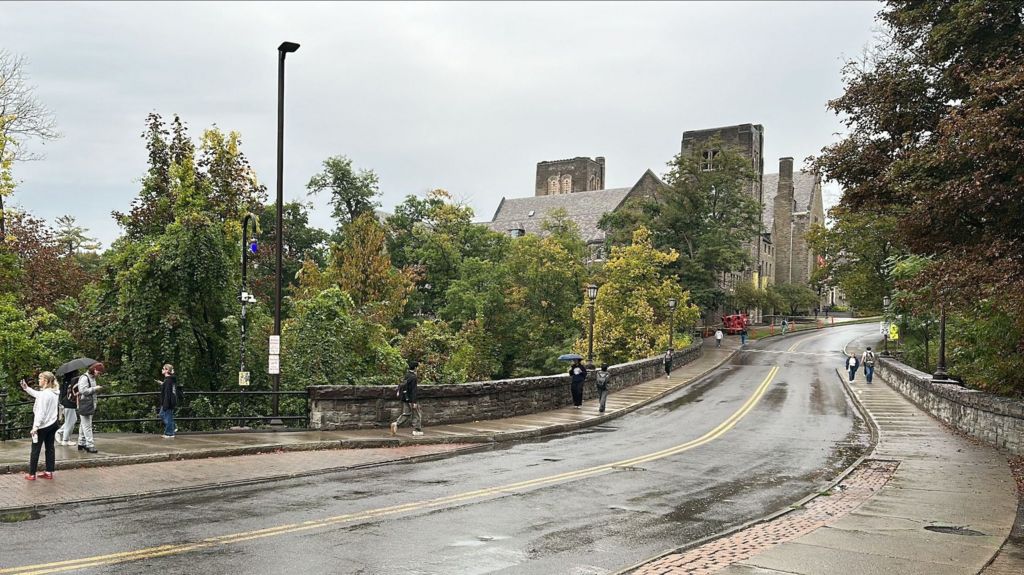
Two years after a 2024 alleged sexual assault at a Cornell University fraternity house, the prestigious Ivy League institution is facing intense public and legal scrutiny over its handling of the case, as a recently filed civil lawsuit and a reopened criminal probe have cast a harsh spotlight on systemic failures across campus medical and disciplinary systems.
Jane Doe, the anonymous plaintiff in the new civil suit, has alleged that she was drugged with ketamine and raped by seven male students during the 2024 fraternity event. Her legal team has launched sharp criticism of both Cornell and local prosecutors, arguing that repeated institutional missteps have undermined efforts to hold the accused perpetrators accountable.
Two days after the alleged attack, Doe visited Cornell’s on-campus health center to report she had developed a urinary tract infection following a traumatic incident. According to her attorney Thomas Giuffra, the treating physician failed to launch any appropriate follow-up evaluation, declining to order a rape kit, connect Doe with sexual assault-trained medical specialists, or conduct a physical exam to document potential injuries. Instead, Giuffra says the provider only advised Doe to seek talk therapy. The attorney called the medical encounter “yet another failure by Cornell,” noting that the missed opportunity to collect timely forensic evidence has irreparably harmed the case.
Cornell declined to provide additional comment to the BBC when asked about the handling of Doe’s medical visit. After the suit was filed earlier this month, the Tompkins County District Attorney’s Office announced it would reopen the criminal investigation it closed in 2024, when no charges were brought. DA Matthew Van Houten initially explained he declined to prosecute because he only accessed a partial statement that implied the encounter was consensual and no drugging had occurred. He now says he only recently obtained the full 120-page transcript of Doe’s Title IX interview, which confirms her sworn account of the non-consensual assault.
Giuffra has pushed back against the DA’s explanation, accusing Van Houten of inconsistent storytelling and defensive attempts to save face amid growing public pressure. “The pattern I am seeing is that whenever evidence comes out supporting prosecution, he claims he never saw it,” Giuffra told the BBC. “His defensiveness and attempt to save face has not been impressive.” Van Houten, for his part, has said he will not be distracted by unfair criticism and remains focused on uncovering the full truth of the incident.
Internal Title IX investigation documents obtained by the *New York Times* have provided the most detailed public timeline of Doe’s experience in the weeks following the alleged assault. The morning after the event, Doe returned to her sorority house and told her two roommates she had used drugs and had sexual contact with multiple men, though she did not initially label the encounter as assault or rape. Her roommates told investigators she appeared deeply disoriented and “in shock,” unable to fully process what had happened to her. As weeks passed, the documents show, Doe gradually came to terms with the trauma, text messaging one of the accused men in early November 2024 to clarify that 90% of the night’s events were non-consensual, writing that she had been given more ketamine (referred to as “key” in the text shorthand) than she could remember, and had repeatedly expressed discomfort before the assault.
The accused man had already apologized to Doe via text in the weeks after the incident, acknowledging that he and other involved men felt “awful” that the situation had gotten out of hand while they were all intoxicated, admitting they failed to end the encounter early.
Doe ultimately underwent a rape kit three weeks after the alleged attack, but by that point no usable DNA evidence could be recovered. Giuffra argues that if Cornell’s medical staff had ordered the kit during her initial health center visit in October, critical forensic evidence would still have been available for prosecution. He added that Doe’s gradual progression from shock and denial to recognition of her trauma matches standard psychological responses to sexual violence. Cornell has confirmed it turned over all internal investigation evidence to prosecutors, including a Snapchat group chat where fraternity members discussed the encounter with Doe.
On the Ithaca campus, the reemergence of the high-profile case has left a palpable cloud of tension and discontent, multiple anonymous students and faculty told the BBC. One senior female student who was on campus in 2024 said current students continue to feel overwhelmed and disappointed by the university’s handling of the case, describing the campus atmosphere as being overshadowed by a “dark cloud.” A faculty member added that the overall campus mood is “dismal,” noting that most instructors are not trained to support students through traumatic incidents like this and feel unprepared to address the ongoing distress across the community.
For anyone experiencing emotional distress related to sexual violence, support resources are available globally through Befrienders Worldwide, with additional services listed for UK residents on dedicated support portals.