博客

  • Seoul court sentences Unification Church leader Hak Ja Han to 2 years in prison

    Seoul court sentences Unification Church leader Hak Ja Han to 2 years in prison

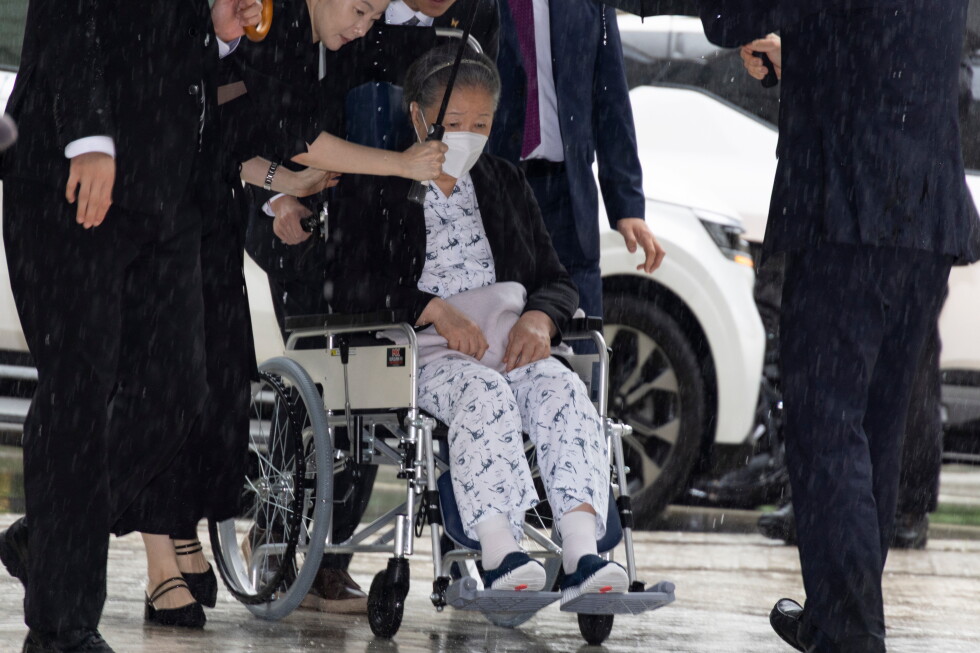
    In a landmark ruling that caps a year of seismic political upheaval in South Korea, the Seoul Central District Court sentenced Hak Ja Han, the leader of the Unification Church and widow of the movement’s founder Sun Myung Moon, to two years in prison on multiple corruption charges on Monday.

    Court public affairs officials confirmed the verdict against Han, who was taken into custody last year. The charges against her span a web of graft that entangled the country’s former presidential administration: prosecutors allege Han instructed senior Unification Church officials to deliver bribes to Kim Keon Hee, wife of conservative former South Korean President Yoon Suk Yeol, and to a prominent pro-Yoon politician when Yoon held the nation’s highest office.

    Beyond the bribery scheme, Han faces convictions for two additional serious offenses: embezzlement of millions of dollars in church funds, and ordering the destruction of evidence documenting her gambling activities in the United States.

    Han’s conviction is the latest development in a sprawling corruption scandal that has already fundamentally reshaped South Korea’s political landscape. Earlier this year, the same Seoul Central District Court found Kim Keon Hee guilty in January of accepting over $100,000 in luxury gifts from the Unification Church, including a high-end Graff diamond necklace and a Chanel handbag, in exchange for political favors the church sought from the administration. The former first lady was initially handed a 20-month prison sentence, but an appeals court in April upped the sentence to four years after adding additional convictions, including that she accepted a second Chanel handbag from the church and manipulated publicly traded stock prices for personal gain.

    The scandal triggered a rapid, dramatic collapse of the Yoon administration. After Yoon attempted to impose martial law amid growing public outcry over the corruption revelations in late 2024, the South Korean National Assembly moved to impeach the president, ultimately removing him from office. The series of convictions this year marks the formal legal conclusion to a political scandal that ended the careers of both South Korea’s former head of state and his wife, while holding the leader of one of the country’s most powerful religious organizations accountable for systemic graft.

  • An upcoming election could produce modern Germany’s 1st far-right state governor

    An upcoming election could produce modern Germany’s 1st far-right state governor

    In the small eastern German town of Moeser, a campaign event for the far-right Alternative for Germany (AfD) carried the buzz of what the party itself frames as a once-in-a-generation political turning point. This Sunday’s state legislative election in Saxony-Anhalt stands on the cusp of rewriting modern German political history: if current polling holds, it could deliver the country its first far-right state governor since the end of World War II, sending shockwaves through national politics and testing long-held taboos surrounding radical right-wing governance.

    Multiple pre-election surveys place the AfD, an anti-immigration party founded just 13 years ago, with a substantial lead over the incumbent center-right Christian Democratic Union (CDU), which has held uninterrupted control of Saxony-Anhalt’s state government since 2002. For the AfD, capturing the governor’s mansion and leading a state administration would mark the most significant milestone in the party’s history, a symbolic and political blow to Chancellor Friedrich Merz and his embattled national government, which is currently grappling with widespread public discontent over a stagnant national economy.

    Political analysts warn that an AfD-led state government would break a long-standing taboo that has set Germany apart from many of its European neighbors in the postwar era. “If AfD wins the election and forms the government, that would be kind of breaking a taboo in Germany,” explained Wolfgang Merkel, a political science professor at Berlin’s WBZ Social Science Center. He noted that modern Germany has long remained an exception across the continent, with no radical right-wing party ever holding governing power at the national, state, or major municipal level to date.

    The AfD’s rise has been fueled by growing voter frustration with mainstream parties, amplified by a stagnant national economy that has left Merz’s administration struggling to build public confidence. In last year’s national election, the AfD notched the strongest postwar result ever recorded by a German far-right party, taking 20.8% of the national vote to claim the position of Germany’s largest official opposition party. Its support has long been concentrated in Germany’s former communist eastern states, including Saxony-Anhalt, and the party has expanded its appeal by capitalizing on voter anger across a range of issues beyond its core signature policy of curbing immigration.

    In Saxony-Anhalt, the AfD is targeting an absolute majority in the state legislature – a result that would break the so-called “firewall” maintained by all mainstream German parties, which have refused to enter into any governing coalition or cooperation with the AfD. Saxony-Anhalt’s AfD regional branch is one of several party wings classified as a proven right-wing extremist organization by Germany’s domestic intelligence service, a label the party forcefully rejects.

    “This is a historic opportunity that we have here in Saxony-Anhalt,” AfD gubernatorial candidate Ulrich Siegmund, a charismatic 35-year-old, told the Associated Press at his Moeser campaign event, where supporters gathered over beer and sausages to meet the candidate. “We will write history here.”

    Siegmund’s policy agenda centers on hardline immigration measures: he has called for a widespread deportation offensive targeting people living in Germany illegally, and pledged to cut social welfare incentives that he claims attract migrants to exploit Germany’s social system. He has also proposed launching a multi-year process to withdraw Saxony-Anhalt from the regional public broadcasting consortium, citing unsubstantiated claims of widespread disinformation from the network. Other key policy priorities include legalizing home schooling – currently banned across Germany – banning official rainbow flag displays in public schools, mandating that only the German national flag be flown, ending German financial support for Ukraine, and pushing to lift international sanctions against Russia (though the latter two policies fall under federal, not state, jurisdiction).

    For the AfD, governing Saxony-Anhalt would represent a massive step up from its only previous local executive win: the party captured a single county administration in neighboring Thuringia in 2023. Holding a state governorship would supercharge the party’s long-term ambition of making further electoral gains and eventually winning control of the national government. German states hold extensive policymaking authority, including oversight of public security and the entire state education system, giving an AfD-led administration substantial room to implement its policy agenda.

    Addressing concerns about his party’s extremist labeling, Siegmund sought to reassure voters: “No one here needs to be afraid, quite the contrary. Every honest person in Saxony-Anhalt will benefit from an AfD-led government.”

    Incumbent CDU Governor Sven Schulze, Siegmund’s main challenger, warned that an AfD government would push Saxony-Anhalt into political isolation and reverse decades of progress the state has made since German reunification in 1990. The state, which is home to 2.1 million of Germany’s 83.5 million people and counts among Germany’s least prosperous regions, has seen steady economic growth and falling unemployment under CDU leadership, Schulze argued.

    He added that the AfD’s hardline anti-immigration stance would devastate the state’s economy: “The far right effectively doesn’t want to have anyone here who was born abroad and lives and works here. With many immigrants working in hospitals and companies, for example, that would be a huge problem for Saxony-Anhalt.” Schulze, who has reiterated that the CDU will never enter into a coalition with the AfD, criticized the party for only highlighting voter grievances without offering actionable solutions.

    Even if the AfD wins a plurality of seats, its path to forming a government remains uncertain. If the party fails to secure an absolute majority, political analyst Wolfgang Merkel notes, there are no viable mainstream coalition partners willing to work with it, leaving the AfD locked out of power. In that scenario, Schulze would likely attempt to assemble a minority or multi-party coalition with smaller left-of-center parties, a move that would likely draw accusations from the AfD that mainstream parties are clinging to power against the popular will.

    The outcome of Sunday’s election carries major implications for Merz’s national government, which is already fighting to overcome low approval ratings and shake off what Merz calls “widespread moroseness” gripping the electorate. Additional poor results for the CDU and its coalition partner, the center-left Social Democrats, in September 1 elections in Berlin and another eastern state, Mecklenburg-Western Pomerania, could amplify the pressure on Merz’s administration.

    While Merkel argues that Saxony-Anhalt’s small size means it is unlikely to trigger immediate national political upheaval, a strong AfD win would reinforce the growing narrative that Germany’s traditional mainstream large parties are in long-term decline. Merz’s government has staked its credibility on delivering sweeping economic and political reforms, but so far has failed to produce visible, high-profile wins to win over voters. “When the economy isn’t running, basically all areas of politics are infected,” Merkel noted.

    After a recent cabinet meeting last week, Merz struck an optimistic tone, emphasizing his government’s commitment to pushing through its reform agenda. “We must get out of this climate of glumness and anger,” he said. “Together, we must shake off this widespread moroseness that has long paralyzed our country.”

  • Rescue efforts intensify after Nepal-Tibet flooding as deaths climb past 900

    Rescue efforts intensify after Nepal-Tibet flooding as deaths climb past 900

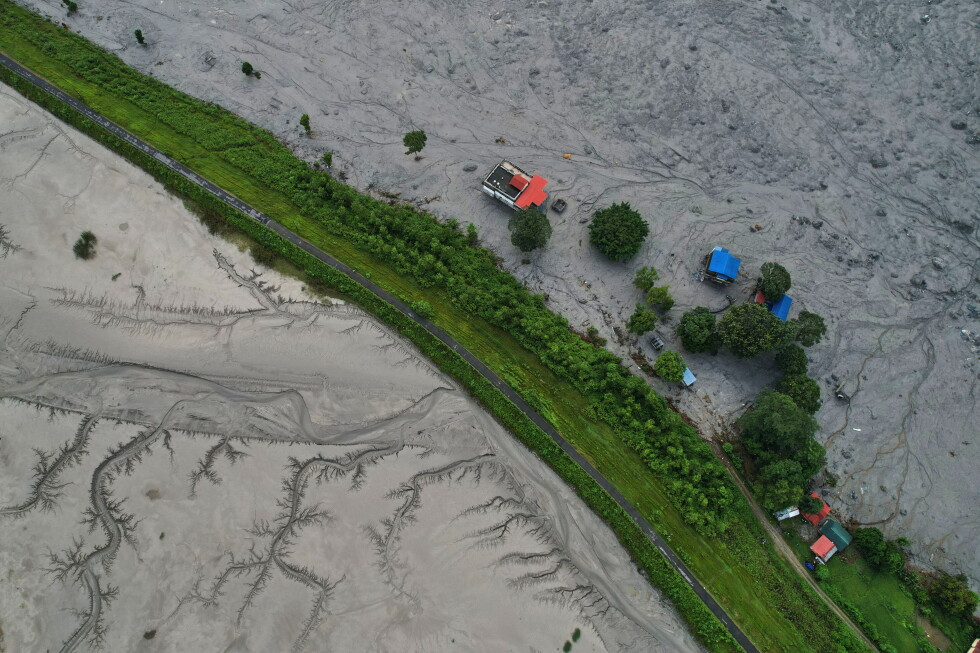
    A catastrophic glacial collapse in the high Himalayas has triggered devastating flash floods that have claimed at least 900 lives and left more than 4,700 people unaccounted for across southern Nepal and the Tibet Autonomous Region of China, with international rescue teams joining local emergency responders in scaled-up search operations.

    Brigadier General Raja Ram Basnet, spokesperson for the Nepali Army, confirmed that search and rescue operations are ongoing across flood-stricken hill communities, riverside settlements and isolated lowland areas, where many residents and travelers remain stranded by fast-moving floodwaters.

    Among the most urgent rescue missions are operations to reach dozens of construction and maintenance workers trapped in incomplete and active hydropower plant tunnels beneath flood-damaged mountain slopes. Multiple foreign specialized rescue teams have deployed alongside local emergency crews to access the blocked, waterlogged tunnels, with officials confirming that at least 90 people remain trapped across multiple hydropower sites.

    Updated data released Monday by Nepal’s national disaster management agency puts the country’s confirmed death toll at 903, with 4,247 people still listed as missing. That missing count includes 592 foreign nationals who were in the region for trekking, work or tourism when the floods hit. On the Chinese side, official data reported Sunday recorded 1 confirmed deaths, with 546 people still unaccounted for. Chinese state media reports add that 261 of the missing in Tibet are foreign nationals, including more than 100 Nepali citizens.

    The disaster unfolded Wednesday when a massive bedrock collapse occurred beneath a high-altitude Himalayan glacier, dragging a large section of the frozen ice sheet down the mountain with it. Analysis of satellite imagery by glaciologists and geoscientists confirms the scale of the collapse was so large that it registered as a magnitude 5.2 seismic event on global monitoring networks.

    The sudden collapse released a massive surge of rock, debris and melted glacial water that rushed down into the river valleys below. The unprecedented torrent of water and debris overwhelmed riverbanks, swept away entire buildings, destroyed critical bridge infrastructure, and scoured entire settlements from valley floors as it moved through both Tibet and Nepal, leaving widespread destruction and loss of life in its path.

  • Russian strikes destroy 12 million books ahead of Ukraine’s first week back at school

    Russian strikes destroy 12 million books ahead of Ukraine’s first week back at school

    A wave of coordinated Russian missile and drone attacks across Ukraine has targeted critical publishing infrastructure and iconic cultural heritage sites, leaving a trail of destruction that Ukrainian officials describe as a deliberate campaign to erase national identity.

    On the outskirts of Kyiv, the charred, twisted wreckage of a major printing press offers a stark example of the damage. The facility was weeks away from delivering 1.3 million textbooks – 10% of Ukraine’s total annual schoolbook supply – when a Russian missile struck overnight amid a production ramp-up for the new academic year. Among the ash and rubble, a single scorched page from an English textbook survives as a haunting symbol: it reads, “My name is William, I’m from the UK. My grandmother lives in Nottingham. It’s a beautiful city.”

    No materials have been salvaged from the site. Pages that escaped the fire were left waterlogged by firefighting efforts or damaged by exposure after the roof collapsed. Viktoria Haidai, commercial director of Ukrainian publisher Konvi, called the attacks a calculated strategy against Ukrainian statehood. “Over the past two months, some of the largest publishing houses have lost their logistics warehouses, where very large quantities of books were stored,” she explained. “The Russians are also destroying printing houses in an attempt to erase Ukraine as a nation. But frankly they will not succeed.”

    Across the country, the scope of destruction to the publishing sector is staggering. Recent attacks have hit more than 35 publishing facilities, destroying 12 million finished books – accounting for one-third of all books printed in Ukraine so far this year, according to local media reports. The damage is not limited to new publications: Kyiv’s historic Pochaina second-hand book market, a beloved cultural gathering spot, was also struck, wiping out hundreds of independent vendor stalls and thousands of rare, out-of-print volumes.

    Even before the embers cooled at the market, 28-year-old book blogger Liliya Velyka was sifting through the rubble, searching for anything she could rescue. Clutching a waterlogged science fiction novel, she summed up the grief of many Ukrainians: “Books are saving us and losing this is like losing our hearts.”

    This campaign against cultural infrastructure extends far beyond the publishing sector. Museums, art galleries, film studios, public libraries, and opera houses across Ukraine have sustained damage in the attacks. One of the highest-profile targets is Kyiv-Pechersk Lavra, a sprawling medieval monastery complex and one of Ukraine’s most significant cultural landmarks, which was hit in a June drone attack. While religious artifacts were moved to safety ahead of the strike, a large portion of the Dormition Cathedral’s roof caught fire, damaging the structure’s iconic golden domes. Repair estimates put the cost at $11.2 million, with work expected to take two years to complete.

    The monastery complex, which also houses Ukraine’s Museum of Books and Printing, was added to UNESCO’s World Heritage List in 1990, and marked as a World Heritage Site in Danger in September 2023. During recent celebrations marking the 975th anniversary of the monastery’s founding, UNESCO Director-General Khaled El-Enany expressed profound sorrow over the damage and condemned the attacks. “UNESCO firmly condemns all attacks against cultural property protected under international law,” he told assembled dignitaries, including Ukrainian President Volodymyr Zelensky.

    Ukraine’s Culture Minister Tetyana Berezhna drew a clear connection between military attacks on Ukraine and the deliberate targeting of cultural sites. “This is an existential war, so Russia wants to destroy us as a nation, to erase us as a nation, like Ukrainians do not exist and have never existed,” she said during a tour of the damaged cathedral with El-Enany. “That’s why Russia targets our cultural heritage, the symbols of our presence here for a long time. They understand that it’s very important for us because we protect our identity, we protect our culture, and Russia wants to ruin everything that it cannot appropriate.”

    As of the latest reports, Berezhna confirmed that Russian forces have damaged more than 1,900 individual Ukrainian heritage sites and over 2,000 cultural institutions. To mitigate ongoing losses, the Ukrainian government has accelerated digitization efforts to preserve art, literature, and educational content, ensuring children can still access learning materials even as physical book stockpiles are destroyed. Industry leaders warn that the entire Ukrainian publishing sector is at risk of collapse without urgent international support.

    For Haidai, the survival of publishing is non-negotiable for preserving Ukrainian identity. “The word is everything,” she said at the bombed-out Kyiv printing plant. “It is our development, our culture, and our historical heritage that is passed down from generation to generation.”

    The targeting of cultural sites aligns with long-standing Russian rhetoric questioning the legitimacy of an independent Ukrainian state and culture. In a 2021 essay, Russian President Vladimir Putin claimed that Russians and Ukrainians were “one people” and rejected the idea of a distinct Ukrainian national identity.

    In response to requests for comment from the BBC, the Russian Embassy in the UK shifted blame to the Ukrainian government, claiming that Ukraine had already damaged its own cultural heritage by dismantling Soviet-era monuments and renaming streets. The embassy also repeated a common Russian claim that cultural sites have been used to conceal military equipment. The Kremlin has consistently denied deliberately targeting civilian infrastructure throughout five years of full-scale invasion, despite widespread documentation of missile and drone strikes on residential neighborhoods, public services, and cultural sites across Ukraine.

  • British Arabs urge UK government to impose binding restrictions on Israeli settlements

    British Arabs urge UK government to impose binding restrictions on Israeli settlements

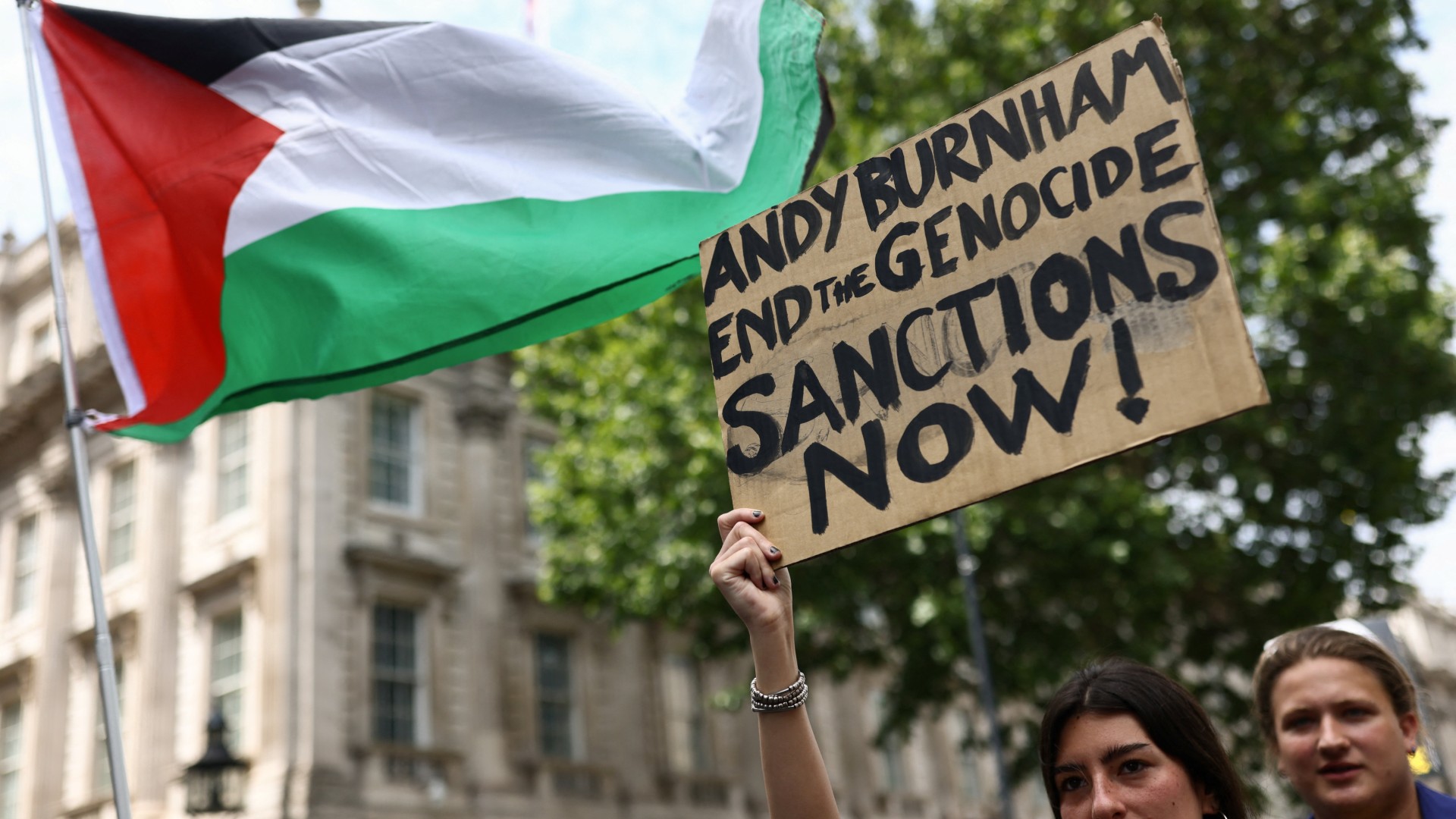
    A coalition of over 40 leading figures from Britain’s Arab community has issued a high-profile call for the UK government to translate its verbal condemnation of illegal Israeli settlements into tangible, legally binding action that cuts off British economic support for continued settlement expansion.

    In an open joint letter addressed to Foreign Secretary Ed Miliband, dated August 24, 2026, the signatories argue the UK must now uphold the international legal obligations it has already publicly acknowledged. These obligations, they note, include the core duties of non-recognition of illegal settlements, non-assistance to settlement activity, and formal legal differentiation between the state of Israel and the Palestinian territories occupied by Israel since the 1967 Six-Day War.

    The letter frames the current global conversation around settlements as having moved far past the debate over whether the settlements themselves are unlawful under international law. Instead, the central question now facing Western governments like the UK is whether the current mix of voluntary industry guidance, limited tariff differentiation, and narrow targeted sanctions is actually sufficient to meet the country’s binding international legal commitments. This includes the clear obligation outlined by the International Court of Justice (ICJ) in its landmark 2024 advisory opinion to block any trade or investment activity that serves to sustain or expand illegal settlement construction.

    Signatories to the letter span multiple sectors of British civil society, including leading voices from Palestinian advocacy groups, legal associations, health worker coalitions, and grassroots solidarity movements. Notable signatories include Adnan Hmidan, chair of the Palestinian Forum in Britain; Sabah Almukhtar, president of the UK’s Arab Lawyers Association; Dr. Omar Abdel-Mannan, head of Health Workers 4 Palestine; and Feda Shahin, secretary general of the Palestine Solidarity Movement, among dozens of other prominent public figures. The letter remains open for additional public signatures from across British society.

    Among the concrete policy measures the coalition calls for are legally binding restrictions on all UK economic activity that generates profits for or supports settlement expansion, the extension of existing UK sanctions to cover both individual actors and private companies tied to settlements, mandatory full differentiation between Israel and occupied territories in all UK government procurement processes and public sector engagements, and coordinated action with international allies to prevent bad actors from circumventing restrictions via third-country corporate structures.

    The letter emphasizes that the UK already holds full domestic legal authority to implement these measures under the 2018 Sanctions and Anti-Money Laundering Act. It also anchors the demands in prior UK diplomatic commitments: the UK’s 2016 vote in support of a binding UN Security Council resolution that confirmed Israeli settlements have no legal validity, and the ICJ’s July 2024 advisory opinion that ruled Israel’s prolonged presence in the occupied Palestinian territories is unlawful and ordered an immediate end to all settlement activity.

    Beyond economic measures, the coalition is pushing the UK to work with global partners to establish a formal international protection mechanism to shield Palestinian civilians from escalating settler violence. This request draws on a 1994 UN resolution that the UK itself co-sponsored, which laid the groundwork for international protection for Palestinian communities. The proposed mechanism would include independent third-party monitoring of violence, systematic documentation of displacement and abuses, and targeted protection support for communities at highest risk of attack.

    The letter explicitly clarifies that these demands do not amount to a call for hostility toward the state of Israel or ordinary Israeli citizens, nor do they seek indiscriminate restrictions on fully legal trade with Israel within Israel’s 1948 borders. Instead, the signatories argue that Britain’s long-stated commitment to upholding international rule of law cannot only be expressed through rhetorical statements of principle—it must be demonstrated through consistent, effective policy implementation.

    The call comes as the UK government has already signaled it is preparing new action over Israel’s controversial E1 settlement plan, a proposed expansion east of Jerusalem that would cut the occupied West Bank into two disconnected parts and effectively eliminate the territorial contiguity required for a viable Palestinian state under a two-state solution. Earlier this month, Foreign Secretary Miliband publicly condemned the E1 plan, warning it poses an existential threat to the two-state solution and confirming he had formally called on Israel to halt all settlement expansion. Miliband also noted that the UK would lay out a broader package of new measures in the coming weeks, leaving space for the government to adopt some of the changes the British-Arab coalition is calling for.

  • Bessent huddles with G20 to try to rally allies on Iran as tariffs strain ties

    Bessent huddles with G20 to try to rally allies on Iran as tariffs strain ties

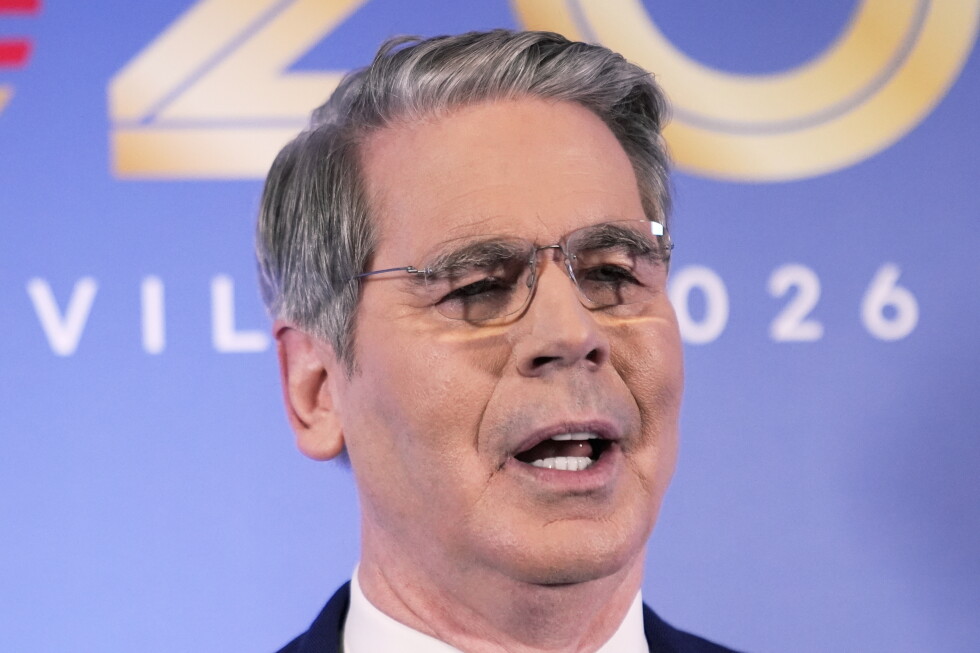
    ASHEVILLE, North Carolina — The annual Group of 20 (G20) finance ministers’ summit kicked off in this mountain city on Monday, bringing top financial leaders from the world’s largest economies together at a moment of deep global geopolitical and economic tension, driven by U.S. policy shifts that have upended international order.

    U.S. Treasury Secretary Scott Bessent opened the gathering by laying out the Biden (Trump) administration’s core priorities: fostering broad-based global economic expansion and reining in the fast-growing sovereign debt that has burdened developing and advanced economies alike. But the summit convenes against a volatile backdrop: renewed U.S.-Iran hostilities that have kept global gasoline prices elevated for consumers worldwide, and a sharp spike in trade tensions with Canada after high-stakes negotiations collapsed, triggering a reciprocal escalation of tariffs between the two North American neighbors.

    In an exclusive interview with the Associated Press ahead of the summit’s opening, Bessent outlined plans to ramp up economic pressure on Iran, announcing a new round of sanctions targeting an additional Iranian bank as part of what the administration has dubbed “Operation Economic Outcast.” This move follows earlier sanctions action this month that restricted the operations of an Egyptian bank with ties to Iran in the United Arab Emirates. “We are prepared to deploy financial violence if necessary to achieve our goals,” Bessent told the AP.

    When pressed by reporters Monday on how quickly the Iranian economy could buckle under the mounting sanctions campaign, Bessent said a shift could come surprisingly fast: “I think it could be within weeks or months. The economy doesn’t have to fully collapse — we just need the regime to come to its senses and change course.”

    Bessent claimed the European Union has offered “fulsome support” for the U.S. sanctions push, a claim backed by a recent EU statement that welcomed expanded economic pressure on Tehran and pledged to coordinate with Washington and other global partners to maintain pressure on the Iranian government.

    Not all major economies have lined up behind the U.S. approach, however. French Finance Minister Roland Lescure told reporters ahead of Monday sessions that the G20 should prioritize reaching a collective, unified statement on a shared path to sustainable global growth, noting that the current global economic outlook carries significant uncertainty. “The world economy is a bit like the weather in Asheville — it’s unpredictable, it’s foggy,” Lescure observed.

    The summit also drew attention for the inclusion of Russian Finance Minister Anton Siluanov, who held a one-on-one bilateral meeting with Bessent on the summit’s sidelines Monday. Critics, particularly from European capitals, have pushed back against allowing Russia to retain its G20 membership amid the ongoing war in Ukraine, but former President Donald Trump defended the decision. “We like getting along with everybody,” Trump told reporters when asked about the invitation. The U.S. Treasury Department has not yet issued additional comment on the meeting.

    Against this fractured geopolitical backdrop, analysts warn that the U.S. may struggle to rally unified support from its traditional allies for its dual agenda on Iran and trade. Daniel Fried, a former assistant secretary of state for European affairs during the George W. Bush administration, noted that recent U.S. policy moves have alienated many long-standing partners. “The U.S. may find it difficult to rally its usual friends and allies under the current circumstances,” Fried said. For the administration to secure broad international buy-in, he added, it will need to “take greater care in consulting with allies and partners than the U.S. has shown in recent months.”

    Bessent is pushing for global cooperation to isolate Iran economically, as the U.S.-led confrontation with Tehran enters its seventh month. While the U.S. conducted another strike against Iranian targets over the weekend, the administration has emphasized it prefers economic pressure over large-scale military action to force policy changes from the Iranian government. To date, the White House has not followed through on earlier threats of an “economic D-Day” that would impose sweeping secondary sanctions on all entities trading with Iran, instead relying primarily on targeted warnings to Iran’s global trading partners.

    The biggest hurdle to the U.S. sanctions campaign remains China, which is the world’s largest importer of Iranian crude oil. When asked if the administration would impose sanctions on Chinese entities for continuing to purchase Iranian oil, Bessent told the AP that “all options are on the table.”

    He rejected widespread claims that the administration is reluctant to confront Beijing over the issue, calling the perception “a completely false narrative.” Bessent insisted that Washington and Beijing share core goals: reopening the strategic Strait of Hormuz to unimpeded global oil trade and preventing Iran from developing a nuclear weapon.

    But Nicholas Mulder, a Cornell University historian specializing in the history of economic sanctions, warns that designating major Chinese financial institutions for sanctions would carry severe global economic risks. “We might see a gradual trickle of smaller listings, but a large designation of, say, a major Chinese bank would cause serious upheaval and prompt retaliation from Beijing,” Mulder explained.

    Mulder also noted that disrupting global oil flows through secondary sanctions would add new upward pressure on global inflation, forcing the U.S. Federal Reserve to continue raising interest rates to cool price growth. “Given that Bessent’s Treasury already finds itself having to quell a growing unease in the bond markets, it will be very challenging to enforce aggressive secondary sanctions with credibility,” Mulder said.

    Beyond geopolitics and sanctions, the summit’s host city carries its own symbolic weight. Asheville is still recovering from the devastation of Hurricane Helene, which swept through the Southeast in September 2024, killing more than 250 people and causing nearly $80 billion in damage across a swath of the U.S. from Florida to the Carolinas. The city’s progress in rebuilding after the storm offers a model for what collective action can achieve, Bessent argued.

    Outlining his economic growth agenda for the summit, Bessent said the U.S. will push for global policy alignment on deregulation and energy independence, alongside discussions of persistent global economic imbalances, updated banking regulations, and sovereign debt restructuring for vulnerable developing economies. “The world has this mountain of debt, and we do have to grow our way out of it,” Bessent told the AP.

  • Djokovic in tears during US Open first-round exit

    Djokovic in tears during US Open first-round exit

    For nearly two decades, Novak Djokovic has owned a perfect record at the opening round of the US Open. That unbroken streak came to a stunning and emotional end on the opening days of the 2026 tournament, where 39-year-old tennis legend dropped a five-set defeat to Argentina’s 25-year-old Mariano Navone, capping a match marked by visible physical struggle and uncharacteristic vulnerability.

    Djokovic, a 24-time Grand Slam champion and the tournament’s fourth seed, entered the match having never fallen in the opening round at Flushing Meadows, and had not lost a first-round Grand Slam match since 2002. Through the four-hour contest in New York’s oppressive humidity, the Serbian icon fought through severe physical distress, repeatedly feeling nauseous and vomiting into a court-side towel bin, before ultimately succumbing to a 7-6 (7-5), 5-7, 4-6, 6-2, 6-1 defeat.

    The match unfolded with a promising start for Djokovic, who broke Navone’s first serve and jumped to an early 4-1 lead. But a grueling extended rally sapped his energy, and his physical struggles quickly derailed his momentum. By the end of the first set, he was bent over double between points, his serve and groundstroke speed dropped dramatically, and he called for a medical timeout to take medication to ease his symptoms. Navone, ranked world No. 49 and never advancing past the second round at the US Open, held his nerve to take the first set in a tiebreak.

    Cooler conditions under the Arthur Ashe Stadium roof briefly revitalized Djokovic, who fought back to level the match at one set apiece and even claimed a break lead in the third set — a position the legendary competitor has almost always turned into a comeback win throughout his career. But this time, Djokovic could not close out the match. As his health deteriorated further, Navone kept pressing, and the contest slipped away from the 39-year-old in the final two sets, culminating in a lopsided 6-1 fifth set that left the capacity crowd at Ashe Stadium stunned and somber.

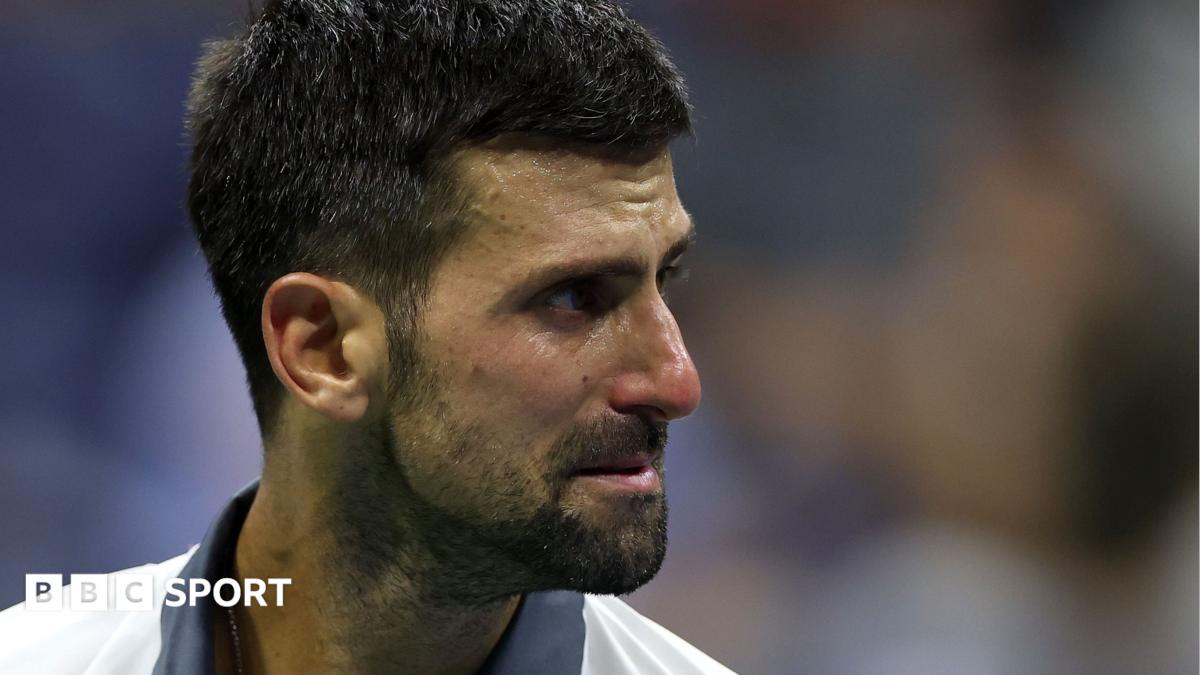
    It was in the final set that the emotion boiled over: Djokovic broke down in tears as the match slipped away, a raw display of disappointment few fans have seen from the notoriously tough competitor. After the final point, he mustered a smile to congratulate Navone on what will go down as one of the biggest upsets of his career, but could not hold back emotion as he walked back to the locker room, clearly distraught over the result.

    The defeat ends Djokovic’s bid for a 25th Grand Slam singles title, which would have given him the outright all-time record, breaking a tie with Margaret Court. The tournament had been viewed as a strong opportunity for Djokovic, with world No. 1 Jannik Sinner sidelined by injury and defending champion Carlos Alcaraz returning from a long wrist layoff. This loss comes just two weeks after another shocking early exit to Argentine player Thiago Tirante at the Cincinnati Open, where Djokovic struggled in similar humid conditions.

    After the match, Djokovic opened up about a long-standing “serious” health issue that has plagued him for years in high heat and humidity, causing vomiting, cramping and widespread muscle pain that left his body unable to compete. “It’s something that I have been carrying pretty much every match this year — vomiting, throwing up,” he told reporters. “And then my whole body starts to collapse basically, cramping and pain — the back just gave up in the end and shoulder, and I couldn’t close it out.”

    The result has stoked long-simmering questions about Djokovic’s eventual retirement, questions the legend has repeatedly pushed back on. In a documentary released earlier this month, he insisted he has never placed an “expiry date” on his career, noting: “Why would I talk about retirement when I still keep proving to myself that I can still win?”

    Despite the historic first-round exit and his ongoing health struggles, Djokovic says retirement is not on his immediate agenda. His priority, he says, remains finding a solution to the undiagnosed health issue that has disrupted his 2026 season, leaving his legendary career hanging in a rare moment of uncertainty.

  • AI and robotics drive an IPO boom in China as Shein lists in Hong Kong

    AI and robotics drive an IPO boom in China as Shein lists in Hong Kong

    A growing wave of initial public offerings (IPOs) is surging through China’s major financial hubs of Shanghai and Hong Kong, fueled by ravenous investor demand for artificial intelligence and advanced technology stocks, alongside a shifting preference for domestic listings over overseas exchanges. The trend is reshaping global capital markets, positioning China’s two leading exchanges as major global players in new share issuance this year.

    The latest high-profile offering to hit the market is fast fashion and e-commerce giant Shein, a China-founded brand that is set to make its trading debut Tuesday on the Hong Kong Stock Exchange. The blockbuster IPO is projected to raise $1.7 billion, ranking among the city’s largest new share sales of 2026. Shein’s decision to list in Hong Kong came after it weighed options in New York and London, reflecting a broader industry shift toward domestic venues for Chinese firms.

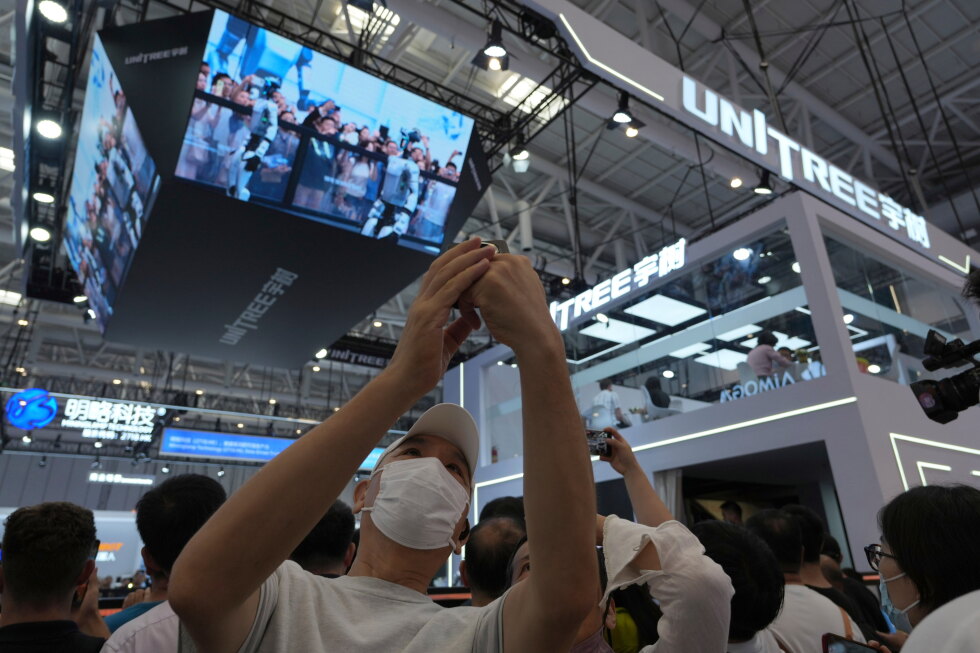
    This year’s IPO boom has already been marked by a string of massive technology offerings. In July, CXMT, China’s top domestic memory chip manufacturer, secured more than $8.6 billion through an IPO on Shanghai’s Nasdaq-style STAR Market, marking the second-largest offering in the bourse’s history and the second-biggest IPO on mainland China this year. CXMT’s shares exploded 466% higher on their first day of trading, riding a wave of demand for AI-capable semiconductor manufacturing. Just one month later, leading Chinese humanoid robot developer Unitree followed suit with its own Shanghai debut, where shares soared 460% on opening day.

    Industry analysts note that investor enthusiasm for AI and next-generation technology is the core engine driving the current market momentum. “The current IPO boom is powered by investor appetite for AI and robotics,” explained Ruiying Zhao, senior research analyst at S&P Global Market Intelligence, adding that retail investor activity makes up a large portion of trading volume on Shanghai’s exchange.

    Perris Lee, head of APAC equity capital markets for ION Analytics, noted that CXMT’s landmark offering carries broader strategic implications for China’s technology ecosystem. CXMT, founded in 2016, saw revenue surge more than 700% year-over-year to 50.8 billion yuan (approximately $7.5 billion) in the first quarter of 2026, driven by skyrocketing demand for AI-grade memory chips. Lee said the successful IPO “placed China in a strategically significant position in tech manufacturing related to AI” and serves as clear evidence of the country’s progress toward its goal of technological self-sufficiency.

    Data from financial data platform LSEG confirms the scale of this year’s IPO boom. Total proceeds from IPOs and secondary listings on the Shanghai and Hong Kong exchanges have already surpassed $54 billion so far in 2026, outstripping 2025’s full-year total of more than $46 billion. Combined, the two Chinese exchanges account for roughly 21% of global IPO proceeds this year, ranking second globally only behind the U.S.-based Nasdaq, which holds a 55% global share. Nasdaq’s leading position was boosted by SpaceX’s $75 billion mega-IPO in June, which cemented the U.S. exchange as the world’s largest IPO market for 2026. To access international capital while adhering to China’s restrictions on foreign investment in mainland exchanges, many Chinese firms pursue parallel listings in Hong Kong that are open to global investors.

    A key factor driving the shift toward domestic listings is tightening regulatory scrutiny on both sides of the U.S.-China relationship in recent years. Chinese firms operating in strategically critical sectors such as advanced technology now face far higher barriers to listing on U.S. exchanges, pushing many to pursue offerings closer to home. Beyond regulatory hurdles, domestic IPOs also offer a faster path to going public, noted Howie Farn, capital markets partner at international law firm Freshfields.

    Beyond semiconductors and robotics, other high-tech Chinese firms have also seen strong investor demand for their Hong Kong IPOs this year, including Apple supplier Luxshare Precision Industry and Zhongji Innolight, a leading manufacturer of optical transceivers for AI data centers. The pipeline of future offerings remains robust, with two more major Chinese robotics firms, AGIBOT and Deep Robotics, already planning IPOs in Shanghai or Hong Kong in the coming months.

    Despite the widespread market enthusiasm, some industry observers warn of growing risks, including the potential for an AI investment bubble that has already shown early signs of correction. After record oversubscriptions and massive first-day gains, a number of newly listed tech firms have seen their share prices retreat sharply from debut-day peaks. As of last Friday, Unitree’s share price had dropped more than 40% from its all-time high set on opening day.

    Zhao from S&P Global notes that the same valuation questions worrying U.S. AI investors are now taking hold in China. “The critical question remains: is the AI sentiment enough?” she said. “For a durable market cycle, investors will demand sustainable revenue, visible profit margins, and realistic valuations.”

    The global AI investment frenzy has also diverted risk appetite away from non-tech IPOs like Shein. Jacob Cooke, CEO of WPIC Marketing + Technologies, explained that “the AI investment cycle is absorbing much of the risk appetite that would have otherwise flowed to a company like Shein.” Shein’s IPO values the company at roughly $27 billion, only a fraction of its peak valuation several years ago. That drop in valuation also partially stems from new trade restrictions imposed by the U.S. and EU that eliminate de minimis tax exemptions for small imported packages, cutting into Shein’s core cross-border business model.

  • China’s factory activity contracts in August despite an uptick in export demand

    China’s factory activity contracts in August despite an uptick in export demand

    HONG KONG, Aug. 31 (Xinhua) — After five consecutive months of contraction, China’s manufacturing sector saw a notable incremental improvement in August, with key indicators coming in better than market forecasts, lifted by unexpectedly strong global demand for Chinese exports, official data released Monday shows.

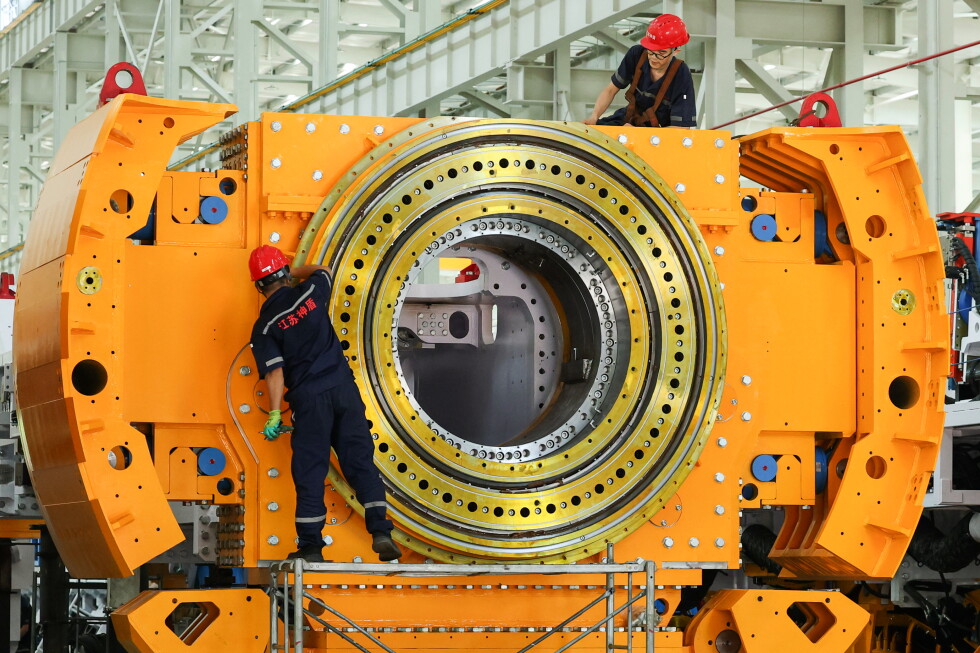
    According to the National Bureau of Statistics (NBS), China’s official manufacturing Purchasing Managers’ Index (PMI) — a closely watched gauge of factory activity — edged up to 49.8 in August from July’s reading of 49.2. While the figure remains below the 50-point threshold that separates expansion from contraction, it outperformed the median expectation of 49.3 from a survey of economists by major financial news outlets.

    The monthly PMI survey tracks a broad range of manufacturing metrics, and several key sub-indexes moved back into expansion territory in August, signaling broad-based improvement across the sector. The production sub-index rose to 50.4 from 49.1 in July, while the overall new orders sub-index climbed to 50.6 from 48.5. Most notably, the new export orders sub-index improved to 50.1 from July’s 49.6, crossing into expansion for the first time in three months and confirming solid global demand for Chinese goods.

    “Manufacturing activity rebounded thanks to strong export demand,” Nguyen Hoang Nam, a China economist at London-based independent research firm Capital Economics, wrote in a Monday research note. Huo Lihui, chief statistician at the NBS, also noted in an official statement that the August PMI results reflect broad incremental improvement across China’s overall economy.

    This latest uptick in factory activity aligns with recent export data that shows Chinese shipments have maintained double-digit growth through the first half of the year. Chinese exports surged nearly 24% year-on-year in July, following an 18% overall expansion across the first seven months of 2025. Multiple drivers are behind this strong export performance, economists say.

    First, the global boom in artificial intelligence development has spurred massive demand for high-tech Chinese exports, particularly semiconductors and related manufacturing components. Second, sustained elevated global energy prices stemming from ongoing geopolitical tensions in the Middle East, including the Iran conflict, have accelerated global adoption of electric vehicles, and Chinese EV manufacturers have captured a growing share of the growing global market. Third, demand for other green technology products, including solar panels and wind turbine components, has continued to accelerate this year after strong growth in 2024, adding further momentum to export gains.

    “Demand for green technologies was already accelerating last year and has continued to strengthen, providing an important additional boost to Chinese exports so far this year,” said Max Zenglein, senior economist for Asia Pacific at business research organization The Conference Board.

    Trade flows have also shifted in recent months, following the return of former U.S. President Donald Trump to the White House last year and the reimposition of broad punitive tariffs on Chinese goods. U.S.-China trade has declined as a result, but Chinese exporters have expanded market share in other regions, particularly the European Union and Southeast Asia, offsetting much of the lost sales to the U.S.

    Trade tensions between the two world’s largest economies are expected to be a top agenda item when Trump meets Chinese President Xi Jinping for high-level talks scheduled for late September, according to officials from both sides.

    Despite the bright spot of strong export growth, China’s economy still faces significant headwinds that are holding back broader expansion. Persistently sluggish domestic demand, driven largely by a years-long protracted slump in the country’s property sector, continues to weigh on overall economic growth. In the second quarter of 2025, China’s annual GDP growth came in at 4.3%, the slowest pace recorded in more than three years.

  • Leaders of China, Russia and India are among heads of state meeting to counter US influence

    Leaders of China, Russia and India are among heads of state meeting to counter US influence

    The capital of Kyrgyzstan, Bishkek, is this week hosting the high-profile Shanghai Cooperation Organization (SCO) summit, which has drawn heads of state from major global powers including China, Russia, and India, as observers frame the bloc as a growing counterweight to long-standing Western-dominated global governance structures.

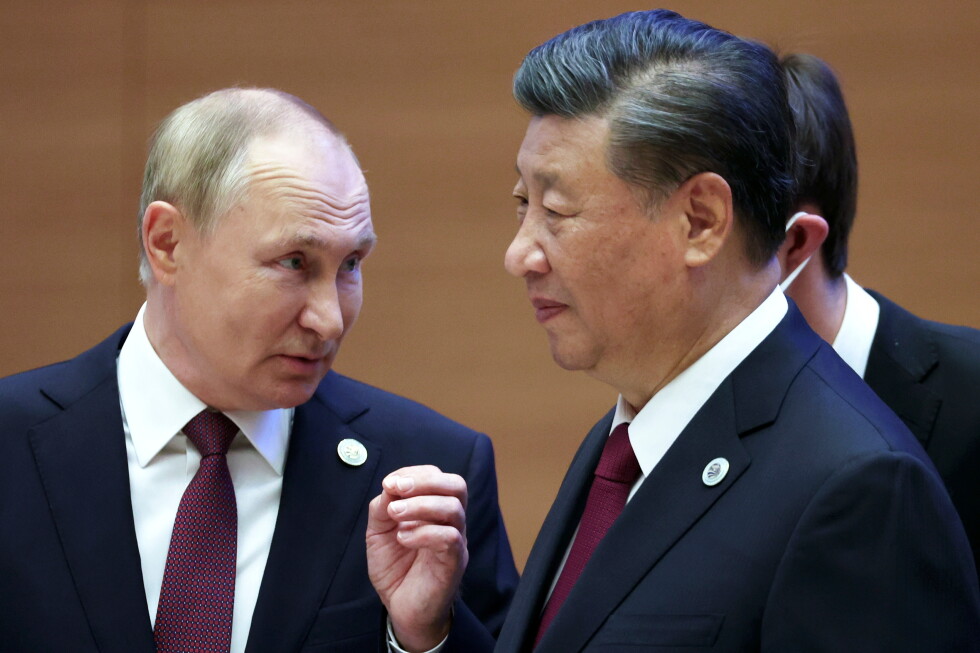
    The summit’s agenda includes formal plenary sessions and a packed slate of bilateral meetings on its sidelines. Among the most anticipated talks are a Monday meeting between Chinese President Xi Jinping and Russian President Vladimir Putin, followed by discussions between Putin and Iranian President Masoud Pezeshkian scheduled for Tuesday, the date of the bloc’s official main summit sessions.

    For two key member states facing intense geopolitical friction with the West, the gathering offers a critical opportunity to deepen ties with other non-Western nations. Russia is now four and a half years into its full-scale invasion of Ukraine, while Iran has been engaged in open conflict with the U.S. and Israel for six months; both view the SCO platform as a space to strengthen economic and political alignment with partners across the Global East and Global South.

    Founded in 2001 by China, Russia and four Central Asian republics as a regional security dialogue forum, the SCO has expanded dramatically in size and geopolitical clout over the past 24 years, even as its core institutional mandates and public profile remain relatively underdefined outside member states. Today, the bloc counts 10 full member states: China, Russia, India, Iran, Pakistan, Belarus, Kazakhstan, Kyrgyzstan, Tajikistan, and Uzbekistan, with dozens more countries holding formal dialogue partner status.

    Alongside Russia, China has positioned the SCO as a viable alternative to Western-led multilateral blocs such as the G7, making active pushes over the past decade to expand the organization’s geographic reach and policy scope, while pledging billions in development and financial assistance to member and partner states. Last week, China’s Ministry of Foreign Affairs stated that the bloc has successfully “explored a new path for regional cooperation,” with Beijing consistently advancing a vision for a multipolar alternative global order with Moscow’s backing.

    Despite the framing of the SCO as a unified counterweight to Western influence, analysts emphasize that the bloc remains far from a cohesive political or military alliance, with deep-seated divergent interests and long-running disagreements between many of its core members.

    For India, which shares tense border relations with China and has a long-standing territorial and geopolitical rivalry with fellow member Pakistan, experts frame the summit as more an exercise in strategic signaling than a venue for groundbreaking substantive outcomes.

    Dinakar Peri, a security studies fellow at Carnegie India, explained that the SCO’s real value for New Delhi lies in giving India a seat at the table in a region increasingly defined by great power competition. “While it may not entirely shape the agenda, it gives New Delhi a first-hand view of the region and allows it to hedge its position with others,” Peri noted, adding that membership lets India protect its core interests, track shifting geopolitical trends, and project itself as a reliable regional stakeholder.

    Turkey, which has held SCO dialogue partner status since 2012, is also using the summit to advance its long-held goal of full membership. For Ankara, SCO membership fits into a long-running strategy of balanced foreign policy: it maintains long-standing institutional ties to the West as a NATO member, while seeking to expand its political and economic influence across Eurasia. President Recep Tayyip Erdogan has repeatedly reiterated his push for full permanent membership, a move that comes as Turkey’s decades-long bid to join the European Union remains effectively stalled, even as the country retains a close 1995 trade deal with the bloc. The meeting’s reporting was supported by contributions from correspondents Andrew Wilks in Istanbul, Huizhong Wu in Bangkok, and Aijaz Hussain in New Delhi.