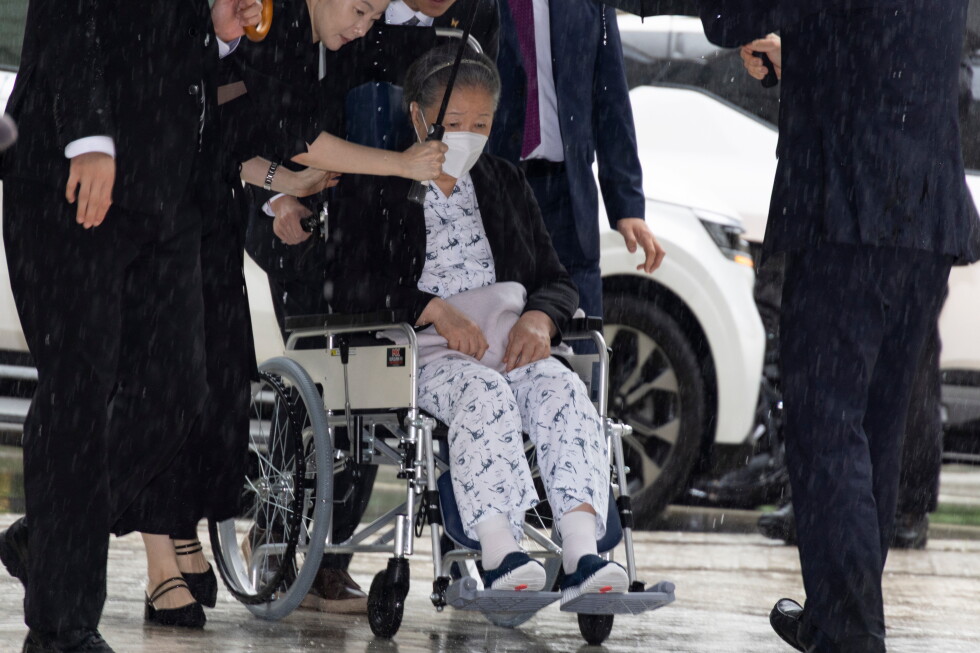
In a landmark ruling that caps a year of seismic political upheaval in South Korea, the Seoul Central District Court sentenced Hak Ja Han, the leader of the Unification Church and widow of the movement’s founder Sun Myung Moon, to two years in prison on multiple corruption charges on Monday.
Court public affairs officials confirmed the verdict against Han, who was taken into custody last year. The charges against her span a web of graft that entangled the country’s former presidential administration: prosecutors allege Han instructed senior Unification Church officials to deliver bribes to Kim Keon Hee, wife of conservative former South Korean President Yoon Suk Yeol, and to a prominent pro-Yoon politician when Yoon held the nation’s highest office.
Beyond the bribery scheme, Han faces convictions for two additional serious offenses: embezzlement of millions of dollars in church funds, and ordering the destruction of evidence documenting her gambling activities in the United States.
Han’s conviction is the latest development in a sprawling corruption scandal that has already fundamentally reshaped South Korea’s political landscape. Earlier this year, the same Seoul Central District Court found Kim Keon Hee guilty in January of accepting over $100,000 in luxury gifts from the Unification Church, including a high-end Graff diamond necklace and a Chanel handbag, in exchange for political favors the church sought from the administration. The former first lady was initially handed a 20-month prison sentence, but an appeals court in April upped the sentence to four years after adding additional convictions, including that she accepted a second Chanel handbag from the church and manipulated publicly traded stock prices for personal gain.
The scandal triggered a rapid, dramatic collapse of the Yoon administration. After Yoon attempted to impose martial law amid growing public outcry over the corruption revelations in late 2024, the South Korean National Assembly moved to impeach the president, ultimately removing him from office. The series of convictions this year marks the formal legal conclusion to a political scandal that ended the careers of both South Korea’s former head of state and his wife, while holding the leader of one of the country’s most powerful religious organizations accountable for systemic graft.