博客

  • Sinabung volcano on Indonesia’s Sumatra island erupts without reports of casualties

    Sinabung volcano on Indonesia’s Sumatra island erupts without reports of casualties

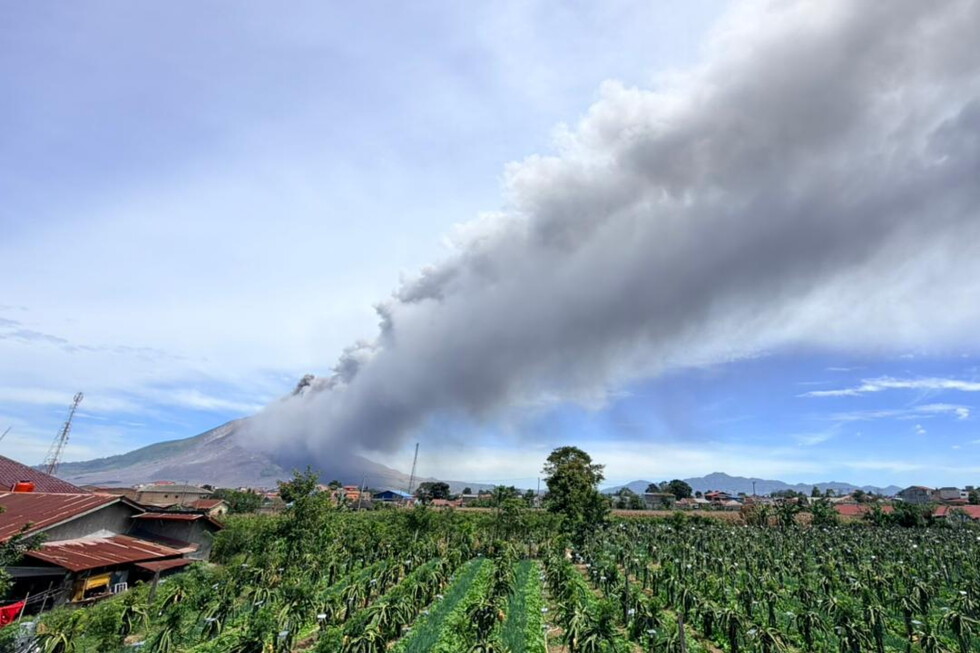
    Indonesia’s Mount Sinabung, one of the country’s more than 120 active volcanoes, erupted on Monday, sending a massive 3,500-meter column of dark ash and thick smoke billowing into the sky above the Indonesian island of Sumatra.

    In the immediate hours after the eruption, authorities reported no fatalities, injuries, mandatory mass evacuations, or disruptions to commercial air travel in the surrounding region. Despite the lack of early harm, disaster management officials issued urgent warnings, ordering residents, casual visitors and traveling tourists to avoid all activities in nearby Karo district villages, as well as any area within a 6-kilometer radius of the volcano’s 2,460-meter summit.

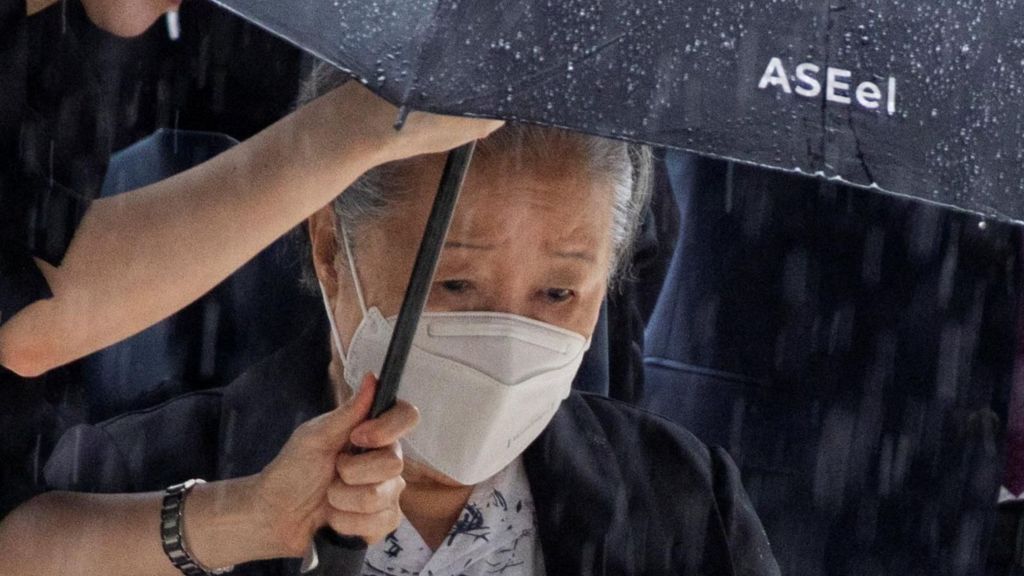
    Gray volcanic ash has blanketed roads, parked vehicles, and residential and public buildings across multiple affected villages in Karo, leaving local infrastructure and communities coated in fine grit. In response, local disaster response teams have distributed free protective face masks to local residents to help prevent respiratory irritation from ash inhalation.

    Following the eruption, Indonesia’s Geological Agency raised the official volcanic activity alert level for Mount Sinabung to “Watch,” the second-highest warning tier in the country’s volcanic monitoring system. The alert upgrade also came with an expansion of the marked safe zone surrounding the peak, extending the exclusion area for civilian activity.

    In an official public statement released Monday, Lana Saria, head of the Indonesian Geological Agency, described this week’s eruption as an initial explosive event, warning that far larger, more hazardous eruptions could follow in the coming days or weeks.

    The Geological Agency first detected signs of accelerating volcanic activity at Mount Sinabung in mid-August, when monitoring equipment recorded dozens of tectonic earthquakes around the peak and observed visible changes in volcanic activity. Even before Monday’s eruption, officials had already expanded the recommended exclusion radius to restrict non-essential public access to the area.

    Over the past decade of repeated volcanic activity at Mount Sinabung, nearly 30,000 local residents have been permanently displaced from their homes surrounding the volcano, forced to resettle in safer areas outside the high-risk zone.

    Indonesia, a sprawling archipelago nation home to more than 280 million people, sits along the Pacific “Ring of Fire,” a geologically active belt of volcanoes and tectonic fault lines that wraps around the entire Pacific Basin. This location makes the country extremely prone to frequent seismic and volcanic events, with dozens of active peaks monitored constantly for signs of dangerous activity.

  • Dolly Parton laid to rest alongside husband in Nashville

    Dolly Parton laid to rest alongside husband in Nashville

    One week after the passing of legendary country music star Dolly Parton at the age of 80, the global music community has gathered to honor her life and enduring legacy, as the icon was laid to rest in a private ceremony in her home state of Tennessee.

    On Friday, Parton received a closed, family-only funeral service in Nashville before being interred at Woodlawn Memorial Park and Mausoleum, where she rests beside her late husband Carl Thomas Dean, who passed away in 2020 after more than 50 years of marriage to Parton. The tomb is marked by a custom brass plaque engraved with the names of Parton and Dean, alongside etchings of their childhood hometowns, local news reporter Amelia Young from Nashville’s NewsChannel 5 confirmed in a social media post featuring photos of the memorial site.

    In a heartfelt public tribute posted one day after the burial, Parton’s great-niece Lainey Parton opened up about the profound impact the star had on her family and her own life. Referring to Parton as “granny” — a nickname the extended family used for the star, who never had biological children of her own — Lainey shared that Parton treated every member of the family as her own. “Because she couldn’t have kids of her own, she always made us feel like we were hers. She loved us that way, and I’ll forever be grateful for that,” Lainey wrote. She went on to recall how Parton nurtured her ambitions from childhood, supporting her through beauty school not just with encouragement, but tangible help to reach her goals. “She didn’t just tell me to chase my dreams, she helped me get there,” Lainey said, adding that she still struggles to process the icon’s passing: “It still doesn’t feel real that she’s gone. I’m going to miss her voice, her laugh, her hugs, and just knowing she was there.”

    The official obituary published by Woodlawn Memorial Park highlighted both Parton’s unparalleled contribution to music and her famously warm character. “Dolly Parton’s legacy is one of love, kindness, and resilience. With a seven-decade career, she inspired multiple generations of artists and fans with her music and an unwavering commitment to making the world a better place,” the statement read. In line with the family’s wishes, the obituary requested that well-wishers forgo sending flowers and instead make donations to Dolly Parton’s Imagination Library, the iconic literacy non-profit Parton founded that has sent more than 200 million free books to children across the globe since its launch.

    On Saturday, the country music world gathered at Nashville’s iconic Grand Ole Opry — widely recognized as the spiritual home of country music — for a public tribute concert honoring Parton’s life and work. One of Parton’s nieces, singer Jada Star, took the stage to perform *The Orchard*, a track she recorded alongside her aunt for the 2024 collaborative album *Smoky Mountain DNA: Family, Faith and Fables*. Ahead of her performance, Star shared that she was navigating deep grief alongside all of Parton’s fans: “I am walking around in a fog of sadness, like all of you have. I do not take this honor lightly.”

    The concert closed with a group performance of Parton’s iconic hit *9 to 5*, which featured a surprise appearance from contemporary country superstar Jelly Roll alongside Grammy-winning vocalist Carly Pearce. Pearce, who got her early start performing at Parton’s famous Tennessee theme park Dollywood, credited the icon with launching her own music career. Beyond the Grand Ole Opry tribute, candlelight vigils have been held in major cities across the United States, including Seattle, to honor Parton’s legacy.

    In recognition of Parton’s outsized impact on her home state, Tennessee’s governor has announced plans to rename Nashville International Airport after the country icon. Across the Atlantic, fans have driven a surge in streams of Parton’s 1980 hit *9 to 5*, putting the track on track to top the UK Official Singles Chart this week. The Official Chart Company confirmed that while streaming numbers have softened slightly in recent days, the track remains in contention for the number one spot when the final weekly rankings are released this Friday.

  • Japan to beef up its defense with drones, AI and missiles, defense budget plans show

    Japan to beef up its defense with drones, AI and missiles, defense budget plans show

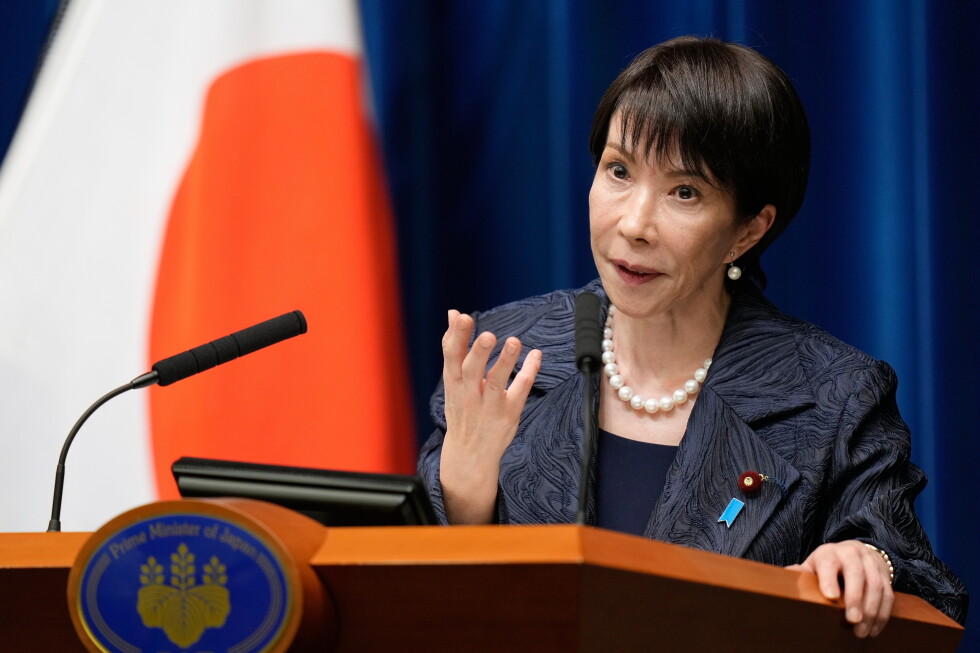
    TOKYO – Japan’s Ministry of Defense has laid out its preliminary 8.9 trillion yen ($55.6 billion) defense budget request for the 2025 fiscal year, outlining a sweeping shift toward integrating cutting-edge uncrewed weapons, artificial intelligence and modern combat tactics into the country’s national defense strategy. The request represents only a minor uptick from the 8.8 trillion yen proposal for the current fiscal year, but the final total is expected to grow substantially later in 2024, after Prime Minister Sanae Takaichi’s cabinet signs off on an updated national security and defense framework focused on expanding Japan’s counterstrike capabilities.

    This new investment push aligns with a 2022 five-year defense roadmap that committed Japan to doubling its defense outlay to 2% of gross domestic product, a major shift that redefines the Japan Self-Defense Forces (JSDF) to take on a more robust offensive posture in response to China’s growing regional influence. Beijing has repeatedly pushed back against this military buildup, labeling it a resurgence of dangerous 20th century Japanese militarism.

    In official briefing materials accompanying the budget request, the Defense Ministry emphasized that the core goal of this proposal is to deliver a “transformative overhaul of defense capability” to drastically strengthen deterrence and response capacities, drawing direct lessons from the widespread use of drones in the ongoing war in Ukraine.

    ### Uncrewed Weapons to Cut Costs, Offset Demographic Decline
    A central pillar of the new strategy is the domestic development and mass production of low-cost uncrewed weapons systems. Defense officials argue that these tools will not only reduce operational costs and troop casualties, but also help build a far more cost-effective layered air defense network.
    Under the plan, attack drones will operate in coordinated tandem with long-range cruise missiles to amplify the effectiveness of counterstrike operations. The ministry has also requested unspecified funding to develop submarine-launched and underwater-deployed attack drones by the 2027 fiscal year. Beyond combat effectiveness, uncrewed systems are seen as a critical solution to Japan’s growing demographic crisis: a rapidly aging and shrinking population has driven a steady decline in available military personnel, a gap drones can help fill.
    Despite these ambitions, defense industry experts note a major barrier to full domestic drone production: Japan’s commercial drone market is currently dominated by Chinese imports, and building a competitive, fully homegrown supply chain will require years of targeted investment and policy support. The proposal also continues Japan’s multi-year effort to fortify its southwestern island chain near disputed regional territories, with additional funding for extended-range missiles and defensive interceptor systems, alongside new research into submarine-launched hypersonic weapons to further boost counterstrike capacity.

    ### AI Integration to Modernize Command and Control
    To match the new generation of weapons technology, the Defense Ministry is rolling out a major overhaul of its command and decision-making infrastructure through the integration of artificial intelligence. The core of this push is a planned next-generation system called the “AI orchestrator,” a unified platform that will integrate multiple independent AI tools to enable autonomous system selection and operational management. The goal is to drastically cut down decision-making time and improve accuracy across core battlefield functions, from situational assessment to target selection.
    Officials confirmed Japan is exploring multiple pathways for AI development: it may adapt proven foreign AI technologies (including systems developed by the United States), scale up indigenous AI research, or combine the two approaches to meet JSDF requirements. The ministry also plans to build a purpose-built “Defense Ministry cloud” infrastructure to enable secure transmission of highly sensitive classified data and maintain stable communications during emergencies or large-scale natural disasters. No specific cost estimates for these AI and digital infrastructure projects have been released publicly.

    ### Government Intervention to Strengthen a Stagnant Domestic Defense Industry
    To sustain long-term military modernization, Japanese officials have also identified a critical need to shore up the country’s domestic defense industrial base. For decades, the sector has struggled under multiple constraints: Japan’s post-war constitution limits military activity to self-defense only, creating an uncertain business outlook for arms manufacturers. Poor profit margins, combined with reputational risks associated with producing lethal weapons, have driven dozens of major suppliers to exit the defense sector over the past 50 years.
    While recent military expansion has lifted profits at Japan’s largest defense contractors, including Mitsubishi Heavy Industries, Kawasaki Heavy Industries and IHI Corp., the broader supply chain remains fragile and at risk of critical component shortages if existing suppliers exit the market.
    To address this risk, the Defense Ministry has requested unspecified funding to launch a new public-private production framework: the government will own key defense manufacturing facilities, while contracting out day-to-day operations to private sector firms. This model is designed to guarantee stable production and supply of critical defense equipment. The budget request also includes targeted funding to support private companies’ defense research and development, as well as corporate restructuring to improve production efficiency and competitiveness across the sector.

  • Survivors of Cypriot ferry disaster describe terror and panic aboard sinking ship

    Survivors of Cypriot ferry disaster describe terror and panic aboard sinking ship

    Just hours after a passenger ferry capsized in waters off the breakaway Turkish Cypriot coast, leaving at least eight people dead and 18 others unaccounted for, survivors shared harrowing firsthand accounts of chaos and panic as they fought to escape the sinking vessel on Monday.

    The incident unfolded Sunday afternoon, when the ship carrying 267 passengers and crew departed Kyrenia – also called Girne in Turkish – the main northern Cypriot port, bound for the Turkish coastal town of Tasucu. Roughly 7.5 kilometers from the Cypriot shore, the vessel suddenly began to list and take on water after passengers reported hearing a series of loud bangs originating from lower decks. It ultimately capsized, triggering a massive cross-border rescue operation involving Turkish coast guard vessels, military assets, and local first responders from northern Cyprus.

    Serkan Kunduraci, one of the passengers who survived by climbing through a cracked window to escape the sinking hull, described scenes of utter despair unfolding in the frigid water to Turkey’s DHA news agency. “I saw people who couldn’t swim drown right in front of me,” he said. “Some people were too panicked to even grab a life jacket, others jumped straight into the sea out of blind fear. We tried to pull an elderly man to safety, but we couldn’t reach him in time – he drowned too. We watched whole families, young boys and little girls, drown out in the open water.”

    Kunduraci added that the crew initially downplayed the severity of the issue after inspecting the leak, telling passengers the problem was nothing more than a loose gasket. By the time the evacuation order was issued, widespread panic had already broken out. He explained that the captain attempted to steer the listing vessel back to Kyrenia port, but the tilt only grew steeper as more water flooded the hull. “There was screaming everywhere, and dozens of people were trapped in the rear of the ship, blocked by piles of other passengers who couldn’t get out,” Kunduraci said. “The people crushed underneath never made it out.”

    Another survivor, Deniz Ozpolat, echoed those accounts of chaos, noting that crowds rushed the exits before anyone could issue clear directions. “We tried to get to the exit, but there was already a massive crush of people,” he told DHA. “We couldn’t find any life jackets, and at first the doors were shut on us, trapping us inside. When they finally opened, we jumped into the water. The ship tilted sharply and went down not long after. We had to break windows to pull other people out, and we saw whole families with small children stranded out in the water.”

    Local rescuer Muhammed Ozcelik, who operates a nearby water sports company and was among the first responders to reach the capsized vessel, said his crew pushed their small boat far past its safe capacity to pull as many survivors from the water as possible. “We tried to do everything we could, more than we were able to,” Ozcelik said. “People were begging to be pulled aboard, shouting ‘take me too’, but our boat was already past capacity. We still took on as many as we could – everyone was fighting just to stay alive.”

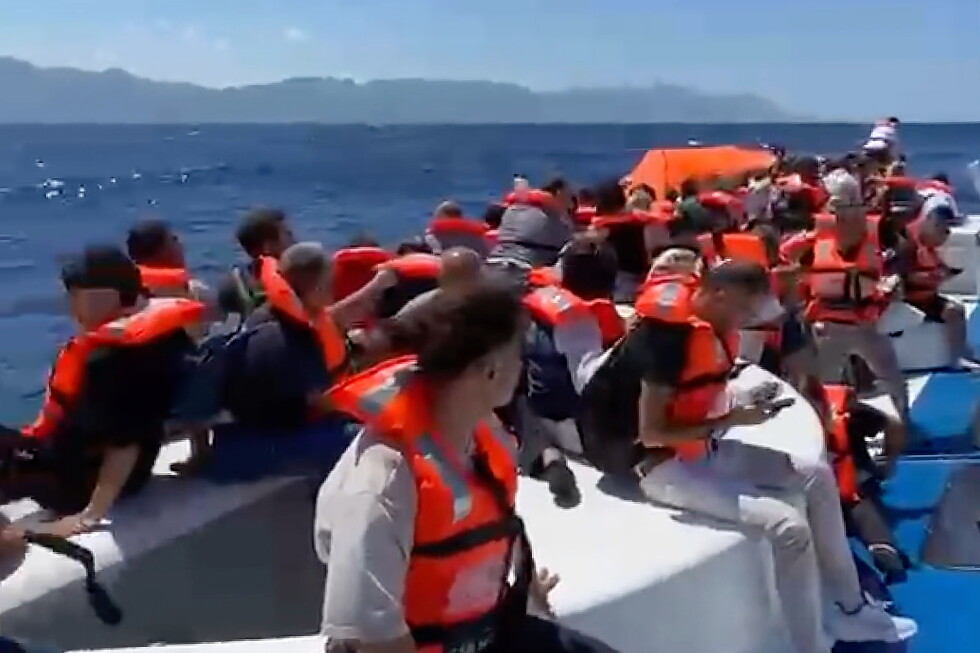
    Footage broadcast on Turkish media outlets showed survivors clad in bright orange life vests standing on the overturned hull of the ferry, which is owned by Turkish maritime operator Filo Denizcilik, waiting for rescue. Many survivors were later brought to shore aboard small local pleasure craft that joined the rescue effort.

    Unal Ustel, prime minister of the self-declared Turkish Republic of Northern Cyprus – a breakaway entity recognized only by Turkey – announced late Sunday that a full formal investigation into the disaster has been launched, and all eight crew members of the ferry have been taken into custody. “Every single detail of this incident will be probed thoroughly,” Ustel said. “Even the smallest act of negligence will be uncovered, and anyone found responsible for what happened will face consequences.”

    Ustel added that Turkish authorities were providing full support for the ongoing search and recovery operation for the 18 missing passengers, and described the incident as the deadliest maritime disaster in the recorded history of Cyprus. This disaster comes amid the long-standing division of the island of Cyprus, which has been split along ethnic lines since a 1974 Turkish invasion. Turkish Cypriots declared independence in 1983, and Turkey maintains a deployment of more than 35,000 troops in the northern region.

  • Algeria president seeks death penalty for arsonists after deadly forest fires

    Algeria president seeks death penalty for arsonists after deadly forest fires

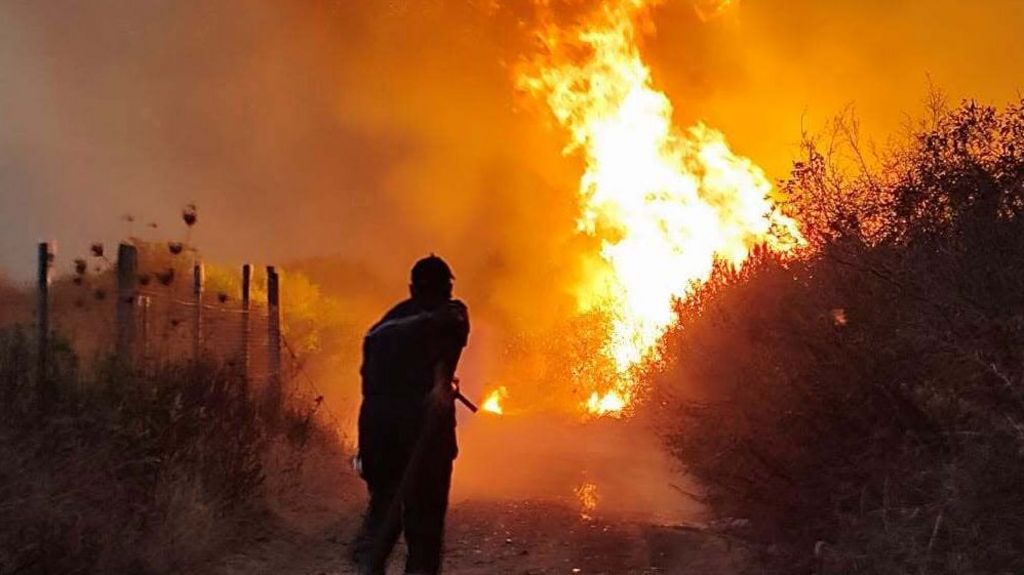
    A devastating outbreak of more than 100 wildfires across northeastern Algeria has left at least 12 people dead, dozens injured, and thousands of residents displaced, prompting the country’s president to announce a sweeping policy shift that would reinstate capital punishment for intentional arsonists.

    In public remarks following the crisis, President Abdelmadjid Tebboune confirmed he is not ruling out the possibility of deliberate foul play behind the unusually intense wave of fires, which swept through large swathes of northern Algeria amid a record-breaking heatwave across North Africa that has also hit neighboring Tunisia hard. While more than 90 percent of the blazes recorded in the 24 hours leading up to Sunday had been extinguished by civil emergency teams, crews continued to battle active hotspots as of Sunday afternoon.

    Tebboune has issued a formal deadline of September 15 for the country’s justice ministry to draft amendments to Algeria’s criminal code that would introduce the death penalty for anyone convicted of intentionally igniting wildfires in forested areas. Currently, the maximum penalty for deliberate arson in Algeria is 30 years imprisonment, with life sentences reserved for the most extreme cases. Though capital punishment remains on the books for a small number of offenses in Algeria’s existing penal code, the country has not carried out any executions since 1993.

    Alongside the proposed legal changes, the president has ordered immediate support for affected communities: compensation for impacted families, full repairs to damaged residential properties, and rapid restoration of damaged critical essential services. Official investigations are also set to be launched to fully document the scope of damage and losses caused by the wildfires, as well as to probe the origins of the blazes, particularly given their unexpected intensity.

    Wildfires are a regular seasonal occurrence in Algeria during the hot summer months, but scientists and observers note that climate change has steadily amplified the frequency and severity of these events across the Mediterranean region in recent years, increasing the risk of large, destructive outbreaks that are harder for emergency teams to contain.

  • ‘Moonies’ church leader jailed for two years over bribery offences

    ‘Moonies’ church leader jailed for two years over bribery offences

    In a landmark ruling that has sent shockwaves through South Korean political and religious circles, 83-year-old Han Hak-ja, the current leader of the highly controversial Unification Church, has been sentenced to two years behind bars over charges of bribing former South Korean first lady Kim Keon Hee and committing multiple violations of political funding regulations. The Seoul Central District Court delivered the sentence on Monday during a public sentencing hearing that Han attended in person, marking the culmination of a high-profile probe into opaque ties between the religious group and national political elites.

    The court found clear evidence that the Unification Church, led by Han, provided Kim Keon Hee — wife of ousted South Korean president Yoon Suk Yeol — with luxury gifts valued at a total of 80 million won (equivalent to approximately $57,900 and £42,500): two high-end Chanel handbags and a diamond necklace. This conviction follows an earlier ruling from earlier this year, where Kim Keon Hee herself was sentenced to 20 months in prison after being found guilty of accepting the improper bribes from the religious organization.

    Han, who is the widow of Unification Church founder Sun Myung Moon, has maintained a consistent stance of denying all allegations against her throughout the investigation and trial, dismissing the charges as entirely fabricated. A special independent counsel team assembled specifically to investigate this case outlined that the luxury gifts were transferred to Kim between April and July 2022, in exchange for promised business advantages and political favors for the church and its affiliated entities.

    Prosecutors emphasized that this investigation marks the first time South Korean law enforcement authorities have formally verified and documented the Unification Church’s deliberate efforts to purchase political influence within the country. As part of the probe, investigators also uncovered $19 million (£14 million) in cash stored inside a personal safe owned by Han, photos of which have been released to the public.

    Kim has publicly acknowledged receiving the Chanel handbags, but has claimed that she returned the items before ever using them. When called in for questioning last August, Kim issued a public apology to the South Korean public, stating, “I am truly sorry that a nobody like me has caused concern to the people.”

    The Unification Church, officially registered under the name The Family Federation for World Peace and Unification, was established in South Korea in the 1950s by Sun Myung Moon, who publicly claimed to be the messiah. The group gained global attention primarily for its large-scale mass wedding ceremonies, where thousands of couples were blessed and married by Han and Moon in massive stadium venues. For decades, critics have labeled the organization as cult-like, with legal representatives of former members alleging that it coerces followers — colloquially referred to by critics as “Moonies,” a term most church members reject as offensive — into making exorbitant monetary donations to the group.

    The Unification Church was thrust into the global spotlight in 2022 following the assassination of former Japanese prime minister Shinzo Abe. The suspect who assassinated Abe publicly blamed the organization for ruining his family’s finances, and held Abe responsible for his alleged public support of the group. The church has long claimed to have extensive political connections across multiple world capitals, including Seoul, Tokyo, and Washington D.C. In 2021, a range of high-profile global political figures sent pre-recorded video messages to congratulate the launch of the church’s new policy think tank; the list included former U.S. President Donald Trump, former U.S. Vice President Mike Pence, Shinzo Abe, and the mayors of South Korea’s two largest cities, Seoul and Busan.

    Currently, the group is banned entirely in multiple jurisdictions around the world, including Singapore. Last year, Japanese courts ordered the Unification Church to be formally dissolved in the country, following years of public outcry over predatory fundraising practices.

  • Everything you need to know about the 2026 Venice Film Festival

    Everything you need to know about the 2026 Venice Film Festival

    The world’s oldest major film celebration, the 83rd Venice Film Festival, is set to open its doors to A-list celebrities, acclaimed filmmakers, and awards hopefuls on Wednesday on the Italian island of Lido, kicking off the annual fall festival circuit in typical high-profile fashion.

    Widely ranked as the second most prestigious film festival on the global calendar, trailing only Cannes, the Venice Film Festival carries a long, storied history dating back to its 1932 founding as a non-competitive event under the umbrella of La Biennale di Venezia. Early screenings included Hollywood classics such as *Grand Hotel* and *It Happened One Night*, before organizers transitioned it to an annual competitive gathering in 1935. Concerns over fascist political influence on the 1938 edition directly spurred the creation of the Cannes Film Festival as an alternative European event. The festival’s iconic top prize, the Golden Lion, was introduced in 1949, and its roll of winners reads as a who’s who of cinema history, from Akira Kurosawa’s 1951 *Rashômon* to last year’s recipient *Father Mother Sister Brother*.

    This year’s 12-day iteration will run through September 12, when the main competition jury, led by American actor and filmmaker Maggie Gyllenhaal, will announce this year’s award winners. The festival opens with Danny Boyle’s *Ink*, a big-screen adaptation of the hit stage play tracking Rupert Murdoch’s early career and controversial acquisition of British tabloid *The Sun*, starring Guy Pearce in the lead role alongside supporting turns from Jack O’Connell and Claire Foy.

    As has become tradition, the 2025 edition draws an extraordinary lineup of global stars, many of whom are attached to buzzy projects already drawing early awards attention ahead of next year’s Oscars. A-list mainstay George Clooney will return to the Lido to accept a lifetime achievement Golden Lion, alongside fellow honoree Ellen Burstyn. Other notable guests confirmed to attend include Oasis’ feuding Gallagher brothers Noel and Liam, sisters Rooney and Kate Mara, Robert Pattinson, Penélope Cruz, Javier Bardem, Pamela Anderson, Sam Rockwell, John Malkovich, Louis Garrel and *Parasite* star Cho Yeo-jeong.

    Among the narrative competition titles, the most heavily anticipated is Martin McDonagh’s dark comedy *Wild Horse Nine*, which follows two CIA operatives in the lead-up to the 1973 Chilean coup, with Rockwell and Malkovich in the lead roles. McDonagh’s two prior works, *Three Billboards Outside Ebbing, Missouri* and *The Banshees of Inisherin*, both premiered at Venice before going on to earn Oscar best picture nominations, cementing expectations for this latest entry. The lineup also includes Florian Zeller’s psychological drama *Bunker* starring real-life couple Cruz and Bardem; Werner Herzog’s *Bucking Fastard* featuring the Mara sisters as twin siblings; and revered South Korean filmmaker Lee Chang-dong’s first feature in eight years, *Possible Love*. Robert Pattinson will draw headlines for his portrayal of former *To Catch a Predator* host Chris Hansen in *Primetime*, a project that has already drawn attention for being produced without Hansen’s participation.

    The documentary lineup is equally high-profile, anchored by Oscar-winning documentarian Alex Gibney’s nearly four-hour deep dive into billionaire Elon Musk, titled simply *Musk*. Other nonfiction entries include Julia Loktev’s continuation of her portrait of independent Russian exiled journalists in *My Undesirable Friends: Part II — Exile*, and *Oasis: Don’t Look Back in Anger*, which follows the Gallagher brothers on their highly anticipated 2025 reunion tour. A last-minute addition to the competition lineup also includes *NAZA*, a documentary focusing on the Gaza Strip.

    For all its cinematic glamour, the 2025 festival has not escaped the geopolitical tensions that have increasingly disrupted global cultural events in recent years. The most prominent controversy centers on Ilya Khrzhanovsky’s competition entry *DAU*, a project exploring the lives of Soviet atomic physicists. Ukraine’s foreign ministry, culture ministry and Italian embassy have publicly condemned the film’s inclusion, arguing it is tied to Russian state and its influence networks. Festival director Alberto Barbera has pushed back against the criticism, defending the selection in an official statement noting the film “is not a Russian film. It is not pro-Putin propaganda. It is a film that denounces totalitarian regimes and their intrusion into citizens’ lives to restrict their freedom.” Khrzhanovsky has also publicly rejected the claims, stating his opposition to Russia’s full-scale invasion of Ukraine and calling for the film to be judged on its content rather than unsubstantiated associations. The controversy follows similar unrest at the 2025 Venice Biennale art exhibition earlier this year, where the entire jury resigned in protest over the participation of Russian and Israeli artists.

    A second activist campaign, organized by the group Venice4Palestine, is calling on the festival to suspend all formal agreements with Israeli government-linked institutions and fly the Palestinian flag across festival venues throughout the event. Two Palestinian independent films are included in the 2025 official selection. The festival has also faced criticism over gender representation in its main competition: out of 21 features competing for the Golden Lion, only one, *Woman Unknown* directed by May el-Toukhy, is helmed by a woman filmmaker. This marks the first time since 2018 that the competition has included just one woman-directed feature, despite a 2018 commitment from organizers to reach 50% women-directed competition entries by 2020, a goal that has yet to be met.

    Beyond the red carpets and controversies, the festival retains its unique character as a cinematic event hosted on Lido, a 11-kilometer barrier island located a 20-minute vaporetto ride from Venice’s historic central districts. Once a 12th-century military outpost, Lido transformed into a luxurious seaside resort popular with European aristocrats by the late 1800s, and served as the setting for Thomas Mann’s classic novella *Death in Venice* and its 1971 film adaptation by Luchino Visconti. Many A-list guests stay in luxury hotels across Venice’s surrounding islands, from the iconic Hotel Excelsior (the only five-star property on Lido) to the Hotel Cipriani on Giudecca, the Gritti Palace, and the Aman Venice — the venue where George and Amal Clooney married in 2014. Most celebrities arrive at premieres and press events via private water taxi, with short trips from nearby hotels sometimes made by sponsored car, a rarity in car-free central Venice.

    Beyond glamour and controversy, the Venice Film Festival has cemented itself as one of the most influential stops on the road to the Academy Awards. Festival director Barbera has traced this reputation back to the 2013 premiere of *Gravity*, which went on to win seven Oscars months later. As the Academy of Motion Picture Arts and Sciences has grown more internationally diverse, Venice’s influence on the Oscar race has only expanded: since 2014, four best picture Oscar winners have premiered at the festival, and 2024’s lineup produced two best picture nominees. With this year’s packed slate of star-driven, critically acclaimed projects, that streak looks set to continue.

    The jury for the 2025 main competition includes Gyllenhaal alongside Tunisian filmmaker Kaouther Ben Hania, English composer Daniel Blumberg, French filmmaker Xavier Giannoli, Afghan filmmaker Shahrbanoo Sadat and Hong Kong auteur Johnnie To. All award winners will be revealed during the closing ceremony on September 12.

  • US futures fall and oil prices surge after US hits Iranian sites in the Strait of Hormuz

    US futures fall and oil prices surge after US hits Iranian sites in the Strait of Hormuz

    Global financial markets swung sharply on Monday after U.S. forces carried out the first direct military action against Iranian rocket launchers in the Strait of Hormuz in a month, ending a weeks-long lull in regional tensions and stoking new fears of broader conflict in the oil-rich Middle East.

    The targeted strike, which came on Sunday, has upended recent market calm that had begun to reduce the geopolitical risk premium baked into global crude prices. As of early Monday trading, U.S. stock futures pointed to clear downward momentum: futures tied to the S&P 500 and the Dow Jones Industrial Average each dropped 0.2%, while Nasdaq 100 futures slipped a more modest 0.1%. European markets followed the negative trend, with Germany’s DAX index falling 0.8% to 26,364.99 and France’s CAC 40 edging slightly lower to 8,399.55. British markets were closed for a national bank holiday, and Asian markets finished the trading day mixed. The U.S. dollar edged down slightly against the Japanese yen, falling to 159.72 yen from 160.10 yen, while the euro ticked up modestly to $1.1602 from $1.1580.

    The most dramatic market movement came in the energy sector, where crude prices surged in response to renewed geopolitical risk near the Strait of Hormuz, a critical chokepoint through which roughly a fifth of global oil supplies pass daily. International benchmark Brent crude jumped 3.4% to reach $91.10 per barrel, while U.S. domestic benchmark West Texas Intermediate crude rose 3.6% to trade at $86.40 per barrel. Stephen Innes, a strategist at SPI Asset Management, noted that the strike shattered the quiet that had allowed traders to start rolling back geopolitical risk pricing. “The Middle East had finally gone quiet enough for oil traders to start sanding some of the war premium out of crude,” Innes wrote in a market note. “Then Sunday arrived, with a reminder that quiet in the Strait of Hormuz is not the same as peace.”

    Along with the geopolitical shock, the Trump administration has rolled out new economic measures targeting Iran, amplifying market concerns over the potential for further escalation of hostilities that could disrupt global energy supplies. For U.S. consumers, the price jump has already translated to record-high fuel costs this month: AAA data shows the national average gasoline price has stayed above $4 per gallon every single day in August, marking the most expensive August for gasoline on record. This milestone outpaces even the severe supply chain disruptions that pushed fuel prices higher during the COVID-19 pandemic in August 2022, creating additional widespread economic pressure on households both in the U.S. and around the globe.

    Not all equities moved downward on Monday. GameStop, the video game retail chain, saw its shares surge more than 5% in pre-market trading after the company released preliminary second-quarter earnings results that outperformed its year-ago performance. On the other hand, professional services firm Aon saw its share price dip slightly after the company announced it would acquire insurance broker USI Insurance Services from private equity firm KKR in a $17 billion deal that includes assumed debt.

    Beyond the immediate geopolitical shock, markets are also bracing for two key coming events: the release of U.S. August jobs data later this week, and a potential interest rate hike from the U.S. Federal Reserve. July’s jobs report delivered an unexpected slowdown, with employers cutting 23,000 jobs, and revised Labor Department data later slashed an additional 103,000 jobs from May and June payrolls. The Fed, meanwhile, signaled its continued commitment to lowering inflation in a high-profile speech Friday by Fed Chairman Kevin Warsh at the annual Jackson Hole economic symposium in Wyoming, even acknowledging that the policy would likely bring short-term economic pain. Following Warsh’s remarks, the yield on the two-year Treasury note, which closely tracks investor expectations for Fed policy, jumped to 4.35% from 4.22% before the speech.

    The Fed’s potential rate hike sets up a new clash with President Donald Trump, who appointed Warsh and has repeatedly pushed publicly for lower interest rates to boost economic growth. Warsh reaffirmed Friday that the central bank will move away from giving explicit forward guidance to markets about future policy moves, while emphasizing that short-term interest rates remain the Fed’s primary tool to pursue its dual mandates of stable low inflation and a strong labor market.

    In alternative asset trading, Bitcoin extended its monthly rally on Monday, climbing roughly 1% to $78,625. The leading cryptocurrency has already gained roughly 25% so far this month, outperforming many traditional asset classes amid ongoing market volatility.

  • Rescue efforts continue on both sides of Nepal-Tibet border

    Rescue efforts continue on both sides of Nepal-Tibet border

    In the wake of devastating flash floods that have swept across the shared border region between Nepal and China’s Tibet Autonomous Region, coordinated rescue operations are accelerating on both sides, as emergency responders race against time to locate missing people trapped by the disaster.

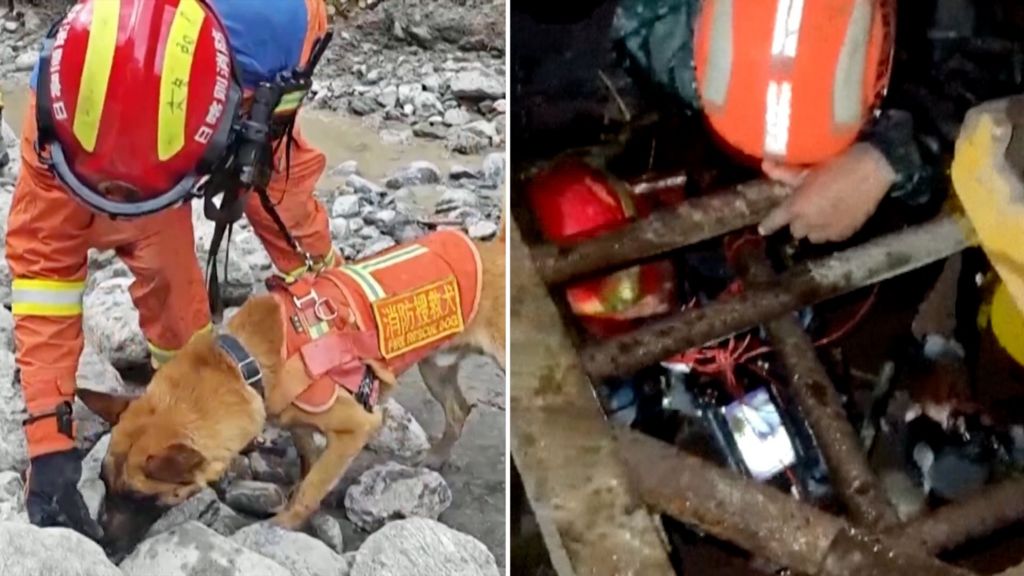
    On the Tibetan side of the border, specially trained search-and-rescue canines have been deployed to comb through waterlogged terrain, mudslides, and debris-strewn areas in a persistent hunt for flood victims. The challenging topography of the Himalayan border region, combined with lingering flood-related hazards, has complicated search efforts, but teams have continued operations around the clock to maximize the chance of finding survivors.

    Meanwhile, in Nepal, emergency management officials and response teams have worked nonstop through the night at a hydropower plant located near the border, where official counts indicate hundreds of people remain unaccounted for following the flood surge. The disaster, which struck without much warning, swept through infrastructure and residential areas along the border, leaving widespread disruption and a trail of missing persons that has stretched local response capacity.

    Cross-border communication has remained active as both sides coordinate to address the aftermath of the flood event, with additional resources being mobilized to support the ongoing search and rescue missions.

  • ‘I adopted stray cats I fell in love with on holiday’

    ‘I adopted stray cats I fell in love with on holiday’

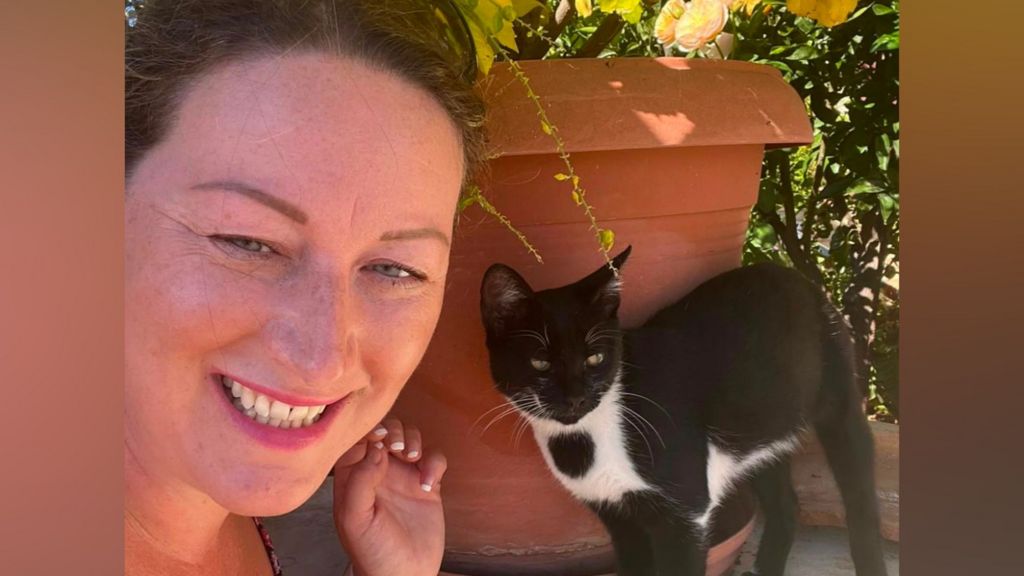
    For most tourists, a Mediterranean holiday is all about sun, sea, and relaxation. For UK cat lover Eve Gaut, a 24-hour stop in the Cretan village of Sissi in September 2023 changed the lives of two tiny stray kittens – and transformed her own approach to animal welfare.

    Gaut, a resident of Shropshire, had long made a habit of feeding stray cats during her travels, often pained by seeing them scavenge through garbage bins for leftover food to survive. But when two orphaned black-and-white kittens bounded up to greet her immediately after she stepped out of her rental car, the encounter struck a chord she never expected.

    “It sounds crazy, I just felt this connection,” Gaut recalled. “Stavros was meowing nonstop, and I just got the feeling he was asking me for help. I knew right then that if we could get them back to the UK, we could give them a far better life than they could ever have on the streets.”

    The two kittens, who would later be named Stavros and Nikos, were brothers whose mother had been killed by a passing car. Their situation reminded Gaut of the two cats she already had at home, and for the rest of her stay, the pair followed her everywhere around the village while she shared what food she could spare. But constant worry for their safety lingered: watching the tiny kittens dart across busy roads, dodging vans and motorbikes, left Gaut terrified that they would meet the same fate as their mother. By the end of her trip, she had made up her mind: “I love these cats, and I’m going to save them,” she told her husband.

    Gaut immediately began coordinating the rescue, reaching out to local Greek animal rescue charities to get help. After she returned to the UK, a local volunteer used the photographs she had left behind to track down and capture the two brothers, kicking off the formal rehoming and relocation process. After months of veterinary care – totaling more than £1,500, which covered vaccinations, microchipping, and treatment for health issues – a period of foster care in Greece, and coordinated international transport, Gaut was finally reunited with Stavros and Nikos in January 2024.

    Against all odds, the transition went smoothly. “They both adapted incredibly well,” Gaut said. “They’re super affectionate, and they eat nonstop – I think they still remember what it was like to never know where their next meal would come from. They’ve just been such wonderful additions to our home, and everyone adores them.”

    Stavros and Nikos’ happy ending is far from the norm for the hundreds of thousands of stray cats living across Southern Europe, however. According to International Cat Care, an animal welfare nonprofit, uncontrolled breeding has left Mediterranean holiday destinations facing what the organization calls an overwhelming stray cat population crisis. On the island of Cyprus alone, estimates suggest there are as many as 2 million stray cats – more than the country’s entire human population of 1.2 million.

    Harry Eckman, global advisor on cat population management for International Cat Care, says he understands the impulse animal lovers feel when they bond with a stray during a trip. “There is an enormous unmet need for help for these animals, and the scale of the problem is huge,” he explained. But he also cautions that bringing a stray cat home isn’t always the best choice for the animal, urging travelers to prioritize the cat’s needs over their own emotional impulse. “A cat that’s happy to sit on your hotel balcony and take food and scratches from you isn’t necessarily going to be happy living inside a home in another country,” he said. “Uprooting a cat from its familiar environment, especially if it’s never lived indoors, can cause incredible stress and distress.”

    In many regions, well-managed community cat programs already provide the best long-term care for stray populations. In these managed colonies, cats are neutered (marked by a clipped ear to signal the procedure), provided with regular food and veterinary care by local volunteers, and allowed to live out their lives in the territory they know. For example, the Portuguese capital of Lisbon has more than 1,300 registered managed cat colonies, with local residents overseeing their ongoing care.

    Eckman’s advice for travelers who want to help is simple: support local efforts rather than trying to rescue cats on your own. “In every destination you visit, there are already local people and organizations working as hard as they can to help these cats,” he said. “Seek out those local groups, and offer your support – that will make a massive difference not just for the one cat you met, but for hundreds and thousands of cats over months and years to come.”

    Gaut agrees with that guidance, acknowledging that not every stray cat relocation works out well, and many cats are better off remaining in their native environment. “Mine is a happy story, but I’ve heard so many sad ones where people brought a cat home and it didn’t work out,” she said. “You have to be realistic about what’s best for the animal.”

    Since bringing Stavros and Nikos home, Gaut has continued to help stray cats on her visits to Greece, spending hundreds of pounds of her own money on cat food and encouraging local residents to take more action to care for strays. On a recent trip to the Greek island of Andros, she tracked down the owner of a property where she spotted a severely ill kitten, convinced him to take the animal to a vet for treatment, and covered the cost of care herself.

    “It breaks my heart every time I go back to Greece, because when I see the street cats, all I can think is that this was the life Stavros and Nikos were going to have,” she said. “Sometimes I wonder if I should even go back, because it doesn’t feel like a holiday when you see all that suffering. But if I don’t go, I’m just turning my back on the problem, and every small bit of help counts. Realistically, there aren’t enough homes in Greece for all these stray cats, or they wouldn’t be on the streets in the first place.”