博客

  • Salesman Trump leaves China with very little in his bag

    Salesman Trump leaves China with very little in his bag

    For former US President Donald Trump, few experiences rankle more than being overshadowed – especially during a high-stakes appearance on one of the most prominent stages of his second presidential term: Beijing. While Trump’s inner circle has pushed back against the idea, Nvidia CEO Jensen Huang did exactly that during Trump’s long-awaited trip this week, a reality that has not gone unnoticed by global financial markets.

    As analysts predicted, the first visit by a sitting US president to Beijing in eight years delivered abundant ceremonial fanfare, but few tangible diplomatic breakthroughs. Chinese President Xi Jinping extended enough concessions to allow Trump to frame the trip as a success back in Washington, including agreements to explore cooperation to ease trade tensions and, critically, pursue an end to the ongoing war in Iran.

    The real center of attention, however, was Trump’s delegation of more than 30 chief executives, whose combined companies hold a total market capitalization of roughly $20 trillion – a sum equivalent to China’s entire annual gross domestic product. This corporate entourage, assembled to push for greater access to the world’s second-largest economy, ultimately drew more global attention and interest than the summit’s headlining political leader, who has long craved the spotlight.

    No corporate leader captured more attention than Huang, a last-minute addition to the delegation who joined the presidential delegation mid-journey, catching up to Air Force One at a refueling stop in Alaska. Huang’s late inclusion has been widely interpreted as a sign that the Trump administration is going to great lengths to accommodate Beijing, as the chip giant seeks regulatory approval to sell its cutting-edge H200 AI chips to Chinese buyers.

    Amanda Hsiao, an analyst at Eurasia Group, notes that Huang’s last-minute participation makes a potential near-term announcement of Chinese approval for a first batch of H200 chip imports far more likely than previously expected – a shift that runs counter to earlier market projections.

    This development carries major implications for the global AI boom that has pushed global stock markets to record all-time highs. For Trump’s Beijing trip, Huang’s progress could end up being the most durable achievement of the entire visit. A breakthrough on AI chip trade would be a landmark win for Nvidia, which is currently approaching an unprecedented $6 trillion market valuation.

    While the summit produced preliminary talks of Boeing aircraft orders, increased Chinese purchases of US soybeans, and a reciprocal visit by Xi to Washington later this year, the most pressing high-stakes issues – including unfettered access to Chinese rare earth minerals, coordinated AI governance standards, and reopening the Strait of Hormuz to commercial shipping – were deferred to future negotiations.

    As former US Congressman Adam Kinzinger observed on his YouTube channel, Xi received Trump like a polite host entertaining a salesperson, and that particular salesperson appears to be returning to the US with very few concrete deals to show for the trip.

    At this stage, global markets are in a holding pattern. It will be several months before it becomes clear whether the diverse delegation of tech, finance, and defense executives – which also includes Tesla’s Elon Musk, Apple’s Tim Cook, and the leaders of Boeing, Citi, and Goldman Sachs – will deliver tangible results from the meetings.

    One major wild card is that Trump enters these negotiations with far less political and economic leverage than he anticipated at the start of 2026. Much of the outcome hinges on whether Trump’s increasingly unpredictable White House avoids disruptive new policies, such as additional sweeping tariffs on Chinese goods, an escalation of the Middle East conflict, or other sudden policy shifts that could roil global markets.

    During his meeting with the US corporate delegation, Xi affirmed that China would continue opening its domestic economy to foreign investment. Trump described his bilateral talks with Xi as “great” and struck a broadly optimistic tone in public remarks, and the warm, welcoming visual of the summit has already provided a modest boost to global investor sentiment.

    Beneath the positive optics, however, significant uncertainty remains. Xi issued a stark warning that mismanagement of the Taiwan question could lead to direct military confrontation, a statement that served as a clear wake-up call for geopolitical risk analysts. The moment also put Trump in an awkward position: standing alongside Xi, he declined to even respond to reporters’ questions about the Taiwan issue.

    Economists are also grappling with the implications of Xi’s reference to the “Thucydides trap,” the theoretical risk that a rising power will inevitably go to war with an established ruling power, framing the dynamic between the world’s two largest economies, which together account for $53 trillion in annual GDP. Even as Xi acknowledged this historic risk, he called for building a “constructive, strategic and stable relationship” between the two global powers.

    To be sure, the simple fact that the leaders of the US and China met face-to-face and held constructive dialogue this week is an unambiguous positive for the global economy. That milestone alone counts as a meaningful economic win after years of escalating tensions.

    Yet what has been lost in much of the post-summit coverage is Trump’s defining policy goal across both of his presidential terms: forcing China into a sweeping “grand bargain” trade deal that would pressure Beijing to make deep structural economic concessions. After days of photo opportunities and diplomatic pleasantries in Beijing, that core goal appears more elusive than ever.

    Carlos Casanova, an economist at Union Bancaire Privee, notes that a major diplomatic breakthrough remains improbable in the medium term. “More plausible are modest gestures, including calibrated moves toward a tariff truce in select categories and assurances on critical-materials access,” he explained.

    As US-China working-level talks resume in the coming weeks, rare earths are a top candidate for a small-scale agreement. Chinese rare earth exports surged 197% year-over-year in April, up from just 3.3% growth in March, a trend that highlights both Washington’s dependence on Chinese supplies and Beijing’s gesture of goodwill ahead of the summit.

    Casanova adds that a “mutual understanding to maintain a stable supply in exchange for restraint on punitive measures would be a logical, market-friendly outcome, especially given vast investments in artificial intelligence that have fueled the stellar performance of equity markets in the United States.”

    Still, just as with unresolved tensions around Iran and the Strait of Hormuz, global markets cannot ignore the underlying risks that remain after the 2025 trade escalation. China retains the ability to at any time restrict exports of rare earth minerals, which are critical inputs for electric vehicles, LED displays, lithium-ion batteries, military radar systems, semiconductors, and smartphones.

    Beijing could also choose to deepen its strategic partnership with Iran, including ramping up crude oil purchases from Tehran, providing military equipment assistance, and expanding intelligence sharing. It could also cancel Boeing’s planned 200-plane order, or shift agricultural purchases back to Brazilian soybean suppliers.

    As Trump returns to a White House grappling with internal disarray, his core MAGA base is unlikely to be impressed by the trip’s outcomes. Since taking office for his first term in 2017, Trump has repeatedly promised to force China into a subordinate trade position and demonstrate US dominance. The results so far tell a different story: China’s GDP has grown by $8 trillion since 2017, even amid years of escalating US tariffs and trade restrictions.

    Despite US tariffs reaching as high as 145% on Chinese goods in 2025, China closed the year with a record $1.2 trillion annual trade surplus.

    For Trump, the political calculus is clear: only a high-profile, transformative trade victory over China can justify the last 15 months of tariff volatility, elevated inflation, and economic disruption to his most loyal supporters. The current trip delivered nothing close to that.

    The Iran war that Trump launched alongside Israel in late February further complicated his negotiating position in Beijing. The resulting surge in global oil prices, combined with ongoing inflation from tariffs, has left Trump’s national approval ratings at historic lows.

    Now, he returns to Washington with little more than an agreement to continue talking about a potential framework for a future deal. In the aftermath, the Trump administration is likely to face critical headlines highlighting the gap between Trump’s bold pre-trip rhetoric and the minimal concrete progress achieved in Beijing.

    Additionally, with Republicans facing midterm Congressional elections this November, the party is vulnerable to attacks that it has been too soft on China, given the deference the Trump administration showed to Xi’s inner circle during the summit. Trump also risks being boxed in by the diplomatic agreement he reached with Beijing.

    Bill Bishop, a veteran China analyst who publishes the Sinocism newsletter, points out that Xi’s inner circle “wants a period of strategic detente and this concept could realize that on terms favorable to them for the rest of Trump’s second term.”

    Bishop adds that “any future US moves to address PRC industrial overcapacity, tighten technology controls, etc. could then be cast by Beijing as violations of the new ‘constructive China-US relationship of strategic stability’ to which the two leaders personally agreed.”

    While China faces significant domestic headwinds, including a persistent property sector crisis, Xi has leveraged the Trump era to position China as a more stable global economic partner open for foreign business. It will take time to determine whether this week’s Beijing summit marks another soft power victory for Xi’s economic governance model.

    What is clear is that Xi will need to do more to convince American households, already grappling with persistent inflation, that China has not undercut US economic interests at home.
  • Takeaways from Trump’s trip to China: Taiwan, a new framework for relationship and flattery for Xi

    Takeaways from Trump’s trip to China: Taiwan, a new framework for relationship and flattery for Xi

    After three days of uncharacteristic public restraint during his official visit to China, former U.S. President Donald Trump broke his silence on the most sensitive topic of the trip only after departing Beijing for Washington. What was expected to center heavily on trade and the U.S.-Israel conflict in Iran instead became dominated by urgent discussion of Taiwan, the flashpoint that continues to shape the core of U.S.-China bilateral relations.

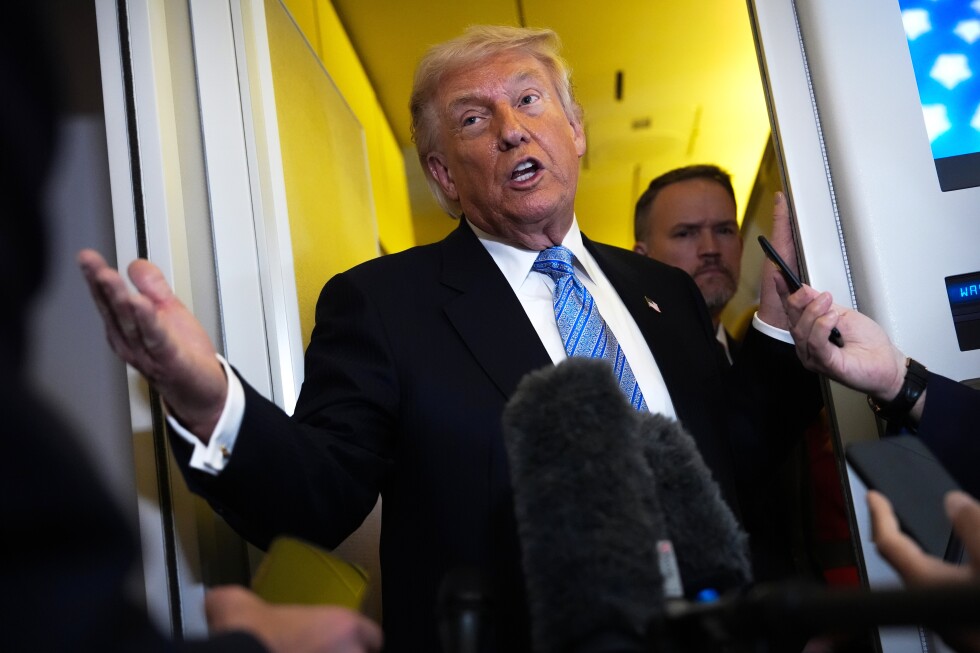
    Chinese President Xi Jinping opened the high-stakes summit with a clear, firm warning: any misstep by Washington in its approach to the self-governing island, which Beijing claims as an inalienable part of its territory, could lead to open confrontation between the two global powers. While Trump made no public response to the warning during his time on Chinese soil, he opened up about the conversation to reporters aboard Air Force One once en route home, revealing that Xi’s strong opposition has pushed him to reconsider a previously planned major U.S. arms sale to Taipei.

    ### Taiwan Policy: Strategic Ambiguity Remains, Arms Sale Decision On Hold

    Heading into the trip, Trump had already signaled growing ambivalence toward U.S. support for Taiwan during his second term, sparking widespread speculation that he might scale back long-standing American backing for the island democracy. Secretary of State Marco Rubio had publicly reaffirmed that there was no shift in Washington’s approach, but observers warned that Trump, famous for unscripted off-the-cuff remarks, could trigger unintended major consequences with a single comment. In the end, he remained publicly silent on the issue while in Beijing, even after Xi framed it as the most critical issue in bilateral ties.

    The $11 billion weapons package for Taiwan was authorized by Trump’s Republican administration back in December, but it has not yet been implemented. A separate $14 billion arms sale was approved by Congress in January, and it cannot move forward until Trump formally submits it for congressional review. When asked if he would move ahead with the sale, Trump told reporters: “President Xi and I talked a lot about Taiwan. He does not want to see a fight for independence because that would be a very strong confrontation. I heard him out, but I didn’t make a comment.”

    Trump struggled to recall the name of Taiwanese President Lai Ching-te during the press exchange, and emphasized that “The last thing we need right now is a war that’s 9,500 miles away.” When pressed on whether the U.S. would intervene militarily if China attacked Taiwan, he declined to give a direct answer — a position that aligns with decades of U.S. “strategic ambiguity” policy, which commits Washington to ensuring Taiwan has the means to defend itself but does not explicitly state what military action the U.S. would take if Beijing launches an attack.

    ### Iran Conflict: Beijing Offers Potential Mediation

    The conflict in Iran, initially expected to dominate the summit agenda, was discussed in substantive terms between the two leaders. The war has already driven a sharp spike in global oil prices, and a prolonged conflict threatens to push the global economy into recession. Trump told reporters that Xi agreed a nuclear-armed Iran would pose a dangerous threat to global security, and that both sides agreed the Strait of Hormuz — a critical global oil chokepoint — must be reopened. Trump added that Xi even offered to help broker a diplomatic end to the conflict.

    Chinese officials have not yet confirmed that mediation offer publicly. Beijing’s public stance has been that any resolution must “take into account the concerns of all parties on the Iran nuclear issue.” Trump has argued that China should play a larger role in ending the conflict, given its heavy dependence on energy imports from the Middle East. If Beijing does step up its engagement, it could mark a major breakthrough for U.S. efforts to reach a sustainable resolution to the war.

    ### A New Framework for Bilateral Ties

    Following the summit, Chinese authorities announced that the two leaders had agreed on a new vision for bilateral ties: a “constructive China-U.S. relationship of strategic stability.” According to the Chinese Foreign Ministry, this framework will guide relations for the remainder of Trump’s current term, focusing on expanding areas of cooperation, setting boundaries for competition, and managing differences through dialogue.

    Helena Legarda, a China analyst at the Berlin-based Mercator Institute for China Studies, described the framework as an effort “to keep the relationship on an even keel” after years of rising tensions. George Chen, a partner at global consultancy The Asia Group, noted that this framing represents a shift from the previous Democratic administration of Joe Biden, which framed the U.S.-China relationship primarily as one of strategic competition.

    ### Trade Deals: Big Promises, Few Concrete Details

    Trump traveled to Beijing accompanied by a delegation of top U.S. business leaders, including Boeing CEO, Nvidia chief Jensen Huang, and SpaceX CEO Elon Musk. The president announced that major new trade agreements had been reached, including a pending deal for China to purchase 200 Boeing aircraft. But he left Beijing without any formal, signed announcement of the deal. Earlier proposals for large Chinese purchases of U.S. soybeans and beef also remain pending.

    Speaking to reporters aboard Air Force One, Trump added that China could eventually purchase up to 750 Boeing aircraft if the initial order proceeds smoothly, with 450 General Electric engines included in any expanded deal. Like all large bilateral accords, the final details will determine the actual impact of any agreements. During Trump’s first term, he oversaw a high-profile signing ceremony in Beijing for nearly $250 billion in deals, but not all of the pledges made at that time were ultimately fulfilled.

    ### Diplomatic Tone: Trump’s Unreciprocated Praise for Xi

    From the start of his visit, Trump offered consistent, effusive praise for Xi Jinping, with no matching level of public flattery in return from the Chinese leader. Trump called Xi a “great leader,” said the two countries would share a “fantastic future together,” and described it as an “honor” to be Xi’s friend, calling the Chinese leader “warm.”

    Xi is not known for public effusiveness, and Trump himself acknowledged in a pre-trip Fox News interview that Xi is “all business.” In his public remarks, Xi called Trump’s visit “landmark” and said it had deepened mutual trust, and offered a more subtle gesture of goodwill: he promised to send rose seeds to the White House, matching the variety grown in the garden of his Beijing residence where the two leaders held talks over tea. Xi noted that hosting Trump at the residence was a gesture to reciprocate the hospitality Trump extended when Xi visited his Mar-a-Lago estate in Florida back in 2017.

    Reporting for this article was contributed by Leung in Hong Kong, Mistreanu and Wu in Bangkok, and Superville in Washington.

  • Palestinian ambassador Husam Zomlot to run for Fatah’s central committee

    Palestinian ambassador Husam Zomlot to run for Fatah’s central committee

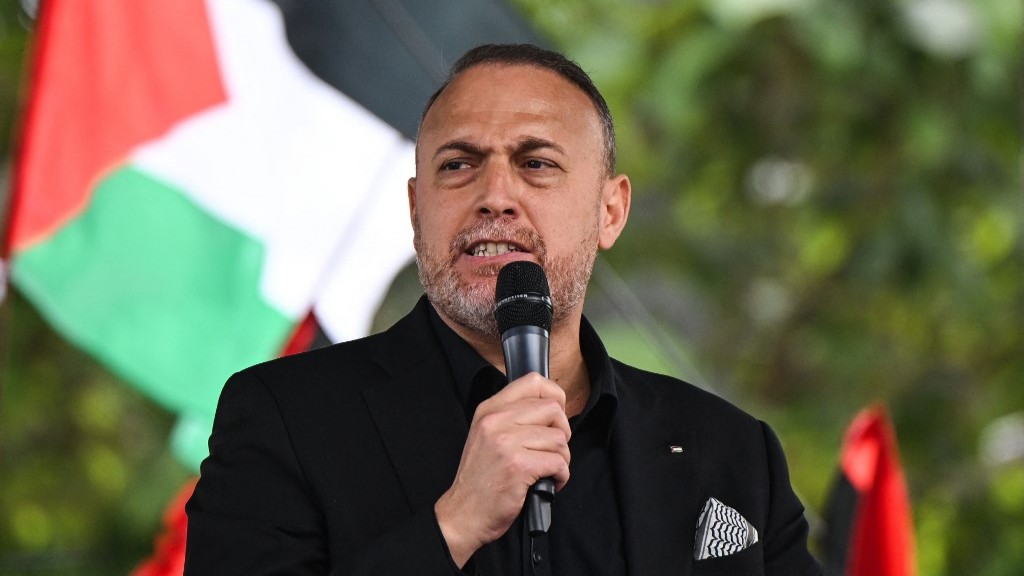
    On the 78th anniversary of the Palestinian Nakba, a landmark date carrying deep collective meaning for displaced Palestinians globally, Husam Zomlot — the long-serving Palestinian ambassador to the United Kingdom — has officially declared his candidacy for a seat on the Central Committee of Fatah, the foundational and most influential Palestinian political movement.

    Zomlot, a Palestinian refugee who was born and raised in the Gaza Strip, shared the formal announcement of his candidacy via his personal Instagram account on May 15, 2026. The date of his declaration was intentionally chosen to align with the annual commemoration of the Nakba, the 1948 event that saw more than 750,000 Palestinians forcibly displaced from their historic homeland during the establishment of the State of Israel, a catastrophe that remains the core trauma of the Palestinian national experience.

    Throughout the ongoing Israeli military campaign in Gaza that has killed tens of thousands of Palestinian civilians and triggered a massive humanitarian crisis, Zomlot has emerged as one of the most visible and articulate Palestinian voices in Western media, consistently advocating for the Palestinian perspective to global audiences. His candidacy has already drawn high-profile backing, including an endorsement from Suha Arafat, the widow of Yasser Arafat — the iconic Palestinian leader who founded Fatah back in 1959. Today, Fatah remains the dominant political force governing the occupied West Bank through the Palestinian Authority (PA), which was established under the 1993 Oslo Accords.

    Muhammad Shehada, a commentator and visiting fellow at the European Council on Foreign Relations, publicly lauded Zomlot’s announcement on the social platform X, formerly Twitter. “Husam has become one of the most prominent Palestinian voices in the West, at the forefront of dismantling decades of lies & myths, leading marches on the streets of London, & excelling at advocacy & strategic communications,” Shehada wrote. “If he succeeds, it’d inject new blood in Fatah & mark a new generation entering the top leadership of Palestinian politics.”

    Fatah has held a central role in Palestinian politics for more than six decades, but the movement’s standing among the Palestinian public has declined sharply in recent years. Critics have pointed to the PA’s security crackdowns on Palestinian militant organizing in the West Bank, as well as its perceived failure to take meaningful action to stop frequent Israeli military incursions and settler attacks on Palestinian communities in the occupied territory. Even amid this dip in popularity, Fatah still retains broad support across Palestinian society, with imprisoned Fatah leader Marwan Barghouti consistently ranked as the most popular political figure among all Palestinians.

    This report was originally published by Middle East Eye, a media outlet that produces independent, on-the-ground coverage of the Middle East and North Africa region.

  • Zaha omitted from Ivory Coast World Cup squad

    Zaha omitted from Ivory Coast World Cup squad

    As the 2026 FIFA World Cup fast approaches, co-hosted by the United States, Canada and Mexico, African powerhouse Ivory Coast has become the latest nation to confirm its final roster for the tournament, delivering several surprise selections and omissions for football fans across the globe.

    Head coach Emerse Fae has named four current English Premier League players in his 26-man squad, a group headlined by Wolverhampton Wanderers center-back Emmanuel Agbadou, Nottingham Forest holding midfielder Ibrahim Sangare, Manchester United winger Amad Diallo, and Aston Villa striker Evann Guessand. Beyond these active top-flight English players, a number of other squad members bring prior Premier League experience to the side, including Al Ahli midfielder Franck Kessie, Stade Rennais captain Seko Fofana, NK Maribor playmaker Jean Michael Seri, AS Monaco winger Simon Adingra, and Villarreal winger Nicolas Pepe.

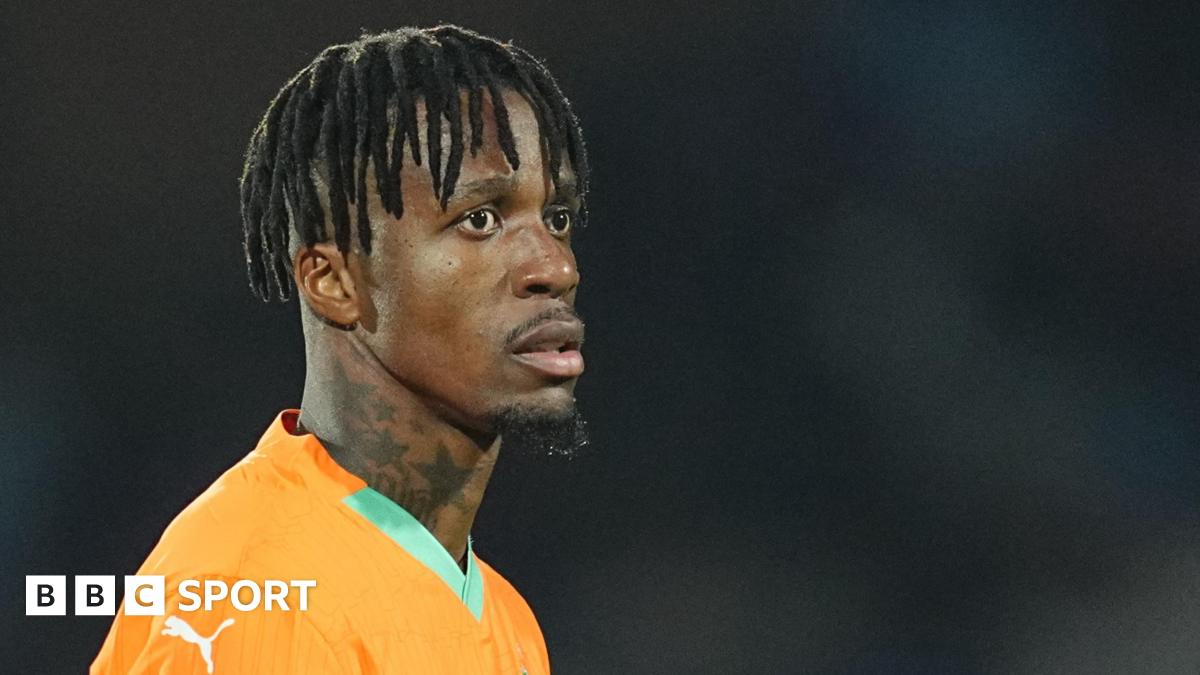
    One of the most eye-catching exclusions from the roster is 33-year-old winger Wilfried Zaha, a veteran of the Ivorian national team with 36 senior caps to his name. Zaha, who recently featured for Ivory Coast at the 2025 Africa Cup of Nations and is currently on loan at Major League Soccer side Charlotte FC from Turkey’s Galatasaray, failed to secure a spot in Fae’s final selection for the World Cup finals.

    Other notable absentees include Nottingham Forest veteran defender Willy Boly and 2024 Afcon final match-winner Sebastien Haller, the former West Ham United striker. Haller, however, has been named among five standby players who could be called up to the squad in the event of last-minute injuries before the tournament kicks off.

    Among the most exciting new additions to the squad is 22-year-old Inter Milan striker Ange-Yoan Bonny, who completed his nationality switch just one week before the squad announcement. Previously a French youth international who represented France at the Under-21 level, Bonny is uncapped at the senior level for Ivory Coast, and follows in the footsteps of teammate Elye Wahi, who earned his first Ivorian cap in a 1-0 friendly victory over Scotland back in March. Another highly anticipated inclusion is RB Leipzig forward Yan Diomande, who has been the subject of widespread transfer speculation linking him with a move to the Premier League in the upcoming summer window.

    For Pepe, the 30-year-old winger’s inclusion marks a return to the national side after being left off Fae’s roster for the 2025 Africa Cup of Nations, where Ivory Coast entered the tournament as defending champions but were eliminated in the quarter-final stage.

    Ivory Coast will make its fourth appearance at the men’s World Cup this summer, having previously qualified for three consecutive tournaments between 2006 and 2014 before missing out on the 2018 and 2022 editions. Drawn into Group E, the Elephants will kick off their 2026 World Cup campaign on 14 June against Ecuador, before facing off against four-time World Cup champions Germany and tournament debutants Curacao in the group stage.

    The expanded 48-team 2026 World Cup will run from 11 June to 19 July across 16 host cities spread across the three North American host nations.

  • Dozens of European nations sign off on new interpretation of rights convention in migration cases

    Dozens of European nations sign off on new interpretation of rights convention in migration cases

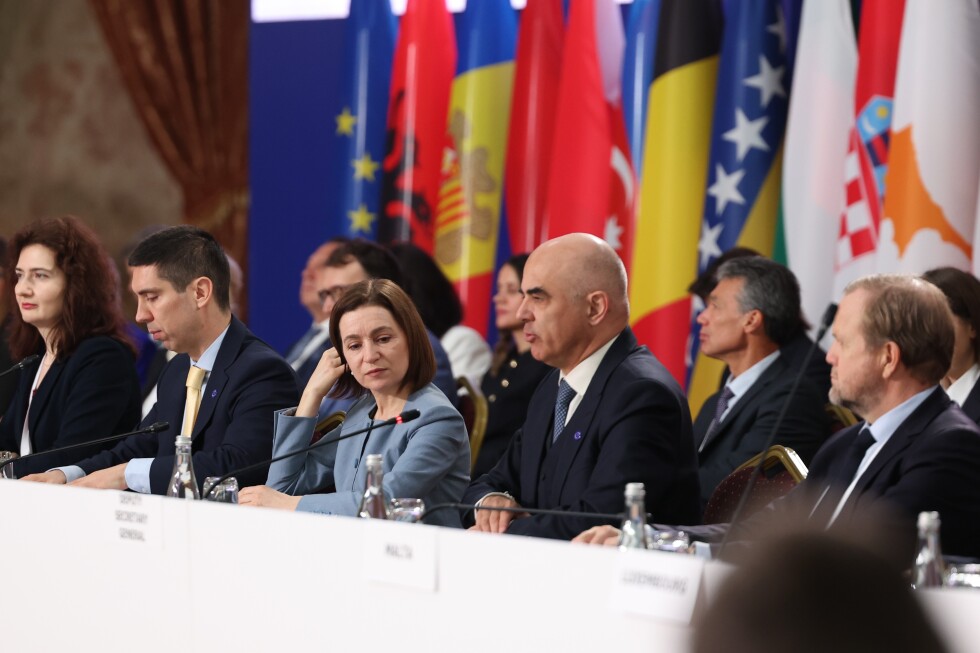
    BRUSSELS, May 20 (Rewritten) — In a landmark meeting held Friday in Chisinau, the capital of Moldova, all 46 member states of the Council of Europe have formally adopted a non-binding political declaration that reinterprets the landmark European Convention on Human Rights for migration-related cases, including a controversial provision that explicitly allows member states to establish deportation processing centers, officially called return hubs, in non-member third countries. The agreement comes as growing political pressure from right-wing and conservative national governments across the continent has pushed for stricter, more enforceable measures to curb irregular migration and streamline cross-border deportation processes.

  • ICE releases wife of US soldier and Afghanistan veteran from detention

    ICE releases wife of US soldier and Afghanistan veteran from detention

    A months-long immigration drama that sparked national outrage over the treatment of military families has come to a temporary resolution, after U.S. Immigration and Customs Enforcement freed Deisy Rivera Ortega, the wife of a decades-long U.S. Army Afghanistan veteran, from custody, her legal representative has confirmed to the BBC.

    Rivera Ortega, a native of El Salvador, was taken into immigration custody on April 14 during a routine scheduled immigration check-in in El Paso, Texas, that she attended alongside her husband, Sgt. Jose Serrano. Serrano, who has served the U.S. military for nearly 28 years and was born a U.S. citizen in Puerto Rico, told reporters his wife’s detention left him deeply distraught.

    In an official statement following the release, the couple’s attorney Matthew James Kozik simply said, “We celebrate her release.” Footage shared with CBS News shows Serrano driving away from the detention facility with Rivera Ortega in the passenger seat, confirming she had been freed and the pair were returning home.

    At the time of her arrest, the couple was in the process of applying for parole-in-place, a federal program specifically designed to allow spouses of active-duty service members and veterans to remain in the U.S. while their immigration applications are processed. Court and legal documents provided to the BBC show the pair married in 2022, had compiled all required documentation covering their marriage, employment, and immigration status ahead of the appointment, and complied fully with all check-in requirements.

    Serrano recalled that during the meeting, officials flagged what they claimed was an issue with their submitted paperwork. After escorting the couple down a hallway, officers separated Rivera Ortega and took her into custody without prior warning.

    In the wake of the arrest, the Department of Homeland Security (DHS) characterized Rivera Ortega as a “criminal illegal alien”, noting she crossed the U.S.-Mexico border without inspection in 2016 and was convicted of a federal illegal entry offense. A 2019 immigration judge ordered her removal to El Salvador, but simultaneously granted her withholding of removal protection under the U.N. Convention Against Torture, which bars immigration authorities from deporting her to El Salvador over credible concerns she would face severe harm if returned.

    This legal protection left immigration officials in a position to consider deporting Rivera Ortega to Mexico instead, a move that Serrano and Kozik said officials actively explored after her arrest.

    The case quickly drew political pushback, with U.S. Sen. Tammy Duckworth, an Illinois Democrat and Iraq War veteran, personally placing a call to DHS Secretary Markwayne Mullin on Wednesday to raise concerns over the detention, according to Duckworth’s office.

    In a public statement after the release, Duckworth said, “I am so incredibly grateful for Deisy’s release and for her to be reunited with her family. Deisy was doing everything ‘the right way’: attending her military parole in-place interview when she was detained by ICE with no warrant and no explanation. There is no higher betrayal to our heroes than to have one of their family members deported by the same nation they sacrificed to defend.”

    DHS has not yet responded to repeated requests for comment from the BBC, including inquiries about Duckworth’s outreach to Mullin and the details of Rivera Ortega’s release.

    This incident marks the second high-profile case in April of ICE detaining the spouse of an active-duty U.S. service member. Earlier that month, Annie Ramos, the Honduran-born wife of Sgt. Matthew Blank who was brought to the U.S. as a child, was held in ICE custody for five days before being released.

  • New York Times defends journalist after Israel threatens to sue

    New York Times defends journalist after Israel threatens to sue

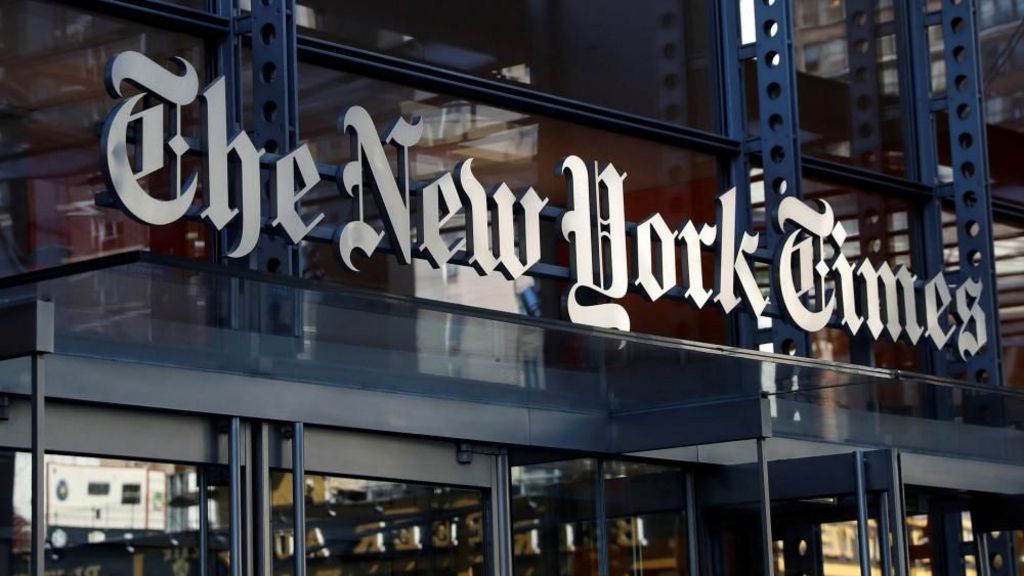
    A sharp public conflict has erupted between senior Israeli officials and The New York Times after the prominent U.S. newspaper published an opinion column alleging a systemic pattern of sexual violence against Palestinian detainees at the hands of Israeli security personnel, settlers and prison staff. The escalation, which has reignited debates over press freedom and journalistic accountability in the context of the decades-long Israeli-Palestinian conflict, began Monday when veteran NYT journalist Nicholas Kristof released a 3,700-word column titled “The Silence that Meets the Rape of Palestinians.”

    In the column, Kristof documented first-hand accounts from 15 alleged victims, who detailed incidents ranging from sexual assault and humiliation to rape by forced bestiality. While Kristof explicitly stated there was no evidence that senior Israeli leaders ordered the abuse, he argued that the country’s security architecture had allowed sexual violence to become what a 2025 UN report labeled a “standard operating procedure” and “core component of the mistreatment of Palestinian detainees.”

    By Thursday, Israeli Prime Minister Benjamin Netanyahu and Foreign Minister Gideon Saar released a scathing joint statement, announcing they had ordered legal officials to launch defamation proceedings against The New York Times. The pair called Kristof’s column “one of the most hideous and distorted lies ever published against the State of Israel in the modern press,” while the Israeli Foreign Ministry further claimed the reporting relied on unvetted sources with ties to Hamas-linked networks.

    In an immediate response, The New York Times pushed back forcefully, dismissing the legal threat as entirely baseless. The newspaper framed the lawsuit threat as a predictable political tactic designed to weaken independent reporting and suppress journalism that deviates from the Israeli government’s preferred narrative. “This threat, similar to one made last year, is part of a well-worn political playbook that aims to undermine independent reporting and stifle journalism that does not fit a specific narrative,” the NYT statement read. “Any such legal claim would be without merit.”

    The column has sparked furious pushback across Israel’s political and media landscape. Israel’s U.S. Ambassador Yechiel Leiter released a video statement arguing that the only clear violation committed in the case was a breach of basic journalistic standards by Kristof and his outlet. On the same day as the Israeli leadership’s statement, dozens of Jewish protesters gathered outside The New York Times’ Manhattan headquarters, holding demonstrations calling for Kristof’s immediate termination.

    The allegations published by Kristof are not without precedent, however. For years, independent reports from both Israeli and Palestinian non-governmental organizations have collected extensive evidence of systemic sexual violence against Palestinian detainees held by Israeli authorities. In 2025, two separate Palestinian men told the BBC they had endured sexual abuse while in Israeli custody, including one account of sexual humiliation using a military dog — a claim identical to one included in Kristof’s column. At the time, the Israeli Prison Service said it had no record of the first man’s claims and asserted it always operates in full compliance with Israeli law, and declined to comment on the second man’s account.

    Another high-profile incident from 2025 also underscores the deep polarization surrounding these allegations in Israel: five Israeli soldiers were charged with assaulting a Palestinian detainee from Gaza at the Sde Teiman military prison, including one count of stabbing the detainee’s buttock with a sharp object. The case split public opinion, with right-wing factions accusing left-wing groups of exploiting the incident to damage the reputation of Israeli security forces. After the then-Israeli Military Advocate General, Major General Yifat Tomer-Yerushalmi, leaked CCTV footage of the incident, she resigned and was arrested, and all charges against the five soldiers were dropped in March 2026.

    Legal experts note that moving forward with a defamation case in Israeli courts carries significant procedural and policy hurdles. Israeli defamation lawyer Liat Bergman Ravid explained that civil claims of this type face a very low chance of success under Israeli law, which blocks collective entities from bringing defamation suits and bars government bodies from pursuing such claims as a matter of public policy designed to protect freedom of speech. While Israeli law does permit the Attorney General to file criminal defamation charges against the author of the alleged defamatory statement, Ravid noted that such action is extremely rare, “bordering on non-existent.”

    Another Israeli defamation attorney, Idan Seger, added that if the case does proceed, The New York Times will face a much higher burden of proof than it would under U.S. law. Unlike U.S. precedent, which protects media outlets from liability as long as no malicious intent is proven, Israeli law requires outlets to either prove the absolute factual accuracy of their reporting or demonstrate that they strictly followed standards of responsible journalism to avoid a guilty verdict. As of this report, it remains unclear whether Israeli officials will actually follow through on their threat to file suit, and what legal pathway they would use to do so.

  • Inside Israel’s Flag March and the erasure of Palestinians in Jerusalem

    Inside Israel’s Flag March and the erasure of Palestinians in Jerusalem

    By midday on Jerusalem Day 2026, the narrow, usually bustling lanes of Jerusalem’s Old City Muslim Quarter had fallen eerily silent. Most storefronts were shuttered with metal security shutters pulled tight, and Palestinian residents who once filled the area had locked themselves indoors or fled entirely.

    Fadi, a 48-year-old local shop owner, summed up the harsh reality facing local traders as he dragged his outdoor display table inside and secured his shop for the day. “If I don’t want to get attacked, I have to close,” he explained.

    Under ordinary conditions, Thursdays draw throngs of visitors and locals to the Old City’s historic markets, turning the quarter into a vibrant hub of commerce and community. This year, however, the annual ultra-nationalist Flag March, a provocative event marking Israel’s capture of East Jerusalem in the 1967 Six-Day War, forced local Palestinians to cede their own neighborhood to the procession. Organizers intentionally route the march directly through the Muslim Quarter as a deliberate show of dominance, turning the area into a flashpoint for sectarian violence year after year.

    Even hours before the official event was set to kick off, far-right Israeli settlers, identifiable by their traditional knitted kippahs and long side curls (peyot), began roaming the quarter. A group of teenage settlers passing a still-open Palestinian shop launched into a torrent of anti-Palestinian slurs, and the confrontation quickly escalated into a physical assault on two shop owners. The shopkeepers defended themselves with plastic chairs while activists from the grassroots group Protective Presence stepped in to de-escalate the clash. The entire confrontation lasted less than 30 seconds, but it set the tone for the rest of the day: the young attackers faced no immediate intervention or arrest, offering an early preview of the impunity that would define the day’s violence.

    Despite a heavy visible deployment of armed Israeli police across the Old City, dozens of Palestinian business owners later reported their storefronts had been vandalized or ransacked by march participants. This pattern of violence repeats annually, tied directly to Israel’s national celebration of its 1967 occupation of East Jerusalem and the formal declaration of Jerusalem as Israel’s unified capital. In recent years, the march has been increasingly dominated by far-right political factions, growing more aggressive and volatile as it is weaponized to assert unchecked Israeli control over the city’s majority-Palestinian resident population.

    Human rights and community activists have repeatedly documented that Israeli security forces rarely intervene to stop attacks on Palestinians or protect their property during the march, even when offenders are young and easily contained. To fill this gap left by intentional state neglect, local and international activist groups have organized volunteer protective presence teams to monitor the event and support Palestinian residents.

    “Every year there is bullying, verbal hate and physical violence,” explained Yonatan Shargian, an organizer with the grassroots movement Standing Together. He noted that while the number of volunteers has grown in lockstep with rising violence, their work serves a broader purpose beyond de-escalation: sending a message that “this place belongs to all of us, and everyone deserves to feel safe and protected”.

    Further tension ignited near the holy site of Al-Aqsa Mosque, when far-right National Security Minister Itamar Ben Gvir led a group of hundreds of settlers into the mosque compound. The politician waved an Israeli flag and declared “The Temple Mount is in our hands”, echoing the extremist movement’s demand for full Israeli sovereignty over the site, which is the third-holiest in Islam. Joining Ben Gvir was lawmaker Yitzhak Kroizer, who later posted on Facebook calling for the full removal of Al-Aqsa Mosque and the construction of a Third Jewish Temple in its place.

    As the afternoon wore on, hundreds of ultra-nationalist marchers gathered at Damascus Gate, the main entry point to the Muslim Quarter and Al-Aqsa Compound. Groups of teenage boys and adult men took turns chanting virulent hate speech, including calls for “Death to Arabs” and overtly racist, misogynistic slurs targeting Palestinian people. While activist volunteers stayed close to escort the few Palestinians who remained in the area to their homes, both volunteers and on-site journalists soon became the primary targets of aggression.

    At one point, a crowd of young ultra-nationalists surrounded a working journalist, shoved him against a wall, threw his phone to the ground, and spat in his face. As they had after every attack throughout the day, Israeli police intervened only to break up the confrontation after the violence was already over, allowing the attackers to break into celebratory victory chants. In this instance, the crowd jeered “May your village burn” as they dispersed.

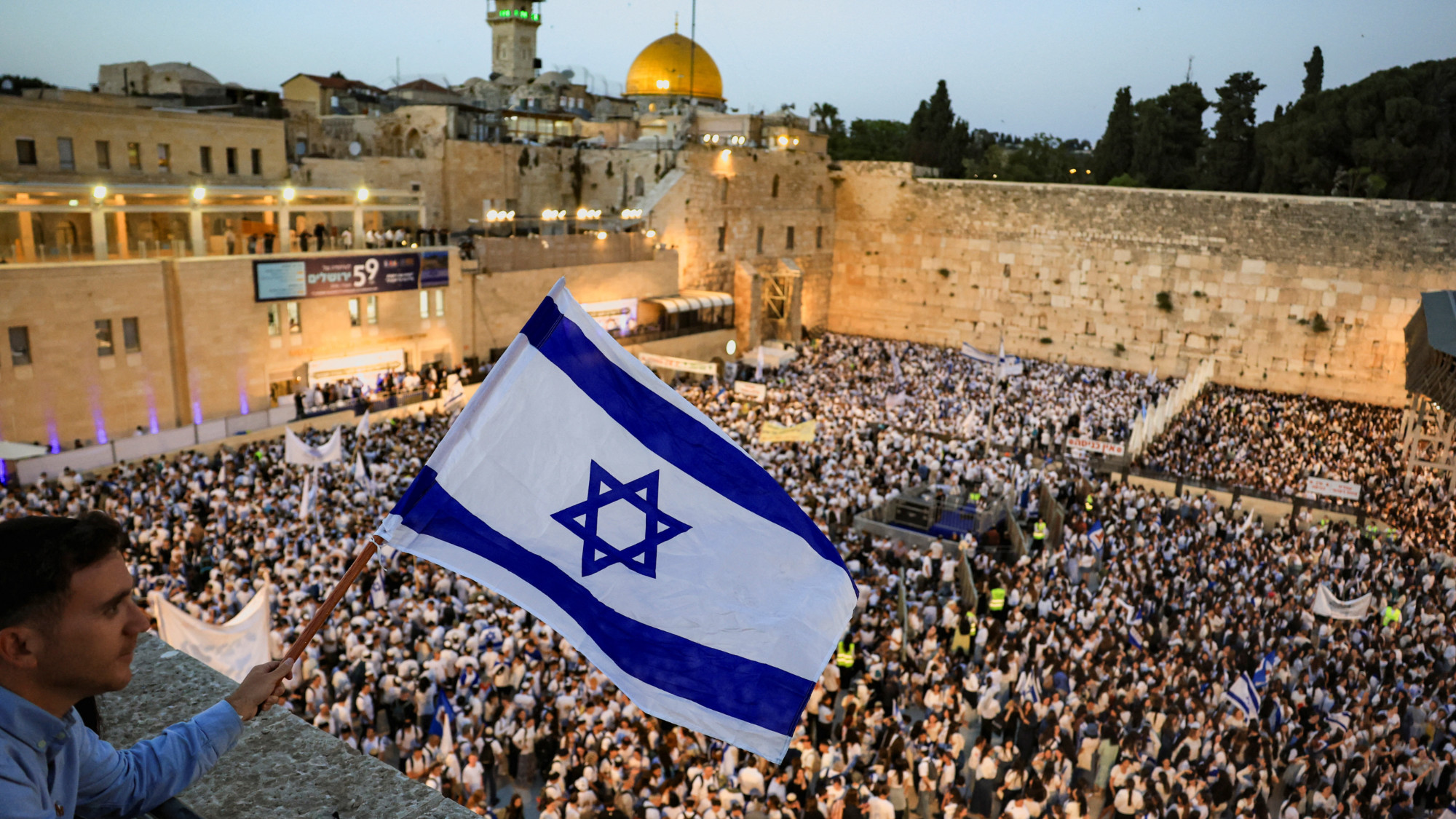
    Shortly after the incident, activists and journalists were forced out of the procession route to clear the way for the main Flag March. What began as scattered small groups swelled into a massive sea of participants, moving through Damascus Gate in successive waves toward the Western Wall. The entire area was flooded with Israeli national flags, alongside dozens of the so-called Third Temple flags: a widely recognized symbol of the movement to demolish Al-Aqsa Mosque and build a Jewish temple on the site.

    Provocative signage and accessories dotted the crowd, including a large banner reading, “It’s not Al-Aqsa, it’s the Temple Mount. You want a massacre? You’ll get the Nakba,” referencing the 1948 displacement of hundreds of thousands of Palestinians during the founding of Israel. Many marchers also wore stickers featuring Ben Gvir’s image alongside a noose, a reference to the recently passed death penalty bill for Palestinian political prisoners that the minister championed in the Israeli Knesset.

    Before entering the Old City, each group of marchers paused to sing nationalist and religious hymns, openly celebrating their display of control over the Palestinian neighborhood. While the day was marked by widespread violence, many long-time activist observers noted that 2026’s event felt comparatively less chaotic than previous years—a shift they attributed not to less extremism, but to the fact that most Palestinians had already been forced out of the area, leaving far fewer targets for abuse.

    For a national holiday that celebrates the unification of Jerusalem under Israeli control, the mass absence of Palestinian residents from their own neighborhood offered the clearest possible reflection of what that “unification” actually entails: the quiet, systematic erasure of the Palestinian community that has lived in the city for generations.

  • A look at major Ebola outbreaks and when the disease was first identified

    A look at major Ebola outbreaks and when the disease was first identified

    CAPE TOWN, South Africa – African public health authorities have confirmed a new Ebola outbreak in the Democratic Republic of the Congo’s northeastern Ituri province, reporting at least 246 suspected infections and 65 fatalities as authorities move to contain the spread of the highly lethal pathogen.

    First identified nearly 50 years ago following two back-to-back outbreaks in what is now South Sudan and the Democratic Republic of Congo (then known as Zaire), Ebola has remained an endemic threat almost exclusively to sub-Saharan Africa, with all major recorded outbreaks concentrated in West and Central African regions, according to the World Health Organization (WHO).

    The disease is triggered by a group of RNA viruses within the Filoviridae family, with three strains — Ebola virus, Sudan virus, and Bundibugyo virus — responsible for all large-scale public health emergencies in recorded history. Researchers trace the virus’s natural reservoir to fruit bat populations native to the African continent, though other wild animals including gorillas, chimpanzees, and monkeys can also carry and transmit the pathogen to humans. Human-to-human transmission occurs exclusively through direct contact with infected bodily fluids — such as blood, feces, or vomit — or contact with contaminated surfaces and materials, making frontline health workers particularly vulnerable to infection during outbreaks.

    According to the U.S. Centers for Disease Control and Prevention (CDC), Ebola symptoms develop between two days and three weeks after initial exposure, with most patients showing signs of infection roughly one week after contact. Early infection presents with flu-like indicators including fever, muscle aches, general fatigue, and sore throat, progressing in severe cases to gastrointestinal distress, organ damage, skin rashes, seizures, and internal or external bleeding. WHO data puts the average Ebola fatality rate at around 50%, though historical outbreaks have recorded mortality rates ranging from 25% to as high as 90% depending on the viral strain and speed of public health response. While approved vaccines and targeted treatments exist for the Ebola virus strain, no comparable medical countermeasures are currently cleared for other pathogenic Ebola strains.

    This new outbreak marks the latest in a long history of Ebola emergencies across Central Africa, with the most severe event on record occurring just over a decade ago between 2013 and 2016 across West Africa. That epidemic, which began when a young child in southeastern Guinea came into contact with infected fruit bats according to researcher estimates, spread across Guinea, Liberia, and Sierra Leone, causing more than 28,000 confirmed and suspected cases and over 11,000 deaths. A small number of secondary cases were also recorded in Europe and the United States, linked to returning travelers and healthcare workers who had responded to the outbreak.

    The second-largest Ebola outbreak in history took place between 2018 and 2020, centered in Congo’s North Kivu, South Kivu, and Ituri provinces, with a small number of cases spreading across the border to Uganda. Caused by the Ebola virus strain, that outbreak recorded more than 3,400 cases and over 2,200 deaths, resulting in a 66% fatality rate per CDC data. Congo has recorded more than a dozen major Ebola outbreaks in modern history, including one as recent as late 2024.

    A notable 2000-2001 outbreak in Uganda, caused by the Sudan virus strain, resulted in 425 reported cases and 224 deaths. Ugandan public health authorities were widely commended for their rapid, community-centered response, which included widespread public education on transmission risks and efforts to counter dangerous misinformation, limiting the outbreak’s geographic spread. The East African nation has also faced multiple smaller Ebola events in the decades since.

    The first officially recognized Ebola outbreaks were recorded back in 1976, 48 years before the current event. The first, in what was then Sudan (now part of South Sudan), was traced to a cotton factory where workers came into contact with roosting bats, and was later identified as the Sudan virus strain. That initial outbreak caused 284 confirmed cases and at least 151 deaths, with many secondary infections among healthcare workers who treated patients before the unknown virus was identified. Just months later, a separate outbreak in a remote village near the Ebola River in northern Zaire (now the Democratic Republic of Congo) resulted in 280 deaths and an extremely high fatality rate, leading scientists to identify and name the Ebola virus. The first recorded Ebola infection outside Africa occurred the same year, when a British laboratory technician accidentally pricked himself with a contaminated needle while studying virus samples; he ultimately recovered. To date, only a tiny handful of Ebola cases have been recorded outside of the African continent.

    Public health teams have not yet released additional details on the current outbreak’s genetic sequencing or ongoing containment efforts as of the initial announcement.

  • Stocks tumble as US-Iran impasse fuels inflation fears

    Stocks tumble as US-Iran impasse fuels inflation fears

    On Friday, international financial markets suffered widespread downturns as geopolitical gridlock in the Middle East and underwhelming outcomes from the high-stakes US-China leaders’ summit reignited investor anxiety over sustained inflation that threatens to undermine global economic expansion. The standoff over the Strait of Hormuz, a critical chokepoint for global energy shipments, sent crude prices jumping by as much as 3.5%, lifting benchmark Brent crude to nearly $109 per barrel by mid-afternoon GMT.

    The much-anticipated summit between US President Donald Trump and Chinese President Xi Jinping failed to deliver the concrete breakthroughs investors had hoped for, both on Middle East de-escalation and bilateral trade negotiations. While Trump claimed the two sides had struck “fantastic trade deals”, he offered no detailed specifics, only noting that Beijing had expressed interest in purchasing American oil and soybean exports, and confirmed he did not raise the contentious issue of existing tariffs during discussions. China’s top diplomatic officials later clarified that the two nations had agreed to uphold previously reached accords and set up new bilateral trade and investment working councils, but offered no new commitments to resolve ongoing tensions.

    Market analysts characterized the meeting as heavy on symbolic goodwill but light on tangible policy progress. With diplomatic efforts to reopen the Strait of Hormuz — where commercial oil tanker traffic has slowed to a near halt following the outbreak of regional conflict — stuck in limbo, fresh uncertainty flooded through global energy and financial markets. The White House confirmed that both leaders agreed the strait must remain open for global energy trade, but investors had pushed for more concrete action to restore full shipping access, which has been blocked amid the ongoing US-Iran impasse. Trump amplified geopolitical jitters Thursday in an interview with Fox News, saying he would “not be much more patient” with Iran, leaving energy markets on edge over potential further supply disruptions.

    Rising crude oil futures triggered a sharp jump in government bond yields across major developed economies, as investors demanded higher returns to compensate for growing inflation risk. In the United Kingdom, where newly inaugurated Prime Minister Keir Starmer is already facing fresh challenges to his leadership, 30-year government bond yields climbed to 5.869% — their highest level since 1998, surpassing the previous record set just three days earlier. In Japan, 30-year bond yields hit the 4% threshold for the first time since 1999.

    “Bond yields have continued to march higher, and this has introduced more volatility to the wider financial markets as investors worry about the impact of increased government borrowings across the developed economies and what they mean for their economies,” explained Fawad Razaqzada, a senior market analyst at FOREX.com.

    Across global equity markets, losses were broad and deep. In Asia, Japan’s Nikkei 225 closed 2% lower, while Hong Kong’s Hang Seng Index and China’s Shanghai Composite dropped 1.6% and 1% respectively. Major European bourses fared worse: London’s FTSE 100 closed down 1.7%, Paris’ CAC 40 fell 1.6%, and Frankfurt’s DAX 30 slid 2.1% by the end of trading. On Wall Street, the Dow Jones Industrial Average and S&P 500 both dropped 0.9% from the fresh all-time highs set Thursday, driven by a cooling in the ongoing AI-fueled tech rally that pulled the Nasdaq Composite down 1.1%. The US dollar strengthened against all major global currencies, including the British pound, euro, and Japanese yen.

    “Stalled US-Iran diplomacy keeps supply fears firmly in focus,” noted Matt Britzman, senior equity analyst at Hargreaves Lansdown. “Even if resolved next month, the oil market could remain undersupplied through October, keeping inflationary pressures high and adding another headache for consumers, central banks, and, eventually, investors.”

    Susannah Streeter, chief investment strategist at Wealth Park, echoed that assessment, adding: “With diplomatic efforts aimed at resolving the Middle East conflict in limbo, fresh uncertainty has flooded in.”

    By 1530 GMT, key market metrics stood at: Brent North Sea Crude up 3.0% at $108.88 per barrel; West Texas Intermediate up 3.5% at $104.71 per barrel; Dow Jones at 49,636.63 (down 0.9%); S&P 500 at 7,436.28 (down 0.9%); Nasdaq Composite at 26,335.25 (down 1.1%); FTSE 100 at 10,195.37 (down 1.7%, close); CAC 40 at 7,952.55 (down 1.6%, close); DAX 30 at 23,950.55 (down 2.1%, close); Nikkei 225 at 61,409.29 (down 2.0%, close); Hang Seng Index at 25,962.73 (down 1.6%, close); Shanghai Composite at 4,135.39 (down 1.0%, close); GBP/USD at 1.3324 (down from 1.3400); EUR/USD at 1.1624 (down from 1.1673); USD/JPY at 158.68 (up from 158.33); EUR/GBP at 87.25 pence (up from 87.09 pence).