博客

  • Israeli activists protest at New York Times building after article exposes rape of Palestinians

    Israeli activists protest at New York Times building after article exposes rape of Palestinians

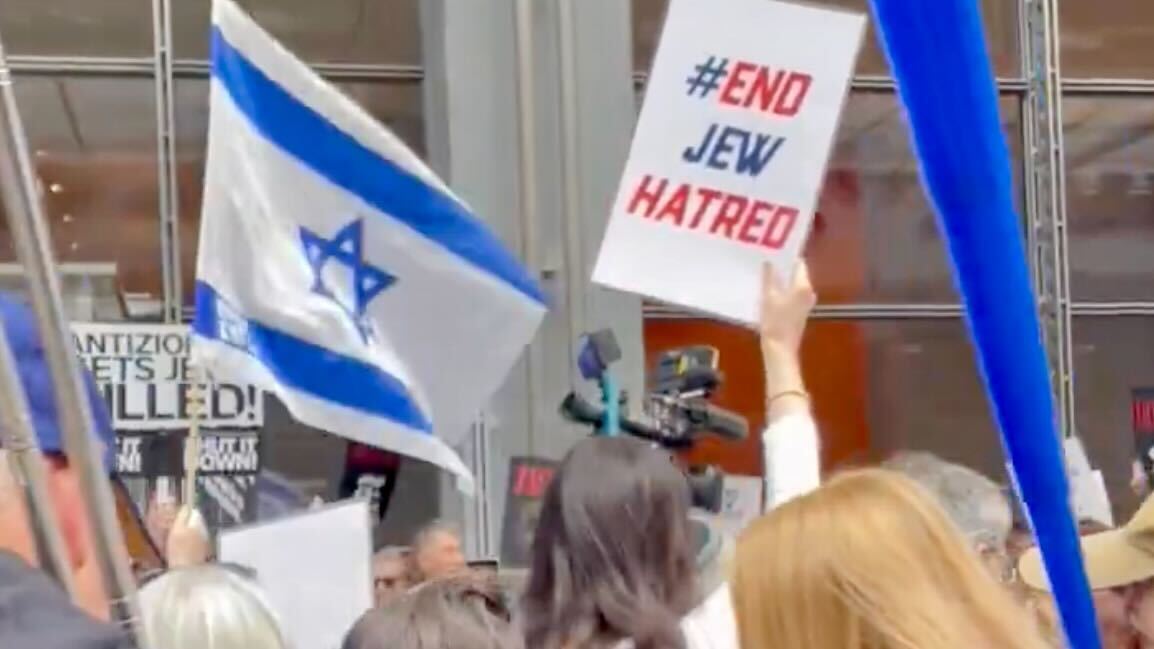
    A fresh wave of controversy erupted this week over a high-profile investigative report published by the *New York Times*, which detailed horrific accounts of sexual violence and rape committed against Palestinian detainees by Israeli personnel in state-run prisons. On Thursday, dozens of pro-Israel activists gathered outside the *New York Times* headquarters in midtown Manhattan to stage a public demonstration against the outlet’s coverage, amplifying long-simmering anger over the piece.

    Video footage of the protest, circulated widely on the social platform X, showed demonstrators carrying banners that demanded an end to antisemitic sentiment and framed anti-Zionist ideology as a direct threat to Jewish lives. Central to the protestors’ demands was the immediate firing of Nicholas Kristof, the veteran *New York Times* journalist who authored the controversial report.

    Kristof’s published investigation featured harrowing, firsthand testimonies from survivors that detailed brutal abuse: Palestinian prisoners described being sexually assaulted with dogs, penetrated with carrots, and sustaining severe rectal tearing from beatings with batons. In response to the report, high-profile Israeli influencers and sitting political figures quickly pushed back, dismissing the testimonies as a modern iteration of the blood libel — a centuries-old antisemitic falsehood that was repeatedly used to justify mass violence against Jewish communities across medieval and early modern Europe.

    After the *New York Times* reaffirmed its commitment to the reporting and stood by Kristof’s work, Israel’s Ministry of Foreign Affairs announced Thursday that it would pursue legal action against the American newspaper.

    Claims of systemic sexual abuse against Palestinian detainees are not new: multiple independent human rights organizations have documented such abuses for years, and allegations featured in Kristof’s report have already been verified by independent regional outlet Middle East Eye. Past incidents of abuse have exposed deep rifts within Israeli society: multiple Israeli media personalities have publicly trivialized the use of dogs in sexual assaults against Palestinian detainees, and when Israeli prosecutors attempted to bring charges against soldiers accused of rape, widespread public backlash from hardline groups ultimately forced the release of the accused. In a high-profile example of public support for the accused soldiers, thousands of Israelis joined so-called “right to rape” demonstrations in the aftermath of the abuse allegations.

    One of the most striking developments in related investigations came in November, when Israeli authorities arrested a military prosecutor charged with leaking footage that documented the rape of a Palestinian detainee. Separately, Yifat Tomer-Yerushalmi, the Israeli military’s chief military advocate, staged a fake suicide attempt while reportedly attempting to dispose of a mobile phone that held incriminating evidence connected to the case. The Israeli military subsequently launched a formal criminal investigation into the evidence leak.

    Most recently, in March of this year, the United Nations Independent Commission of Inquiry on the Occupied Palestinian Territory released its own findings, confirming it had uncovered evidence of widespread, systematic sexual violence perpetrated by Israeli officers against Palestinian people, dating back to the start of military operations in Gaza. The commission’s final report documented dozens of cases of rape and sexual assault against male Palestinian detainees, including accounts of abuse involving electrical probes used to burn anal tissue, and the insertion of objects including fingers, sticks, broom handles and vegetables into detainees’ anuses and rectums.

  • The balikbayan box: The way Filipino Americans have sent love all the way back home

    The balikbayan box: The way Filipino Americans have sent love all the way back home

    For nearly five decades, the balikbayan box has stood as one of the most recognizable cultural and emotional touchstones for Filipino communities across the United States, linking millions of immigrant households to their loved ones back in the homeland through carefully packed shipments of American goods. This enduring tradition traces its origins not to grassroots diaspora culture alone, but to a 1973 state-led tourism initiative launched by then-Philippine President Ferdinand Marcos Sr., just one year after he imposed martial law across the country.

  • Created as IDs, dog tags became a crucial link between military families and fallen troops

    Created as IDs, dog tags became a crucial link between military families and fallen troops

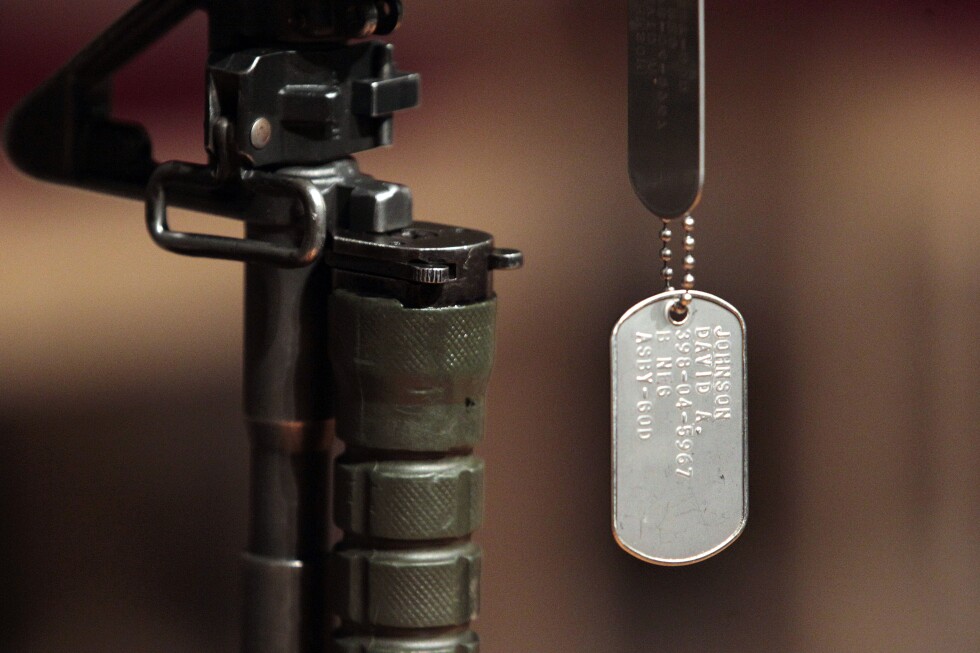
    For grieving military families across the United States, a small pair of worn metal rectangles often holds more weight than any memorial. Many survivors clench these items in their palms, as if they can still feel the hand of the service member they lost gripping back. Even battle-hardened fellow troops have broken down in tears reading the engraved names and details etched into their surfaces.

    More than a century after an Army chaplain first advocated to make these identification tokens – universally known as dog tags – standard issue for all American service members, they have evolved far beyond a practical tool for battlefield identification to become one of the most sacred and tangible links between fallen troops and their loved ones left behind.

    Stationed at Dover Air Force Base, the facility where the remains of U.S. service members killed overseas are repatriated to American soil from conflicts ranging from Afghanistan to recent tensions in the Middle East, Air Force Major and Chaplain Benjamin Quintanilla Jr. has witnessed this connection firsthand. “What families are searching for when they hold these tags is a connection to the person they lost,” Quintanilla explained. “That is what makes these dog tags such a sacred symbol for them.”

    From the brutal trenches of the World Wars to the jungles of Vietnam and decades of ongoing conflict across the Middle East, military dog tags have also stood as a quiet, enduring emblem of the sacrifice American service members have made in global engagements. Even so, Pentagon historians note that the origin of the common term “dog tags” for these identification tokens remains unconfirmed to this day.

    The urgent need for standardized battlefield identification first emerged into public consciousness during the American Civil War, when tens of thousands of troops were buried in unmarked graves as “unknown” soldiers. National Park Service data underscores this gap: at Vicksburg National Cemetery alone, 75% of the 17,000 Union troops interred there are recorded as unknown.

    It was not until the end of the Spanish-American War, the 1898 conflict that cemented the United States’ status as a rising global power, that a formal push for standard issue identification tags began. Serving as morgue director in the Philippines following the conflict, Army Chaplain Charles C. Pierce became the first official to formally request that all Army service members be issued individual identification tags.

    By the time the United States entered World War I, mandatory dog tag wear was required for all combat troops. The small metal tokens were officially integrated as a required part of the standard military uniform by World War II, a policy that remains in place today.

    In the modern era, dramatic advances in forensic science and biometric identification have reduced the historical reliance on dog tags for confirming the identity of fallen service members. Even so, the small tokens still hold critical practical value for military chaplains deployed to combat zones: the standard listing of religious affiliation allows chaplains to deliver appropriate, respectful end-of-life care and funeral rites for dying and fallen troops, according to Quintanilla.

    It is the deep symbolic meaning of connection, however, that makes dog tags irreplaceable for military communities. Surviving family members treasure the dog tags their loved ones wore during their service, as well as the honorary tags placed on fallen troops’ caskets during formal dignified transfer ceremonies. So profound is this attachment that many survivors choose to wear their loved one’s tags daily, or even get permanent tattoos replicating the engraved text.

    For currently serving troops, dog tags also act as the simplest, most immediate marker of shared belonging. Quintanilla, who originally joined the Air Force as a dental technician before becoming a chaplain, explained this bond: “I can trust somebody who is wearing the same identification as me. It’s a reminder that I was part of something bigger than myself.”

    This story is part of *American Objects*, a recurring series marking the 250th anniversary of the founding of the United States that explores the stories of ordinary objects that shaped the nation’s history.

  • Bam! Pow! Krakoom! The everlasting allure of the American comic book

    Bam! Pow! Krakoom! The everlasting allure of the American comic book

    BARCELONA, Spain — From their glossy eye-catching covers to depictions of impossibly muscular heroes clad in skintight costumes, American superhero comics draw readers in instantly with the promise of high-stakes battles, triumph over villains and thrilling adventure. For decades, these slim, serialized publications have carved out a one-of-a-kind space in global pop culture, often contrasted sharply with other regional sequential art forms.

    Against Europe’s more literary, substantive graphic novels, traditional American superhero comics are often dismissed as flimsy, juvenile entertainment. When stacked against Japanese manga’s sprawling, genre-spanning narratives with complex thematic layers, American superhero stories read as earnest and uncomplicated, rooted in a bygone era of American cultural identity. Once sold for mere nickels and dimes before climbing to quarter price points, today single issues typically cost as much as a coffee shop latte — a clear marker of their place as a product of American consumer capitalism, widely labeled as junk-food literature: eye candy for casual readers, light entertainment that requires little deep engagement. But this surface reading overlooks the deeply American identity that has been baked into these 32-page monthly stories for generations.

    The turning point for modern American superhero comics came in 1961, when Stan Lee and Jack Kirby launched the Fantastic Four. In the team’s origin story, a fateful unplanned space journey exposes four explorers to cosmic radiation, leaving them with extraordinary abilities they never asked for. This origin rewrote the rules of superhero storytelling: for the first time, all-powerful heroes were also reluctant, relatable figures, shaped by the unintended consequences of scientific progress and random chance — flawed, modern people first, heroes second.

    This blueprint shaped countless iconic characters that followed. Spider-Man, the Hulk, Wolverine, and dozens more were marked by their otherness: their incredible powers turned them into outcasts, casting them as imperfect, burdened messiahs rather than perfect, unflappable paragons. Tied to a core thread of the American cultural psyche, nearly all of these characters abide by Peter Parker’s iconic moral mandate: “With great power comes great responsibility.” Like a distinctly American reimagining of the Greek myth of Sisyphus, they are bound to an endless cycle of sacrifice, repeatedly stepping forward to save the world even when victory offers them no personal reward.

    What could be more fundamentally American than this core belief: that when raw power is anchored to a commitment to justice, it will ultimately prevail? It is a worldview that is simultaneously deeply honorable and unapologetically naïve, a reflection of the national identity that has shaped the country for centuries.

    Today, even as storytelling has grown grittier and more complex, the two giants of the American comic industry — Marvel and DC — continue to reimagine what American character looks like for new eras. Long sidelined as supporting players to white male lead characters, female fan-favorites including Gwen Stacy, Jean Grey, and Susan Storm have emerged as central leaders in recent years, breathing new life into iconic sagas for Spider-Man, the X-Men, and the Fantastic Four. DC’s *Absolute Wonder Woman* has pushed creative boundaries with groundbreaking, cinematic artwork, while half-Latino, half-Black Miles Morales has become the Spider-Man for a new, more diverse generation of readers.

    Even with these evolutions, the core tensions that have long defined American superhero stories remain unchanged. Bruce Wayne, the Batman, is unable to form deep meaningful connections with anyone beyond his longtime butler Alfred — a perfect portrait of the isolated individual in modern, atomized American society. Steve Rogers, Captain America, carries the weight of representing the World War II “Greatest Generation,” forever an outsider out of time even in his own country. And Lex Luthor, Superman’s villainous megalomaniacal nemesis, stands as one of the most iconic depictions of a power-hungry tech tycoon meddling with humanity’s future for his own gain — a trope that feels just as relevant today as it was decades ago, leaving readers to joke that the modern world could use a mild-mannered Clark Kent keeping watch on powerful elites, just in case.

    This feature is part of the recurring series “American Objects,” created to celebrate the 250th anniversary of the United States, exploring the everyday and cultural items that have shaped the nation’s identity over its history.

  • Suspect in killing of Israeli embassy staff members to face death penalty

    Suspect in killing of Israeli embassy staff members to face death penalty

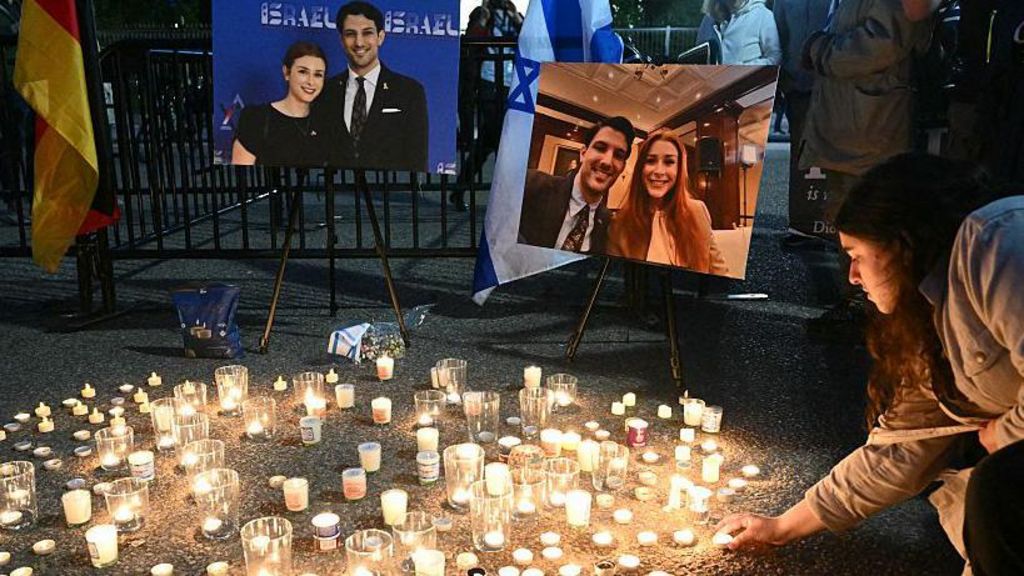
    On a quiet spring evening in downtown Washington D.C., hundreds gathered across from the White House on May 22, 2025, holding flickering candles to honor the lives of Yaron Lischinsky and Sarah Lynn Milgrim, two young Israeli embassy employees killed in a targeted attack months earlier. Now, federal prosecutors have formally notified the court they will pursue the ultimate legal punishment for the man accused of their murder, in a case that intersects with the Trump administration’s sweeping reversal of Biden-era restrictions on the federal death penalty.

    Thirty-one-year-old Elias Rodriguez, the suspect in the May 2024 shooting outside the Capital Jewish Museum, has entered a plea of not guilty to all 13 charges filed against him. Among those counts are three capital offenses: murder of a foreign official, discharge of a firearm during a violent felony, and second-degree murder by firearm, for which US Attorney for the District of Columbia Jeanine Pirro confirmed Friday her office will seek execution if Rodriguez is convicted. Additional charges against Rodriguez include federal hate crime violations and counts related to acts of domestic terrorism.

    Prosecutors have laid out a detailed account of premeditation tied to ideological anti-Israel sentiment. According to their filings, Rodriguez traveled from his home in Chicago to Washington D.C. armed with a handgun, after researching a scheduled networking event for young Jewish professionals to be held at the downtown museum. Lischinsky, 30, and Milgrim, 26, were leaving the museum when Rodriguez opened fire, discharging 20 rounds that killed both victims immediately. Multiple law enforcement and media reports confirm the pair were in a committed relationship, and Lischinsky had purchased an engagement ring with plans to propose during an upcoming trip to Israel.

    After the shooting, prosecutors allege Rodriguez entered the museum, displayed a red keffiyeh, and openly stated he carried out the attack “for Palestine” and “for Gaza.” During his arrest, he shouted “Free Palestine,” and court documents show he left behind a written manifesto titled “explication,” where he expressed explicit support for violence against Israelis, claimed Israel was carrying out an extermination campaign against Palestinians, and attempted to justify his violent actions to encourage future copycat attacks. Multiple social media posts attributed to Rodriguez in the months before the shooting contain the slogan “Death to Israel” and repeated endorsement of violent targeting of Israeli civilians.

    FBI Assistant Director Darren Cox, head of the bureau’s Washington Field Office, emphasized the severity of the attack in a February 2025 press statement, noting “In addition to allegedly murdering two innocent people and terrorizing the survivors of his attack at the Capital Jewish Museum, Rodriguez wrote and published a manifesto attempting to morally justify his actions and inspire others to commit political violence.”

    Pirro reiterated her office’s commitment to full accountability in comments earlier this year, saying “My office will not rest in our efforts to hold Elias Rodriguez accountable for this horrific, and targeted act of terror against Yaron Lischinsky, Sarah Milgrim and our Jewish community.”

    The decision to pursue the death penalty comes amid a sweeping reversal of federal justice policy under the second Trump administration. During Trump’s first term in office, the White House reinstated federal executions after a 17-year informal moratorium, only to see the Biden administration roll back those policies and impose a formal halt on all federal executions after taking office in 2021.

    On his first day back in the White House following the 2024 presidential election, Trump issued an executive order directing the Department of Justice to prioritize capital punishment in eligible cases, speed up execution schedules, and expand legal methods of execution beyond lethal injection to include practices such as firing squad. Department of Justice records confirm the administration has already resumed federal executions and streamlined court processes to reduce delays in death penalty cases.

    The case has sparked renewed national conversation about political violence targeting Jewish communities in the U.S., tensions over the Israeli-Palestinian conflict spilling over into domestic attacks, and the future of the federal death penalty under the current administration.

  • Scientists find climate change is reducing oxygen in rivers worldwide

    Scientists find climate change is reducing oxygen in rivers worldwide

    A groundbreaking new research published in *Science Advances* on Friday has uncovered a quiet, growing threat to global river ecosystems: human-caused global warming is driving a steady decline in dissolved oxygen levels across the world’s waterways, putting fish populations and entire aquatic habitats at severe risk. The research, led by environmental scientist Qi Guan from the Chinese Academy of Sciences in Nanjing, combines decades of satellite data and artificial intelligence analysis to deliver one of the most comprehensive assessments of river deoxygenation to date.

    Guan’s team tracked changes in oxygen content in more than 21,000 rivers spanning every continent from 1985 onward. The data revealed an average 2.1% drop in dissolved oxygen across all studied systems over the 38-year study period. While this decline may seem modest at first glance, researchers warn that it represents a cumulative trend that will escalate if current warming rates continue. By the end of the 21st century, the study projects an additional average 4% oxygen loss globally, with some vulnerable river basins facing drops close to 5% that would trigger severe ecological harm.

    The basic science behind the trend is well-established: warmer water inherently holds less dissolved oxygen than colder water, and rising water temperatures drive more oxygen out of rivers and into the atmosphere. Guan’s study quantified the share of global deoxygenation driven by warming: nearly 63% of the observed oxygen loss can be traced directly to rising water temperatures from anthropogenic climate change. Other contributing factors include nutrient pollution from agricultural fertilizers, urban stormwater runoff, altered flow patterns from dam construction, and changes in surface wind dynamics, but warming remains the single largest driver of the trend.

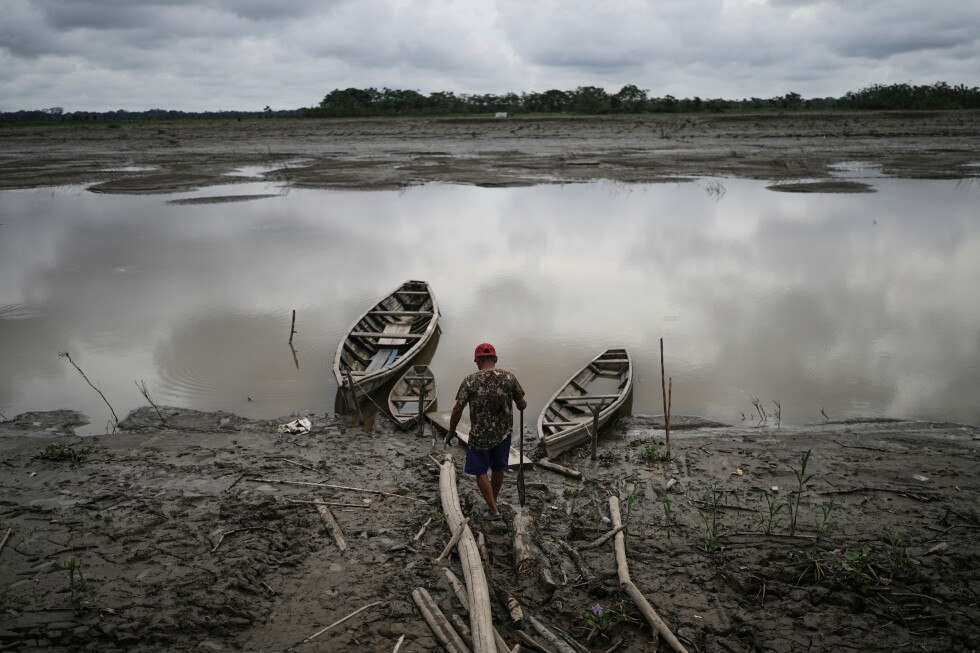
    If current deoxygenation rates persist, the study warns that heavily impacted regions including the eastern United States, India, the Arctic and most of tropical South America could see a 10% total oxygen loss from 1985 levels by 2100, even under moderate carbon emissions scenarios, not the most severe worst-case climate projections. Already, one of India’s most important and heavily polluted water systems, the Ganges River, is losing oxygen more than 20 times faster than the global average, according to the analysis. Tropical systems such as the Amazon Basin are particularly at risk: previous research found the number of days with dead zone conditions in the Amazon has increased by nearly 16 days per decade since 1980.

    When dissolved oxygen drops low enough, it creates hypoxic (low-oxygen) or anoxic (no-oxygen) dead zones, areas where most aquatic life cannot survive. Fish suffocate, biodiversity collapses, and water quality degrades in these areas, which already threaten major water bodies including the Gulf of Mexico, Chesapeake Bay and Lake Erie. Outside experts not involved in the study echoed Guan’s team’s alarm over the emerging trend.

    Karl Flessa, a geoscientist at the University of Arizona, noted that deoxygenation is an incremental process that builds over time to create irreversible harm. “Deoxygenation is a very slow process. If we have a long period, the negative impact will attack the river ecosystems,” Guan said. “The low level of oxygen can cause a series of ecological crises such as biodiversity decline, water quality degradation and maybe some fish will die.” Flessa added that many already stressed rivers are just a small temperature increase away from tipping into dangerous hypoxic conditions, which would eliminate sport and commercial fish populations in popular fishing areas.

    Emily Bernhardt, an ecologist and biogeochemist at Duke University, explained that rising river temperatures amplify the harm caused by existing water pollution. “As rivers warm it becomes easier and easier for the same pollution problems as before to cause more severe, more long lasting or more widespread hypoxia and anoxia,” she said. That means cutting water pollution has become an even more critical priority as the climate warms, she added. Marc Bierkens, a hydrology professor at Utrecht University in the Netherlands who also was not part of the new study, has observed similar trends in his own independent research: he found global river oxygen stress has increased by 13 days per decade, and dead zone occurrences by nearly 3 days per decade, since 1980, trends that will accelerate with continued warming.

    The Associated Press’ climate and environmental reporting for this article was supported by funding from private philanthropic foundations, with the AP retaining full editorial control over all content.

  • Judge declares mistrial in Weinstein case as jury fails to reach verdict

    Judge declares mistrial in Weinstein case as jury fails to reach verdict

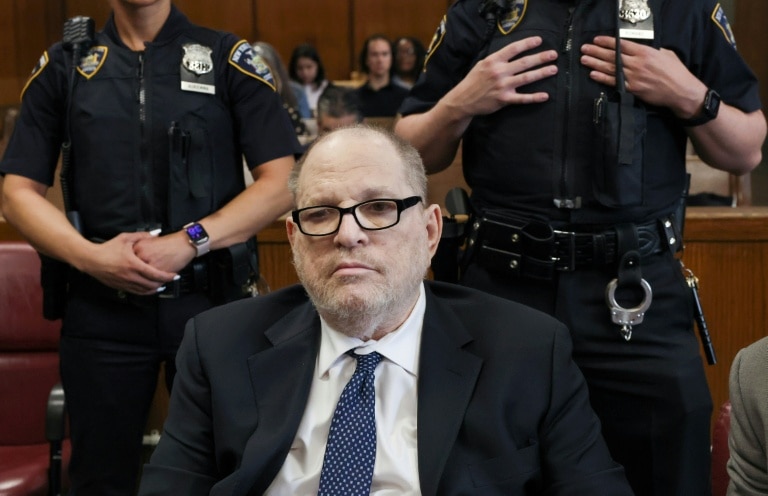
    A federal judge in New York has declared a mistrial in the latest sexual assault trial of disgraced former Hollywood film producer Harvey Weinstein, after the jury was unable to reach a unanimous verdict on the charges brought by accuser Jessica Mann. This outcome marks the third time proceedings against Weinstein over Mann’s allegations have collapsed, leaving the case unresolved. Now 74, Weinstein has already been convicted in two other separate sexual assault cases, meaning he will remain in custody regardless of this trial’s conclusion. The disgraced studio executive, whose decades-long pattern of alleged abuse sparked the global reckoning of the MeToo movement, is currently serving a 16-year prison sentence stemming from a 2022 California conviction for raping a European actress more than a decade ago. He is also appealing that conviction, alongside a June 2024 New York conviction for sexual assault against former film producer Miriam Haley. The first guilty verdict against Weinstein for Mann’s allegations, returned in 2020, was later thrown out over improper witness handling. A 2025 retrial ended in a mistrial after a bitter conflict among jury members, making this week’s outcome the second consecutive mistrial in the case. During the latest proceedings, Mann, now 40, recounted her first encounter with Weinstein at a 2013 industry party, when she was a 27-year-old aspiring actress and he was one of the most influential powerbrokers in Hollywood. She told the jury that Weinstein positioned himself as a potential mentor, showering her with flattering compliments — even saying she was prettier than A-list star Natalie Portman — and investing in her career by buying her acting textbooks. To the young, emerging actress, this attention initially felt like a once-in-a-lifetime miracle, she said. Mann’s testimony was deeply emotional, with frequent pauses as her voice cracked under the weight of recounting the alleged assault. Her account largely aligned with the testimony she gave in the two previous trials. In a post-declaration statement, Manhattan District Attorney Alvin Bragg acknowledged the disappointment of the mistrial outcome, while reaffirming respect for the jury system. “While we are disappointed that the proceedings ended with a mistrial, we deeply respect the jury system and sincerely thank all of the jurors for their time and dedication,” Bragg said. “For nearly a decade, Jessica Mann has fought for justice.” The 2017 exposure of dozens of sexual misconduct allegations against Weinstein, published in groundbreaking investigations by *The New York Times* and *The New Yorker*, ignited a watershed global movement centered on holding powerful perpetrators of sexual harassment and assault accountable. More than 80 women came forward with accusations against Weinstein, and the reporting triggered the MeToo movement that has reshaped workplaces and cultural attitudes around the world.

  • Judge declares another mistrial in Harvey Weinstein New York rape charge

    Judge declares another mistrial in Harvey Weinstein New York rape charge

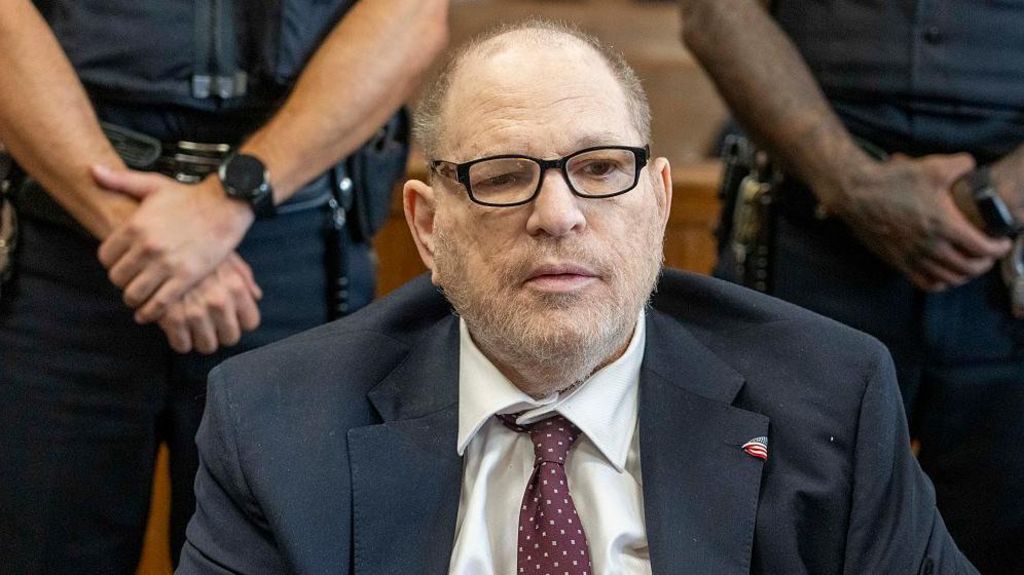
    A New York judge has formally announced a mistrial in the high-profile sexual assault case against disgraced former Hollywood film producer Harvey Weinstein, after the jury confirmed it could not reach a unanimous verdict following three days of deliberations. The outcome marks the third time a New York jury has considered the rape allegation against the 74-year-old, who remains incarcerated on separate sexual violence convictions in California. The 2024 mistrial caps off a month-long trial centered on claims from aspiring actress Jessica Mann, who alleged that Weinstein raped her in a Manhattan hotel room more than 15 years ago. The case has a long and tangled procedural history: Weinstein was first convicted of the charge in 2020, but that verdict was thrown out by an appeals court in 2024 over unfair trial procedural errors. A 2024 retrial ended with another deadlocked jury, leading to this third proceeding. The core accusation from Mann, who testified during the trial, is that she entered a coercive relationship with Weinstein, who exploited his industry power to pressure her, and that he forced her into non-consensual sex during a 2013 encounter. Weinstein’s defense team has consistently maintained that all sexual interactions between the two were consensual. Manhattan District Attorney Alvin Bragg released a public statement following the ruling, noting that prosecutors are currently evaluating whether to pursue a fourth trial in the case. “While we are disappointed that the proceedings ended with a mistrial, we deeply respect the jury system and sincerely thank all of the jurors for their time and dedication,” Bragg said. He went on to thank Mann for stepping forward with her allegation, adding that the prosecution team will consult with Mann before deciding their next move, while also accounting for Weinstein’s upcoming sentencing in an unrelated New York sexual assault case. “As always, we will continue to prosecute crimes of sexual violence – no matter who the defendant is – in a survivor-centered manner that uplifts their voices in the pursuit of justice,” Bragg added. In response, Weinstein’s legal team framed the mistrial as evidence of deep-seated cultural bias against their client that makes a fair trial impossible. “The outcome shows how deeply public perception and prejudice surrounding Harvey Weinstein have become embedded in society,” the team’s statement read. “For some people, regardless of the evidence presented, saying ‘not guilty’ has become emotionally or socially impossible.” The defense called on the Manhattan District Attorney’s Office to abandon further prosecutions of the case and redirect its limited resources to pressing public safety issues that impact everyday New Yorkers. The deadlock was delivered to Justice Curtis Farber in a written note from the majority-male jury on Friday morning, which stated jurors had concluded they could not reach the required unanimous decision. Farber initially ordered jurors to return for additional deliberations, but ultimately ruled the jury was hopelessly deadlocked and had no path to a verdict. “I see no reason to go any further,” Farber said before thanking jurors and dismissing them from the case. The 2020 appeal that overturned Weinstein’s original conviction found that the trial judge had improperly allowed testimony from other women who made uncharged sexual misconduct allegations against Weinstein, violating his right to a fair trial. Following the overturned conviction, prosecutors obtained a new indictment against Weinstein focused on two accusers from the original trial: Mann and former television production assistant Miriam Haley. This most recent trial centered solely on Mann’s rape allegation. More than 100 women have come forward with public allegations of sexual misconduct, assault, and rape against Weinstein since the first accusations became public in 2017. Weinstein has repeatedly and consistently denied all allegations of non-consensual sexual activity. Even with the hung jury in this case, Weinstein remains in custody following a 2022 conviction in a separate California sexual assault case, a conviction that carries a 16-year prison sentence and makes it likely he will spend the remainder of his life behind bars. The allegations against Weinstein, and the collective decision of his accusers to speak out, are widely credited with sparking the global #MeToo movement, which has worked to hold powerful men across industries accountable for sexual harassment and abuse. Before the scandal broke, Weinstein was one of the most influential figures in Hollywood, co-founding the iconic production studio Miramax alongside his brother Bob. The studio produced dozens of award-winning and culturally influential films, including Pulp Fiction and Shakespeare in Love, which won the Academy Award for Best Picture. Weinstein has also faced a wave of civil litigation over the allegations. A 2020 class-action lawsuit brought by a group of his accusers resulted in a $19 million settlement for the claimants. In recent years, Weinstein has also battled serious health issues, including a 2024 diagnosis of bone marrow cancer.

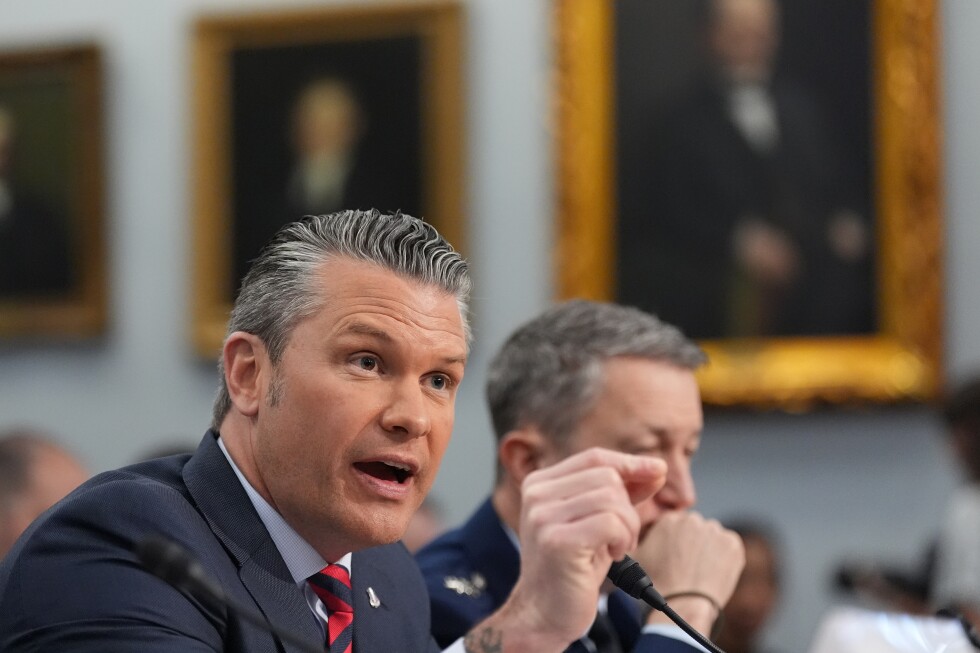
  • Pentagon halts deployments to Poland and Germany to cut troop numbers in Europe, AP sources say

    Pentagon halts deployments to Poland and Germany to cut troop numbers in Europe, AP sources say

    Widespread confusion and bipartisan backlash have followed the Pentagon’s unexpected order to cancel thousands of scheduled U.S. troop deployments to Europe, a move that has amplified long-simmering tensions between the Trump administration and key NATO allies amid disputes over U.S. strategy in the Iran war. Multiple senior U.S. defense officials, speaking on condition of anonymity to discuss sensitive military planning, have confirmed details of the drawdown, which aligns with President Donald Trump’s early May executive order to cut roughly 5,000 active-duty troops from the U.S. European theater.

    The core of the order signed by Defense Secretary Pete Hegseth directed the Joint Chiefs of Staff to reposition a full brigade combat team out of Europe. That directive ultimately led to the cancellation of the planned deployment of 4,000 soldiers from the U.S. Army’s 2nd Armored Brigade Combat Team, 1st Cavalry Division, based out of Fort Hood, Texas. The unit had been scheduled to depart for Poland this week, but the deployment was scrapped at the last minute. Alongside the Poland cancellation, the order also halted an upcoming rotational deployment of a long-range rocket and missile battalion to Germany.

    The Trump administration had initially framed the European troop reduction as a cut limited exclusively to U.S. forces stationed in Germany, a positioning that followed public criticism of U.S. policy from German Chancellor Friedrich Merz. Merz had previously stated that the U.S. had been “humiliated” by Iranian leadership and condemned the administration’s lack of a clear strategy for the ongoing Iran war. The sudden inclusion of Poland in the cuts caught both European allies and many U.S. military personnel on the continent off guard: multiple U.S. officials based in Europe confirmed they had no advance warning the Poland deployment would be halted, with one senior officer describing an emergency briefing called with just 20 minutes’ notice on Monday to outline the change. Some troops had already arrived in Poland when the order came down, while others still stateside were told to stand down only hours before they were scheduled to depart for the airport. Most of the unit’s heavy equipment had already been shipped to European ports and remains in transit limbo, officials added.

    Polish authorities have moved quickly to downplay the impact of the cancellation, framing the move as a logistical adjustment rather than a targeted snub. Polish Prime Minister Donald Tusk said Friday that he had received formal assurances from the Trump administration that the decision would not erode Poland’s national security or NATO deterrence capabilities on the alliance’s eastern flank. The move also contradicts public assurances Trump gave as recently as September, when Polish President Karol Nawrocki visited the White House. At that meeting, Trump explicitly stated he had no plans to withdraw U.S. troops from Poland, even offering to increase the U.S. presence if Warsaw requested it. Poland has long positioned itself as a leading U.S. ally within NATO, and currently meets the alliance’s 2% of GDP defense spending target, hitting a planned 4.7% of GDP in 2025 – the highest share among all NATO members. Defense Secretary Hegseth has previously referenced Poland as a “model ally” for its defense spending commitments. Currently, roughly 10,000 U.S. troops are present in Poland, the vast majority on rotational deployments, with only around 300 permanently stationed in the country, per data from the U.S. Congressional Research Service.

    Pentagon spokesman Joel Valdez defended the drawdown in a public statement, arguing that the decision followed a “comprehensive, multilayered process” and was not an impulsive last-minute adjustment. But senior Army leaders acknowledged to Congress on Friday that formal discussions on halting the Poland deployment only began two weeks ago, with the final decision coming just days before the unit was scheduled to depart. The chaotic rollout has drawn sharp criticism from lawmakers across the U.S. political spectrum, with both Democrats and Republicans arguing the move sends a dangerous message to U.S. allies and emboldens Russian President Vladimir Putin, whose forces launched one of the deadliest strikes on Kyiv this week in the four-year-old full-scale invasion of Ukraine.

    Nebraska Republican Rep. Don Bacon, who said he spoke to Polish officials Thursday, told reporters that Warsaw had been completely “blindsided” by the cancellation, calling the decision “reprehensible” and “an embarrassment to our country.” House Armed Services Committee Chair Mike Rogers, an Alabama Republican, added that the administration failed to fulfill its requirement to consult with Congress ahead of the drawdown, leaving lawmakers in the dark about the full scope of the changes. “So we don’t know what’s going on here,” Rogers said. “But I can just tell you we’re not happy with what’s being talked about.”

    U.S. officials have sought to soften concerns about a full U.S. withdrawal from the continent. Speaking at a security conference in Tallinn, Estonia, on Friday, U.S. Undersecretary of State for Arms Control and International Security Thomas G. DiNanno said the drawdown plans were public and transparent, noting that “the U.S. isn’t going anywhere.” “We’ll continue to work with the Pentagon and work with our partners to make sure we get the right fit and right mix of what’s happening here on the ground,” DiNanno said.

    A NATO spokesperson also sought to downplay security risks, saying the canceled deployment would not disrupt the alliance’s existing deterrence and defense plans on the eastern flank, pointing to increased force contributions from Canada and Germany that offset the change. But retired Lieutenant General Ben Hodges, former commanding general of U.S. Army Europe, warned the uncoordinated drawdown causes long-term damage to alliance cohesion. “This move reinforces the perception that the United States just does things without consultation with allies,” Hodges said, adding that eroding partner trust will ultimately harm U.S. defense industry interests in the region long-term.

    One senior U.S. official confirmed that after the drawdown is complete, the overall U.S. military presence in Europe will return to pre-2022 levels, before Russia launched its full-scale invasion of Ukraine. The drawdown comes as the Trump administration has repeatedly pressed European allies to take greater responsibility for their own security, including support for Ukraine, a shift that has deepened rifts between Washington and longstanding transatlantic partners amid ongoing disputes over the Iran war.

  • US charges Iraqi national accused of plotting at least 18 terror attacks in Europe

    US charges Iraqi national accused of plotting at least 18 terror attacks in Europe

    MANHATTAN, N.Y. — Federal law enforcement authorities have secured terrorism-related charges against an Iraqi man accused of orchestrating a sprawling, Iran-linked plot to carry out violent attacks targeting Jewish communities and Western interests across three continents, court documents unsealed Friday confirm.

    Mohammad Baqer Saad Dawood Al-Saadi, the 48-year-old suspect, stands accused of planning no fewer than 18 separate terrorist attacks across Europe, all framed as retaliation for U.S. military engagement in the Middle East. The alleged plots included plans to firebomb a major bank in Amsterdam and carry out stabbings targeting Jewish civilians in London, according to the unsealed complaint filed in Manhattan federal court.

    Beyond European targets, prosecutors allege Al-Saadi was actively developing plans to strike a synagogue in New York City as recently as last month. He is also accused of sharing visual intelligence — including photographs and detailed location maps — of Jewish community centers in Los Angeles, California, and Scottsdale, Arizona, to an undercover law enforcement agent, marking the sites as planned targets.

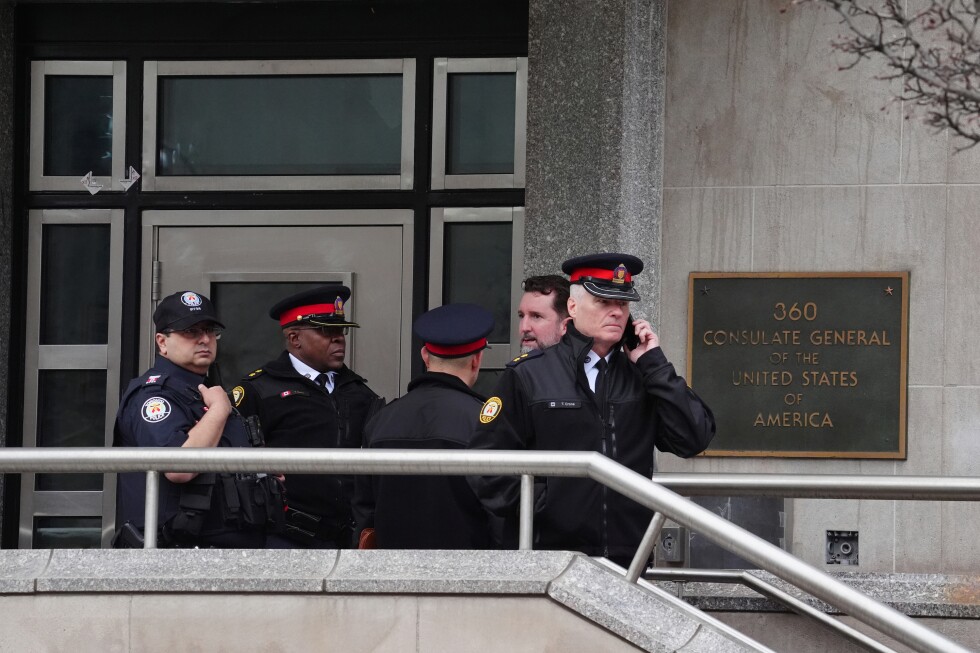
    The complaint also ties Al-Saadi to two high-profile violent attacks in Canada earlier this year: a targeted assault on a Canadian synagogue and a March shooting at the U.S. consulate general in Toronto.

    Al-Saadi faces four separate federal charges: conspiracy to provide material support to two U.S.-designated foreign terrorist organizations, Kata’ib Hizballah, an Iraqi Shia militant group backed by Tehran, and the Islamic Revolutionary Guard Corps (IRGC) of Iran; conspiracy to commit acts of terrorism transnationally; providing material support to these terrorist acts; and conspiracy to bomb a facility of public use.

    Court records confirm Al-Saadi was arrested by Turkish law enforcement before being extradited to U.S. custody. He was transferred to a federal detention facility in Brooklyn Thursday evening, and has been held in solitary confinement since his arrival, according to his defense counsel.

    During his initial court appearance this week, Al-Saadi did not make any on-the-record statements. Through his attorney, Andrew Dalack, he has claimed he is being wrongfully detained as a political prisoner and prisoner of war, asserting persecution by U.S. authorities over his past personal ties to Qasem Soleimani, the former top commander of the IRGC Quds Force who was killed in a U.S. drone strike in Baghdad in January 2020.

    Under standard federal procedures, Al-Saadi was not required to enter a formal plea at his initial hearing. He remains in federal custody as of Friday, though his legal team has signaled he may file a motion for bail at a later date.