博客

  • Lionel Messi says he’s retiring from playing for Argentina

    Lionel Messi says he’s retiring from playing for Argentina

    BUENOS AIRES, Argentina — After two decades of donning the Argentina national team jersey and delivering countless historic moments to football fans across the globe, one of the sport’s greatest ever players, Lionel Messi, has announced his retirement from international soccer. The 39-year-old Inter Miami captain shared the emotional news on his Instagram account on Monday, opening up about the profound difficulty of his decision.

    “It was a decision that hurt — and still hurts deeply — but I understand that the time has come,” Messi wrote in his retirement statement. He went on to reaffirm his unwavering commitment to the national side throughout his entire career, adding: “I swear to you that I always gave it my all — not just in these last few years when we won everything, but before that too; I always fought and left everything on the field for this jersey, to bring you joy and make you feel proud to be Argentine through football.”

    Over his 20-year international career, Messi built a legacy that will stand the test of time. He matched the all-time record by competing in six FIFA World Cups, claiming the sport’s biggest prize with Argentina in Qatar 2022, and led the side to the 2026 World Cup final earlier this month, where Argentina fell to Spain in extra time in New Jersey. Across the 2026 tournament co-hosted by the United States, Mexico and Canada, Messi started and played all eight of Argentina’s matches, netting eight goals — just one strike behind top scorer Kylian Mbappé of France. When he hangs up his international boots, he leaves as Argentina’s all-time leading goalscorer, with a staggering 125 national team goals, 21 of which came in World Cup appearances.

    Messi revealed that he actually drafted his retirement announcement on July 21, just two days after the 2026 World Cup final, but delayed publishing the post out of respect for his father Jorge, who was battling serious health issues that ultimately led to his passing on August 8 in Messi’s hometown of Rosario.

    Notably, this is not the first time Messi has stepped away from international football. A decade ago, following a missed penalty in Argentina’s 2016 Copa América final defeat to Chile on penalties, the star announced his first international retirement. At that point, he had endured years of near-misses and frustration with the national side, having made his senior Argentina debut back in 2006. But he reversed that decision, went on to lead Argentina to the 2021 Copa América title, the 2022 World Cup triumph, and the 2024 Copa América crown, cementing his legacy as a national hero.

    While his international career has drawn to a close, Messi will continue his club career with Major League Soccer side Inter Miami. Just this past weekend, he showcased he still has elite level finishing, scoring four goals in the club’s 7-1 routing of CF Montreal. The two-time defending MLS Most Valuable Player and reigning league champion did not specify how much longer he intends to continue playing at club level in his retirement announcement.

    In a heartfelt closing to his statement, Messi thanked Argentine fans for two decades of support, saying: “Thank you for all the love these past 20 years. I’m going to miss hearing you all from the inside so much. Now I’m going to be one of you, cheering and supporting you from the outside (through thick and thin, even more so). I leave with the peace of mind and pride of having given you — along with my teammates — moments we once only dreamed of. Experiencing this with you was incredible. I love you all.”

    Argentina national team coach Lionel Scaloni, who worked alongside Messi through the side’s recent golden run, praised the forward’s unparalleled legacy during the 2026 World Cup, simply saying: “He is pure history. History. A legend.”

    AP Sports writer Tim Reynolds contributed reporting from Miami, Florida.

  • France to supply Sweden with 4 frigates to bolster the NATO country’s defense

    France to supply Sweden with 4 frigates to bolster the NATO country’s defense

    During an official state visit to Stockholm on Monday, French President Emmanuel Macron formalized a landmark 4.3-billion-euro ($5-billion) defense agreement to deliver four advanced Amiral Ronarc’h-class frigates to Sweden, boosting the defensive capabilities of NATO’s 32nd and newest member in the strategically critical Baltic Sea region, where Russia maintains key maritime and air transit routes. The signing ceremony took place aboard the French Navy’s newly commissioned lead frigate of the class, launched in 2022 and delivered to French service in October 2025, shortly after Macron held bilateral defense talks with Swedish Prime Minister Ulf Kristersson ahead of a scheduled working dinner.

    The deal marks a major step forward for Macron’s ongoing push to deepen European military autonomy, a policy goal designed to reduce the continent’s long-standing defense reliance on the United States. This push comes as the U.S. has increasingly shifted its strategic focus to Indo-Pacific security challenges, and just last week, the Biden administration publicly urged NATO European allies to ramp up their own defense investment and capabilities as Washington reorients its global security priorities.

    Swedish Prime Minister Kristersson emphasized that the new frigates will deliver transformative long-range maritime operational capabilities and critical ballistic missile defense protection — a capability that has grown urgent in the wake of Russia’s full-scale invasion of Ukraine. “The war in Ukraine has shown us the importance of being able to defend against this type of missile,” Kristersson noted during the ceremony. Under the terms of the contract, French state-linked shipbuilder Naval Group will provide not just the four warships, but also a full suite of integrated weapons systems including ballistic missile-capable air defense interceptors, torpedoes, and long-range cruise missiles, alongside specialized training for Swedish naval personnel. The first frigate is scheduled for delivery to the Swedish Navy in 2030, according to anonymous French presidential officials who spoke on background in line with the Elysee Palace’s standard media protocols.

    Macron framed the agreement as a cornerstone of deepened strategic partnership between the two nations, highlighting that it will also strengthen Europe’s domestic defense industrial and technological base. Talks between the two leaders also covered Sweden’s potential participation in France’s unprecedented European nuclear deterrence coordination initiative, a program that has already drawn interest from eight other European nations: Britain, Germany, the Netherlands, Belgium, Greece, Poland, Denmark and Norway. The initiative allows France to temporarily deploy nuclear-capable aircraft to allied territories, invites partner nations to join French deterrence exercises, and enables non-nuclear allied forces to support French nuclear deterrence operations.

    The defense partnership runs both ways: in December last year, France placed an order for two GlobalEye airborne surveillance aircraft built by Swedish defense giant Saab, deepening cross-border industrial cooperation between the two countries. Sweden’s accession to NATO in 2024 ended nearly 80 years of post-World War II military neutrality and centuries of broader non-alignment with European great power blocs, a shift driven by sharply heightened security concerns across Northern Europe following Russia’s 2022 full-scale invasion of Ukraine. Regional security experts have widely noted that adding Sweden to NATO has dramatically strengthened the alliance’s posture in the Baltic Sea, a region that remains a flashpoint for tensions between the Western alliance and Russia.

  • Keeping cool saves thousands of lives yearly, but at a cost of worsening global warming, experts say

    Keeping cool saves thousands of lives yearly, but at a cost of worsening global warming, experts say

    As record-breaking heat waves sweep across nearly every continent amid accelerating global warming, air conditioning has emerged as a critical life-saving technology — but it also carries a steep environmental cost that deepens the climate crisis it helps people survive, leading climate and public health experts warn. A new peer-reviewed study published in *Nature Health* on Monday quantifies both the life-saving benefits and growing climate risks of widespread cooling use, offering a data-backed look at this urgent global dilemma.

    Led by senior author Kai Chen, an epidemiology professor at the Yale School of Public Health, the research analyzed more than 30 million U.S. death records collected between 2010 and 2020, pairing county-level data on dangerous heat exposure with mortality outcomes to calculate air conditioning’s impact. The study found that cooling systems saved an average of 5,267 American lives each year over the 11-year period, with a total of nearly 58,000 lives saved across the decade. The largest number of lives saved were recorded in warm southern U.S. states including Arizona, Florida, Texas, Louisiana, Alabama and Mississippi, while northern states from Washington to Maine saw fewer than 10 lives saved annually due to less frequent extreme heat.

    United Nations officials estimate that extreme heat kills roughly half a million people globally each year, and demand for cooling is skyrocketing as average global temperatures climb. Data from the U.S. Energy Information Administration shows the number of “cooling degree days” — a metric measuring how much energy is required to cool indoor spaces during hot weather — has risen 28% in the U.S. since 1990, with 2024 setting an all-time record and 2026 on pace to exceed that mark. Across Europe, cooling degree days have more than doubled since 1990, pushing air conditioning adoption up 44%. The trend is even starker in other major warm regions: cooling use has tripled in India and more than doubled across Southeast Asia, according to the International Energy Agency (IEA). The IEA and United Nations Environment Programme (UNEP) project global electricity demand from cooling will triple by mid-century.

    This growing demand creates a dangerous feedback loop, experts explain: roughly 90% of the electricity powering today’s air conditioning systems comes from burning fossil fuels, which release heat-trapping greenhouse gases that warm the planet further. The UN projects that greenhouse gas emissions from air conditioning will jump from 4.5 billion metric tons annually to 7.2 billion metric tons over the next 25 years — an amount nearly equal to the total current carbon emissions of the United States and European Union combined.

    “Everyone knows air conditioning works, but from a climate change perspective, it is not an ideal solution,” Chen explained. “It leads to more carbon emissions … then it accelerates the climate warming problem.” Beyond greenhouse gas emissions, cooling systems also amplify the urban heat island effect by expelling waste heat directly into outdoor city environments, and increased power demand worsens conventional soot and smog air pollution that harms public health.

    Chen’s study also highlights widespread overuse of cooling in many developed regions, particularly in commercial buildings. Chen noted that many office spaces are cooled to such low temperatures that workers often wear sweaters even during the hottest summer months, and more than half of the cooling use examined in the study qualified as unnecessary overconsumption. The research confirms that excess cooling beyond a reasonable threshold does not save additional lives, but only increases carbon emissions and accelerates climate change. Chen recommends setting indoor cooling temperatures no lower than 75 degrees Fahrenheit (24 degrees Celsius) as a reasonable balance between comfort and sustainability.

    A 2020s global energy crunch, exacerbated by geopolitical conflict, has already pushed multiple nations to implement cooling regulations to cut energy use and emissions. Eight countries including Bangladesh, Cambodia, Jordan, Malaysia, the Philippines, the Seychelles, Singapore and Sri Lanka have enforced maximum cooling limits for office air conditioning, and some have even mandated full cooling shutdowns one day per week in public buildings. India proposed similar national cooling limits in 2025.

    The issue also carries profound equity implications, experts emphasize: many of the world’s most vulnerable low-income communities lack consistent access to affordable air conditioning, even as they face the worst impacts of rising heat. UNEP’s chief heat officer Eleni Myrivili notes that in recent extreme heat waves, many low-income families have been forced to choose between paying for life-saving medication and running their cooling systems. “In a warming world, thermal comfort should not be a luxury,” Myrivili said. “It’s becoming a prerequisite for health, dignity and increasingly survival.”

    Global policymakers and experts from 75 countries and 250 cities are now working to navigate this tightrope: expanding access to life-saving cooling for vulnerable communities without worsening climate change. Delegates will gather in Singapore this September for the Global Cooling Pledge conference to coordinate collaborative action on sustainable cooling solutions.

    Experts point to comprehensive policy approaches that combine passive cooling strategies and energy-efficient technology to cut emissions while expanding access. UNEP cooling unit head Lily Riahi highlighted Singapore as a leading model for integrated cooling action. The city-state has implemented a sweeping national strategy that combines passive cooling measures such as expanded urban greenery, which reduces ambient urban temperatures and cuts annual energy costs by an estimated $35 million, with mandatory energy-efficiency standards for cooling and ventilation systems in both new and existing buildings. The approach has lowered local outdoor temperatures by up to 8 degrees Celsius (14 degrees Fahrenheit) in some areas, Riahi said.

    Riahi noted that passive, nature-based solutions are sufficient for many mild heat conditions, but extreme, humid heat events still require active air conditioning to protect public health. Experts emphasize the ultimate solution will require shifting cooling energy demand to renewable energy sources and rolling out highly efficient cooling technology to break the link between increased cooling access and rising carbon emissions. The goal, Riahi said, is not less cooling overall, but “smarter and more equitable cooling” that protects both human life and the global climate.

  • Trump pushes Apple to change ‘Lake Ontario’ to ‘Lake America’ on its maps

    Trump pushes Apple to change ‘Lake Ontario’ to ‘Lake America’ on its maps

    A controversial executive order signed by former President Donald Trump last Thursday to rebrand Lake Ontario—one of North America’s five Great Lakes—as “Lake America” has ignited cross-border tension between the United States and Canada, sparking mixed reactions from mapping technology providers and Canadian political and business leaders.

    The order comes on the heels of collapsed bilateral trade negotiations between the two neighboring nations, and directs U.S. Interior Secretary Doug Burgum to implement all necessary steps to formalize the name change, including updating the Geographic Names Information System (GNIS), the U.S. federal government’s official geographic database.

    In an interview with Fox News this Monday, Burgum confirmed that Trump has personally reached out to tech giant Apple to request the company adjust the lake’s name on its widely used Apple Maps platform to align with the new executive order. “I’m sure we may be seeing that change coming up soon,” Burgum told the outlet. The BBC has reached out to Apple for official comment on the request, with no response released as of yet.

    Search giant Google was the first major mapping provider to comply with the order over the weekend, rolling out a name change that only impacts users based in the U.S. For users located in Canada, where the lake shares a border with the province of the same name and the U.S. state of New York, the original name Lake Ontario remains visible. For users accessing Google Maps from the rest of the world, the lake is labeled as “Lake Ontario (Lake America)” to reflect the conflicting naming designations from the two countries.

    Not all U.S.-based mapping services have fallen in line with the executive order, however. Veteran American web mapping platform MapQuest, which launched in 1996, issued a blunt refusal in a brief Facebook post Friday, writing simply “we’re not changing it.” The platform also went a step further, releasing a custom tool that allows users to rename the lake to any name of their choosing and share their custom configurations online.

    MapQuest’s defiant stance has resonated strongly with Canadian consumers: as of Monday morning, the platform jumped to the number one spot on the list of most-downloaded free applications on Apple’s Canadian App Store.

    The unilateral name change has already triggered widespread pushback across Canada. Multiple Canadian public and private entities have already issued apologies after third-party mapping data briefly displayed the “Lake America” name on their internal and public-facing maps.

    Toronto-based electrical utility provider Hydro One was the first to address the issue Sunday, confirming in a post on X that the incorrect name appeared due to the company’s use of an external third-party mapping service. “We are working with our vendor to correct the issue as quickly as possible and restore the proper geographic reference,” the company said in its official statement. “We regret the error and apologise for any confusion it has caused.” Other Ontario-based organizations, including utility provider Hydro Ottawa and the Liquor Control Board of Ontario, also reported brief instances of the “Lake America” label appearing on their mapping systems.

    Ontario Premier Doug Ford has taken a firm public stance against the name change, unveiling a large bilingual sign along the Lake Ontario shoreline this Saturday that reads “Lake Ontario Now and Always” in both English and French, Canada’s two official languages. Appearing on U.S. broadcaster ABC’s interview with host George Stephanopoulos Sunday, Ford reiterated his province’s unwavering position. “No one’s going to call it Lake of America,” Ford said. “It’s been Lake Ontario for hundreds of years. It’s going to continue being Lake Ontario.”

  • Norway’s Queen Mette-Marit joins procession to bring late King Harald V’s coffin to royal chapel

    Norway’s Queen Mette-Marit joins procession to bring late King Harald V’s coffin to royal chapel

    OSLO, Norway – In a somber ceremony that marked the formal transition of Norway’s monarchy, the coffin of the late King Harald V traveled from the Royal Palace’s Red Salon to the palace chapel on Monday, drawing the nation’s grief into a quiet, shared public ritual. The event also marked Queen Mette-Marit’s first official public appearance since ascending to her new title, following the passing of her husband’s father Friday at the age of 89.

    Immediately after Harald’s death, Crown Prince Haakon, 53, ascended to the throne as King Haakon VIII, completing a constitutional line of succession that has placed Princess Ingrid Alexandra, Haakon VIII’s eldest child, as the new crown princess and official heir to the Norwegian throne. Mette-Marit, Haakon’s wife, assumed the role of Norway’s queen consort alongside her husband’s accession.

    On Monday, Mette-Marit walked hand-in-hand with Queen Sonja, Harald V’s widow, behind the royal casket as it processed through the palace grounds to the chapel. The appearance marks a notable milestone for Mette-Marit, who has stepped back from most public duties after undergoing a life-saving lung transplant in June. She was first diagnosed with pulmonary fibrosis, an incurable progressive condition that scars lung tissue and impairs respiratory function, back in 2018.

    King Haakon VIII is scheduled to take his formal oath of office to Norway’s constitution on Tuesday, a procedural step that will formalize his authority as the nation’s new head of state. The new monarch faces pressing early challenges: he must work to shore up public confidence in the Norwegian monarchy, which has been rocked by recent controversies. These include scrutiny over past connections between Mette-Marit and the deceased convicted sex offender Jeffrey Epstein, as well as a rape conviction secured against Mette-Marit’s son, Haakon’s stepson.

    Norway has been in an official state of national mourning since Harald V’s death. Over the weekend, thousands of Norwegians and international visitors gathered outside the Royal Palace in central Oslo to lay flowers, handwrite sympathy cards, and light candles in tribute to the late king, who reigned for decades across the Nordic nation. The coffin remained in the palace’s Red Salon through the weekend before Monday’s procession, according to public broadcaster NRK.

    Beginning Tuesday, the general public will be permitted to enter the royal chapel to pay their final respects to Harald V before his funeral, which is officially scheduled for September 9, the royal administration confirmed.

  • Dramatically low flyby by passenger jets over packed South African stadium sparks safety debate

    Dramatically low flyby by passenger jets over packed South African stadium sparks safety debate

    CAPE TOWN, South Africa – A high-drama pre-game aerial stunt featuring two commercial passenger jets screaming just meters above the roof of Cape Town’s DHL Stadium has electrified a sell-out crowd of 56,000 rugby fans, but ignited fierce global discussion over whether the event crossed unacceptable safety lines. The low-altitude formation flyby, carried out by South African regional carrier Airlink ahead of a blockbuster rugby clash between the world’s top two ranked teams – South Africa and New Zealand – on Saturday, went viral almost immediately after footage from broadcast cameras and fan witnesses spread across social media.

    Flight tracking data from the widely used aviation monitoring service Flightradar24 estimates the lead Embraer jet passed as close as 12 to 14 meters (41 to 46 feet) above the stadium’s roof, with thousands of spectators and both competing teams positioned directly below. Trailing just behind its lead, the second jet flew straight through a cloud of pink ceremonial dust that had been released from the stadium roof as part of the pre-game entertainment program. As the primary sponsor of the South African national rugby team, Airlink has moved quickly to defend the event, insisting every step of the flyby was planned and executed in full compliance with South African civil aviation safety rules.

    According to a statement released by the airline Sunday, the stunt underwent weeks of detailed planning and multiple full rehearsals before the match. The jets, which carried no commercial passengers, were crewed by three senior captains each: one serving as flight commander, one as co-pilot, and a third dedicated exclusively to monitoring on-board safety conditions. When passing over the stadium, the aircraft maintained a steady speed of approximately 150 knots (278 kph/172 mph), a speed the airline says was well within regulated limits. The airline also noted that both the South African Civil Aviation Authority and national Air Traffic Navigation Services reviewed the plan, issued formal approval, and provided ongoing guidance throughout the preparation and execution of the flight. Post-flight analysis of flight data from both jets, Airlink added, confirms all altitude and speed parameters remained within official civil aviation safety limits.

    Low-altitude stadium flybys are a long-standing tradition for major South African rugby matches, dating back to the iconic 1995 Rugby World Cup final – also between South Africa and New Zealand, the sport’s most storied fierce rivals – when a Boeing 747 completed a low pass over Johannesburg’s Ellis Park Stadium. But this weekend’s event was far lower and more dramatic than any previous flyby, drawing international attention and immediate pushback from aviation safety experts, who argue the stunt left an unacceptably small margin for error.

    Chris Martinus, president of the Aircraft Owners and Pilots Association South Africa, told the Associated Press that the lead jet’s altitude adjustments as it passed over the stadium – dipping and climbing to follow the roof contour – created unnecessary risk. “Basically, that lead aircraft … was kind of like dodging over the roof and climbing over the one side and dipping below and then climbing over the other side. That was a little bit uncomfortable,” Martinus said. He emphasized that at such an extremely low altitude, pilots have almost no room to respond to an unexpected emergency: if any unplanned adverse event occurs, there are simply no actionable options to avoid disaster.

    Keith Tonkin, an Australian aviation consultant and former military and commercial pilot, echoed those concerns, noting that Embraer regional jets like the ones used for the stunt are designed for medium-altitude commercial passenger routes, not low-level aerobatic-style operations. Tonkin also warned that the event sets a dangerous precedent that other organizers may try to replicate in the future. “The bigger picture is that a benchmark has been established and others may expect to do something similar, and that’s not going to end well,” Tonkin said. He pointed to common in-flight hazards that become catastrophic at low altitude: even a minor bird strike or unexpected turbulence would leave pilots with too little space to maneuver to avoid crashing into the crowded stadium below.

    As of Monday, South African civil aviation authorities have not issued any additional public comment beyond the Airlink statement confirming their prior approval of the event. The debate over the stunt continues to unfold across aviation and sports circles online, with spectators praising the unforgettable pre-game experience even as safety experts call for stricter rules for future aerial stunts at public sporting events.

  • Workers’ strike at Kenya’s main international airport leaves passengers stranded

    Workers’ strike at Kenya’s main international airport leaves passengers stranded

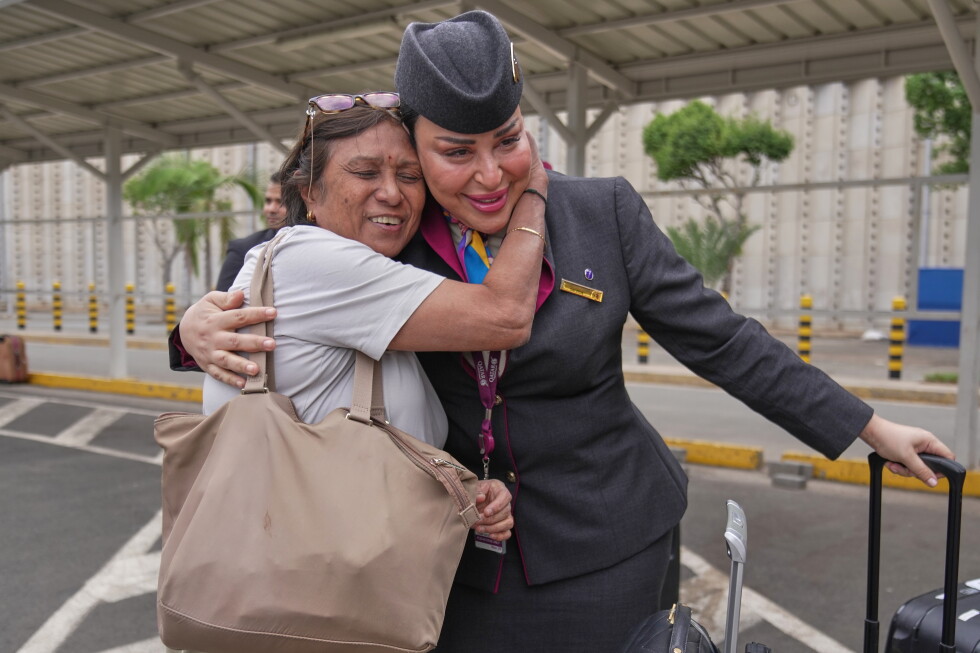
    A widespread work stoppage organized by aviation employees has thrown operations at Nairobi’s Jomo Kenyatta International Airport, Kenya’s busiest and most strategically important air gateway, into chaos, leaving hundreds of domestic and international passengers stranded amid widespread flight delays and cancellations. The industrial action, led by the Kenya Aviation Workers Union (KAWU), stems from long-simmering worker grievances that union leaders say have been ignored by airport management for months.

    On Monday, the Kenya Airports Authority (KAA) acknowledged the disruption in an official public statement, confirming that multiple flights had been impacted by the walkout, and urged all passengers planning to travel through the hub to contact their airline directly to confirm flight status before departing for the airport. The strike has already hit operations of Kenya’s largest carrier, Kenya Airways, and its low-cost subsidiary Jambojet, both of which have reported extensive delays across their route networks.

    KAWU’s industrial action is centered on three core demands: an end to what the union calls unfair hiring practices, significant improvements to worker compensation packages, and the withdrawal of proposed restructuring changes to Jomo Kenyatta International Airport’s senior management framework. A top priority for the union is blocking KAA’s plan to deploy volunteer workers to fill frontline staff roles, a policy union leaders argue devalues the work of trained, full-time aviation employees and puts long-term job security for existing staff at risk.

    Many stranded travelers expressed their frustration with the disruption at the airport over the weekend and Monday. Hellen Moraa, a business traveler who was scheduled to fly to the Netherlands via Dubai, told reporters that the unplanned delay will lead to major financial losses for her work commitments. “It is unfair that ordinary passengers are caught in the middle of a dispute that is not of our making,” Moraa said.

    Union leader Moss Ndiema confirmed that KAWU representatives held a new round of negotiating talks with senior government officials on Sunday in a last-ditch effort to avoid the strike. However, after hours of discussions, the two sides failed to reach a binding agreement on any of the union’s core concerns, including job security protections and revised employment terms that KAWU says remain unaddressed by KAA and the government. Ndiema added that the union has repeatedly accused KAA of failing to provide adequate support and fair working conditions for its workforce.

    This is not the first major disruption to hit the key regional travel hub this year. A similar KAWU-led strike in February also left thousands of passengers stranded at the airport, which serves as a critical connecting hub for travel across East Africa and intercontinental journeys between Africa, Europe, and Asia.

  • Congo authorities report more than 6,000 confirmed Ebola cases and nearly 3,000 deaths

    Congo authorities report more than 6,000 confirmed Ebola cases and nearly 3,000 deaths

    In a grim update released Monday, Democratic Republic of Congo health authorities confirmed that the nation’s unprecedented fast-spreading Ebola outbreak has crossed a devastating threshold, with more than 6,000 confirmed cases and 2,911 fatalities recorded to date. Amid the rising death toll, authorities did highlight one small positive development: over 1,360 patients have successfully recovered from the virus, a trend officials described as encouraging for frontline response teams.

    The outbreak, which is centered in eastern Congo, is expanding against a backdrop of extraordinary operational challenges. Chronic regional insecurity, mass population displacement, a recent strike by frontline health workers, and constant large-scale population movements have all combined to accelerate transmission. Displacement camps, where residents already live in overcrowded, unsanitary and precarious conditions, are emerging as particularly high-risk sites for widespread infection. Just last week, health officials confirmed the virus has reached two more previously unaffected health zones, bringing the total number of impacted areas across the region to nearly 60.

    The World Health Organization (WHO) has repeatedly warned that the outbreak remains completely out of control, and current projection models indicate it could soon overtake the 2014–2016 West Africa Ebola epidemic as the deadliest outbreak on record. That earlier outbreak killed more than 11,000 people across Guinea, Liberia and Sierra Leone.

    Complicating response efforts further, violent attacks against response teams have become increasingly common. On Saturday, an Ebola response team deployed to the outskirts of Mambasa, a town in Ituri province, came under attack while working to safely recover an Ebola-related death. A group of young men armed with machetes stormed the funeral site where the team was operating, forcing all responders to evacuate the area and leaving one team member injured. Floribert Magene, a member of the response team, told the Associated Press that frontline workers are urgently calling for improved protection. “We demand greater security so we can operate in the field and do our work without endangering our lives,” Magene said.

    Unlike many previous Ebola outbreaks, this current event is caused by the Bundibugyo strain, a rare variant of the virus for which no officially licensed vaccine or specific treatment currently exists. In a proactive step last week, Congolese health authorities launched a vaccination campaign for health care workers and other frontline response staff using Ervebo, a vaccine that proved effective against Zaire Ebola — the more common strain that caused previous major outbreaks. Clinical trials for a Bundibugyo-specific vaccine are currently ongoing to develop a targeted tool for fighting this outbreak.

    Health officials retroactively determined that while the outbreak was formally declared in mid-May, the virus had begun spreading quietly through communities as early as February. It has since expanded from just 3 initial health zones to 60, with data showing that the majority of new cases and deaths are occurring outside of monitored contact tracing networks, spreading undetected within local communities.

    Public health control measures, including limits on large public gatherings, social distancing guidelines, and airport closures, have upended daily life across six affected Congolese provinces. Ituri province, which is also grappling with persistent rebel violence that has displaced thousands of residents, has been hit particularly hard by these disruptions. While the Congolese government has rolled out limited interventions, including installing sanitary and medical screening equipment at high-traffic sites, public health advocacy groups emphasize that far more work is needed to build trust with local communities and expand access to care.

    Although neighboring Uganda declared itself officially Ebola-free last month after containing a small cross-border outbreak, the WHO warned last week that the risk of future cross-border spread remains elevated, as long as the large-scale outbreak continues to rage in eastern Congo.

  • The jury’s options in Lindsay Clancy’s murder trial

    The jury’s options in Lindsay Clancy’s murder trial

    For five weeks, the murder trial of Lindsay Clancy, a 36-year-old former Massachusetts nurse, has held the attention of audiences across the United States. The case traces back to 2023, when Clancy killed her three young children inside the basement of her family’s home. Clancy does not deny taking the lives of her two sons and infant daughter, but the core of the high-stakes trial hinges on one critical question: was she so severely impaired by postpartum psychosis at the time of the killings that she could not tell right from wrong?

    Clancy’s defense team has built their entire case around her mental state, arguing that after giving birth to her youngest child, she experienced debilitating hallucinations, including a voice that commanded her to kill her children. Expert witnesses have testified to the severe, life-altering impacts of untreated postpartum psychosis, while family members have shared firsthand accounts of Clancy’s fractured mental state in the months leading up to the tragedy.

    Under Massachusetts state law, the burden of proof does not fall on Clancy to prove her lack of criminal responsibility due to mental illness. Instead, prosecutors must prove beyond a reasonable doubt that Clancy was legally capable of distinguishing right from wrong and controlling her actions when she killed her children. Prosecution can meet this burden in one of two ways: either by proving Clancy did not experience a severe mental illness at the time of the killings, or by confirming that despite her illness, she retained the capacity to understand her actions were wrong and acted intentionally anyway.

    On Monday, the 12-member jury — made up of nine women and three men — entered the second phase of deliberations, with five possible verdicts on the table: not guilty, not guilty by reason of insanity, first-degree murder, second-degree murder, and manslaughter. Legal experts across the country widely agree that a full not guilty verdict, which would result in Clancy’s immediate release, is extremely unlikely. The most probable outcome, many note, is a verdict of not guilty by reason of insanity, which would require Clancy to be permanently detained in a secure psychiatric facility.

    Criminal defense attorney Elyse Hershon summed up the core conflict of the trial in an interview with the BBC, noting: “The case really comes down to where she is going to serve the rest of her life; the defence thinks it should be a psychiatric facility, the prosecution thinks it should be in a state prison.”

    The harshest possible outcome for Clancy is a conviction on three counts of first-degree murder, which under Massachusetts law requires a mandatory sentence of life in prison without the possibility of parole. First-degree murder is defined as an intentional, premeditated killing, and to reach this verdict, jurors would have to conclude that Clancy’s actions qualified as extreme cruelty or atrocity, and that no mitigating factors — including her mental illness — apply. Heather Cucolo, a mental health law expert and professor at New York Law School, explained that a first-degree conviction would require jurors to view Clancy as irredeemable, saying that to reach this verdict they would need to see her as “a monster in the jury’s eyes.”

    Prosecutors, led by Jennifer Sprague, have acknowledged that Clancy was living with mental illness at the time of the killings, but have argued that her condition was not severe enough to rob her of the ability to tell right from wrong. Prosecution’s expert witnesses have also publicly cast doubt on Clancy’s claim that she heard a hallucinated voice ordering her to kill her children.

    A middle ground between first-degree murder and acquittal is second-degree murder, which Massachusetts law defines as any unlawful killing that is not premeditated or planned, but is committed with malice aforethought or extreme recklessness. As Cucolo explained, this verdict would be appropriate if jurors believe Clancy was not guilty of pre-planning the killings, but nonetheless consciously chose to act when the opportunity presented itself. A second-degree murder conviction also carries a life sentence, but Clancy would become eligible for parole after a minimum serving period.

    In a late development that broke with early disputes between the two legal teams, the judge granted the jury the additional option of a manslaughter conviction. Manslaughter is defined as an unlawful killing that lacks premeditation and intent to kill, with each count carrying a maximum 20-year prison sentence. According to experts, this option allows jurors to acknowledge that Clancy made an unplanned, split-second decision to act, rather than carrying out a premeditated plan. Unlike murder convictions, prosecution does not need to prove Clancy intended to kill her children to secure a manslaughter conviction.

    As jurors weigh the competing claims and carefully consider Clancy’s mental state, the trial has sparked a national conversation about postpartum psychosis, the treatment of maternal mental illness, and how legal systems balance questions of criminal responsibility and mental health impairment.

  • Man arrested after Swiss rave shooting that killed woman

    Man arrested after Swiss rave shooting that killed woman

    A violent shooting at an outdoor techno rave held on a horse racing track in the Swiss town of Aarau has left one young woman dead and five other attendees injured, prompting a nearly 24-hour nationwide manhunt that ended with the arrest of a 43-year-old Swiss national suspect.

    The attack unfolded in the early hours of Sunday local time, when cantonal police first received emergency calls reporting gunfire at the Schachen race track, located roughly 29 miles west of Zurich. The victim, 22-year-old Italian national Maria Spinelli, was pronounced dead at the scene of the incident. Five additional attendees — four men and one woman between the ages of 24 and 27 — were transported to local hospitals with injuries spanning from minor wounds to life-threatening conditions, according to official police updates.

    Eyewitness accounts shared with local Swiss outlet Blick paint a chaotic picture of the attack. One attendee recalled that he suddenly heard what he first assumed was fireworks, just minutes after the event’s music had been cut short. He told reporters that a couple nearby directed him to take cover, moments before the woman in that pair was struck by gunfire.

    The pre-planned event, organized on the race track grounds, had been expected to draw around 3,500 attendees. Authorities launched an extensive manhunt for the perpetrator immediately after the shooting, with German law enforcement near the Swiss-German border — just 25 miles from Aarau — offering support to Swiss investigative teams. Cantonal police confirmed they had taken the 43-year-old suspect into custody shortly before 1 a.m. Monday local time, which was 11 p.m. GMT Sunday.

    In an official statement released following the arrest, police noted that the probe into the exact timeline of the attack, the suspect’s background, and potential motives remains ongoing. Investigators currently working the case are operating under the working assumption that the suspect acted alone, with no accomplices involved.

    The incident has drawn formal response from Italian authorities, as the fatality was an Italian citizen. Italian Prime Minister Giorgia Meloni released a statement saying she trusts Swiss law enforcement to fully investigate the attack and hold all responsible parties accountable. The Italian Ministry of Foreign Affairs also confirmed it has dispatched official representatives to Zurich to monitor the progress of the investigation closely.

    The shooting has reignited conversation around gun regulation in Switzerland, which holds one of the highest civilian gun ownership rates in all of Europe. Despite the high rate of ownership, violent mass shootings remain extremely rare in the country. In recent years, Swiss legislators passed stricter gun control legislation to tighten ownership requirements amid growing international pressure. The deadliest mass shooting in modern Swiss history dates back to 2001, when a lone gunman killed 14 members of the cantonal parliament and local government in Zug, a small town near Lucerne, before dying by suicide.