博客

  • Hopes high, expectations low for Germany as it prepares to host Women’s Basketball World Cup

    Hopes high, expectations low for Germany as it prepares to host Women’s Basketball World Cup

    BERLIN – A series of pre-tournament setbacks, including multiple key player injuries and three consecutive warm-up losses, have failed to dampen the competitive spirit and medal ambitions of the host German national team ahead of the 20th FIBA Women’s Basketball World Cup, kicking off this week in the German capital.

    This year marks only the second time Germany has qualified for the quadrennial global tournament, 28 years after the country last hosted the event in 1998. On that historic first appearance, Germany advanced to the second group stage, and this year’s squad has set its sights on exceeding that achievement by claiming a podium finish. That goal, however, comes with significant hurdles: the team will be missing its biggest star, Satou Sabally of the WNBA’s New York Liberty, who continues to recover from a concussion – her second brain injury of 2026, sustained during a June match against the Las Vegas Aces.

    Injury struggles extend beyond the elder Sabally. Her younger sister Nyara Sabally, who plays for the Toronto Tempo, has yet to return to action from a calf injury, while another key WNBA-based German player, Leonie Fiebich of New York Liberty, only recently resumed training following a prolonged foot injury recovery. Team captain Marie Gülich also just made her return to the court from a serious knee injury, stepping back into play during Germany’s 65-60 warm-up loss to Spain.

    Germany’s preparations for the expanded 16-team tournament have been far from ideal, with the squad dropping three straight warm-up matches to Spain, Hungary, and most recently a narrow 63-62 defeat to Turkey in Cologne last Thursday. Despite the disappointing run of results, German guard Luisa Geiselsöder emphasized that warm-up results do not define the team’s tournament outlook. “Of course, we were hoping for a win but it was just a friendly,” she noted.

    A major factor in the team’s underwhelming warm-up form is the absence of three WNBA-based players – Satou Sabally, Fiebich, and Portland Fire’s Frieda Bühner – who missed the exhibition matches due to club commitments. Head coach Olaf Lange says their arrival will transform the squad’s dynamic. “We learned a lot today,” Lange said after the Turkey defeat. “But with the three (WNBA players yet to arrive) we’re a completely different team.”

    Lange also added that recent MRI results give him confidence Nyara Sabally will be fit enough to feature in the tournament. When the event gets underway, Germany will rely heavily on veteran combo guard Alexis Peterson to anchor the team’s offensive playmaking as key contributors work their way back to full match fitness.

    Germany opens its 2026 World Cup campaign on Friday with a rematch against familiar rival Spain at the 14,000-capacity Berlin Arena, the main tournament venue renamed temporarily for the competition to avoid confusion over the venue’s frequently changing commercial sponsor naming rights. A second group stage match will follow on Saturday against Japan at Berlin’s historic Max-Schmeling-Halle, a 9,000-seat multipurpose venue named after legendary 1932 German heavyweight boxing champion Max Schmeling, which will also host additional tournament matches. Germany closes out Group A play against Mali on September 7, a match most analysts project as a winnable contest for the host side.

    Ahead of the opening tip, Germany faces an uphill battle against Spain: the two sides have met seven times in competitive play, and Germany has never come away with a win. Their most recent matchup came during the EuroBasket group stage in Hamburg last year, where Spain claimed a comfortable 79-60 victory. For this tournament, only the bottom-placed team from each of the four groups will be eliminated from competition. Group winners earn an automatic spot in the quarterfinals, while second and third-placed teams advance to knockout playoffs to claim the remaining quarterfinal slots.

    Despite the on-court challenges facing the host team, organizers are celebrating unprecedented public interest in the tournament. Officials confirmed earlier this week that more than 200,000 tickets have already been sold – a new record for the Women’s Basketball World Cup, surpassing totals from every previous edition. The September 13 final is already completely sold out.

    German Basketball Federation president Ingo Weiss hailed the milestone as a sign of growing global popularity for women’s basketball. “We’re witnessing an extraordinary evolution of our sport, and this World Cup in Berlin will mark another major milestone,” Weiss said. “200,000 tickets is a fantastic sign, and we’re far from finished yet.”

  • ‘No hollow or empty space’: A drone operator reveals challenges in Nepal’s tunnel rescue efforts

    ‘No hollow or empty space’: A drone operator reveals challenges in Nepal’s tunnel rescue efforts

    Just two days before a catastrophic glacial outburst triggered deadly flash floods across the Himalayan border region shared by Nepal and China, local Nepali filmmaker and professional drone pilot Manish Maharjan crossed back into Nepal via the Rasuwagadhi border checkpoint – the same crossing closest to the disaster’s origin. What he did not anticipate on his return home was that his specialized piloting skills would quickly become a critical asset for rescue operations along a route he has traveled extensively for work over the years.

    When catastrophic flash floods struck on August 26, authorities across both countries immediately mobilized dozens of search-and-rescue and relief teams. One day after the disaster unfolded, Maharjan volunteered his expertise to embed with the Nepal Army’s rescue mission. The disaster has already claimed more than 1,000 lives across Nepal and southern Tibet, leaving thousands more unaccounted for.

    Maharjan’s primary role has been operating thermal-equipped drones to support ground teams, with a core focus on locating nearly 900 missing workers from 12 regional hydropower projects that were completely buried under massive mudslides and debris. Of these missing workers, an estimated 500 are thought to have been trapped inside hydropower plant tunnels when the flood hit.

    The drone pilot explained that unmanned aerial systems have proven remarkably effective for pinpointing survivors stranded on isolated hillsides and in hard-to-reach locations such as mountain caves. Beyond thermal imaging to detect body heat, Maharjan’s team adapted creative tactics to draw out trapped people. “We mounted microphone speakers to our drones to call out to anyone who might be stuck. In some areas, we even played music and waited for a response,” he shared. “That tactic actually worked in a handful of cases, and helped us locate survivors who could not be seen from the air.”

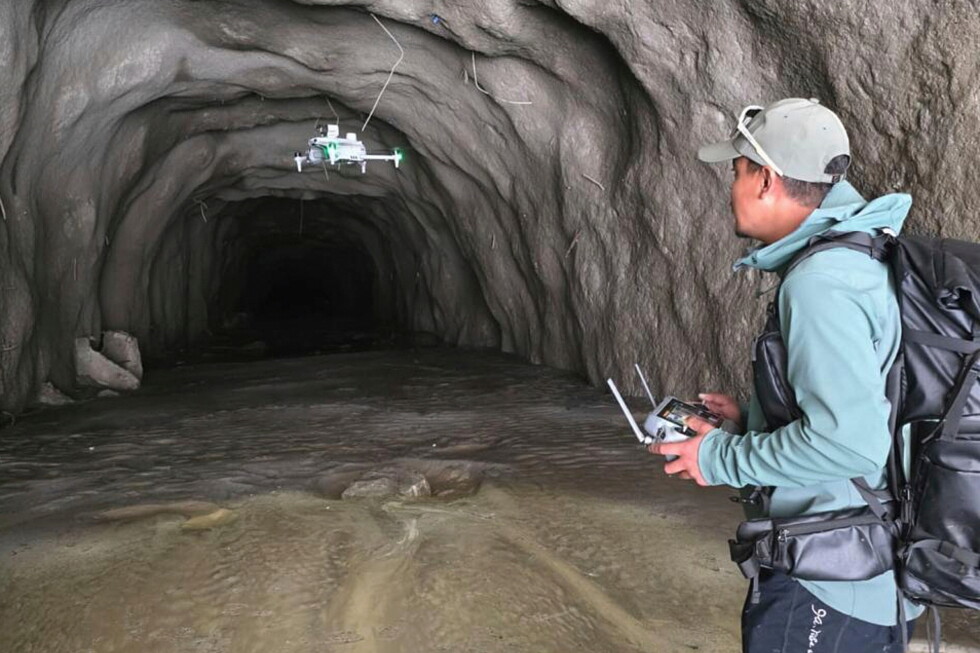
    While drones have successfully helped extract stranded people from open terrain, searching the collapsed hydropower tunnels has presented an entirely unprecedented set of challenges, Maharjan noted. When teams have scanned tunnel entrances, they found the structures completely packed solid with mud, dense as toothpaste squeezed into a tube, with no hollow or empty space left inside for survivors to take shelter.

    The disaster originated high in the Himalayas, when scientists analyzing post-event satellite imagery confirmed that a section of bedrock beneath a glacial formation collapsed, pulling a portion of the overlying glacier down with it. The scale of the rockfall was so massive that it registered as a magnitude 5.2 seismic event on global monitoring systems. The cascading rock and melted glacial water surged down into the river valleys below, creating a destructive wall of water that swept through communities and infrastructure across both Tibet and Nepal.

    The torrent destroyed critical regional infrastructure, including the under-construction and operating hydropower projects, highways, residential buildings, and bridges. According to Mohan Kumar Dangi, president of Nepal’s Independent Power Producers’ Association, some workers inside the tunnels managed to place emergency calls for help when the flood hit, and workers who successfully escaped confirmed their colleagues remained trapped inside. To date, there has been no confirmed contact with the trapped workers since those initial distress calls.

    As the clock ticks past the critical 72-hour window for rescue, search teams face rapidly dwindling odds of finding additional survivors. Survival experts emphasize that access to clean water and breathable air are non-negotiable for people trapped in disaster settings, and chances of survival drop sharply once the 72-hour mark passes without rescue.

    At the Rasuwagadhi hydropower project, Maharjan successfully maneuvered his drone all the way to the end of the tunnel’s main corridor, scanning every inch for signs of life. No signs of survival were detected. “We checked the space repeatedly, but the entire tunnel was just filled with mud and debris,” he said. “Just looking at the extent of the blockage, you can only imagine the incredible force of the flood that did this.”

    Tunnel search operations remain incredibly difficult beyond the full blockage at many sites, Maharjan added. The layout of most hydropower tunnels limits the ability of drones to operate effectively. “I can only safely and effectively fly drones in long, straight tunnel sections,” he explained. “Once there are bends, turns, or zigzags in the layout, controlling the drone and conducting a thorough search becomes exponentially harder.”

  • Robert Moreno hired as interim head coach as South Korea aims for calm after a turbulent summer

    Robert Moreno hired as interim head coach as South Korea aims for calm after a turbulent summer

    After a season of unprecedented turmoil that shook the foundations of South Korean men’s football this summer, the Korea Football Association (KFA) has formally named former Spain national team head coach Robert Moreno as the program’s new interim leader. Announced in a press statement Tuesday, Moreno’s initial contract covers six scheduled friendly and qualifying matches set for the September and November 2024 international match windows, with KFA officials confirming the deal could be extended to lead the squad through the 2027 Asian Cup, which kicks off in January next year.

    Hyun Young-min, who leads the KFA’s National Teams Committee, highlighted the key reasons behind the governing body’s selection, noting that Moreno stood out from other candidates thanks to his deep, nuanced grasp of Korean football and his knack for designing flexible, diverse tactical approaches tailored to the squad’s strengths. “We hope he and his new supporting staff will help lift our national team’s performance and put us back on a positive trajectory,” Hyun added.

    Moreno brings a wealth of top-tier coaching experience to the role. He took the helm of the Spanish men’s national team for a stint in 2019, and has since held senior head coaching positions at prominent European clubs including Ligue 1 side AS Monaco, La Liga outfit Granada, and most recently Russian Premier League club Sochi, where his contract concluded in August 2023.

    The top job for South Korea’s men’s national team has sat vacant since late June, when former manager Hong Myung-bo stepped down in the wake of the team’s unexpected group-stage elimination from 2026 FIFA World Cup qualifying. Widespread public anger over Hong’s 2024 appointment boiled over this summer, forcing not only Hong’s exit but also the resignation of long-time KFA president Chung Mong-gyu. Both figures were later called to testify under questioning during a parliamentary hearing held in July, capping a period of intense public and political scrutiny of the country’s football governing body.

    One of Moreno’s core mandates, KFA officials confirmed, is to reset the culture and mood of the national team as it works to rebuild following a brutal stretch of off-field and on-field disappointment. Moreno will make his debut on the South Korean sideline on September 24, when the team hosts Ecuador in a friendly match in Suwon, a major city just south of the capital Seoul.

  • Zambia’s president to be sworn in for second term while opponent detained

    Zambia’s president to be sworn in for second term while opponent detained

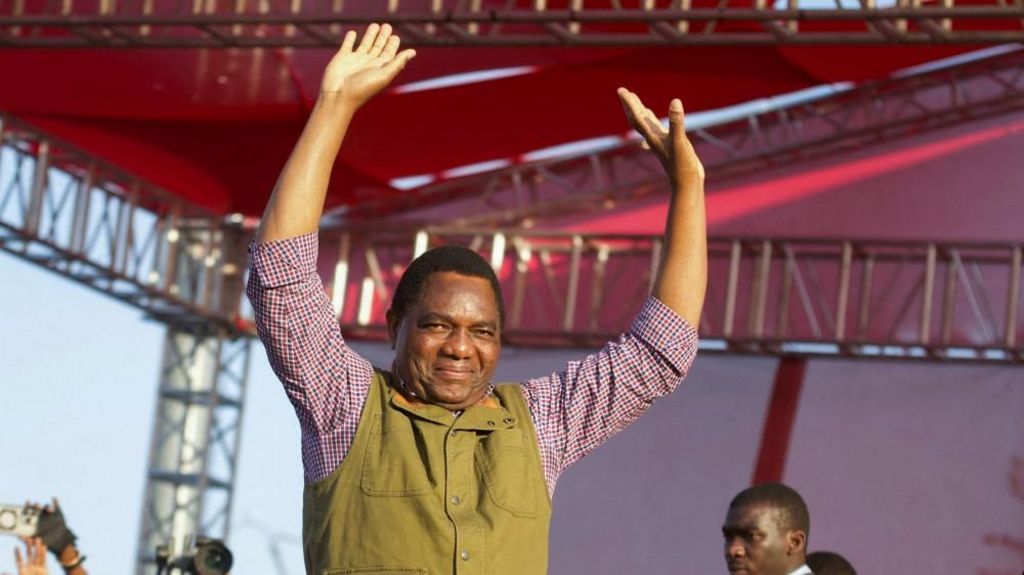
    Zambia is preparing to inaugurate President Hakainde Hichilema for his second five-year term on Tuesday, a ceremony that comes against a backdrop of contested election results, treason charges against the main opposition candidate, and mixed assessments of the country’s nascent economic recovery.

    According to official electoral commission results, Hichilema secured a decisive victory in the August 13 poll, capturing 60% of the national vote. His main challenger, Brian Mundubile of the opposition, finished second with 38% of ballots cast, but has rejected the outcome, claiming widespread tampering with the results. Mundubile was ultimately blocked from launching a formal legal challenge to the election, after court buildings were sealed off on the final deadline for filing petitions.

    International observer missions have echoed some of the opposition’s concerns over procedural irregularities. While most observers acknowledged that voting proceeded largely without violent disruption on polling day, multiple teams flagged significant flaws in the national vote tallying process. A European Union observer mission noted that staff at numerous tallying centers failed to document results on official paper sheets immediately after they were announced, creating a gap between public announcements and formal records. The mission also reported widespread weak cross-verification between digital result entries and physical paper records, and found that local returning officers often paused counting operations for extended periods while waiting for guidance from electoral headquarters.

    Tensions escalated sharply in the days after the poll. The day after voting concluded, Zambian security forces raided a Lusaka property linked to Mundubile. The operation left a former cabinet minister dead and resulted in the arrest of multiple opposition figures. State authorities claimed the raid was necessary to foil a planned armed insurrection by the opposition, a charge opposition leaders have firmly denied. After days in hiding, Mundubile and his running mate Makebi Zulu were taken into police custody last week and formally charged with treason over the weekend.

    For Hichilema, the inauguration marks the start of a new term built on the economic stabilization work he prioritized during his first term, which began in 2021. When the 64-year-old former businessman first took office following a 2021 landslide win, Zambia was grappling with a recent default on its international sovereign debt and annual inflation that surpassed 24%. In pre-election comments to the BBC, Hichilema emphasized the depth of the crisis his administration inherited, describing the country as broken and the economy as steadily declining.

    Over his first term, Hichilema’s government successfully negotiated a major restructuring of Zambia’s outstanding debt and repaired frayed relations with international creditors. Inflation has also been pulled down from the extreme highs recorded in 2021, though persistent price growth continues to place heavy cost-of-living pressure on ordinary Zambians, many of whom still struggle to afford basic goods and services. Ahead of his inauguration, Hichilema has signaled he will focus on expanding on the economic foundations laid during his first five years in office.

    The inauguration ceremony is scheduled to take place at Lusaka’s National Heroes Stadium, with a number of regional heads of state in attendance. Confirmed guests include the presidents of Kenya, Botswana, Zimbabwe, Namibia and Tanzania, among other African leaders. Hichilema will be sworn in alongside his vice presidential running mate, Mutale Nalumango, who will also begin her second term in office.

  • It’s taken me a long time to process Olympic experience – Raygun

    It’s taken me a long time to process Olympic experience – Raygun

    In the summer of 2024, breaking made its long-awaited debut as an official medal sport at the Paris Olympic Games, and one unexpected Australian competitor became the center of a global firestorm that extended far beyond the dance floor. 38-year-old Rachael Gunn, known professionally to the breaking community as Raygun, is far from a typical elite Olympic athlete: by trade, she is a university lecturer, who only stepped into full-time athletic training months before the Games.

    Gunn’s Olympic journey was fraught with personal struggle long before she stepped onto the Paris competition stage. Just hours before she marched alongside the Australian delegation in the Paris opening ceremony, the weight of her unexpected opportunity crashed down on her as she walked through the Olympic village, surrounded by some of the most experienced competitive athletes in the world. In an upcoming Netflix documentary chronicling her Games experience, Gunn recalled the overwhelming moment that left her questioning her place at the event.

    “I felt like an imposter,” Gunn shared in the film. After spotting a familiar Australian team member, she was unable to control her panic. “I just could not stop crying… I had a panic attack. ‘What am I doing? What have I done? Should I be doing this?’” Within hours, she had pulled herself together to sail down the River Seine in the opening ceremony parade, waving to crowds of spectators lining the riverbanks.

    Less than two weeks later, Gunn’s competitive run at the Paris Games came to an end. She failed to secure a win in any of her three round-robin battles, but the athlete said she left the competition proud of how she showed up. When she finished her final routine, reigning world champion Dominika “Nicka” Banevic publicly praised her movement, the event emcee celebrated her performance, and the overall atmosphere in the arena was overwhelmingly positive, she told BBC Sport.

    What Gunn could never have anticipated was that her signature routine, which featured playful, unconventional moves including a sprinkler and a kangaroo hop that paid homage to her Australian identity, would spread like wildfire across global social media. The clip of her performance spawned thousands of memes, earned a parody spot on *The Tonight Show Starring Jimmy Fallon*, was referenced by global pop star Adele during one of her concerts, and drew a public show of support from Hollywood star Chris Hemsworth during an interview on *Jimmy Kimmel Live!*. Even Australian Prime Minister Anthony Albanese stepped forward to publicly praise Gunn for taking the once-in-a-lifetime opportunity and giving it her all.

    “It was pretty wild the way I became a topic of conversation in spaces I never thought I would be,” Gunn said of the sudden global attention.

    Beneath the lighthearted viral attention, however, a darker wave of harassment and misinformation began to spread online. Baseless conspiracy theories emerged claiming nepotism had secured Gunn her Olympic spot, falsely alleging that her husband and personal trainer Samuel Free had sat on the national selection committee that approved her spot on the Australian team – a claim that was entirely untrue. “It was really tough when mine and Sammy’s credibility, ethics and motivations were being called into question,” Gunn said. “You could just spend 30 seconds researching and find plenty of sources to debunk these conspiracies, but that’s not how people use the internet anymore.”

    The unrelenting scrutiny and online trolling took a severe toll on Gunn’s mental health. “I felt like my whole life was just kind of crumbling before me… and I was just trying to get through the day,” she says in the documentary. But working with filmmakers to chronicle her experience has helped her regain control of her story after months of being defined by online criticism. “It’s taken a long time for me to process what happened,” Gunn told BBC Sport. “It’s really exciting for me to finally have a voice again.”

    Gunn’s path to Paris began after breaking was confirmed for the 2024 Games, when she secured her spot on the Australian team by winning qualification at the 2023 Oceania Breaking Championships in Sydney. “I’ve never participated in anything of such high stakes before. It was all international judges, but I was relieved and excited when I qualified. And then the next whirlwind happened,” she recalled.

    After qualification, Gunn quickly made the decision to adapt her life to meet the demands of Olympic competition, something she had never done before. In February 2024, she earned a scholarship from the New South Wales Institute of Sport, which allowed her to begin a structured strength and conditioning program. “That was great, but also overwhelming because I was training with people who had been doing that stuff since they were kids,” she noted.

    The documentary also uncovers additional personal struggles Gunn navigated during her pre-Games training: her mother suffered three separate brain aneurisms while she was preparing for competition, and Gunn began taking anti-depressants to manage chronic anxiety. As she competed in pre-Olympic qualifying events, she began to fully grasp the scale of the challenge she had taken on, competing against athletes who had trained at the highest level for decades. Even so, she committed to stepping onto the Olympic floor and giving her best performance.

    With that context, Gunn made a deliberate creative decision to lean into her unique strengths rather than trying to match her competitors’ elite athleticism. She designed a routine that leaned into creativity – one of the official judging criteria for Olympic breaking – that leaned into playful, distinctly Australian flair. “I was aware that I was never going to beat my competitors on athleticism,” she explained. “For me, my strength is creativity. With that being one of the [judging] criteria, our thinking was, ‘why don’t we put all our eggs in that basket and really try and wow them? Maybe we can make a moment.’ We never, ever expected the impact it might have.”

    The documentary also reveals that limited support was available to Gunn during her training: Lowe Napalan, head of the Australian Breaking Association, only worked with Gunn a handful of times before the Games, as he was overwhelmed by administrative duties for the new Olympic program. That meant Napalan saw Gunn’s viral routine for the first time when she stood side-stage waiting to compete in Paris. “I had to not have a face of shock,” Napalan admitted in the film.

    In late 2024, multiple reports claimed that the controversy surrounding her Olympic performance had pushed Gunn to quit breaking entirely. She is quick to correct that false narrative. “I don’t know where that came from,” Gunn said. “I wouldn’t let what happened take dancing away from me. I love breaking, I’ll always break, I’ll always be a part of the community.”

    Now, Gunn hopes her upcoming documentary will help reframe the conversation around her Olympic experience, allowing her to move forward after a year of turmoil. “It feels nice to lay it all out there and now be able to look to the future. I’m actually excited about what’s to come, which is the first time for a while,” she said. For anyone struggling with the mental health impacts of online harassment, support resources are available via the BBC Action Line.

  • US-Venezuela oil deal deepens China’s energy security squeeze

    US-Venezuela oil deal deepens China’s energy security squeeze

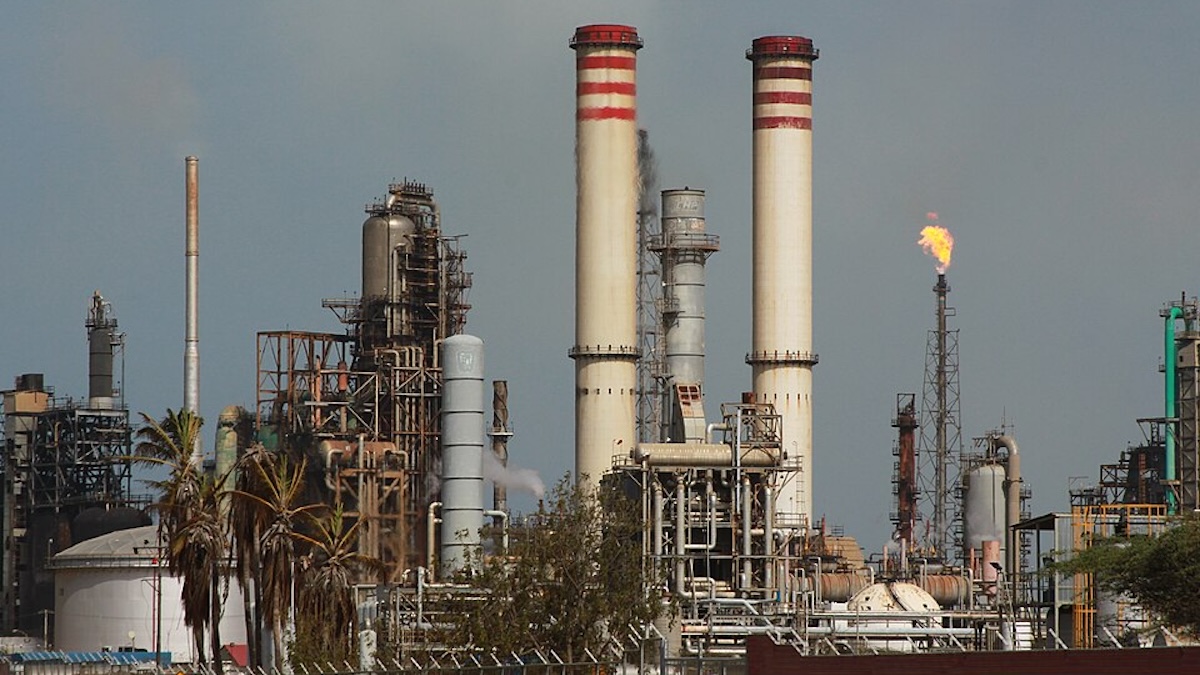
    In a move that promises to upend decades of global energy market dynamics and reconfigure geopolitical power balances, the United States has announced a historic oil agreement with Venezuela that analysts warn could cut off Chinese refiners from a longstanding source of low-cost crude and grant Washington unprecedented influence over international oil pricing.

    U.S. President Donald Trump first made the deal public on August 28, framing it as the largest oil transaction in modern world history. Under the terms of the arrangement, the U.S. secures majority control of more than 65 billion barrels of Venezuela’s proven oil reserves without any financial burden on American taxpayers. A U.S.-backed private venture will hold a 55% stake in oil production across 17 development blocks, with exploitation rights extending for a full century. Venezuelan authorities project the deal will generate more than $209 billion in additional tax revenue for Caracas and attract nearly $100 billion in private sector investment to the country’s energy sector.

    “This deal is a huge win for both the American and Venezuelan people,” stated Secretary of State Marco Rubio, the lead U.S. negotiator who finalized the agreement alongside Defense Secretary Pete Hegseth and Venezuela’s acting President Delcy Rodríguez.

    The geopolitical picture grows more complex when paired with a parallel U.S. sanctions campaign targeting Iran. Just four days before the Venezuela deal was announced, Treasury Secretary Scott Bessent unveiled Operation Economic Outcast, a sweeping set of sanctions designed to cut off all remaining government revenue streams for Iran. The campaign also intentionally restricts China’s access to discounted Iranian crude, with preliminary August data showing Chinese imports of Iranian oil falling to 534,000 barrels per day, down sharply from 823,000 bpd in July. The sanctions have disrupted the tanker, brokerage, and banking networks that facilitate China’s Iranian oil purchases, driving the steep decline.

    Chinese analysts have largely characterized the U.S.-Venezuela agreement as a significant setback for Beijing’s long-term energy security strategy. The consensus among most commentators is that the deal will allow the U.S. to reduce its reliance on oil imports from Canada and the Middle East, while forcing China to turn to more expensive crude supplies, particularly from Canada, leading to higher domestic fuel costs in China even as American consumers see lower prices at the pump.

    “The U.S. is already the world’s largest oil producer, and with control over these 65 billion barrels added on, its say over global oil prices will reach an unprecedented level,” wrote a Shaanxi-based columnist who uses the pen name Xiaoche. “The Organization of the Petroleum Exporting Countries (OPEC) will see its influence further weakened, and the geopolitical standing of traditional producers like Saudi Arabia and the United Arab Emirates will be challenged.”

    Xiaoche added that for China, a major net energy importer, the U.S. now holds an additional leverage point that can be deployed at any time to exert targeted pressure. “If Washington one day says it wants oil prices below a certain level, it may actually be able to make that happen,” he noted. He also argued that Venezuela has effectively become an economic dependency of the U.S., ceding full control over production, pricing, and sales of its massive reserve, with Rodríguez’s political position now dependent on U.S. backing that leaves Caracas with very limited policy independence. “This episode shows how, when the stakes are large enough, rules can be rewritten and sovereignty redefined,” he said. However, he also pointed out that China and Russia, both of which hold substantial Venezuelan debt claims, are unlikely to accept the U.S. takeover passively. The two countries are expected to use diplomatic pressure and targeted economic support to back anti-U.S. factions within Venezuela, creating long-term obstacles for Washington’s ambitions.

    Following the announcement of the deal, Bloomberg reported on August 29 that Venezuelan officials are actively considering a full withdrawal from OPEC, a move that aligns with Caracas’s deepening alignment with U.S. interests following the capture of former President Nicolás Maduro by U.S. forces earlier this year. While the proposal has been discussed with U.S. officials, no final decision has been made. A withdrawal from OPEC would free Venezuela from the cartel’s production quotas at a time when the country, currently pumping just 1.16 million barrels per day, is looking to sharply increase output under the new U.S. development deal.

    Shaanxi-based energy commentator Zhenqing noted that a full Venezuelan exit from OPEC would trigger a profound restructuring of the global energy market, touching three core pillars of the current system: First, the U.S. dollar would almost certainly regain its status as Venezuela’s primary currency for oil settlement, reversing a partial shift toward the euro, yuan, and cryptocurrencies that was pushed forward by previous sanctions, strengthening the decades-old petrodollar system. Second, U.S. Treasury yields would become more stable, as increased U.S.-controlled oil supply reduces the risk of extreme price volatility, easing domestic inflation pressure and giving the Federal Reserve more flexibility to manage interest rates. Third, the cohesion of the broader OPEC+ alliance would face additional strain, as available spare capacity would become even more concentrated in Saudi Arabia and Russia, particularly if Venezuela ramps up output outside of OPEC+ production caps. This would complicate the alliance’s market management efforts through 2027.

    Zhenqing added that while China would face indirect headwinds from these shifts, the direct impact on Chinese refiners would be mild and manageable, since Venezuelan crude accounts for less than 3% of China’s total oil imports, even after the loss of discounted supply.

    The new agreement is the most visible outcome of a broader shift in U.S. grand strategy toward the Western Hemisphere, rooted in the Trump administration’s December 2025 National Security Strategy that introduced a “Trump Corollary” to the 19th-century Monroe Doctrine. The doctrine pledges to expand U.S. military and economic influence across the Americas, prioritize development of the region’s strategic resources in partnership with regional allies, reposition U.S. military forces to address hemispheric threats, and make energy dominance across oil, gas, coal, and nuclear power a core national priority to create domestic jobs, lower energy costs, and curb the influence of rival global powers.

    Chinese state media has framed the U.S. strategic shift to the Americas as a victory for Beijing in the ongoing U.S.-China trade war, arguing that it represents a U.S. retreat from the Indo-Pacific region. Following the release of the new strategy, the Trump administration moved quickly to implement its agenda: U.S. forces captured Maduro on January 3, 2026, and launched direct strikes against Iran on February 28 – a country outside the Western Hemisphere, but central to the U.S. goal of global energy dominance as a major oil producer.

    Not all Chinese commentary has been uniformly negative, however. Some analysts have pointed to potential silver linings, noting that deeper U.S. involvement in Venezuela’s oil sector could help Chinese stakeholders recover decades of outstanding investments in the country. “Over the past decade or so, China has provided Venezuela with total loans of $50 billion to $60 billion through platforms including the China-Venezuela Joint Fund, mostly financing infrastructure such as railways, power plants, housing and oilfield upgrades,” explained Henan-based commentator Tangtangtutu. “Venezuela agreed to repay the principal and interest by channeling part of its oil export earnings into designated accounts.”

    Tangtangtutu noted that outstanding loans still total between $10 billion and $20 billion, and the original “oil-for-debt” repayment mechanism was cut off after the U.S. took control of Venezuela’s oil sales. But he added that expanded Venezuelan exports under the new deal could improve Caracas’s fiscal position, making debt repayment to China more likely than it has been in recent years. Under current expectations, Beijing is likely to either extend the repayment timeline or continue accepting oil in lieu of cash payments, rather than agreeing to major debt write-downs.

    Other commentators have noted that even though Chinese refiners are being forced to switch to more expensive Canadian heavy crude – which currently trades $8 to $9 higher per barrel than Venezuelan heavy crude – the shift is not entirely a negative outcome. Yunnan-based writer Xiaoman pointed out that Canadian oil sands crude has a similar chemical profile to Venezuela’s heavy crude, requiring only minor adjustments to Chinese refinery infrastructure. Additionally, shorter shipping routes from Canada to China mean faster delivery turnaround times and more consistent supply chains, offsetting some of the higher per-barrel cost.

  • Indonesia doubles down on coal to power its aluminum expansion

    Indonesia doubles down on coal to power its aluminum expansion

    The ongoing Iran war has sent shockwaves through the global aluminum market, disrupting regional supply chains and opening an unexpected window of opportunity for resource-rich Indonesia to dramatically scale up its production of the ubiquitous industrial metal. But the Southeast Asian nation’s ambitious expansion plan, powered almost entirely by newly built coal-fired facilities, stands in direct contradiction to global and national pledges to cut carbon emissions and curb the worst effects of climate change.

    Aluminum, a lightweight silver metal used in everything from consumer packaging and power transmission infrastructure to smartphones and electric vehicles, has long relied on the Middle East for roughly 9% of global annual output. Commodities analytics firm Fastmarkets projects that regional production will plummet by 44% this year compared to pre-conflict 2025 levels, driven by widespread energy shortages, Iranian strikes that damaged key industrial facilities in Bahrain, and production cuts across major producers including Qatar Aluminium Ltd. Emirates Global Aluminium has even been forced to exit existing supply deals amid persistent energy instability.

    This supply shock has sent global aluminum prices swinging: prior to the outbreak of the war, a metric ton of aluminum traded between $3,150 and $3,250, peaking at $3,780 per metric ton in June before settling at around $3,400 in recent trading. Andy Farida of Fastmarkets explained that the uncertainty around Middle Eastern supply has forced industrial end-users to seek alternative sources, accelerating a global shift in aluminum production that has catapulted Indonesia into a new role as a major global supplier. “When that supply is so unsure, end users look for alternatives,” Farida said. “The war has really accelerated this transformation and put Indonesia on the map.”

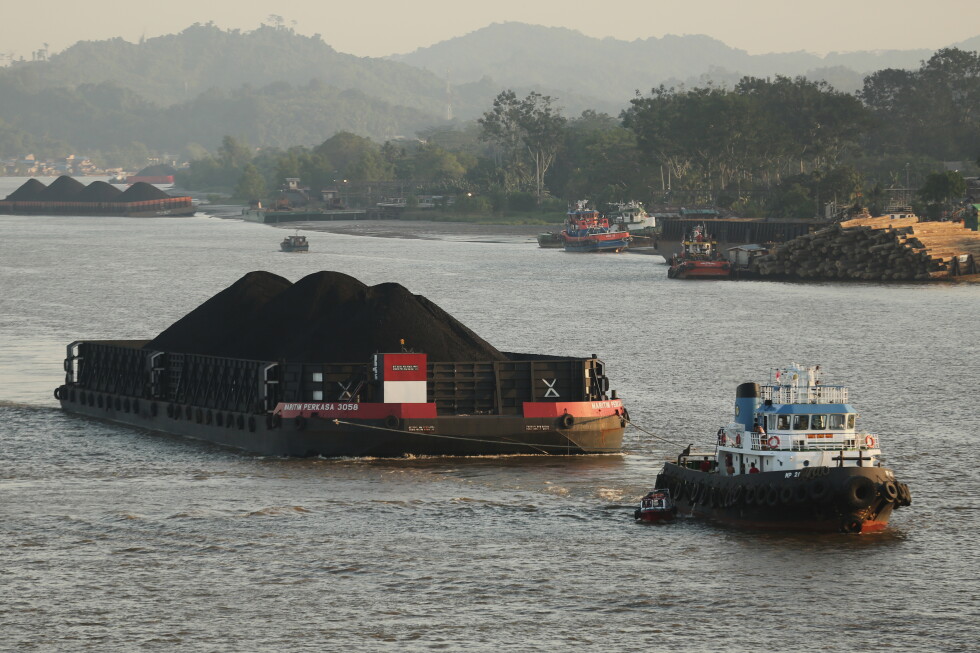
    Indonesia’s expansion targets are aggressive: according to the Centre for Research on Energy and Clean Air (CREA), a Finland-based non-profit research organization, the country aims to quadruple its alumina output to 32.5 million metric tons by the end of the decade, and ramp up primary aluminum production from roughly 1 million metric tons in 2025 to 14.5 million metric tons by 2030. Unlike many decarbonization-focused production projects, however, nearly all new Indonesian smelters will be powered by dedicated off-grid coal-fired power plants, referred to as “captive coal” facilities. CREA is currently tracking 32 planned captive coal projects exclusively built to power aluminum smelters, most of which are developed by private companies.

    Syahdiva Moezbar, a Jakarta-based researcher with CREA, noted that there is a striking lack of public emissions data for these facilities, creating a largely unmonitored expansion of highly polluting energy infrastructure. “This captive coal boom all over Indonesia is essentially not tracked. That is why it’s very concerning,” Moezbar said. The plan directly contradicts Indonesia’s existing international pledges to phase out coal, the most carbon-intensive major fossil fuel and a leading driver of global warming. It also mirrors the environmental tradeoffs already seen in Indonesia’s rapid expansion of its nickel industry, where widespread deforestation and ecosystem degradation have been traded for rapid industrial growth.

    The global aluminum industry already accounts for roughly 2% of annual global greenhouse gas emissions, equal to around 1.1 billion tons of carbon dioxide equivalent per year — more than the total annual emissions of most entire countries, according to the World Economic Forum. Even more concerning, CREA estimates that if all planned Indonesian projects come online by 2030, the country’s domestic bauxite ore reserves, the core raw material for aluminum production, will be depleted in less than 12 years.

    Indonesia’s aluminum boom would not be possible without major Chinese investment. CREA data shows Chinese firms have already poured between $5.5 billion and $6 billion into Indonesia’s aluminum sector, with total investment projected to surge to $30 billion by 2030. Putra Adhiguna, a researcher with the Jakarta-based Energy Shift Institute, explained that Chinese investment flows follow a decade-old policy shift: after Beijing imposed a domestic cap on aluminum production in 2017 to curb overcapacity and cut domestic pollution, Chinese firms began shifting high-emission smelting operations to countries with looser environmental regulations, including Indonesia.

    Indonesia classifies aluminum and nickel as “transition minerals” due to their widespread use in clean energy technologies such as electric vehicle batteries and solar panels. This classification creates a critical regulatory loophole that allows coal-powered production projects to be framed as consistent with global climate commitments — even despite Chinese President Xi Jinping’s 2021 pledge to halt public funding for overseas coal-fired power projects. Binbin Mariana, a policy analyst with environmental advocacy group Market Forces, called this loophole extraordinarily large, saying the framing of coal-powered aluminum as a green product amounts to blatant greenwashing. “It is a huge loophole, an elephant can go through the loophole,” Mariana said. “You say it’s a green product, but it is powered by coal… That’s definitely greenwashing.”

    While aluminum smelting can run on lower-emission energy sources such as hydropower, building that renewable infrastructure would require more time and larger upfront investment. Adhiguna said Indonesia has chosen to prioritize speed to capitalize on the supply opportunity created by the Iran war, and that rush to develop is the root of much of the environmental and social risk. “The speed factor is really what is causing the havoc,” Adhiguna said. “This is really running against the grain, against the spirit, of the commitment to the climate movement.”

    Muhammad Al Amin, a senior official with WALHI, Indonesia’s largest environmental advocacy nonprofit, warned that expanding captive coal capacity for aluminum will worsen the toxic seasonal haze that regularly blankets major Southeast Asian cities including Jakarta. WALHI has already led campaigns against coal expansion on Sulawesi, the island at the center of Indonesia’s nickel production boom, where local communities have already reported widespread health and livelihood impacts from coal-powered industrial development. “If companies want to expand captive coal to aluminum, I think it is very bad news and a very bad development,” Al Amin said. “We have seen it, we have felt it — how communities suffer from the captive coal impact.”

  • Russian barrage of drones and missiles on Ukraine’s capital region kills at least 11

    Russian barrage of drones and missiles on Ukraine’s capital region kills at least 11

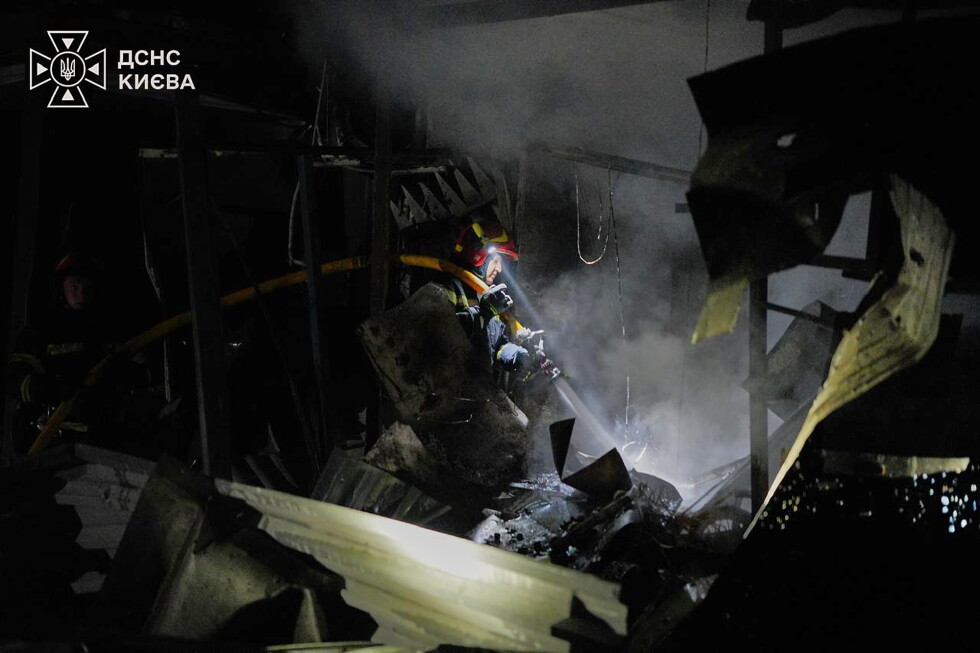
    In a sustained escalation of air attacks targeting Ukrainian population centers, Russia launched another massive overnight aerial barrage that extended into Tuesday morning, leaving at least 11 civilians dead and more than 10 others injured, three of whom are children, according to local Ukrainian officials. The coordinated assault, which began at 6 p.m. Monday, marked the sixth straight day of targeted strikes on Ukraine’s capital Kyiv, part of an unbroken, multi-day campaign of air raids that first launched last week. Ukrainian Air Force officials reported that Russia deployed a wide arsenal of weaponry for the attack, including ballistic missiles, cruise missiles, anti-radar missiles, 218 attack drones and decoy aerial devices. Roughly one-third of the drones deployed were powered by jet engines, a faster and more lethal platform that has become increasingly common in recent Russian strikes, officials added. Primary targets for the latest assault were concentrated in the Kyiv and Odesa regions, the Ukrainian Air Force confirmed in an official statement posted to Telegram. The unrelenting pace of attacks has left Kyiv and its civilian population trapped in prolonged danger and daily disruption, with strikes occurring around the clock across both daytime and overnight hours, and air raid alerts remaining active at a near-constant rate across the capital. The latest barrage hit civilian infrastructure and residential properties across multiple districts of Kyiv. Eight fatalities were recorded within Kyiv city limits, while three additional deaths occurred in surrounding areas of the Kyiv region. Seven of the capital’s deaths were concentrated in the Darnytskyi district, where emergency services confirmed one person was critically wounded and admitted to a local hospital. At a second impact site in the same district, an explosion left two people injured, one of them a child. An eighth fatality was recorded in Kyiv’s Holosiivskyi district, where a non-residential building was struck and ignited a large blaze, emergency services said. In the Solomianskyi district, a drone strike hit a multi-unit residential building, causing extensive structural damage. First responders managed to rescue one man and extract a woman who had been trapped under fallen rubble after the strike. Across the broader Kyiv region, outside the capital’s city boundaries, three people were killed and 12 others were injured. In the Kyiv suburb of Boryspil, which hosts one of Ukraine’s largest international airports, the strike left three vehicles engulfed in flames and damaged a local infrastructure facility, where a truck also caught fire. Emergency teams evacuated 48 local residents and pulled two people alive from collapsed rubble. Eight people in Boryspil suffered injuries, including two children. Two people were killed at the damaged infrastructure site, while one additional fatality was recorded at a damaged local service station in the city. Further south, the Odesa region also suffered a major Russian overnight attack that damaged multiple pieces of civilian infrastructure and left one person wounded, according to regional governor Oleh Kiper. Two residential buildings suffered damage, and a large fire broke out at a local sewing factory in the strikes. Russian forces also targeted the Orlivka international ferry crossing, which connects Ukraine to neighboring Romania on the Black Sea coast, Kiper confirmed. For their part, Ukrainian air defense forces announced that they successfully intercepted and neutralized 199 aerial targets launched in the assault, including five ballistic missiles and 187 drones. Ukrainian military officials noted that missile and drone impact sites were recorded across 28 Ukrainian locations, while debris from downed Russian weapons fell across 10 additional sites that were not directly targeted. This ongoing coverage of the Russia-Ukraine conflict can be found in full at the Associated Press’ dedicated conflict hub.

  • Kenya aviation workers end strike that paralyzed airport operations in the capital

    Kenya aviation workers end strike that paralyzed airport operations in the capital

    Two days of crippling work stoppage that shut down large swathes of air travel across Kenya, including its busiest international gateway in Nairobi, has been brought to an abrupt end after union leaders and airport management brokered a last-minute agreement. The Kenya Aviation Workers Union, which launched the go-slow industrial action on Sunday, announced the immediate termination of the strike on Tuesday, confirmed union head Moss Ndiema. The walkout, which impacted not only Nairobi’s Jomo Kenyatta International Airport – a critical regional and international travel hub for East Africa – but also aviation operations across the country, left thousands of passengers trapped, with hundreds of flights canceled or delayed. Since the strike began, travelers have described chaotic scenes across airport terminals, with many forced to sleep on waiting room floors and miss critical personal and professional commitments. Among those stranded was Hellen Moraa, a business traveler who was scheduled to fly to the Netherlands via Dubai. Speaking to reporters at the airport on Monday, Moraa warned the unplanned disruptions would lead to significant financial losses for her, labeling the work stoppage an unfair burden for ordinary passengers. The root of the latest industrial action lies in long-simmering grievances from unionized aviation staff, who have raised complaints over what they call unfair hiring practices, uncompetitive compensation packages, and controversial proposed changes to the senior management structure of Jomo Kenyatta International Airport. The airport has a long history of repeated, intermittent labor unrest, as workers continue to push for meaningful improvements to both pay scales and working conditions. A comparable work stoppage back in February 2024 also left hundreds of passengers stranded at the hub, highlighting the ongoing instability that has plagued Kenya’s aviation sector for months. Following the announcement of the deal between the union and Kenya Airports Authority, aviation officials have begun the gradual process of clearing the backlog of stranded passengers and rescheduling canceled flights, though travelers are still being advised to expect residual delays over the next 24 hours as operations return to normal.

  • Stocks slip on Wall Street under pressure from rising oil prices, bond sell-off

    Stocks slip on Wall Street under pressure from rising oil prices, bond sell-off

    Wall Street kicked off September on a downbeat note Tuesday, with major stock indices retreating as climbing crude oil prices reignited investor fears over persistent inflation and tighter future monetary policy. As of 10:51 a.m. Eastern Time, the benchmark S&P 500 fell 0.4%, the Dow Jones Industrial Average dipped 164 points (0.3%), and the tech-heavy Nasdaq composite dropped 0.7%.

    This weak opening comes after a generally positive but volatile August, when every major U.S. stock index secured monthly gains. Yet long-running economic anxieties continue to hang over global markets, with concerns over sticky inflation, ballooning government debt and the spillover effects of global geopolitical conflicts weighing heavily on investor sentiment.

    Technology stocks bore the brunt of the sell-off, pulling the broader market down due to their outsized market capitalizations. Chipmaking giant Nvidia declined 1.2%, while rival Advanced Micro Devices fell 2.9% amid the downward pull.

    A key source of market pressure stems from the ongoing global sell-off in government bonds, which has pushed yields steadily higher. The yield on the 10-year U.S. Treasury note, which heavily influences domestic mortgage rates, climbed to 4.77% from 4.75% at Monday’s close, up sharply from a 2026 starting low of 4.20%. The 2-year Treasury yield, which closely tracks market expectations for Federal Reserve interest rate movements, also ticked up to 4.37% from 4.34%, a substantial rise from its 3.50% level at the start of 2026. Bond yields move inversely to bond prices, and rising yields reflect investor demand for higher returns as sovereign debt risk grows amid expanding national deficit levels. Just two weeks ago, the U.S. national debt crossed the $40 trillion threshold, a milestone that has drawn fresh attention to the country’s unsustainable spending trajectory, where defense costs and interest payments on the growing deficit already account for a massive share of federal outlays. Bond sell-offs are not isolated to the U.S., with sovereign debt facing similar pressure across other major global economies.

    Higher bond yields translate to elevated borrowing costs for a wide range of consumer and business loans, from home mortgages to corporate lines of credit. These higher costs dampen overall economic activity, weigh on corporate valuations and discourage business expansion, creating broad headwinds for equity markets.

    At the center of the current inflation and yield pressure is the recent surge in global oil prices. International benchmark Brent crude rose 2% to $92.28 per barrel on Tuesday, with costs remaining high and volatile following U.S. military strikes on Iranian sites in the Strait of Hormuz. The strategic waterway is responsible for roughly 20% of global oil shipments, and ongoing conflict has effectively disrupted regular passage through the route.

    Surging oil prices have pushed up costs across nearly every sector of the economy, from retail gasoline to freight shipping, sustaining inflation that has continued to squeeze household budgets and corporate profit margins. Current U.S. inflation remains well above 3%, far exceeding the Federal Reserve’s 2% long-term target. The persistently high price environment has fueled expectations that the Fed will implement another interest rate hike before the end of the year to cool price growth. According to CME Group’s FedWatch tool, investors are currently pricing in a 66% probability of a rate increase at the central bank’s upcoming September policy meeting.

    The Fed will receive new inflation data ahead of its scheduled meeting, and this week also brings key updates on the state of the U.S. labor market, a key factor influencing the central bank’s policy decisions. On Tuesday, government data showed U.S. job openings rose slightly in July, and the closely watched monthly nonfarm payrolls report for August is set for release on Friday.

    Global markets echoed the downward trend on Tuesday: major European stock indices traded lower, while Asian markets finished the session mixed. AP Business Writers Elaine Kurtenbach, Michelle Chapman and Matt Ott contributed reporting to this article.