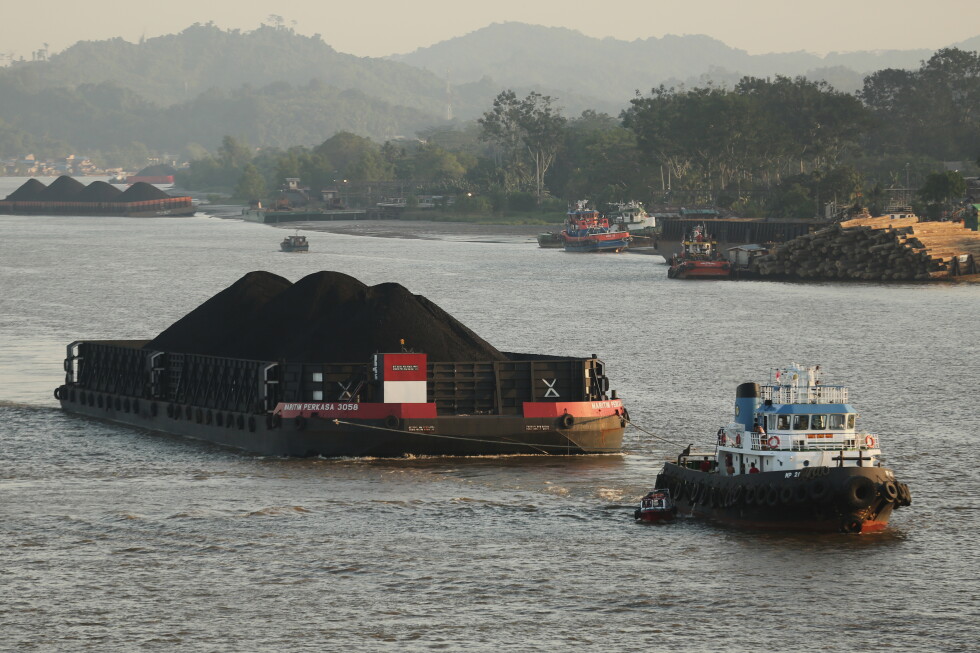
The ongoing Iran war has sent shockwaves through the global aluminum market, disrupting regional supply chains and opening an unexpected window of opportunity for resource-rich Indonesia to dramatically scale up its production of the ubiquitous industrial metal. But the Southeast Asian nation’s ambitious expansion plan, powered almost entirely by newly built coal-fired facilities, stands in direct contradiction to global and national pledges to cut carbon emissions and curb the worst effects of climate change.
Aluminum, a lightweight silver metal used in everything from consumer packaging and power transmission infrastructure to smartphones and electric vehicles, has long relied on the Middle East for roughly 9% of global annual output. Commodities analytics firm Fastmarkets projects that regional production will plummet by 44% this year compared to pre-conflict 2025 levels, driven by widespread energy shortages, Iranian strikes that damaged key industrial facilities in Bahrain, and production cuts across major producers including Qatar Aluminium Ltd. Emirates Global Aluminium has even been forced to exit existing supply deals amid persistent energy instability.
This supply shock has sent global aluminum prices swinging: prior to the outbreak of the war, a metric ton of aluminum traded between $3,150 and $3,250, peaking at $3,780 per metric ton in June before settling at around $3,400 in recent trading. Andy Farida of Fastmarkets explained that the uncertainty around Middle Eastern supply has forced industrial end-users to seek alternative sources, accelerating a global shift in aluminum production that has catapulted Indonesia into a new role as a major global supplier. “When that supply is so unsure, end users look for alternatives,” Farida said. “The war has really accelerated this transformation and put Indonesia on the map.”
Indonesia’s expansion targets are aggressive: according to the Centre for Research on Energy and Clean Air (CREA), a Finland-based non-profit research organization, the country aims to quadruple its alumina output to 32.5 million metric tons by the end of the decade, and ramp up primary aluminum production from roughly 1 million metric tons in 2025 to 14.5 million metric tons by 2030. Unlike many decarbonization-focused production projects, however, nearly all new Indonesian smelters will be powered by dedicated off-grid coal-fired power plants, referred to as “captive coal” facilities. CREA is currently tracking 32 planned captive coal projects exclusively built to power aluminum smelters, most of which are developed by private companies.
Syahdiva Moezbar, a Jakarta-based researcher with CREA, noted that there is a striking lack of public emissions data for these facilities, creating a largely unmonitored expansion of highly polluting energy infrastructure. “This captive coal boom all over Indonesia is essentially not tracked. That is why it’s very concerning,” Moezbar said. The plan directly contradicts Indonesia’s existing international pledges to phase out coal, the most carbon-intensive major fossil fuel and a leading driver of global warming. It also mirrors the environmental tradeoffs already seen in Indonesia’s rapid expansion of its nickel industry, where widespread deforestation and ecosystem degradation have been traded for rapid industrial growth.
The global aluminum industry already accounts for roughly 2% of annual global greenhouse gas emissions, equal to around 1.1 billion tons of carbon dioxide equivalent per year — more than the total annual emissions of most entire countries, according to the World Economic Forum. Even more concerning, CREA estimates that if all planned Indonesian projects come online by 2030, the country’s domestic bauxite ore reserves, the core raw material for aluminum production, will be depleted in less than 12 years.
Indonesia’s aluminum boom would not be possible without major Chinese investment. CREA data shows Chinese firms have already poured between $5.5 billion and $6 billion into Indonesia’s aluminum sector, with total investment projected to surge to $30 billion by 2030. Putra Adhiguna, a researcher with the Jakarta-based Energy Shift Institute, explained that Chinese investment flows follow a decade-old policy shift: after Beijing imposed a domestic cap on aluminum production in 2017 to curb overcapacity and cut domestic pollution, Chinese firms began shifting high-emission smelting operations to countries with looser environmental regulations, including Indonesia.
Indonesia classifies aluminum and nickel as “transition minerals” due to their widespread use in clean energy technologies such as electric vehicle batteries and solar panels. This classification creates a critical regulatory loophole that allows coal-powered production projects to be framed as consistent with global climate commitments — even despite Chinese President Xi Jinping’s 2021 pledge to halt public funding for overseas coal-fired power projects. Binbin Mariana, a policy analyst with environmental advocacy group Market Forces, called this loophole extraordinarily large, saying the framing of coal-powered aluminum as a green product amounts to blatant greenwashing. “It is a huge loophole, an elephant can go through the loophole,” Mariana said. “You say it’s a green product, but it is powered by coal… That’s definitely greenwashing.”
While aluminum smelting can run on lower-emission energy sources such as hydropower, building that renewable infrastructure would require more time and larger upfront investment. Adhiguna said Indonesia has chosen to prioritize speed to capitalize on the supply opportunity created by the Iran war, and that rush to develop is the root of much of the environmental and social risk. “The speed factor is really what is causing the havoc,” Adhiguna said. “This is really running against the grain, against the spirit, of the commitment to the climate movement.”
Muhammad Al Amin, a senior official with WALHI, Indonesia’s largest environmental advocacy nonprofit, warned that expanding captive coal capacity for aluminum will worsen the toxic seasonal haze that regularly blankets major Southeast Asian cities including Jakarta. WALHI has already led campaigns against coal expansion on Sulawesi, the island at the center of Indonesia’s nickel production boom, where local communities have already reported widespread health and livelihood impacts from coal-powered industrial development. “If companies want to expand captive coal to aluminum, I think it is very bad news and a very bad development,” Al Amin said. “We have seen it, we have felt it — how communities suffer from the captive coal impact.”