博客

  • Liberals sweep three seats in boost for Carney after trade tensions with US

    Liberals sweep three seats in boost for Carney after trade tensions with US

    In a significant show of political force that underscores continued public confidence in Prime Minister Mark Carney’s leadership, Canada’s ruling Liberal Party claimed victory in all three federal parliamentary by-elections held across the country on Monday. The outcome comes more than a year into Carney’s premiership, and on the heels of high-stakes trade friction with the United States that appears to have rallied domestic support behind the government.

    The special elections were called to fill vacancies left by the resignations of three sitting Members of Parliament. The most high-profile upset came in the Quebec riding of Chicoutimi-Le Fjord, where the Liberals flipped the seat from the official opposition Conservative Party. In the other two contests, held in Beaches-East York (Ontario) and North Vancouver-Capilano (British Columbia), the governing party held onto the seats, matching pre-election polling projections.

    Carney’s standing in national opinion polls has risen sharply since he made the decision to end stalled trade negotiations with the U.S., accusing Washington of pushing unfair terms that would harm Canadian economic interests. Taking to social media platform X to celebrate the by-election results, the prime minister congratulated the three winning Liberal candidates and struck a determined tone on the challenges ahead. “Canada is being tested in a changing world, and Canadians are up for it,” Carney wrote.

    The clean sweep preserves Carney’s narrow working majority in the House of Commons, a critical outcome for the government’s legislative agenda going forward.

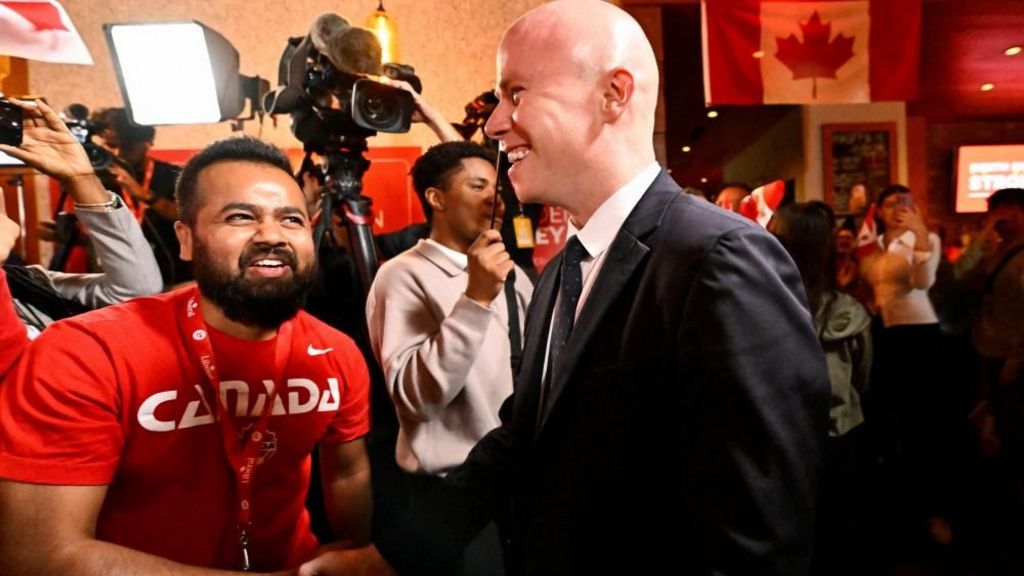
    Canadian election projections confirmed a commanding victory for the Liberals in Chicoutimi-Le Fjord. The party’s candidate, Daniel Gobeil, a third-generation dairy farmer, won more than 50% of the popular vote to claim the seat, defeating Bloc Québécois (second) and Conservative (third) challengers. This marked a shift from the previous election in the riding, which was a tight three-way contest. Speaking to supporters in French, Gobeil framed the win as a mandate for advancing national unity across all regions of Canada, according to public broadcaster CBC.

    In Ontario, Tanveer Shahnawaz secured the Beaches-East York seat for the Liberals, while Braeden Caley held the North Vancouver-Capilano riding for the party in British Columbia, capping off an undefeated night for the governing bloc.

    The results add to a string of struggles for the Conservative Party, which has failed to narrow its polling gap with the Liberals since losing the 2025 federal election. Current national surveys show the Conservatives trailing Carney’s party by roughly 10 percentage points. Since the April 2025 vote, four Conservative MPs have crossed the floor to join the Liberals, while three more have resigned or announced plans to leave office. The Quebec seat contested on Monday was vacated when former Conservative MP Richard Martel resigned last month after Carney appointed him to the unelected Canadian Senate.

    The loss of Martel’s former seat delivers another major blow to Conservative leader Pierre Poilievre, who won a landslide leadership confidence vote in January but has faced growing scrutiny over his ability to connect with Canadian voters in the current political climate.

    Meanwhile, new polling data released Monday by Canadian research firm Abacus Data shows Carney’s government approval rating has risen four percentage points in recent weeks, alongside a matching jump in the prime minister’s personal popularity. Abacus Data founder David Coletto attributes the upward trend to two key factors: deeply negative views of U.S. President Donald Trump among Canadian voters, and a national rallying effect around Carney’s decision to walk away from unfavorable trade talks with the White House.

    Coletto noted that the shift in approval is most dramatic in Quebec, where Carney’s personal approval rating is now higher than in any other Canadian province. The province is also set to bear the brunt of new 50% tariffs on a wide range of Canadian goods imposed by Trump, which took effect after trade talks collapsed earlier this month. Global forecasting firm Oxford Economics recently warned that Quebec could lose up to C$2 billion ($1.4 billion) in annual economic output by 2028 if the tariffs remain in place.

  • Why finding missing workers from Nepal’s hydropower tunnels is proving to be difficult

    Why finding missing workers from Nepal’s hydropower tunnels is proving to be difficult

    ### Race Against Time: Nepal Flood Disaster Traps Hundreds in Hydropower Tunnels, Exposes Critical Rescue Gaps

    In the wake of catastrophic flash flooding that has already claimed more than 1,000 lives across Nepal and southern China, rescue teams in Nepal are locked in a desperate race against the 72-hour critical window for disaster survival to locate hundreds of missing construction and operational workers, hundreds of whom are feared trapped inside flood-ravaged hydropower project tunnels.

    Official and industry data confirms that at least 900 workers from affected hydropower facilities remain unaccounted for, with an estimated 500 believed to be trapped deep inside damaged underground tunnel networks. Access to these remote sites has been severely compromised by the flooding, which left behind massive debris fields, washed out critical infrastructure, and cut off most access routes to the affected projects.

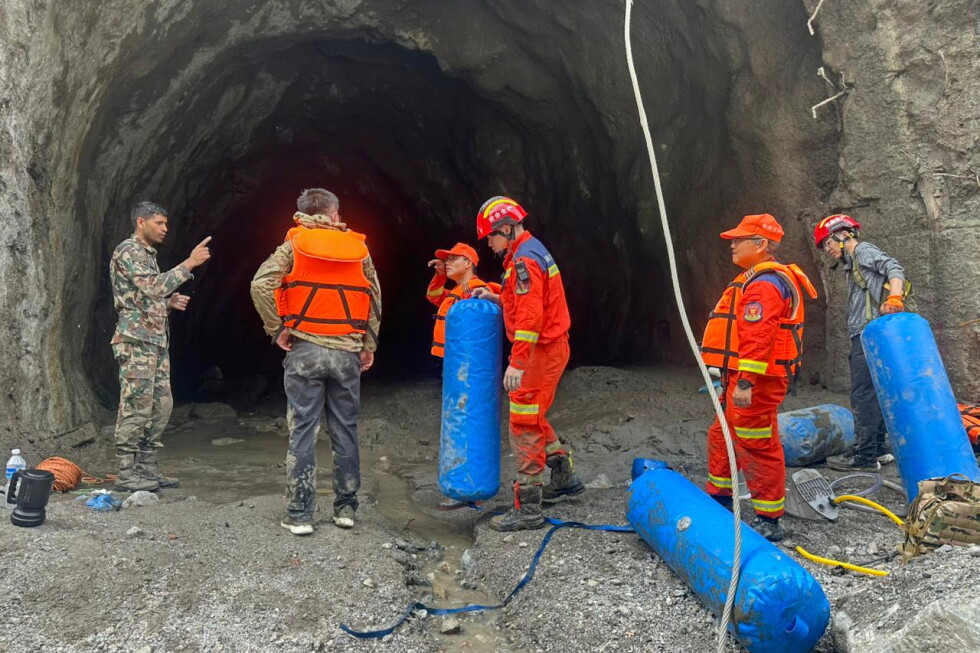
    According to Brigadier General Raja Ram Basnet, spokesperson for the Nepal Army, rescue operations are currently underway at multiple affected sites, with support from international technical experts. Released army footage documents the grueling conditions rescuers face: teams navigate pitch-black tunnels choked with mud and debris, wading through thick silt and scrambling over loose rock dislodged by floodwaters to search for any signs of the missing.

    Mohan Kumar Dangi, president of the Independent Power Producers Association of Nepal, outlined the scale of damage to the country’s hydropower sector: at least 12 projects spanning the Rasuwa and Nuwakot districts, with a total combined energy generation capacity of 670 megawatts, have sustained major damage. Of the affected facilities, four were still under active construction, seven were fully operational, and one was in pre-launch testing when the floods struck on August 26. Despite mandatory risk assessments and geological surveys completed prior to construction, Dangi described the extreme flood event as “something unimaginable” that exceeded all projected disaster scenarios.

    The single greatest barrier to rescue efforts remains access to the trapped workers. Most of Nepal’s hydropower projects are sited in remote, steep mountainous terrain, where narrow, winding roads are already vulnerable to disruption. The flooding compounded these challenges, destroying paved routes and leaving few passable paths to project sites. Even when tunnel entrances can be reached, floodwaters carried massive boulders, mud, and timber debris into underground passages, collapsing entire tunnel sections and blocking entry deeper into the networks. Crews must clear thousands of tons of debris before they can begin searching for trapped workers.

    Locating the missing has been made even more difficult by the extreme conditions inside tunnels. Manish Maharjan, a documentary filmmaker and skilled drone pilot who has volunteered his expertise to support the Nepal Army’s efforts, explained that many tunnels are completely filled with packed mud, comparing the conditions to “toothpaste in a tube.” During one search mission, Maharjan flew a drone through the entire length of an accessible tunnel to search for signs of life, returning with no evidence of survivors. In the immediate aftermath of the flood, some trapped workers were able to make emergency contact for help, and escapees confirmed colleagues remained underground. As of now, there has been no update on whether rescuers have reestablished contact or whether any of the missing are still alive.

    Disaster response experts emphasize that the first 72 hours following a disaster are the most critical for finding living trapped people. While people trapped underground can survive for several days without food, the limited supply of breathable air and clean drinking water in enclosed tunnel spaces quickly turns the situation life-threatening, making every hour of delay count.

    The crisis has laid bare longstanding gaps in Nepal’s ability to respond to large-scale complex disasters, particularly in remote industrial sites. Anil Pokhrel, a disaster risk reduction expert and former head of Nepal’s national disaster management authority, said that the operation has exposed critical weaknesses in the country’s rescue infrastructure. Rescuers lost critical hours early on just confirming the exact coordinates and entry points of the trapped tunnels, and operations have been hampered by a lack of heavy excavation equipment and properly trained personnel for technical tunnel rescues.

    “Harsh and remote locations with inclement weather worsened the situation. Also, we didn’t have adequately trained human resources to undertake such operations,” Pokhrel noted. Despite more than a century of experience designing and constructing hydropower tunnels across the country’s mountainous terrain, Nepal remains woefully underprepared for large-scale tunnel rescue operations. “We are focused on tunnel design and construction but are not adequately prepared for rescue operations,” he added.

    (Reporting from Kathmandu, Nepal by Kafle)

  • Trump admin is urged to end sanctions impacting Iranian students

    Trump admin is urged to end sanctions impacting Iranian students

    On Monday, the most prominent grassroots advocacy organization representing Iranian American communities, the National Iranian American Council (NIAC), issued a formal appeal to top officials in the Trump administration demanding an urgent reversal of new sanctions that have effectively sent a message the United States is in conflict with the Iranian public, while calling for permanent exemptions for all humanitarian, educational and cultural initiatives.

    NIAC’s open letter was addressed to Treasury Secretary Scott Bessent and Secretary of State Marco Rubio, and it warned that the imminent withdrawal of long-standing general licenses will deepen growing harm already being felt across sectors that have long connected U.S. and Iranian communities. These licenses previously cleared the way for U.S. universities, educational testing providers and other non-governmental entities to offer life-changing academic opportunities to Iranian citizens.

    The appeal comes in the wake of multiple confirmed reports that major testing providers have already restricted access for Iranian students following the new sanctions rollout. The Education Testing Service (ETS), which administers two of the most widely required standardized tests for international study — the Test of English as a Foreign Language (TOEFL) and the Graduate Record Examination (GRE) — has halted all testing operations within Iran. The Duolingo English Test, a popular alternative proficiency assessment run by global language learning platform Duolingo, has also been taken offline for users in Iran and any test-takers holding Iranian identification.

    Labeled “Operation Economic Outcast,” the Trump administration’s new sanctions are formally framed as a response to the Iranian government’s decision to restrict access to the Strait of Hormuz, a retaliatory move amid the ongoing U.S.-Israeli war against Iran. But NIAC President Jamal Abdi argued in the letter that these new restrictions will have no meaningful impact on the Iranian ruling establishment, despite their stated policy goal.

    “Instead, it is already being felt by American entities and Iranian students,” Abdi wrote. “Iranian students have been barred from taking key exams required for academic studies by US organizations.”

    Abdi called on the administration to immediately reinstate two critical regulatory frameworks: 31 CFR § 560.544, which grants authorization for U.S. individuals and organizations to conduct certain educational activities in third countries, and Iran General License G, the legal provision that explicitly permits educational exchange programs between the two nations.

    “The Trump administration would be wise to bolster the limited educational, humanitarian, and cultural channels that exist between ordinary Iranians and the United States, rather than send a message that the US is at war with the Iranian people,” Abdi stated.

    For decades, Iran has ranked among the countries with the highest global demand for TOEFL testing, as thousands of Iranian students pursue undergraduate and graduate study at international institutions each year. Abdi noted that cutting off access to these core testing infrastructure will create insurmountable barriers for Iranian citizens seeking global educational opportunities.

    NIAC outlined the overlapping barriers Iranian students already face when pursuing study in the United States: a long-standing travel ban that blocks most Iranians from securing U.S. visas, paired with the new sanctions that eliminate access to required English proficiency exams, academic services and university enrollment.

    “There is no world in which the US preventing young Iranians from taking English proficiency tests leads to the opening of the Strait of Hormuz and yet that appears to be the rationale for this cruel new policy,” Abdi said in an accompanying public statement. He reiterated that preserving and expanding people-to-people connections between U.S. and Iranian communities is a far more productive policy path than cutting these ties.

    Beyond educational access, Abdi also pressed administration leaders to reverse the suspension of licenses that permit Iranian Americans to send remittances to immediate family members residing in Iran, as well as licenses that allow athletic competitions between U.S. and Iranian teams. He warned that the suspension of sports exchange licenses creates unnecessary complications for the 2028 Summer Olympic Games scheduled to be hosted in Los Angeles, damages the U.S.’s global reputation as a welcoming host nation, and delivers no tangible policy benefits to advance U.S. strategic goals.

    Abdi explained that the exemptions now being rolled back by the White House were first introduced more than a decade ago specifically to mitigate harmful unintended consequences of earlier U.S. sanctions regimes, which had accidentally cut off ordinary Iranians from access to academic opportunities and people-to-people exchanges.

    “Now, it appears that these have become very much intended consequences aimed at the Iranian people, which is a self-defeating message for the US to send to Iranians and the world,” Abdi continued. “There is absolutely no justification for this.”

  • Teen girl charged with murder over recording of San Diego mosque attack

    Teen girl charged with murder over recording of San Diego mosque attack

    A horrific mass shooting at the Islamic Center of San Diego that left three people dead in May has led to a major legal development, with a 17-year-old girl from North Carolina indicted on multiple murder charges for her role in aiding and abetting the attack. Prosecutors allege the teenager directly facilitated the white supremacist-motivated attack by live-streaming the assault and publishing the attackers’ hateful manifesto after the shooting.

    Forsyth County District Attorney Jim O’Neill announced this week that the teen was arrested last week and formally indicted by a grand jury on Monday. O’Neill told reporters the decision to move forward with immediate arrest and charges was rooted in public safety concerns, noting that authorities could not take risks given the upcoming school week and religious holidays. “The thought of her going back to school, with the weekend approaching, holy days approaching, we didn’t know what she was capable of,” O’Neill said at a press briefing.

    The teen now faces three counts of murder and one count of conspiracy. Under North Carolina state law, any individual charged with aiding and abetting a criminal act faces the same level of criminal liability as the perpetrators who directly carried out the violence, O’Neill explained.

    The May 18 attack was carried out by two teenage males, ages 17 and 18, who opened fire on worshippers and other people at the Southern California mosque before dying by suicide. O’Neill confirmed the pair had two core goals for their attack: first, to kill as many people as possible, and second, to record and live-stream the carnage to spread their ideology and inspire further violence. The attackers mounted recording devices on GoPro-style helmets to capture the entire assault.

    Three people lost their lives in the attack: mosque security guard Amin Abdullah, and worshippers Mansour Kaziha and Nader Awad. Abdullah acted heroically during the attack, exchanging gunfire with the shooters and initiating a building lockdown that protected roughly 140 children who were inside the mosque at the time. San Diego Police Chief Scott Wahl previously praised Abdullah’s quick, brave actions, saying they “undoubtedly” saved dozens of lives. Kaziha and Awad were killed in the parking lot after drawing the shooters’ attention away from people inside the building.

    Investigators have since uncovered disturbing details about the attackers’ broader plans and extremist beliefs. The pair held a cache of roughly 30 firearms and a crossbow, all of which were stolen from one of the shooter’s parents. They also plotted follow-up attacks at three additional targets: a nearby Jewish temple and a majority African American high school. The attackers left behind written materials filled with virulent racist and antisemitic rhetoric rooted in white supremacist ideology, and they explicitly cited the 2019 Christchurch, New Zealand, mosque shooter—who killed 51 people in a live-streamed attack—as an inspiration for their violence.

  • Could Tupac verdict inspire new efforts to also find killer of his rap rival?

    Could Tupac verdict inspire new efforts to also find killer of his rap rival?

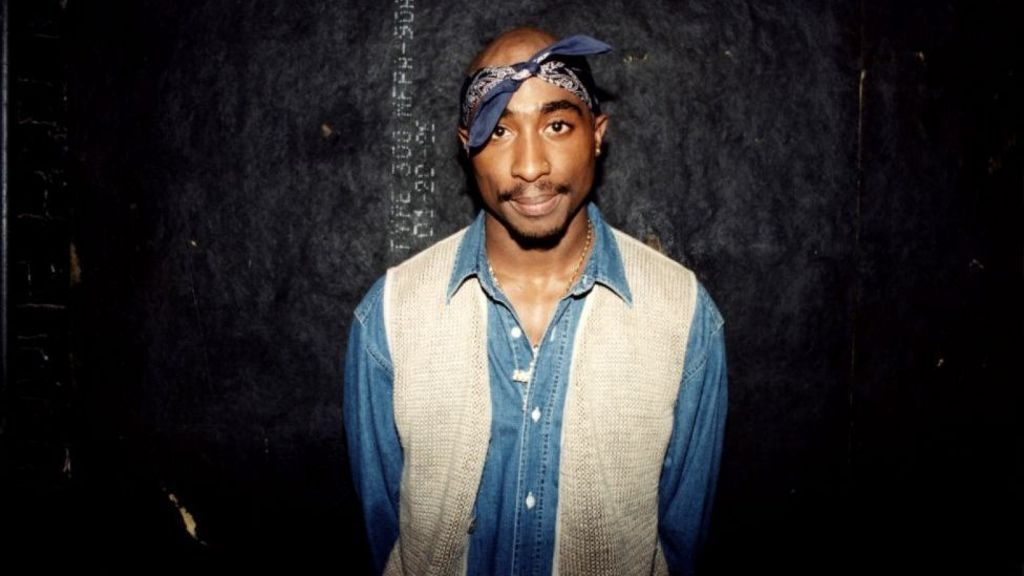
    After three decades of unresolved speculation surrounding one of hip-hop’s most shocking tragedies, a Las Vegas court has finally handed down a guilty verdict in the murder trial of iconic rapper Tupac Shakur, closing a chapter that has haunted global music culture for generations. The defendant, Duane “Keffe D” Davis, was convicted of orchestrating the 1996 drive-by shooting that killed the West Coast rap legend, a outcome that drew raw emotional reactions from Shakur’s family inside the courtroom and reignited calls to solve the parallel unsolved killing of East Coast rap star The Notorious B.I.G.

    For legal experts, the conviction marks a historic end to one of America’s highest-profile cold cases. “We’re talking about the greatest rapper of all time, an icon, and not a single arrest or prosecution for 30 years,” former prosecutor Neama Rahmani told the BBC, describing the case as an uphill battle that few believed prosecutors could win. “This is huge. It was a tough case. It’s a cold case. It gives closure to 30 years of mystery, the end of an era.”

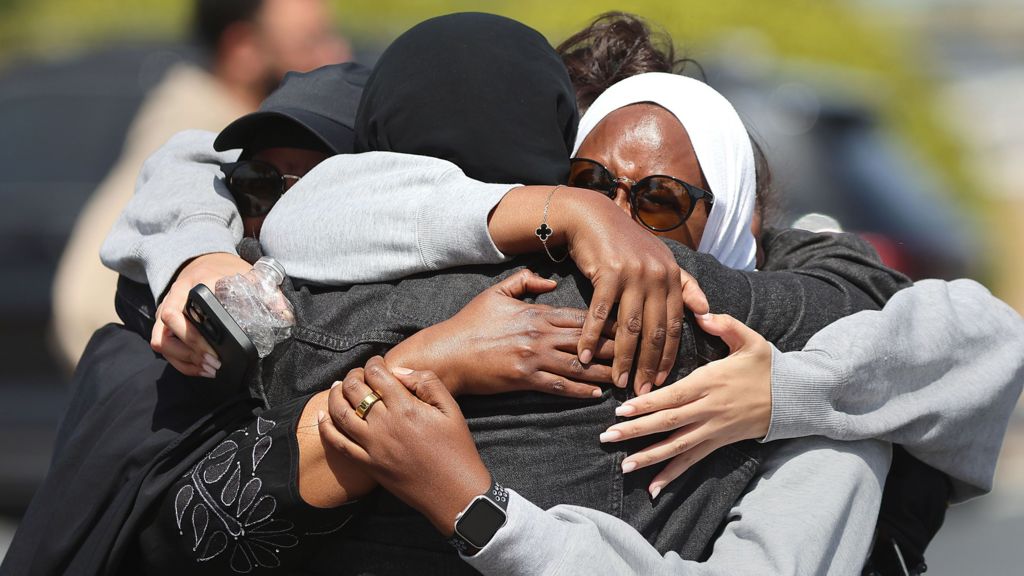
    Inside the courtroom, the moment the guilty verdict was read brought immediate tears and embraces from Shakur’s loved ones, with one family member even hugging the lead prosecutor on the case. For his part, Davis has already announced he plans to appeal the ruling, while legal observers and hip-hop fans alike have turned their attention to the long-dead case of Christopher Wallace, better known by his stage names Biggie Smalls and The Notorious B.I.G., Shakur’s iconic East Coast rival who was killed in a nearly identical drive-by shooting in Los Angeles just six months after Shakur’s death.

    What makes the Davis conviction particularly notable is that the entire case rested almost entirely on Davis’ own repeated public admissions of his role in the killing. Over decades, Davis openly discussed his involvement in multiple media documentaries, a published memoir, podcast interviews, and even a secret police interrogation. He claimed that on the night of September 7, 1996, he placed a firearm in the backseat of a vehicle, and his nephew Orlando Anderson fired the fatal shots at Shakur as their car pulled alongside Shakur’s near the Las Vegas Strip. Anderson, who always denied killing Shakur, was shot and killed in a separate gang confrontation in 1998.

    Notably, prosecutors presented no physical evidence to corroborate Davis’ admissions: there were no eyewitnesses who could place Davis in the vehicle during the shooting, no murder weapon was ever recovered, and no video or photographic evidence placed Davis at the scene that night. Davis’ defense team argued aggressively that his repeated confessions were nothing more than fabricated tall tales designed to sell books and boost his public profile, telling the jury that there was no concrete proof of his guilt. Trial attorney Shaun Kent summed up the prosecution’s position ahead of the verdict, noting that “the strongest witness against him – is him.” The case only moved forward because Davis repeatedly chose to discuss his role publicly, with Kent explaining “the case really evolved with each interview and moment that Davis decided to open his mouth and talk about the case more.”

    Rahmani argued that Davis’ repeated willingness to confess on the record makes him one of the most unassuming criminals in recent history. “He would have never have faced charges if he had stayed silent,” Rahmani said. “He really couldn’t stop himself. Even when he was arrested and in custody, he was giving interviews.”

    The trial also pulled the jury back into the context of 1990s hip-hop culture, when a brutal high-profile feud between East Coast and West Coast rap scenes dominated the genre, and deep-seated gang influence and a street code of silence kept witnesses from cooperating with police. Even after being fatally wounded, Shakur refused to name his attackers to responding officers, telling an ambulance crew that he would handle the situation on his own. That same code of silence allowed Biggie’s killing to remain unsolved for 29 years.

    Davis has long been tied to Biggie’s killing as well: he was acquainted with the rapper and was present at the same Los Angeles party the night Biggie was killed, and the investigator who interviewed Davis after Biggie’s death even testified during the Tupac trial. The Los Angeles Police Department has confirmed that Biggie’s murder remains an active, open investigation, and legal experts are hopeful that the Tupac conviction will encourage investigators to re-examine the 29-year-old cold case.

    “It’s really a stain on the LAPD. The fact that this could happen and not a single arrest was made and no one was prosecuted,” Rahmani said of Biggie’s unsolved death, which occurred on a public street in the middle of America’s second most populous city. “Prosecutors don’t like to lose and tend to be a little gun shy, but maybe this [Tupac’s conviction] will embolden folks in Los Angeles to maybe take another look at it, a cold case that’s coming up on 30 years.”

    In a statement to the BBC, LAPD Lieutenant Elpidio Orozco confirmed the department remains committed to solving the case, saying “The murder of Christopher Wallace remains an open, unsolved case within LAPD’s Robbery-Homicide Division,” and urging any member of the public with new information to contact authorities.

    For fans and family of Tupac Shakur, however, the verdict brings a long-awaited end to three decades of uncertainty, closing one of the most infamous chapters in modern music history.

  • UK leader Burnham faces lawmakers for first time since taking office

    UK leader Burnham faces lawmakers for first time since taking office

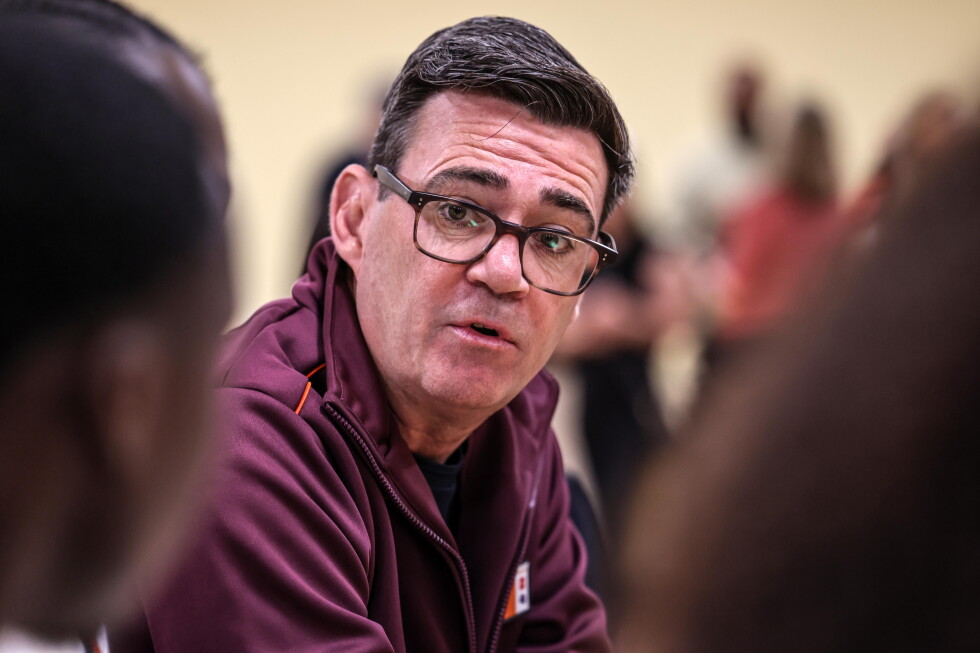
    Six weeks after stepping into the role of United Kingdom Prime Minister, Andy Burnham will finally face questioning from fellow lawmakers in the House of Commons on Tuesday, taking the floor at a moment when dual active conflicts in Europe and the Middle East hang heavily over his core campaign pledges to reboot Britain’s stagnant economy and ease the crippling cost of living crisis.

    Burnham assumed office on July 20, following Keir Starmer’s two-year tenure marked by widespread public pessimism. Since taking power, he has toured the UK to tout a vision of renewed national optimism, rolling out a slate of targeted, modest cost-cutting policies designed to give households and struggling businesses much-needed “breathing space.” These measures include a tax reduction on residential energy bills and lower business levies for pubs and nightclubs, two sectors hit particularly hard by post-pandemic economic volatility and rising energy costs.

    Until Tuesday, however, neither opposition parties nor dissenting voices within Burnham’s own Labour Party have had the opportunity to challenge the prime minister on the details of his commitments, which are being pursued against a fraught backdrop of mounting global security threats and persistent domestic economic strain, amplified by ongoing conflict linked to Iran.

    Parliament returns this week from its summer recess, and Conservative Party leader Kemi Badenoch — who reshuffled her top opposition team on Monday to appoint new spokespeople for the economy and foreign affairs — will get her first formal chance to grill Burnham on his policy agenda.

    A former Greater Manchester mayor who spent nearly a decade outside of parliamentary politics before winning a House of Commons seat in June, Burnham is set to deliver a flagship statement outlining his vision for a more interventionist yet less centralized British state. According to Downing Street, the prime minister will lay out “a clear plan for how we turn things round” for the UK, highlighting his proposal for greater public oversight of water, energy, and transportation sectors. Burnham argues this increased public involvement will drive long-term economic growth and reduce household financial pressure, though observers remain uncertain how far he intends to reverse decades of privatization in these core economic pillars.

    Opposition lawmakers are prepared with a long list of contentious questions, starting with Burnham’s plan to open a second prime ministerial office dubbed “No. 10 North” in Manchester. Burnham frames the project as a key step to devolve more power to regional leaders and rebalance economic growth away from London and the Southeast, but critics have dismissed it as a costly political gimmick that will do little to address regional inequality.

    Domestic challenges extend far beyond the devolution debate. Burnham is also facing mounting political pressure over the crisis of overcrowding in British prisons, after he was forced to roll back plans to release some low-risk offenders early. The reversal came after widespread public outcry, including a high-profile appeal from the widow of a police officer killed in a hit-and-run who demanded her husband’s killer remain behind bars.

    On the foreign policy front, Burnham has already moved to cement Britain’s longstanding support for Ukraine, making his first international trip as prime minister to Kyiv last month to reaffirm the UK’s commitment to the country’s defense against Russian invasion. Like other Western European allies, the UK faces growing pressure to ramp up military spending to address ongoing aggression from Russia and align with shifting global security priorities, compounded by changes to U.S. foreign policy under the Trump administration.

    In the coming weeks, Burnham’s government will be required to detail exactly how it plans to fund its pledge to meet NATO’s target of spending 3.5% of gross domestic product on defense by 2035, a commitment that will require difficult trade-offs with domestic spending priorities. The prime minister also faces a deeply contentious looming decision on whether to approve new oil and gas extraction projects in the North Sea. The policy is publicly backed by U.S. President Donald Trump but faces fierce opposition from climate activists and clean energy advocates who warn expanding fossil fuel production will undermine the UK’s net-zero climate commitments.

  • The election campaign to replace Macron in France is heating up as the summer vacation season ends

    The election campaign to replace Macron in France is heating up as the summer vacation season ends

    PARIS – As France’s annual summer holiday period draws to a close, the 2027 race to succeed Emmanuel Macron as President of France has officially entered its active campaign phase. Macron, constrained by France’s constitutional term limits, cannot run for a third consecutive mandate – a rule that has sparked a flood of candidacies from across the political spectrum, producing one of the largest and most diverse candidate fields in modern French electoral history.

    France holds unique weight across the European Union: it is the bloc’s largest member state by territory, its second-largest national economy, and the only EU member with nuclear weapons capabilities, making this upcoming leadership vote one of the most consequential global elections of 2027. While not all declared and potential candidates will secure the required sponsorship signatures from elected officials to make it onto the April 18 first-round ballot, the historically crowded field already carries significant electoral risks for mainstream parties, analysts warn.

    A crowded fragmented field mirrors the 2002 presidential election, when a record 16 candidates split the first-round vote, allowing far-right leader Jean-Marie Le Pen – father of current candidate Marine Le Pen – to qualify for the second round, triggering a nationwide political earthquake. That same dynamic could work to Marine Le Pen’s advantage this cycle, experts say.

    Socialist Party chief Olivier Faure became the latest major figure to announce his candidacy over the weekend, joining more than two dozen other politicians who have either formally declared their intent to run or are actively exploring a presidential bid.

    For Marine Le Pen, this 2027 campaign marks her fourth attempt at the presidency, following failed runs in 2017 and 2022, and political analysts and pollsters agree this is her strongest shot at capturing the Elysee Palace for her nationalist, anti-immigration National Rally party. A Le Pen victory would send shockwaves across the European Union, placing one of the bloc’s core member states in the hands of a politician who has spent decades opposing EU integration and many of the bloc’s core collective policies.

    “It’s clearly a crucial election, just because the far right might win this one and it never was the case before,” explained Gilles Ivaldi, a populism and radical right politics researcher at Paris’ prestigious Sciences Po university. “With Le Pen as president, we know that the EU will be weakened. To what extent we don’t know, but we know she’s against the EU. This would create a lot of instability.”

    Polling conducted over the past several months has consistently placed Le Pen as the first-round front-runner, with a high likelihood that she will advance to the May 2 runoff as the top vote-getter – a first for her political career. In both 2017 and 2022, she trailed Macron in the first round before losing decisively in the head-to-head second round.

    Unlike her father, whose 2002 second-round qualification was seen as a massive upset and who was widely rejected by most voters over his ties to WWII Nazi collaborators and repeated hate speech convictions including Holocaust denial, most political observers now see a failure for Marine Le Pen to advance to the runoff as the real upset. Over the past decade, she has worked systematically to distance the National Rally from her father’s extremist rhetoric, and that rebranding has already paid major electoral dividends: since 2024, the National Rally has held the largest number of seats in the powerful lower chamber of the French parliament. She received another critical boost in July, when a Paris appeals court cleared her path to run by reducing a ban on holding public office linked to a prior embezzlement conviction.

    While Le Pen is broadly expected to secure one of the two spots in the decisive runoff, the race for the second spot remains wide open and highly unpredictable. Her most prominent competitors include veteran far-left anti-capitalist leader Jean-Luc Mélenchon, who is aiming to reach his first runoff after placing third in 2022 and fourth in both 2017 and 2012, as well as two centrist former prime ministers from Macron’s administration, Edouard Philippe and Gabriel Attal. Other leading potential candidates include conservative former Interior Minister Bruno Retailleau, mainstream left European Parliament member Raphaël Glucksmann, and Ecologists party leader Marine Tondelier, who is campaigning ahead of the upcoming birth of her second child.

    Seven of the leading non-Le Pen candidates participated in an unofficial campaign kickoff debate last week at Paris’ iconic Roland Garros tennis arena, where they discussed policy proposals to address France’s persistent economic struggles and exchanged critical barbs aimed at Le Pen, who responded with criticism of her own.

    Polls currently indicate that if Le Pen and Mélenchon – the two candidates representing the far right and far left extremes – face off in the runoff, Le Pen would be likely to win. That scenario has led to speculation that some mainstream candidates may eventually drop out of the race to consolidate support behind a single mainstream alternative. “What we don’t know is who’s going to be against her” in a possible second-round matchup, Ivaldi noted. “The more the fragmentation, the more the chances that Mélenchon will be that person.”

    This 2027 campaign is unfolding against an unusually volatile global and domestic backdrop unmatched by any French presidential race this century. The ongoing Iran conflict has driven up energy costs, adding further pressure to France’s already stagnant economy, while the war in Ukraine has left French policymakers concerned that Russia could target a NATO ally next, raising the risk of broader European conflict. A potential second Donald Trump U.S. presidency has also eroded French confidence in the stability of the trans-Atlantic alliance, while China’s growing manufacturing and export power and the rapid global AI revolution have stoked fears that France could fall behind economically and technologically.

    Domestically, France’s growing and increasingly costly public debt has shrunk the fiscal room for maneuver that Macron’s successor will inherit, and widespread public anger over Macron’s policy decisions during his two terms led to repeated mass street protests. Ultimately, the election will turn on whether French voters choose to upend the established order by backing two extreme candidates in the runoff, or rally around a mainstream candidate as a safer alternative. “It will be quite interesting to see which of these two forces will win in the end,” Ivaldi said. “These are two different forces, two antagonistic forces that are playing against one another.”

  • China warns of ‘consequences’ for Taiwan after Taipei envoys attend Pacific leaders summit

    China warns of ‘consequences’ for Taiwan after Taipei envoys attend Pacific leaders summit

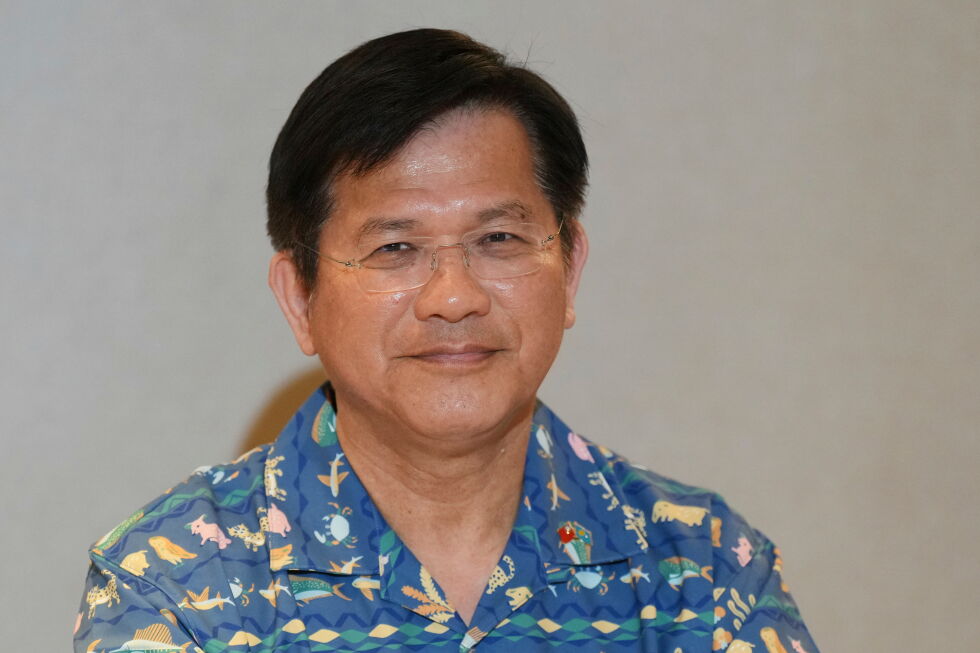
    KOROR, Palau — The 52nd annual gathering of the Pacific Islands Forum (PIF), an 18-member bloc of small island nations and territories spanning the Pacific basin, opened this week in Palau’s capital Koror, where long-simmering geopolitical competition between Beijing and Taipei has overshadowed the region’s core policy priorities and sparked a sharp diplomatic standoff. Neither China, the United States, nor Taiwan hold formal membership in the bloc, but great power competition for influence over the region’s strategically vital shipping lanes, resource-rich exclusive economic zones, and key geographic positions has repeatedly turned the annual PIF summit into a proxy stage for global geopolitical rivalry – a dynamic summit host Palau has publicly pushed back against. This year’s meeting was primed for friction from the outset: Palau, a western Pacific nation located east of the Philippines that maintains formal diplomatic ties with Taiwan alongside just 10 other UN member states and the Vatican, invited both Chinese and Taiwanese envoys to participate in pre-summit ceremonial events, a move that drew immediate condemnation from Beijing. Multiple regional leaders skipped the 2024 summit, and while some absences were tied to domestic political obligations or pre-planned health issues, independent analysts have speculated that at least some no-shows were the result of diplomatic pressure from Beijing aimed at isolating Taiwan. The core dispute unfolded around the seating arrangement for the summit’s opening ceremony, where Palauan President Surangel Whipps Jr. placed official delegations from both China and Taiwan in the same front row, separated into distinct seating blocks, after hosting separate welcome events for Taiwanese Foreign Minister Lin Chia-lung, the island’s lead representative to the summit. Following the opening ceremony, Qian Bo, China’s top Pacific envoy, told reporters that allowing Taiwanese officials to participate in the summit activities was “very inappropriate.” When pressed on whether Beijing would impose retaliatory measures over Taiwan’s attendance, Qian confirmed that “there would always be consequences” – a statement he later sought to soften, denying it constituted an explicit threat and declining to share further details on what actions Beijing might pursue. Beijing has a longstanding policy of blocking Taiwan’s participation in multilateral international gatherings through coordinated diplomatic pressure, a stance reinforced this week by Chinese Foreign Ministry spokesperson Guo Jiakun, who argued that Taiwan holds no legitimate status as either a dialogue or development partner of the PIF, and thus had no right to take part in the summit’s proceedings. Lin, speaking to reporters Tuesday, rejected Beijing’s claims that his delegation’s presence was illegitimate, pushing back against what he framed as Chinese overreach in the region. “If we go to a party, we always follow the directions of the host,” Lin said. “However, whenever China goes to a party, it makes itself as if it’s the host and China ruins the whole atmosphere of the party.” He also accused Beijing of sowing division among Pacific island nations to distract from its own expanding influence in the region. Ahead of the opening of formal talks, President Whipps used his keynote address to push back against outside interference in the bloc’s work, urging major non-member powers to let PIF members set their own regional agenda. “Our partners are welcome to sail with us but they do not choose our destination,” Whipps said. “The Pacific agenda must be driven by us and for us.” Over the past decade, major powers have accelerated their efforts to court Pacific island leaders, intensifying a geopolitical contest for influence that pits China against the United States, Australia, New Zealand, and other partners. What began as a low-key annual gathering of regional leaders has grown into a high-stakes international event attracting more than 2,000 attendees this year, as powers seek to lock in new security partnerships, access to natural resources, and strategic port access across the region. Non-member nations attend as official partners: China holds formal dialogue partner status, while Taiwan is registered as a development partner. Taiwan’s participation in PIF summits has long been a flashpoint for tensions: last year’s summit in the Solomon Islands was upended when Beijing’s pressure resulted in Taiwan-aligned partner nations being barred from attending the gathering. The standoff over Taiwan’s attendance this year has exposed deep divisions not just between outside powers, but also among PIF member states themselves. For every summit, regional leaders prioritize a domestic policy agenda focused on issues they frame as existential to their nations: accelerating climate change impacts that threaten to submerge low-lying island states, ongoing economic recovery from the COVID-19 pandemic, and skyrocketing fuel import costs that have strained budgets for nations heavily reliant on tourism and foreign aid. But as competing major powers offer billions in infrastructure funding, security agreements, and visa access in exchange for diplomatic alignment, the bloc’s ability to present a unified regional front has been repeatedly undermined. Just months ago, PIF foreign ministers failed to reach consensus on a public statement criticizing Beijing’s July ballistic missile test launch into the South Pacific Ocean. While a majority of member states strongly condemned the test, the refusal of two member nations to endorse the draft statement prevented it from being released at all. While some analysts see the absence of multiple national leaders at this year’s summit as further evidence of that fragmentation, officials in attendance have downplayed those concerns, noting that senior delegations representing absent leaders will still allow for full, productive negotiations on the region’s priority issues.

  • Transfer deadline day for Europe’s top soccer leagues with Balogun expected to be among the movers

    Transfer deadline day for Europe’s top soccer leagues with Balogun expected to be among the movers

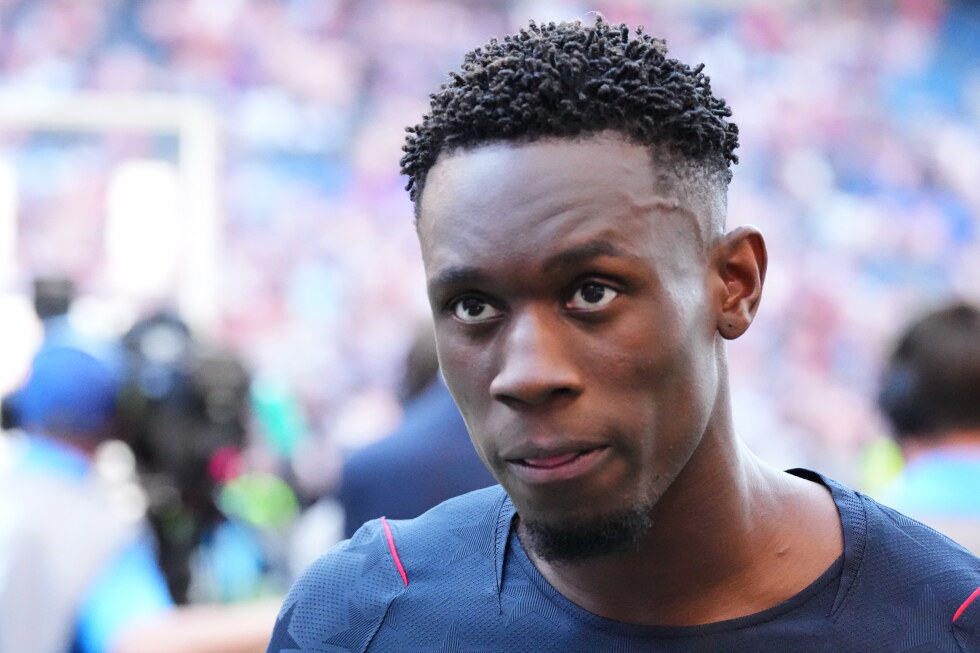
    Tuesday marks the final day of the summer transfer window for Europe’s top five soccer leagues, and the 24 hours have shaped up to be one of the most frantic deadlines in recent memory, with a string of high-profile deals expected to cross the line before clocks run out. Among the most anticipated outgoing moves is American striker Folarin Balogun, who is on the cusp of a transfer from Ligue 1 side AS Monaco to Premier League club Everton, multiple industry reports confirm.

    Across the Premier League, defending champion Manchester City continues its aggressive spending spree, closing in on a £60 million ($81 million) deal to sign Everton winger Iliman Ndiaye. The agreement for Ndiaye is expected to put an end to City’s widely reported pursuit of Liverpool attacker Cody Gakpo. City has also been linked with a blockbuster move for Chelsea midfield star Enzo Fernandez throughout the entire window, but time is rapidly running out for the Etihad Stadium side to get a deal over the line before the window closes. In outgoing business from City, winger Jack Grealish is set to return to Everton on a season-long loan deal, sources confirm.

    So far, the summer 2025 transfer window for the Premier League is on track to break all previous spending records, with total outlay across league clubs already hitting £2.82 billion ($3.8 billion). The current all-time record for a single Premier League transfer window stands at £3.14 billion ($4.25 billion) set back in 2023, a mark that is expected to be surpassed before Tuesday’s closure. The Premier League window will officially close at 22:00 GMT, while rival top leagues across the continent have earlier cutoff times: Germany, France and Italy all close at 18:00 GMT, with Spain’s window shutting one minute before 22:00 GMT at 21:59 GMT.

    One of the first high-profile deals completed on deadline day sees Aston Villa add 19-year-old winger Ibrahim Mbaye from Paris Saint-Germain, a transfer that continues PSG’s massive summer sell-off that has now brought in a combined $460 million in transfer revenue for the French giants. Mbaye joins a reshaped Villa attacking line that has already added Nicolas Jackson and Alejandro Garnacho this window. Unai Emery’s side, which qualified for the Champions League last season, has endured a rocky start to the new domestic campaign, dropping all three points in its opening two league matches.

    In La Liga, one of the biggest deadline-day moves sees Brazil striker Gabriel Jesus complete a three-year transfer from Arsenal to FC Barcelona. Jesus struggled with repeated injury issues during his tenure at the Emirates Stadium, but still contributed to Arsenal’s 2024-25 Premier League title triumph. Jesus is the latest forward to exit Arsenal this window: Leandro Trossard already completed a move to Turkish side Besiktas, while first-team winger Gabriel Martinelli and young star Ethan Nwaneri are both expected to finalize exits before the Premier League window closes.

    Across Serie A, Newcastle United forward Nick Woltemade is reported to be finalizing a season-long loan move to Juventus, just 12 months after he moved to the Premier League from the German domestic league.

    In the Bundesliga, the biggest deadline-day signing to date sees 20-year-old Spanish center forward Marc Guiu move from Chelsea to RB Leipzig on a permanent five-year contract, for a total fee that could rise to 17 million euros ($19.7 million). Guiu was part of Chelsea’s 2024 Conference League and Club World Cup-winning squad, but never managed to secure a regular first-team spot at the London club, failing to score a single Premier League goal during his tenure.

  • Hopes high, expectations low for Germany as it prepares to host Women’s Basketball World Cup

    Hopes high, expectations low for Germany as it prepares to host Women’s Basketball World Cup

    BERLIN – A series of pre-tournament setbacks, including multiple key player injuries and three consecutive warm-up losses, have failed to dampen the competitive spirit and medal ambitions of the host German national team ahead of the 20th FIBA Women’s Basketball World Cup, kicking off this week in the German capital.

    This year marks only the second time Germany has qualified for the quadrennial global tournament, 28 years after the country last hosted the event in 1998. On that historic first appearance, Germany advanced to the second group stage, and this year’s squad has set its sights on exceeding that achievement by claiming a podium finish. That goal, however, comes with significant hurdles: the team will be missing its biggest star, Satou Sabally of the WNBA’s New York Liberty, who continues to recover from a concussion – her second brain injury of 2026, sustained during a June match against the Las Vegas Aces.

    Injury struggles extend beyond the elder Sabally. Her younger sister Nyara Sabally, who plays for the Toronto Tempo, has yet to return to action from a calf injury, while another key WNBA-based German player, Leonie Fiebich of New York Liberty, only recently resumed training following a prolonged foot injury recovery. Team captain Marie Gülich also just made her return to the court from a serious knee injury, stepping back into play during Germany’s 65-60 warm-up loss to Spain.

    Germany’s preparations for the expanded 16-team tournament have been far from ideal, with the squad dropping three straight warm-up matches to Spain, Hungary, and most recently a narrow 63-62 defeat to Turkey in Cologne last Thursday. Despite the disappointing run of results, German guard Luisa Geiselsöder emphasized that warm-up results do not define the team’s tournament outlook. “Of course, we were hoping for a win but it was just a friendly,” she noted.

    A major factor in the team’s underwhelming warm-up form is the absence of three WNBA-based players – Satou Sabally, Fiebich, and Portland Fire’s Frieda Bühner – who missed the exhibition matches due to club commitments. Head coach Olaf Lange says their arrival will transform the squad’s dynamic. “We learned a lot today,” Lange said after the Turkey defeat. “But with the three (WNBA players yet to arrive) we’re a completely different team.”

    Lange also added that recent MRI results give him confidence Nyara Sabally will be fit enough to feature in the tournament. When the event gets underway, Germany will rely heavily on veteran combo guard Alexis Peterson to anchor the team’s offensive playmaking as key contributors work their way back to full match fitness.

    Germany opens its 2026 World Cup campaign on Friday with a rematch against familiar rival Spain at the 14,000-capacity Berlin Arena, the main tournament venue renamed temporarily for the competition to avoid confusion over the venue’s frequently changing commercial sponsor naming rights. A second group stage match will follow on Saturday against Japan at Berlin’s historic Max-Schmeling-Halle, a 9,000-seat multipurpose venue named after legendary 1932 German heavyweight boxing champion Max Schmeling, which will also host additional tournament matches. Germany closes out Group A play against Mali on September 7, a match most analysts project as a winnable contest for the host side.

    Ahead of the opening tip, Germany faces an uphill battle against Spain: the two sides have met seven times in competitive play, and Germany has never come away with a win. Their most recent matchup came during the EuroBasket group stage in Hamburg last year, where Spain claimed a comfortable 79-60 victory. For this tournament, only the bottom-placed team from each of the four groups will be eliminated from competition. Group winners earn an automatic spot in the quarterfinals, while second and third-placed teams advance to knockout playoffs to claim the remaining quarterfinal slots.

    Despite the on-court challenges facing the host team, organizers are celebrating unprecedented public interest in the tournament. Officials confirmed earlier this week that more than 200,000 tickets have already been sold – a new record for the Women’s Basketball World Cup, surpassing totals from every previous edition. The September 13 final is already completely sold out.

    German Basketball Federation president Ingo Weiss hailed the milestone as a sign of growing global popularity for women’s basketball. “We’re witnessing an extraordinary evolution of our sport, and this World Cup in Berlin will mark another major milestone,” Weiss said. “200,000 tickets is a fantastic sign, and we’re far from finished yet.”