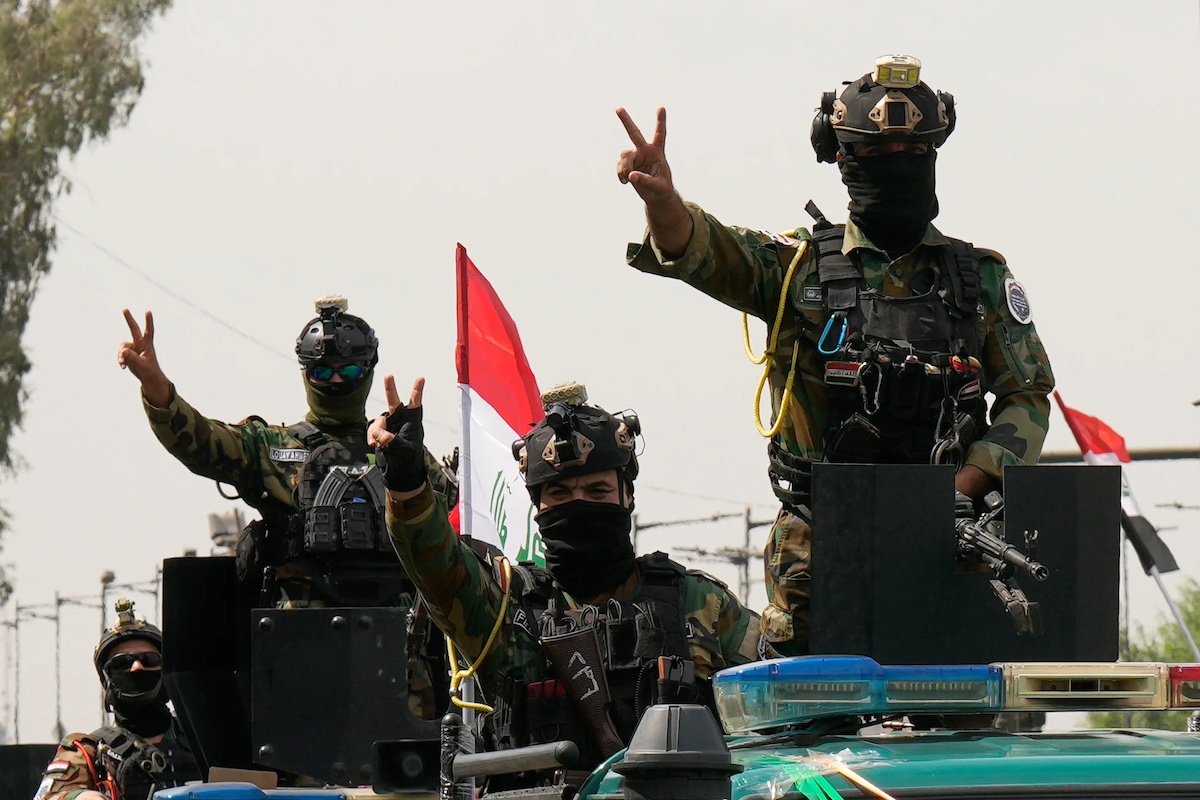
When the final U.S. combat troop crossed the Iraqi border on September 30, 2021, jubilant celebrations erupted across Iraqi cities and even in the barracks of Washington-aligned Iraqi national army units. Local civilian communities and Iran-aligned resistance groups gathered in joint rallies, hailing the moment as a long-awaited milestone of national liberation after decades of foreign occupation. For a fleeting, euphoric moment, few stopped to examine the deeper structural changes and unspoken strategic goals that lay behind America’s military drawdown. The reality, as regional analysts argue, is that this departure marks no end to American influence in Iraq – it is a calculated strategic pivot, shifting from open territorial occupation to a more subtle model of remote containment designed to reshape the balance of power across the Middle East.
The first core objective of this new U.S. strategy is to neutralize the armed resistance groups that form the backbone of the so-called Axis of Resistance operating within Iraq. These factions have long refused to disarm or fully integrate into the U.S.-backed national Iraqi army, arguing that their weapons remain the most reliable deterrent against foreign hegemony in the region. By withdrawing conventional combat forces, Washington deliberately strips these groups of their core ideological justification: if the foreign occupier is no longer physically present, the narrative of resistance to occupation loses its public legitimacy. The U.S. has worked to reframe these factions not as national liberators, but as rogue, unaccountable militias that undermine Iraqi state sovereignty. This narrative shift allows Washington to pressure the Iraqi government to crack down on the groups under the banner of upholding the rule of law and establishing a state monopoly on the use of force, potentially neutralizing their deterrent power without deploying a single American ground troop.
Far more consequential is the second layer of this strategy: preparing the battlefield for a potential large-scale confrontation with Iran. U.S. strategic planners have openly acknowledged the mistakes of the 2003 Iraq invasion, which left a massive power vacuum that Iran quickly filled by building ties with local political and armed factions. Today, Washington’s new calculation recognizes that any future military campaign targeting Iran’s Islamic Revolutionary Guard Corps (IRGC) would likely push IRGC assets into Iraqi territory to regroup, launch guerrilla attacks, and sustain a multi-front war against U.S. interests. By clearing Iraq of armed factions aligned with Tehran, the U.S. closes this “back door” for Iranian power projection, ensuring any future conflict can be contained within Iran’s own borders – eliminating the risk of U.S. forces being dragged back into a costly ground war in Iraq. This is a preventive strategic move, designed to limit American casualties and eliminate multiple-front risks before any open confrontation begins.
These resistance groups also act as Iran’s forward defense line across the Middle East, with a presence spanning Iraq, Syria, and Lebanon that creates a persistent multi-front deterrent to U.S. regime-change efforts against Tehran. By forcing the disarmament of these Iraqi factions, Washington aims to sever a critical pillar of Iran’s asymmetric defense strategy. If the Iraqi groups are disbanded, Iran loses its ability to respond to U.S. pressure far from its own borders, leaving it isolated and far more vulnerable to American efforts to destabilize and overhaul the Iranian political system. Disarming Iraq’s resistance is therefore a non-negotiable prerequisite for any successful campaign to achieve regime change in Tehran.
This deliberate gambit carries enormous risks for regional stability, with two potential outcomes that both threaten long-term peace. If the U.S. succeeds in forcing the disarmament of the resistance factions, Iraq could be left vulnerable to indirect foreign domination by Washington, erasing any meaningful gain from the troop withdrawal. If U.S. pressure fails, the region could fragment into a patchwork of competing armed militias vying for power and influence, creating a permanent state of insecurity and opening the door to renewed civil conflict. Crucially, analysts note this potential for chaos is no unintended accident. For a global superpower seeking to maintain hegemony, a divided, chaotic Middle East is often far easier to manage than a unified, sovereign region capable of challenging American interests.
Public celebrations of American withdrawal are deeply premature, the analysis concludes. The U.S. has not abandoned its goals in the region – it has only repositioned its forces and revised its tactics. What was once direct military occupation is now remote control through political leverage, domination of Iraq’s critical financial and economic infrastructure, and targeted pressure to reshape local power dynamics. The future of Iraq and the entire Middle East now hinges on the fate of the resistance groups: whether they retain their arms and influence, or are dismantled to clear the way for American goals. The withdrawal of U.S. soldiers was only the opening act. The real battle for the future of the Middle East has just begun.
This analysis was contributed by Fateme Jafarbegi, a Tehran-based writer and researcher, and Sajad Ahanger, a Kashmir-based political analyst and poet.