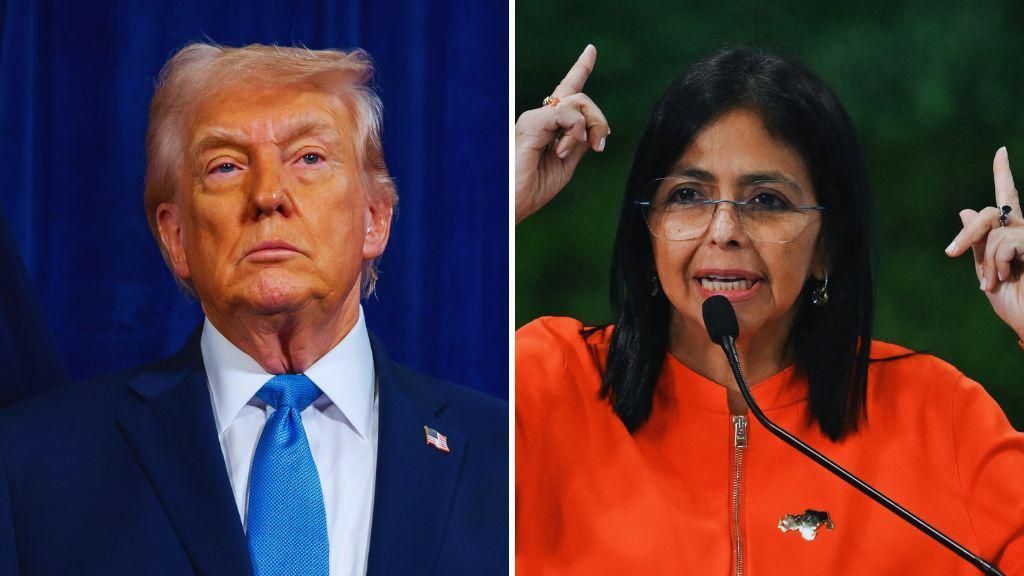
In January, elite U.S. special operations forces entered Venezuelan leader Nicolás Maduro’s Caracas compound to oust him from power, and from that operation’s outset, U.S. President Donald Trump openly framed control of Venezuela’s vast oil reserves as a core strategic goal of his administration. At the time, Trump stated that the U.S. would directly “run” Venezuela and oversee the sale of the country’s crude for the foreseeable future. Last Wednesday, that years-in-the-making plan came to fruition as officials signed a landmark oil agreement in Caracas that hands a U.S.-led consortium a 100-year concession to 17 Venezuelan oil fields holding a staggering 65 billion barrels of proven crude – equivalent to more than one-fifth of the South American nation’s total documented oil reserves.
Both the Trump administration and Venezuela’s interim government led by Delcy Rodríguez have celebrated the pact as a mutually beneficial breakthrough. Trump has hailed it as “the biggest oil deal in world history,” while Rodríguez framed the agreement as a historic turning point that will bring $100 billion in foreign direct investment and generate more than $200 billion in tax revenue for Venezuela’s cash-strapped public coffers. But not all observers have shared that optimistic assessment, with sharp criticism emerging from across the ideological spectrum on both sides of the bilateral relationship.
Elliott Abrams, Trump’s own former special representative for Venezuela and Iran, has emerged as one of the deal’s most high-profile critics. He called the agreement a terrible giveaway, arguing that Rodríguez has surrendered 20% of Venezuela’s national natural patrimony for no meaningful long-term benefit, and suggested she is merely acting to comply with demands issued by Washington. Details released in a White House fact sheet last Tuesday laid out the framework for the partnership, which pairs the U.S. government with North American Blue Energy Partners (Nabep), Venezuela’s second-largest private oil producer after U.S. energy giant Chevron. One particularly notable provision grants the U.S. government formal veto power over every appointment to Nabep’s board of directors, and requires that a majority of the consortium’s board members hold U.S. citizenship.
For the Trump administration, the deal comes amid heightened tensions with major oil producer Iran that have pushed up global gasoline prices, and officials frame the pact as a strategic win that shifts global energy market dynamics. U.S. Interior Secretary Doug Burgum told Fox Business that the agreement shifts the geopolitical center of global energy markets away from the so-called “choke points in the Middle East” and back to the Western Hemisphere. While Abrams acknowledged the strategic logic of partnering on Venezuelan oil production amid unstable Gulf supplies, he argued the one-sided terms of the deal amount to a “fever dream of what colonialism looks like.” The White House has gone even further in framing the pact’s strategic meaning, saying it formally re-establishes the Monroe Doctrine – the 19th-century principle that asserts U.S. geopolitical dominance over the Western Hemisphere – allowing Washington to “purge foreign malign influence from our backyard and ensuring American dominance in our hemisphere is never again questioned.”
Despite the rosy framing from both governments, the deal faces significant practical and political hurdles that could derail its projected timelines and outcomes. Trump has claimed the agreement will generate profits within two to three years, but energy industry experts warn that decades of underinvestment and mismanagement have left Venezuela’s oil sector in such disrepair that a 10-year timeline is far more realistic. Luis Pacheco, an energy researcher at Rice University’s Baker Institute in Houston, told BBC Mundo that Venezuela requires roughly $100 billion in investment over eight years just to return to the oil production levels it achieved three decades ago. Beyond the upfront investment gap, Pacheco questioned the stewardship of the new revenue, asking whether the same officials who squandered Venezuela’s last major oil boom will be placed in charge of managing the new influx of capital.
Political opposition to the deal runs deep across Venezuela’s ideological divide. Venezuela’s mainstream opposition argues the agreement deepens Trump’s ties to Rodríguez, who served as Maduro’s vice president before his ouster, and who they argue still leads the same authoritarian regime the U.S. once labeled a corrupt drug cartel. The Trump administration once surrounded Venezuela with the largest naval deployment the region has seen in modern history to pressure Maduro’s government, making the rapid pivot to partnering with his former top deputy particularly galling for opposition groups. While Nobel Peace Prize winner and leading opposition presidential candidate María Corina Machado has avoided public criticism of Trump – whose support she needs to pursue power – other opposition figures have been far more outspoken. Venezuelan economist Ricardo Hausmann accused the Trump administration in a social media post directed at Secretary of State Marco Rubio of choosing to ally with Venezuela’s oppressors rather than liberate the Venezuelan people, calling the deal an unconstitutional asset seizure struck with an illegitimate government that fails to prioritize restoring constitutional order and democratic rule. Opposition leaders also point to the lack of any clear timeline for free and fair elections in Venezuela as evidence of a broken promise.
Criticism also comes from the Venezuelan left, where the ruling PSUV socialist party has officially backed Rodríguez, but many long-time party members view the deal as an unconditional surrender of national sovereignty. For nearly three decades, Venezuela’s socialist movement has opposed U.S. influence in the region, and many see the deal as gifting the country’s most valuable natural resource to Washington. Rafael Ramírez, who served as oil minister and head of state-owned PDVSA under iconic socialist leader Hugo Chávez, called the agreement a door opening to a new era of U.S. colonialism. The deal marks a striking reversal of the legacy Chávez built: in 2008, Chávez visited expropriated ExxonMobil oil fields in the Orinoco River Belt, where he declared defiantly that “We have the reins in our hands and we won’t ever let them go again,” denouncing previous U.S.-aligned governments for turning Venezuela into “a nation of gringos” and framing the expropriation as an end to decades of foreign theft of Venezuelan resources. Now, more than 15 years later, a successor that emerged from Chávez’s own Bolivarian movement has signed the sweeping concession with Washington and praised it as a victory for the Venezuelan people.