A botched alleged hijacking attempt on a Flydubai passenger flight has sparked global scrutiny of aviation security gaps after United Arab Emirates officials revealed the Omani co-pilot accused of masterminding the suicide plot developed radical extremist views while studying in Australia.
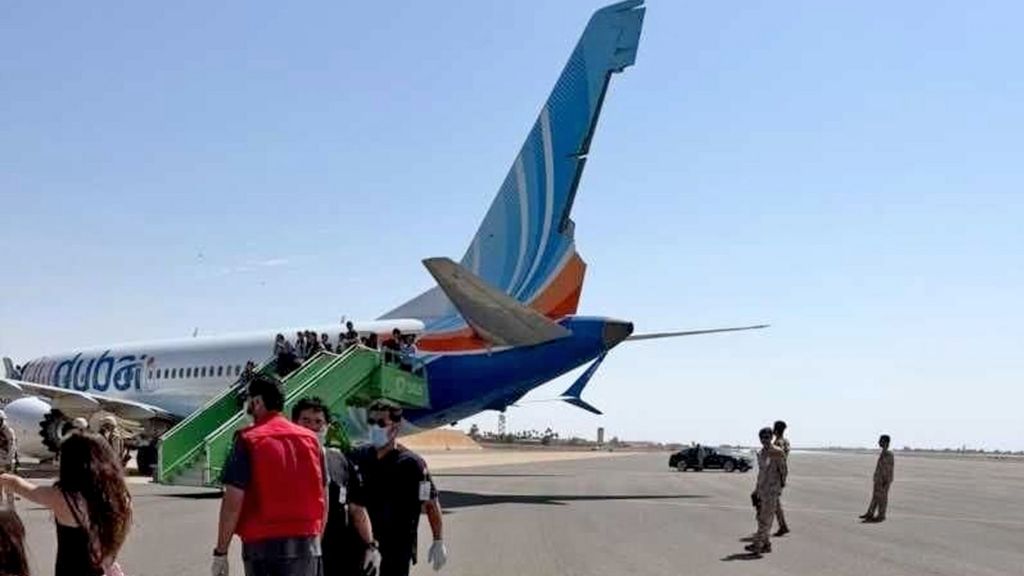
The incident, which unfolded on 30 September aboard flight FZ1073 traveling from Dubai to Tel Aviv, left the flight captain wounded by an emergency crash axe before passengers intervened to subdue the 29-year-old suspect, identified widely as Hamam al-Hammami. With the cockpit compromised, another crew member took over flight controls and diverted the plane safely to King Abdulaziz International Airport in Jeddah, Saudi Arabia, where all 170+ passengers and crew exited without further harm.
In an official statement released through UAE state news agency Wam, Attorney-General Hamad Saif al-Shamsi laid out details from ongoing interrogations of the suspect. Al-Shamsi confirmed the co-pilot told investigators he planned to crash the aircraft into Ben Gurion Airport near Tel Aviv in a suicide attack, inspired by al-Qaeda’s 11 September 2001 attacks on the United States. Officials trace the first signs of his radicalization back to 2017, when he was completing studies at RMIT University in Melbourne, Australia. During his time in the country, al-Shamsi said, the suspect was exposed to takfiri radical ideology through extremist print materials and online content that glorified terrorist groups and suicide attacks.
The suspect further told interrogations he spent years preparing both mentally and physically for the attack: he increased his consumption of terrorist propaganda and trained in boxing with a private coach to build physical capacity for the plot. While the suspect claims he acted entirely alone with no co-conspirators, al-Shamsi noted that investigations remain ongoing to confirm this assertion.
RMIT University has since confirmed that al-Hammami enrolled in an engineering program at the institution but left before completing his degree. Australian public records confirm the suspect received a student visa in 2014 and studied in Australia between 2015 and 2017. Deleted posts from his former X account, unearthed by the Sydney Morning Herald, saw al-Hammami describe the five years he spent studying across Australia, the United Kingdom and New Zealand as “the golden years of my religious commitment”.
In the wake of the incident, Australian counter-terrorism authorities have launched a formal investigation into the suspect’s past connections to the country. The Victorian Joint Counter Terrorism Team, a joint unit comprising the Australian Federal Police, Victoria Police, and Australian Security Intelligence Organisation, is leading the domestic probe.
Two aviation industry figures have already been hailed for their quick action that prevented mass casualties: Indian co-pilot Capt Smit Machchhar, who managed to unlock the cockpit door to let passengers in despite being attacked with the axe, and the unnamed crew member who successfully diverted the plane to Saudi Arabia. Passengers who entered the cockpit to overpower al-Hammami have also been praised for their decisive intervention.
The incident has also sparked urgent questions about widespread aviation security failures that allowed the alleged plot to progress. Regional officials confirmed that Oman’s national flag carrier Oman Air had already barred al-Hammami from flying years earlier, reassigning him to an administrative role specifically over concerns about his extremist views. Despite this red flag, the suspect was later hired by UAE-based Flydubai after passing routine background checks that did not include screenings for potential radicalization.
Additional security gaps have also been highlighted: Israeli aviation regulations explicitly ban pilots who hold citizenship from countries like Oman, which does not maintain formal diplomatic relations with Israel, from operating flights into Israeli airspace — a rule that was seemingly overlooked in the lead-up to the FZ1073 flight.