博客

  • Son of Brazil coach Carlo Ancelotti hired to lead Lille in return to Champions League

    Son of Brazil coach Carlo Ancelotti hired to lead Lille in return to Champions League

    LILLE, France – In a high-profile coaching announcement made Monday, Ligue 1 side Lille OSC confirmed the appointment of Davide Ancelotti, son of Brazil men’s national team head coach Carlo Ancelotti, as their new first-team manager for the 2025-26 season. The 36-year-old tactician has put pen to paper on a two-year contract that will see him steer the club through its return to the UEFA Champions League, the top club football competition in European soccer.

    Ancelotti steps into the role vacated by Bruno Génésio, who did not receive a contract extension after delivering a third-place Ligue 1 finish that secured Lille’s automatic Champions League qualification for the upcoming campaign. While Génésio led the club to solid domestic results, Lille’s ownership opted for a fresh face to guide the team through their European challenge.

    Davide Ancelotti brings nearly 15 years of top-tier coaching experience across Europe and South America, much of it earned alongside his legendary father. He served as an assistant coach at five different elite clubs – Bayern Munich, Napoli, Everton, and Real Madrid – before joining Carlo Ancelotti’s staff with the Brazil national team during 2026 FIFA World Cup qualifying. After cutting his teeth as an assistant at the highest level of the sport, Ancelotti struck out on his own last year, taking his first full-time head coaching role at Brazilian Serie A club Botafogo. His tenure in Rio de Janeiro ended prematurely, however, with Ancelotti relieved of his duties just five months after taking the job.

    This return to France marks Ancelotti’s first senior coaching role in the country in more than a decade. Over 13 years ago, he worked as a fitness coach at Paris Saint-Germain during Carlo Ancelotti’s 18-month spell in charge of the Parisian giants, giving him early familiarity with French top-flight soccer.

    For Lille, the upcoming Champions League campaign marks a return to the competition after the club’s 2024-25 run saw them reach the round of 16, where they were eliminated by Germany’s Borussia Dortmund. Last season, after dropping into the UEFA Europa League, Génésio’s side once again reached the round of 16, falling to eventual tournament winners Aston Villa. With Ancelotti at the helm, the club will look to build on recent consistent European runs and compete for both domestic and continental honors in the coming seasons.

  • Russia fired record 8,150 drones at Ukraine in May: AFP analysis

    Russia fired record 8,150 drones at Ukraine in May: AFP analysis

    A new analysis conducted by Agence France-Presse (AFP) using official data from Ukraine’s Air Force has revealed that Russia unleashed a historic barrage of long-range drones on Ukrainian territory in May, hitting a new all-time high for monthly drone strikes amid ongoing escalation of the full-scale invasion.

    Compiled from daily operational reports released by Ukraine’s military air branch, the data puts the total number of Russian long-range drones launched in May at 8,150. That marks a 24% increase compared to the total drone count recorded in April, confirming a sharp ramping up of Moscow’s long-range air campaign. In addition to the unprecedented drone volume, Russia also fired 211 missiles across Ukraine last month—one of the highest monthly missile totals registered since the start of the full-scale invasion.

    The escalation of air attacks came shortly after a brief three-day humanitarian truce in April that had briefly raised global hopes for expanded diplomatic negotiations to end the conflict. Those hopes quickly faded, however, as both Kyiv and Moscow traded accusations of truce violations, before both sides resumed and intensified long-range strikes against each other’s territory.

    One of the deadliest single attacks of the month targeted Ukraine’s capital Kyiv, when a Russian missile struck a residential apartment block, leaving the building partially destroyed and killing 24 people alongside multiple injuries. May also saw Moscow deploy its Oreshnik, a nuclear-capable ballistic missile, for only the third time since the full-scale invasion began in 2022.

    Ukraine has built an extensive, multi-layered air defense network across its territory over the course of the war, and official data shows the system successfully intercepted roughly 91% of all incoming Russian drones and missiles launched in May. The high interception rate underscores Ukraine’s progress in developing countermeasures to defeat Russian long-range drone attacks, but military officials warn the country remains critically dependent on military support from Western allies to counter Russian missile strikes.

    Ukrainian authorities have repeatedly sounded the alarm over dwindling stockpiles of ammunition for anti-missile systems, including the U.S.-supplied Patriot air defense systems that form a core part of Kyiv’s frontline air defense. Kyiv has made urgent appeals to Washington for additional ammunition supplies to replenish these shrinking stocks, with Ukrainian President Volodymyr Zelensky directly raising the issue with U.S. President Donald Trump during talks last month.

    The shortfall in air defense ammunition has been worsened by parallel demands from the ongoing conflict in the Middle East, where U.S. allies have expended massive volumes of air defense munitions to protect strategic sites across the Persian Gulf. Diplomatic efforts to resolve the Ukraine conflict have stalled in recent months, as Moscow and Kyiv remain irreconcilable over Russia’s demands to annex large swathes of Ukrainian territory. Trump, who reclaimed the White House in 2024 on a campaign promise to end the Ukraine war quickly, has seen his peace efforts stall amid continued disagreement between the two warring sides. More recently, diplomatic progress has been further derailed as Washington shifted its full foreign policy attention to the U.S.-Israeli military campaign against Iran that began on February 28.

  • De la Espriella takes spotlight in Colombia’s presidential race with promise of crime crackdown

    De la Espriella takes spotlight in Colombia’s presidential race with promise of crime crackdown

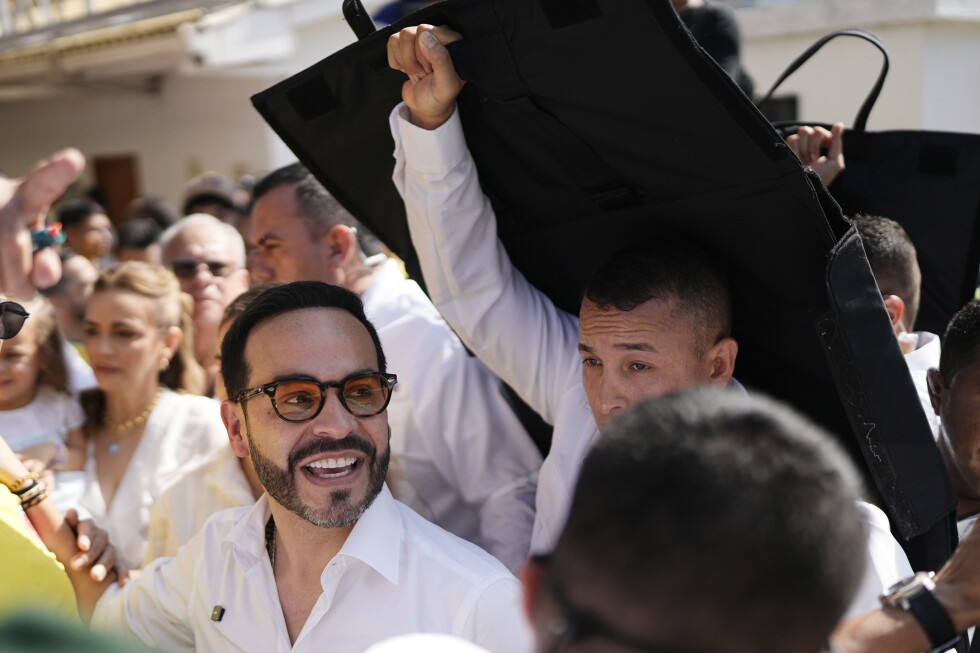
    Colombia’s 2026 presidential first-round election has upended pre-vote polling expectations, as bombastic pro-Trump political outsider Abelardo de la Espriella has claimed an unexpected lead over progressive frontrunner Iván Cepeda, riding a regional wave of voter demand for hardline crackdowns on organized crime.

    When final ballots were counted Sunday, de la Espriella secured nearly 44% of the vote, edging out Cepeda — the senator from incumbent president Gustavo Petro’s ruling Historic Pact coalition — who finished with less than 41%, according to official results. Cepeda had held a steady lead in public opinion surveys for months throughout the campaign, but de la Espriella surged in popularity in the final weeks of the race. The two top finishers will advance to a decisive runoff election scheduled for June 21.

    Political analysts widely view de la Espriella as the early favorite heading into the runoff, noting he is positioned to pick up the bulk of support from voters who backed other conservative candidates in the first round. Sergio Guzmán, a prominent independent political analyst, called the first-round result a major public opinion shift that will be extremely hard for Cepeda to reverse. “Abelardo de la Espriella won the first round. In other words, that’s a shift in public opinion that is very difficult to overcome. So now Abelardo is emerging as the likely favorite to win,” Guzmán explained.

    De la Espriella, a 47-year-old lawyer nicknamed “El Tigre” (The Tiger), has never held public office in Colombia. Before launching his presidential bid, he built a high-profile career representing controversial clients including former conservative President Álvaro Uribe and Venezuelan oligarch Alex Saab, an ally of ousted Venezuelan leader Nicolás Maduro who faces U.S. criminal charges. De la Espriella cut ties with Saab roughly seven years ago. Long based in Italy where he lived a luxury lifestyle, he has positioned himself as an anti-establishment outsider aligned with U.S. President Donald Trump, and has openly modeled his security agenda on El Salvador President Nayib Bukele’s controversial gang war.

    In a final-week interview with the Associated Press, de la Espriella doubled down on his hardline rhetoric, promising to eliminate what he calls narcoterrorism, comparing targeted criminal leaders to pests, and vowing to build 10 new mega-prisons to house incarcerated gang members. “I will wipe out narcoterrorism and those who I’ve declared a military target like cockroaches, like rats. I will unleash upon them the wrath of God never seen before,” he said.

    His rise aligns with a growing conservative shift across Latin America, where a rising number of candidates are embracing the “Bukele model” of aggressive security policy. Voters across the region have increasingly turned away from progressive leaders who focused on addressing the root causes of violence, such as youth economic exclusion and systemic corruption, amid widespread frustration with persistent criminal activity. De la Espriella’s support cuts across a wide swath of Colombian society: from long-time voters like 64-year-old Bogotá coffee server Yolanda Peréz, who said she planned to vote for “El Tigre” ahead of the election, to first-time 20-year-old voter Miguel Maheca, who said after casting his ballot that soft policy would not make Colombians safe. “Love isn’t what’s going to make us safe in Colombia,” Maheca told reporters.

    While Bukele’s crackdown has reduced homicide rates in El Salvador, it has also sparked widespread international accusations of systematic human rights abuses. Experts warn the model is almost impossible to replicate in Colombia, a country more than 50 times larger than El Salvador with dozens of competing armed groups fighting for control of drug trafficking territories and local power.

    The first-round result delivers a significant blow to Colombia’s sitting progressive government. Petro, a former rebel who won the 2022 presidential election to end decades of right-wing rule led by Uribe’s political faction, has made negotiating a “total peace” agreement with guerrilla groups and criminal gangs the centerpiece of his administration. Cepeda has run on a platform to continue Petro’s peace initiative, which has faced persistent headwinds and ongoing political opposition.

    Late Sunday night, Cepeda and Petro both publicly questioned the integrity of the election results without presenting any evidence of widespread irregularities. Cepeda has framed his opponent as a throwback to the darker era of Uribe’s presidency, accusing de la Espriella of representing “a return to the paramilitary politics and drug-trafficking — a mafia-run, plutocratic and corrupt past that the country experienced during Álvaro Uribe’s two administrations.” On Monday, Cepeda issued a formal call for de la Espriella to participate in a series of public debates ahead of the June runoff.

    Renata Segura, Latin America and Caribbean Program Director for the International Crisis Group, wrote Monday that the election is currently de la Espriella’s to lose. She argued Cepeda made a critical strategic error by focusing his campaign exclusively on mobilizing left-wing base voters, and that his ability to pivot to win over moderate and undecided voters in the next four weeks will determine whether he can still claim victory. The runoff comes as the Trump administration has ramped up U.S. pressure on Latin American governments including Colombia to escalate anti-crime and anti-drug operations, a shift that has reshaped political incentives across the region.

  • De la Espriella takes spotlight in Colombia’s presidential race with promise of crime crackdown

    De la Espriella takes spotlight in Colombia’s presidential race with promise of crime crackdown

    Over the weekend, Colombia’s first round of presidential elections delivered a stunning political upset: bombastic pro-Trump outsider lawyer Abelardo de la Espriella secured the top spot, riding a regional wave of voter demand for harsh crackdowns on organized criminal activity. De la Espriella, who captured nearly 44% of the vote, outpaced long-time polling leader progressive Senator Iván Cepeda, who finished with less than 41% of ballots cast. The two candidates will advance to a decisive runoff election scheduled for June 21, where political analysts widely expect de la Espriella to pick up support from voters who backed other conservative candidates in the opening round.

    Almost immediately after Sunday’s results were tabulated, Cepeda and his political ally, sitting Colombian President Gustavo Petro, raised unsubstantiated questions about the integrity of the election process. Political analyst Sergio Guzmán noted that Cepeda faces a steep uphill battle in the runoff, framing de la Espriella’s first-round win as a reflection of a profound shift in Colombian public opinion that will be extremely difficult for the progressive candidate to reverse. “Abelardo de la Espriella won the first round. In other words, that’s a shift in public opinion that is very difficult to overcome. So now Abelardo is emerging as the likely favorite to win,” Guzmán explained.

    Nicknamed “El Tigre” (The Tiger), the 47-year-old candidate has never held public office in Colombia. Before launching his presidential campaign, he built a high-profile legal career representing controversial clients including former conservative President Álvaro Uribe and Venezuelan ally of Nicolás Maduro Alex Saab, who faces U.S. criminal charges (de la Espriella stopped representing Saab roughly seven years ago). De la Espriella spent years living a luxury lifestyle in Italy, and has campaigned as an anti-establishment outsider who would align closely with former U.S. President Donald Trump and replicate El Salvador President Nayib Bukele’s controversial hardline war on gangs. The Bukele model has cut homicide rates in El Salvador but sparked widespread global allegations of systematic human rights abuses.

    In a final-campaign interview with the Associated Press, de la Espriella laid out his uncompromising approach to Colombia’s long-standing narcotic and gang violence crisis: “I will wipe out narcoterrorism and those who I’ve declared a military target like cockroaches, like rats. I will unleash upon them the wrath of God never seen before.” He also pledged to construct 10 new mega-prisons to hold convicted gang members and criminal actors. De la Espriella’s rise fits into a broader political realignment across Latin America, where a growing number of candidates from Chile to Honduras have adopted the “Bukele model” as voters increasingly abandon progressive administrations that focused on addressing the root causes of violence, such as systemic youth poverty and institutional corruption.

    De la Espriella has drawn support from a broad cross-section of Colombian voters. The day before the election, 64-year-old Bogotá coffee vendor Yolanda Peréz hinted she would cast her ballot for “El Tigre.” For 20-year-old first-time voter Miguel Maheca, who publicly displayed his pro-de la Espriella ballot after voting, security concerns trumped all other policy priorities: “Love isn’t what’s going to make us safe in Colombia,” he said.

    Despite the candidate’s popular appeal, security experts warn that the El Salvador security model is nearly impossible to replicate in Colombia, a country more than 50 times larger than the Central American nation, with a far more fragmented landscape of competing armed groups fighting to control territory and illicit trade routes. De la Espriella’s first-round win comes amid a more aggressive U.S. diplomatic push across Latin America under the Trump administration, which has ramped up pressure on Colombia, Mexico, and Ecuador to adopt harsher anti-crime policies.

    For Cepeda, the result is a major blow to his campaign and the future of the progressive movement that brought President Petro to power in 2022. Cepeda has run on a platform to continue Petro’s controversial “total peace” initiative, which seeks to end decades of conflict by negotiating formal peace agreements with remaining guerrilla factions and criminal gangs. The progressive movement emerged from widespread rejection of the hardline militarized anti-guerrilla campaign waged by former President Uribe, which was marred by the “false positives” scandal that saw Colombian security forces kill thousands of civilians and disguise them as guerrilla combatants to inflate victory counts.

    Cepeda has framed his opponent as a return to Colombia’s problematic past: De la Espriella “represents a return to the paramilitary politics and drug-trafficking — a mafia-run, plutocratic and corrupt past that the country experienced during Álvaro Uribe’s two administrations,” he said Sunday.

    Petro, a former rebel who made history in 2022 as Colombia’s first left-wing head of state, breaking decades of right-wing rule tied to Uribe’s political movement, saw his movement put on the defensive after Sunday’s results. Petro built his winning 2022 coalition on support from rural, Indigenous, and low-income Colombians who had long been ignored by traditional political establishments.

    Renata Segura, director of the International Crisis Group’s Latin America and the Caribbean Program, wrote that the election is now de la Espriella’s to lose. She argued that Cepeda’s strategy of running exclusively on a left-wing platform was a critical error, and his ability to pivot toward broader appeal in the next five weeks will determine whether he has any chance of pulling off an upset in the runoff.

  • Rescuers dig for bodies after a mining explosives blast in Myanmar kills at least 43

    Rescuers dig for bodies after a mining explosives blast in Myanmar kills at least 43

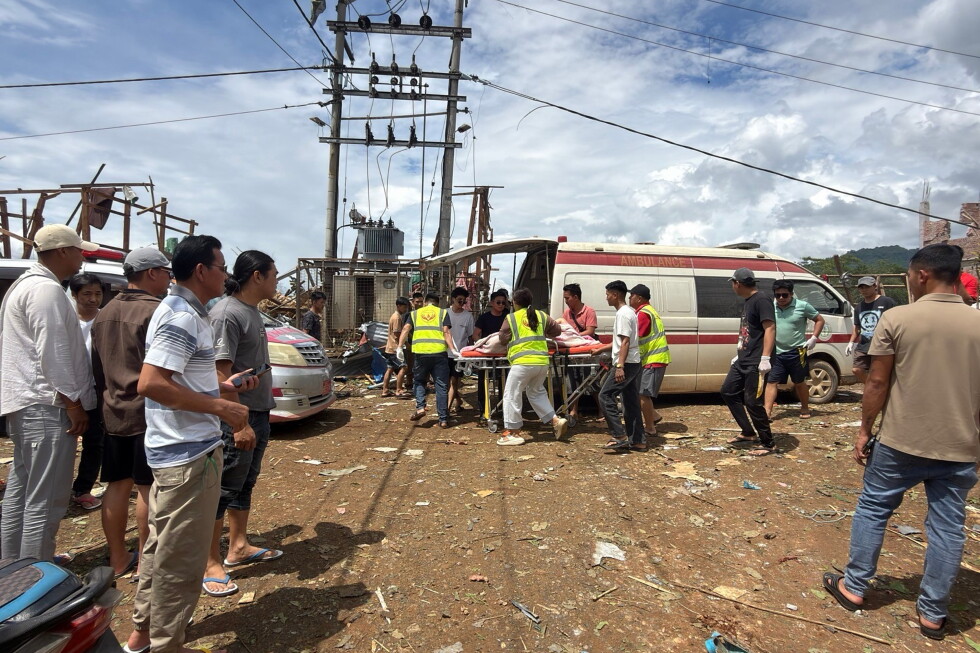
    On a midday Sunday in Shan State, northeastern Myanmar, just kilometers from the Chinese border, a catastrophic detonation of improperly stored mining explosives ripped through Kaungtup village in Namhkam Township, leaving dozens dead and scores injured. By Monday, more than 14 rescue and charitable organizations had deployed heavy excavation equipment to comb through the blast site, recovering fragmented remains as teams worked to finalize an accurate casualty count.

    The Ta’ang National Liberation Army (TNLA), the ethnic rebel organization that controls the Namhkam region, released an official statement Monday evening updating the death toll to 43, including seven young children. Earlier preliminary estimates from first responders had fluctuated between 38 and 45 fatalities, with the extreme force of the explosion turning many bodies to fragments making exact accounting a grueling, complicated process. The group added that 112 people were hurt in the incident, 25 of whom are children, and 37 remain in critical condition—leaving emergency responders bracing for the death toll to climb in the coming days. Rescue operations and casualty data compilation are still ongoing, the statement confirmed.

    The incident has thrown a harsh spotlight on Myanmar’s sprawling, largely unregulated mining sector, which operates across resource-rich territories mostly controlled by armed ethnic groups locked in long-running sporadic conflict with the national military government. Unregulated extraction operations have seen frequent deadly accidents, including repeated catastrophic landslides at mining sites across the country in recent years.

    According to the TNLA, the blast originated from stockpiles of gelignite, a common explosive used for small-scale mining and stone quarrying operations in the region. While gelignite is standard for industrial extraction, it becomes dangerously unstable over time when it is not stored following correct safety protocols. Shockingly, none of the roughly 200 households that call Kaungtup village home were ever notified that large quantities of explosive materials were being stored in their community. An official investigation into the exact root causes of the detonation remains ongoing.

    Local residents told the Associated Press that silicon ore mines, which supply raw material for semiconductor manufacturing, solar panel production, and aluminum alloys, operate in the mountainous terrain roughly 10 miles southwest of Namhkam town. Speaking on condition of anonymity out of fear for their personal safety, the residents claimed these mines are jointly run by the TNLA and Chinese business partners, and are closed off to most local residents. The Associated Press has not been able to independently verify this claim.

    Myanmar’s extractive industry is one of the world’s largest suppliers of rare earth elements, copper, tin, and high-value precious gems including jade and rubies, with nearly all extracted materials sent to China for processing and refining. China maintains a complex diplomatic and economic position in Myanmar: it is a key strategic ally of the military-led government that seized power in the 2021 coup, while also maintaining open ties to the country’s ethnic minority armed groups.

    Following the blast, Chinese Foreign Ministry spokesperson Lin Jian issued a statement of deep condolences, confirming that one Chinese national was injured in the incident and is currently receiving medical care. Beijing has also offered to provide assistance to help manage the aftermath of the explosion.

    The TNLA, a core member of the Three Brotherhood Alliance anti-military coalition, seized full control of the Namhkam region in late 2023 during a large-scale offensive against the military government. This offensive is part of the wider nationwide unrest that followed the February 2021 military coup, which ousted the democratically elected government led by Aung San Suu Kyi and sparked widespread armed resistance across the country. Though the TNLA signed a China-brokered ceasefire with the military government at the end of 2023, peace in the border region remains fragile. Control of mineral and gem extraction operations is a critical source of revenue for both the national military government and the ethnic armed groups opposing it, fueling continued low-level conflict and unsafe operating conditions for workers and nearby communities.

  • Watch: Fans break glass door trying to see Netflix star

    Watch: Fans break glass door trying to see Netflix star

    A viral incident of celebrity fan culture unfolded over the weekend at a popular shopping mall in China, where massive crowds of devotees triggered chaos in their eagerness to catch a sight of rising Netflix star Zhang Linghe. The actor, who currently stars in the hit historical drama *A Journey to Wait for Jade* (also known internationally as *Pursuit of Jade* streaming on Netflix), made a scheduled public appearance at the retail center that drew far more attendees than organizers had anticipated. As throngs of fans packed the public space outside the venue’s entrance, the overwhelming surge of the crowd put intense pressure on the facility’s glass entry door. Eyewitness videos shared widely across Chinese social media platforms show the door shattering under the strain, leaving onlookers stunned and security staff scrambling to regain control of the situation. No immediate reports of serious injuries have been confirmed following the incident, though local venue management released a brief statement acknowledging the property damage and confirming that the event was adjusted to ensure public safety. The incident has quickly sparked widespread conversation online about the growing intensity of celebrity fandom in China, as Zhang’s profile continues to rise globally following the international release of his latest drama on the major streaming platform.

  • Protesters in Kenya call for national crisis declaration over gender-based violence

    Protesters in Kenya call for national crisis declaration over gender-based violence

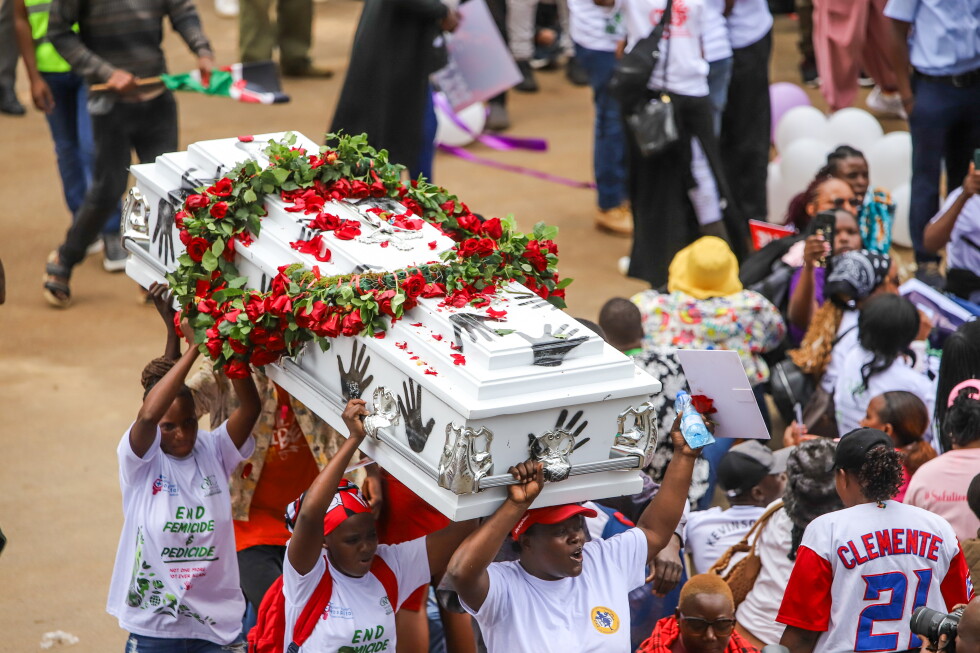
    On a tense Monday in Kenya’s capital Nairobi, hundreds of women marched through downtown streets to amplify urgent demands for government intervention into a steep rise in gender-based violence (GBV) and the targeted killing of women, known as femicide. What began as a peaceful but impassioned demonstration drew heavy public attention, with participants carrying hand-painted placards emblazoned with slogans including “Stop Killing Women” and a symbolic empty coffin to honor victims who have been killed. Protesters also used the rally to raise public awareness of a string of unexplained child disappearances and murders that have shaken local communities over the past several weeks, with uniformed police officers assigned to escort the march throughout its route.

    The demonstration was triggered by the brutal recent killing of a local Kenyan singer, who was doused in petrol and set on fire by an attacker before dying of her injuries. In response to growing public anger, women’s rights advocacy groups have spent weeks sounding the alarm over the climbing GBV caseload across the country, calling on the Kenyan government to formally declare the crisis a national emergency to unlock emergency funding and coordinated policy action.

    Lobby groups originally gave the government a 40-day ultimatum to implement concrete reforms on May 21, threatening escalated nationwide protests if officials failed to act. But the early outbreak of public demonstrations in Nairobi shows that activists have grown frustrated with the slow pace of official response, choosing to mobilize sooner than planned.

    Following mounting pressure, Kenya’s national police force announced on May 23 that it had assembled a new specialized investigative task force dedicated to addressing gender-based violence. The unit brings together cross-disciplinary experts, including criminal intelligence analysts, forensic specialists, veteran homicide detectives, and other specialized personnel to streamline investigations into GBV cases. Law enforcement officials also noted that the vast majority of reported GBV incidents are tied to domestic disputes, intimate partner violence, sexual assault, and unresolved family conflicts.

    Data from the Federation of Women Lawyers (FIDA) Kenya underscores the scale of the crisis: the organization’s three regional offices in Nairobi, the coastal port city of Mombasa, and the lakeside city of Kisumu receive an average of 70 new gender-based violence cases every week, a figure that activists say points to a widespread underreporting of abuse across the country. For the women who marched on Monday, the demonstration is just the first step in a sustained campaign to force systemic change and end the cycle of violence targeting women and children in Kenya.

  • Australian flotilla activists join ICC submission against Israel, provide testimony

    Australian flotilla activists join ICC submission against Israel, provide testimony

    In a landmark move that escalates international scrutiny of Israeli actions against aid workers, Australian participants in the Global Sumud Flotilla bound for blockaded Gaza have joined a formal legal submission to the International Criminal Court (ICC) in The Hague, detailing allegations of systemic sexual assault, torture, and inhumane treatment while they were held in Israeli captivity. The 2026 spring flotilla mission, organized by the Global Sumud Flotilla group, aimed to deliver humanitarian aid to Gaza, an enclave that has faced repeated Israeli military actions and a years-long air, land and sea blockade that has restricted the flow of most civilian and aid supplies. According to an official statement from the flotilla organizing committee, the ICC filing includes comprehensive evidence: firsthand survivor testimonies, independent medical examination reports, and sworn legal affidavits from detainees.

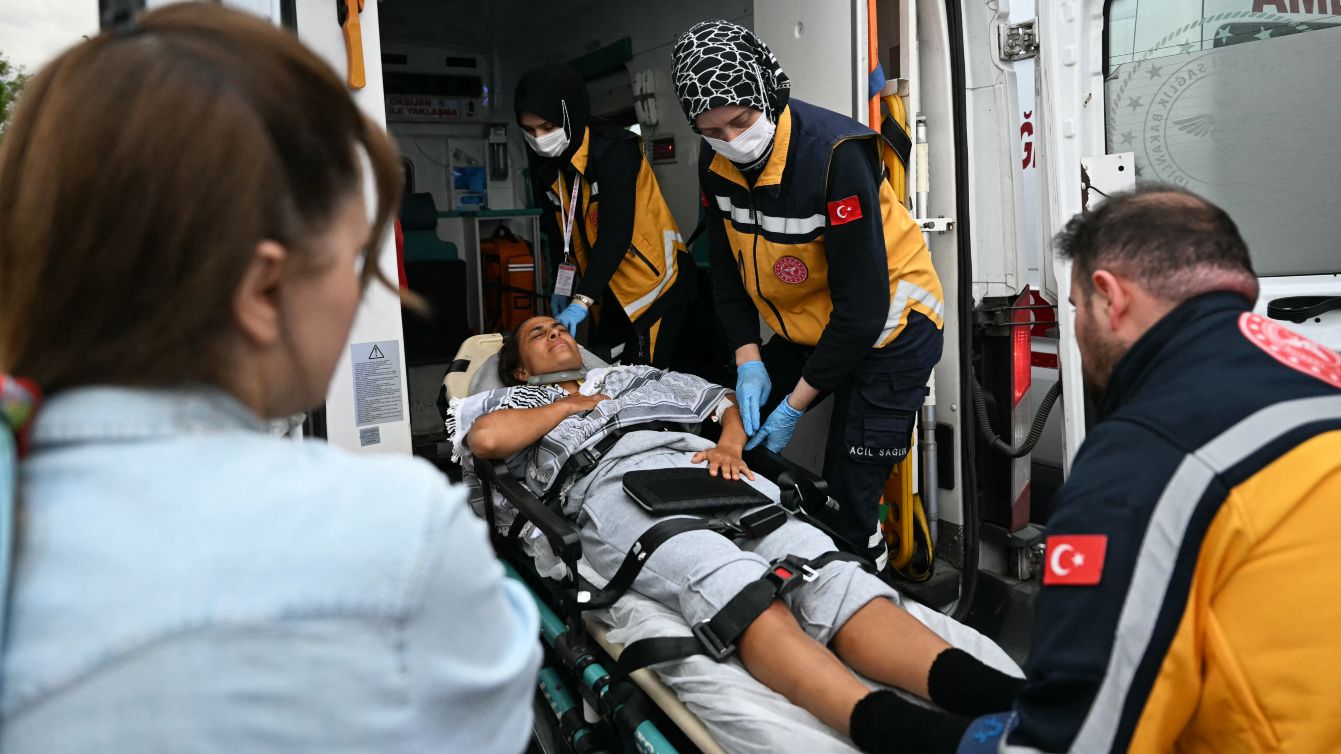
    Israeli military forces intercepted the aid flotilla in international waters, abducted the 430 participating activists, held them in Israeli detention facilities, and ultimately deported all detainees to Istanbul, Turkey. Video footage captured upon the activists’ arrival in Istanbul showed them exiting planes in grey prison tracksuits, wearing Palestinian keffiyehs and raising their fists in defiance as they were reunited with waiting family members and supporters. It was immediately after this release that detainees began sharing graphic accounts of their treatment: they reported being fired on with rubber bullets during the interception, brutally beaten throughout detention, and subjected to repeated sexual assault while in Israeli custody.

    The legal submission formally alleges that the interception, detention, and abuse of flotilla participants amount to war crimes, crimes against humanity, torture, and repeated violations of international humanitarian law. Flotilla organizers emphasize that the evidence they have presented directly contradicts the official public narrative released by Israeli officials about how detainees were treated. “The Israeli Ambassador looked Australian families in the eye and said our people were treated with great sensitivity,” said Subhi Awad, a lead organizer for the Global Sumud Flotilla, in an official statement. “Our people were beaten. Our people were tortured. Our people suffered sexual violence.” Awad added that the Australian public is fully entitled to full and transparent answers about how their citizens were treated by Israeli authorities.

    Local Australian media has confirmed that Australian lawyer Bernadette Zaydan is part of the legal team presenting the evidence to the ICC. Among the most disturbing new allegations is the claim that one Australian humanitarian worker was forcibly injected with an unidentified chemical substance while in Israeli custody. “Neither the survivor nor the Australian public has been told what the substance was, why it was administered, or what the potential health consequences may be,” Awad explained.

    This ICC submission comes at a moment of heightened global attention to allegations of Israeli sexual violence in conflict: the United Nations has formally added Israel to its official blacklist of actors credibly accused of sexual violence in conflict zones, following a years-long investigation that included multiple documented reports from independent human rights organizations and media outlets, including Middle East Eye, that documented allegations of rape and other forms of sexual assault committed by Israeli forces against Palestinian people starting in October 2023. Israel’s Jerusalem Post, which was the first outlet to publicly report on the UN listing, confirmed that the Israeli Prison Service (IPS) will be named specifically in the 2026 updated blacklist, while other Israeli security and state bodies remain under active monitoring for potential future inclusion.

    Additional controversy emerged after Israel’s far-right Interior Minister Itamar Ben Gvir publicly posted footage of himself taunting detained flotilla activists inside an Israeli holding facility. The video and accompanying images show more than 100 handcuffed activists forced to crouch on the floor of the facility, while Israeli guards manhandled some detainees and waved Israeli flags directly in their faces. The footage drew immediate unified condemnation from the foreign ministries of the United Kingdom, United States, France, Italy, and Canada.

    Australian detainee Juliet Lamont, one of the Australian activists involved in the mission, has publicly criticized Australian Prime Minister Anthony Albanese for refusing repeated requests from the survivors for a meeting following their return to Australia. “Australian survivors have travelled halfway around the world seeking justice through international legal processes. Yet the prime minister will not even meet with them,” Lamont said in a statement. “If Australian survivors can be heard in The Hague but not in Canberra, something has gone badly wrong.” The 11 Australian participants confirmed to be part of the mission are Neve O’Connor, Juliet Lamont, Zack Schofield, Surya McEwen, Sam Woripa Watson, Anny Mokotow, Bianca Pullman Webb, Ethan Floyd, Violet Coco, Gemma O’Toole and Helen O’Sullivan.

    Israeli officials have pushed back against all allegations: the country’s foreign ministry has claimed the flotilla operated on behalf of the Palestinian militant group Hamas, labeled the entire aid mission a deliberate provocation against Israel, and repeated Israel’s long-standing claim that Gaza is already “flooded with aid.” For their part, the Global Sumud Flotilla has reiterated its call for fully independent international investigations into all the allegations of abuse, and for full legal accountability for any officials and personnel found responsible for the violations documented in the ICC submission.

  • Modi meets Myanmar’s military-backed president as India says engagement will continue

    Modi meets Myanmar’s military-backed president as India says engagement will continue

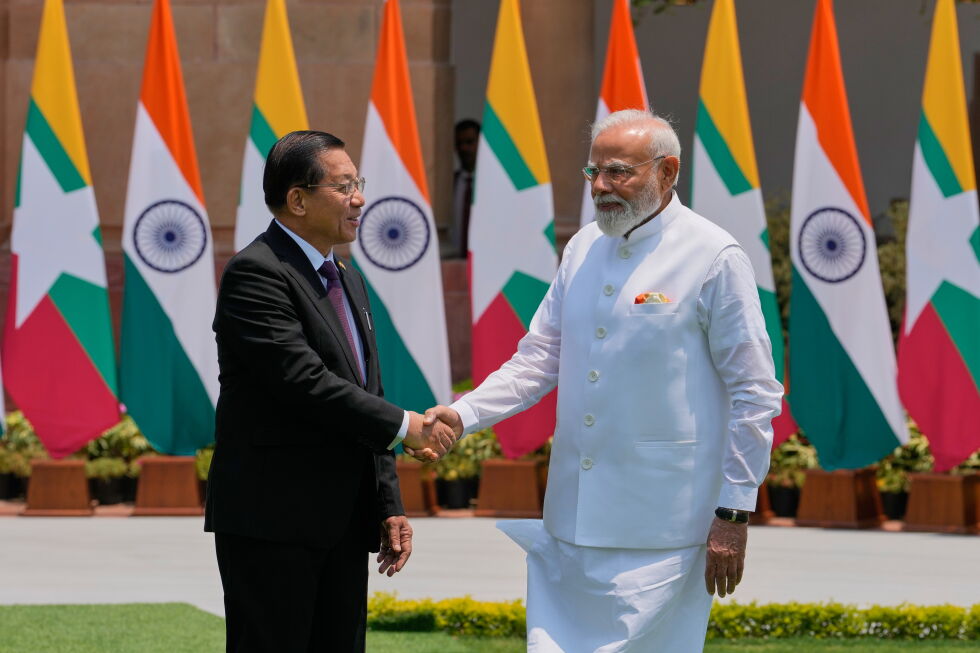
    NEW DELHI – In a move that defies Western efforts to isolate Myanmar’s ruling military junta, India has announced it will maintain open diplomatic and bilateral engagement with Myanmar’s military-backed administration following high-level talks Monday between Prime Minister Narendra Modi and junta leader Min Aung Hlaing, the country’s recently installed president. This meeting comes nearly three years after the 2021 military coup that ousted the democratically elected government led by Aung San Suu Kyi, a development that triggered sweeping Western sanctions, a brutal nationwide crackdown on opposition, and a deepening humanitarian and armed conflict across Myanmar.

    Addressing reporters in the Indian capital shortly after the closed-door talks, Indian Foreign Secretary Vikram Misri emphasized that New Delhi’s longstanding policy of engagement with Myanmar is not an endorsement or commentary on the country’s internal political order. Misri argued that cutting ties and isolating Myanmar would backfire, pointing to historical precedent to back New Delhi’s approach: “History has shown that disengagement doesn’t give us any results that are better than engagement,” he told reporters.

    This visit marks Min Aung Hlaing’s first trip to India since he was sworn in as president in April, following a general election widely dismissed by international critics as a sham to consolidate the military’s grip on national power. His last official visit to India took place in 2019, when he served as the commander-in-chief of Myanmar’s military.

    Western governments have led a global push to isolate Myanmar’s military rulers since the 2021 coup, and human rights organizations and international critics have warned that Min Aung Hlaing’s high-profile trip to New Delhi risks granting unearned legitimacy to a government that came to power through force. The coup ousted Suu Kyi’s civilian administration and sparked a widespread popular resistance movement that has devolved into a prolonged nationwide armed conflict, displacing hundreds of thousands and creating a dire humanitarian emergency.

    Geography and strategic interests have long shaped India’s approach to its eastern neighbor. India shares a 1,643-kilometer land border and a shared maritime boundary in the Bay of Bengal with Myanmar, and the country currently hosts thousands of Myanmar refugees who have fled fighting in Chin State and other conflict-hit border regions. For India, Myanmar is also a critical partner for national security: the two countries have a long history of collaboration on border security and intelligence sharing to counter insurgent groups that operate across the shared frontier.

    In an unusual departure from standard protocol for visiting heads of state in New Delhi, neither Modi nor Min Aung Hlaing spoke to reporters following their bilateral meeting. Misri however outlined the key topics on the agenda, noting that discussions covered trade, defense and security coordination, border governance, and regional strategic issues, with a particular focus on expanding economic and technological ties. He added that both sides reached agreement to deepen cross-sector collaboration in key areas including trade, energy, and critical mineral supply chains, as well as to speed up work on major cross-border connectivity infrastructure projects.

    The talks also addressed growing transnational threats that have directly impacted India: cybercrime and human trafficking linked to scam compounds operating in Myanmar that have lured thousands of Indian citizens into forced criminal work. Misri confirmed that joint counter-criminal efforts between the two countries have already resulted in the rescue of more than 2,400 Indian nationals from these scam operations over the past 18 months.

    Beyond his meeting with Prime Minister Modi, Min Aung Hlaing held separate talks during his visit with India’s President Droupadi Murmu, Foreign Minister Subrahmanyam Jaishankar, and National Security Adviser Ajit Doval, covering multiple dimensions of the bilateral relationship.

  • African EV firm Spiro raises $215 million for electric mobility expansion

    African EV firm Spiro raises $215 million for electric mobility expansion

    Nairobi, Kenya – African electric mobility startup Spiro has announced it has closed a $215 million equity financing round, with backing from cross-continental institutional investors to fuel its aggressive expansion of battery-swapping infrastructure and electric vehicle operations across the African continent.

    The new capital injection, which counts Denmark’s Impact Fund among its lead backers, highlights the rapidly growing global investor interest in Africa’s emerging clean transport and renewable energy sectors, a space that has gained increasing attention as governments across the continent pursue decarbonization and energy security goals.

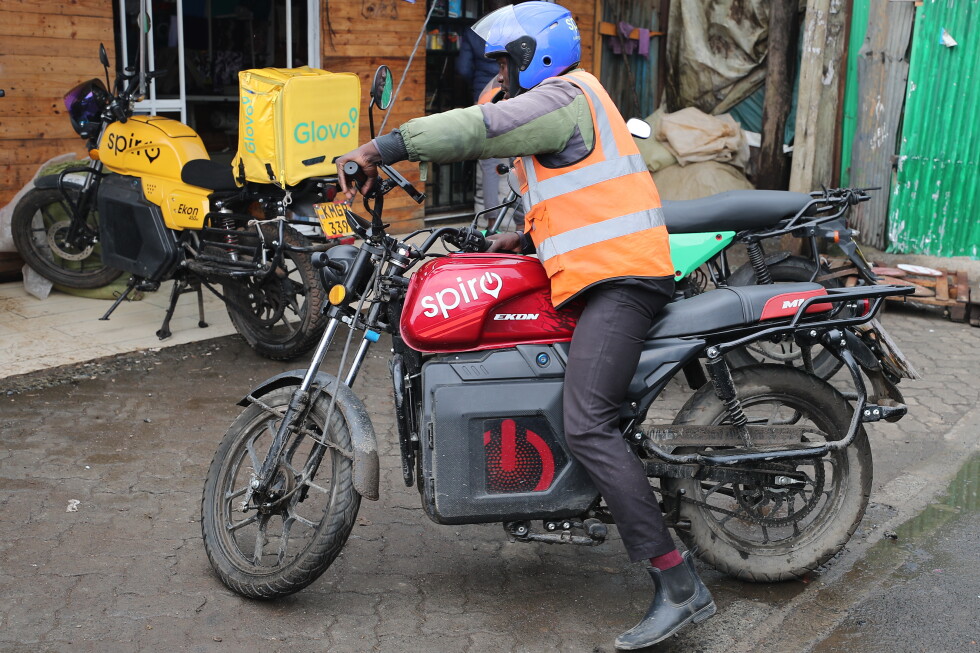
    For Spiro, the fresh funding marks the start of a new high-growth phase after a transformative 12 months for the company. Gagan Gupta, Spiro’s founder and chair of parent firm Equitane, framed the past year as a defining strategic milestone for the business in an official statement. Currently active in seven African markets – Kenya, Rwanda, Uganda, Togo, Benin, Nigeria, and Cameroon – Spiro has already deployed 100,000 electric vehicles and 2,500 smart battery-swapping stations, turning what was once a niche sustainable mobility concept into an affordable, accessible option for daily use across multiple regions. Gupta emphasized that the company’s next chapter will center on bringing affordable clean transport alternatives to millions of riders across the continent.

    Spiro did not disclose the company’s valuation tied to this latest financing round. What the startup did outline is its clear roadmap for the new capital: the funds will go toward expanding its existing battery-swapping network, scaling up local manufacturing and vehicle assembly operations, and accelerating entry into two new target markets, the Democratic Republic of Congo and Ethiopia.

    This funding round closes at a pivotal moment for African sustainable transport. Many governments across the continent are actively working to cut reliance on costly imported fossil fuels, boost domestic energy security, and modernize overstretched urban transportation systems. These policy shifts come as global fuel prices remain volatile and consumer demand for low-cost mobility options continues to rise alongside rapid urban population growth.

    Lars Bo Bertram, CEO of Denmark’s Impact Fund, noted that the investment signals broad confidence in the long-term growth potential of Africa’s electric mobility market. Two-wheeled vehicles, particularly electric motorcycles, have emerged as one of the fastest-growing segments for clean transport in Africa, where motorcycles already dominate urban passenger mobility and last-mile delivery services across most major cities.

    Unlike many foreign EV entrants that rely on imported fully assembled vehicles, Spiro has built local production capacity across key markets, operating manufacturing facilities in Kenya, Rwanda, and Uganda, as well as a purpose-built battery recycling plant in Nigeria. The company also highlights tangible cost savings for riders: users of Spiro’s electric motorcycles can cut their daily transport expenses by up to 40%, equal to roughly $2 per day, compared to operating a traditional gasoline-powered two-wheeler.

    In addition to expanding its core network, Spiro is also investing in innovative sustainable energy integration, including developing solar-powered battery-swapping stations and second-life battery storage systems that repurpose used EV batteries for stationary energy storage.

    While Africa’s overall electric mobility market still lags behind the larger, more mature sectors in China and Europe, industry analysts project rapid continued growth for the segment. That expansion is being driven by two key trends: national governments rolling out policy incentives for clean transport, and homegrown startups like Spiro developing locally tailored business models – such as widespread battery swapping, which eliminates long charging waits and cuts the high upfront cost of EV ownership for riders.