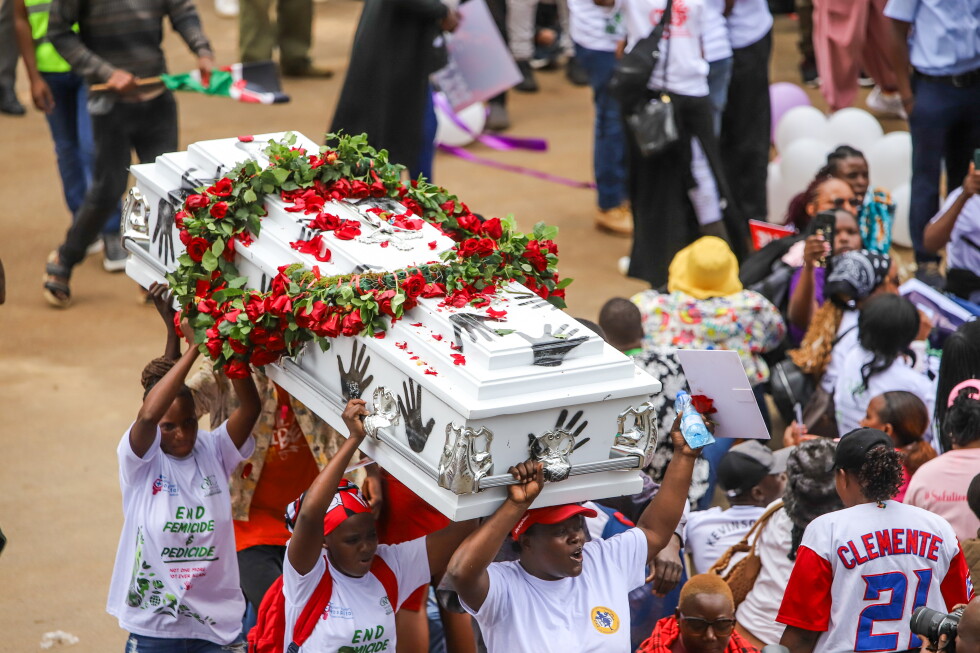
On a tense Monday in Kenya’s capital Nairobi, hundreds of women marched through downtown streets to amplify urgent demands for government intervention into a steep rise in gender-based violence (GBV) and the targeted killing of women, known as femicide. What began as a peaceful but impassioned demonstration drew heavy public attention, with participants carrying hand-painted placards emblazoned with slogans including “Stop Killing Women” and a symbolic empty coffin to honor victims who have been killed. Protesters also used the rally to raise public awareness of a string of unexplained child disappearances and murders that have shaken local communities over the past several weeks, with uniformed police officers assigned to escort the march throughout its route.
The demonstration was triggered by the brutal recent killing of a local Kenyan singer, who was doused in petrol and set on fire by an attacker before dying of her injuries. In response to growing public anger, women’s rights advocacy groups have spent weeks sounding the alarm over the climbing GBV caseload across the country, calling on the Kenyan government to formally declare the crisis a national emergency to unlock emergency funding and coordinated policy action.
Lobby groups originally gave the government a 40-day ultimatum to implement concrete reforms on May 21, threatening escalated nationwide protests if officials failed to act. But the early outbreak of public demonstrations in Nairobi shows that activists have grown frustrated with the slow pace of official response, choosing to mobilize sooner than planned.
Following mounting pressure, Kenya’s national police force announced on May 23 that it had assembled a new specialized investigative task force dedicated to addressing gender-based violence. The unit brings together cross-disciplinary experts, including criminal intelligence analysts, forensic specialists, veteran homicide detectives, and other specialized personnel to streamline investigations into GBV cases. Law enforcement officials also noted that the vast majority of reported GBV incidents are tied to domestic disputes, intimate partner violence, sexual assault, and unresolved family conflicts.
Data from the Federation of Women Lawyers (FIDA) Kenya underscores the scale of the crisis: the organization’s three regional offices in Nairobi, the coastal port city of Mombasa, and the lakeside city of Kisumu receive an average of 70 new gender-based violence cases every week, a figure that activists say points to a widespread underreporting of abuse across the country. For the women who marched on Monday, the demonstration is just the first step in a sustained campaign to force systemic change and end the cycle of violence targeting women and children in Kenya.