博客

  • Hasan Piker was set to meet Zack Polanski and Jeremy Corbyn in UK before being banned

    Hasan Piker was set to meet Zack Polanski and Jeremy Corbyn in UK before being banned

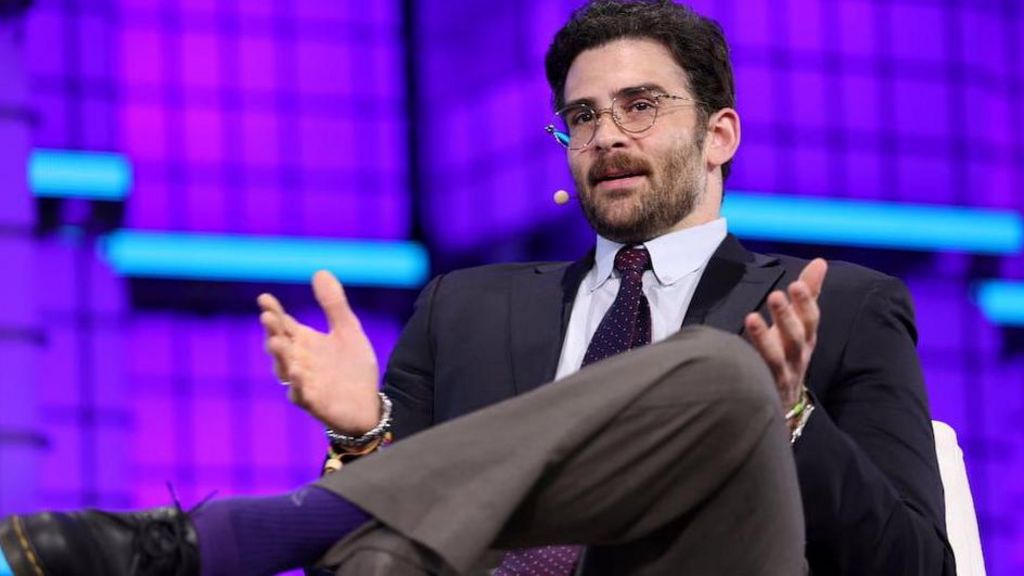
    A brewing controversy over free speech and political censorship has erupted in the United Kingdom after the Home Office blocked entry for two high-profile American progressive political commentators over their public criticism of Israel, multiple sources confirm to Middle East Eye. Hasan Piker and Cenk Uygur, founder and host of the popular online political show *The Young Turks*, were scheduled for a slate of public events across the UK this week, including podcast interviews, a planned discussion with veteran British politician Jeremy Corbyn, speaking engagements at the Oxford Union and SXSW London festival. But their travel authorisations were revoked at the eleventh hour, shutting down all planned in-person appearances.

    The cancellation of the pair’s visit drew immediate condemnation from across the UK political spectrum, with critics arguing the move exposes a growing bias against dissent on Israeli policy, while supporters frame the ban as a necessary step to curb hate speech and community division. Green Party deputy leader Zack Polanski, who was set to host Piker on his *Bold Politics* podcast, was among the first to speak out against the decision Monday morning.

    “People often talk about the dangerous road we would go down under a Reform government – this is another clear warning we are already down that road,” Polanski said in a statement, demanding answers from UK Home Secretary Shabana Mahmood and Greater Manchester Mayor Andy Burnham. “A Labour government is doing everything possible to silence criticism of the Israeli Government,” he added.

    Corbyn, the former Labour Party leader and a longstanding critic of Israeli policy who was set to join Piker for a separate interview with UK outlet PoliticsJOE, called the ban “an absurd and cowardly decision from an increasingly authoritarian government.” He went further, framing the move as an overt attack on fundamental democratic rights: “Let us call this what it is: an attack on the freedom to criticise Israel, as well as the UK government’s own complicity in genocide,” he said. As of publication, PoliticsJOE has not released an official comment on the planned interview, and MEE has reached out to the outlet for additional context.

    Both Piker and Uygur have confirmed the ban stems directly from their public condemnation of Israel’s ongoing military campaign in Gaza, which both have described as genocide. The Times of London reported that Mahmood revoked Uygur’s Electronic Travel Authorisation after concluding his presence in the UK would not be “conducive to the public good,” citing official Home Office concerns that his rhetoric on Israel could fuel antisemitism and stoke tensions between local communities.

    Uygur pushed back against that characterization in a post on X, the social platform formerly known as Twitter, mocking the Home Office’s reasoning. “The British government said that my charge that Israel controls the American government through donations to 94% of Congress, while factual, is antisemitic nonetheless,” he wrote. “Don’t know if facts will soon be banned in Britain. I didn’t get banned for criticizing the UK, but for criticizing Israel. They broke the irony record by saying it was because I said Israel might control other governments. I wonder if they’re going to ban themselves.”

    Organizers of the planned events have also voiced alarm over the last-minute cancellation. Arwa Elrayess, president of the Oxford Union, told MEE the speaking engagements had been publicly announced months in advance, making the sudden Home Office ruling all the more disruptive and worrying. “To this day, we defend freedom of speech; the right for our invited speakers to express themselves, and to be challenged, irrespective of political viewpoint,” Elrayess said, adding that the union is exploring all available alternatives to hold the discussion, including moving the event to an online format.

    A spokesperson for SXSW London, meanwhile, noted that entry decisions fall exclusively under the purview of the Home Office and the individuals affected. “SXSW London’s role is to convene a broad range of diverse voices and perspectives,” the organization said in a statement.

    Not all politicians have criticized the ban, however. Last week, Labour MP David Taylor publicly called on the Home Office to bar Piker from entering the UK, and he applauded the decision after it was announced Monday. “Thank you Home Secretary for revoking Hasan Piker’s visa,” Taylor said. “There’s no reason to open our doors to those who seek to spread hate and division, especially to those who’ve supported a proscribed terror group.”

    The ban is part of a broader recent trend of the UK Home Office denying entry to high-profile foreign speakers over a range of political concerns. Last month, officials barred 11 people scheduled to speak at a far-right rally organized by anti-Islam activist Tommy Robinson, whose legal name is Stephen Yaxley-Lennon.

    British left-wing commentator Aaron Bastani drew a contrast between the UK’s current approach to dissenting speech and its historical position as a haven for exiled political thinkers. “Britain at the height of its power and prestige was home to Karl Marx and Giuseppe Mazzini. It was a refuge for Alexander Herzen and Victor Hugo,” Bastani said. “Now, in 2026, it won’t allow American YouTubers & streamers to enter because they criticised Israel.”
  • Top EU official tells Western Balkan countries that bloc’s enlargement is real

    Top EU official tells Western Balkan countries that bloc’s enlargement is real

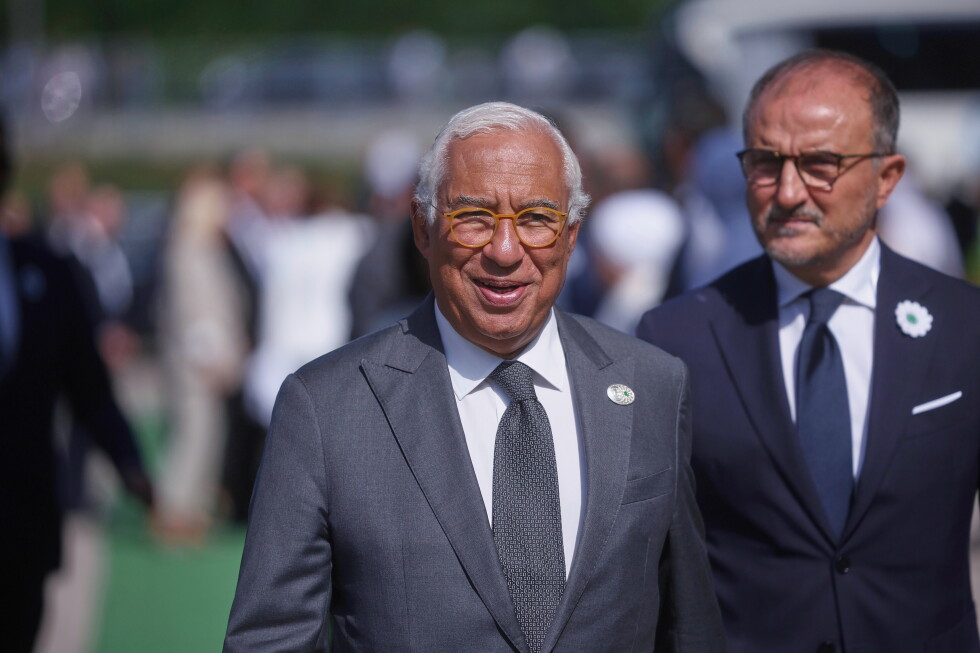
    SARAJEVO, Bosnia-Herzegovina – Ahead of a landmark EU-Western Balkans summit this week, European Council President António Costa has reaffirmed that the European Union’s enlargement push for the region is not empty rhetoric, but a tangible and priority goal for the bloc. Making the first stop of his pre-summit tour through the Western Balkans in Sarajevo on Monday, Costa framed EU expansion as a critical geostrategic investment at a moment of rising global uncertainty.

    Against a backdrop of shifting global power dynamics and widespread economic volatility across the globe, Costa emphasized that enlargement delivers long-term dividends for the entire European continent. “Enlargement is an investment in the peace, stability and security of our continent,” he stated, adding that his regional tour itself serves as concrete proof that the EU’s commitment to Western Balkan aspirants is as genuine as the membership opportunity on offer.

    This Friday, Costa will co-chair the high-stakes summit in the Adriatic coastal resort of Tivat, Montenegro. The gathering will bring together heads of government and senior officials from all 27 EU member states, alongside leadership from six Western Balkan candidate countries: Albania, Bosnia-Herzegovina, North Macedonia, Kosovo, Serbia, and host nation Montenegro. Each of the six nations is progressing through the accession process at different speeds, with Montenegro and Albania currently leading the pack in meeting the bloc’s requirements.

    In recent years, the EU has ramped up its outreach and encouragement for reform across candidate nations, driven in large part by concerns over growing geopolitical influence from Russia and China in the Western Balkans. Ukraine and Moldova are also part of a wider group of roughly 10 countries that hold aspiring member status, expanding the bloc’s ongoing enlargement agenda beyond the Western Balkans.

    Accession to the EU requires candidate states to align their entire legal and regulatory frameworks with 35 distinct policy areas, known as “chapters”, that cover everything from judicial standards and human rights protections to agricultural policy and fishing regulations. Every chapter requires unanimous approval from all 27 current EU members both to open negotiations and to finalize its completion, making the process deliberately rigorous and slow.

    Costa made clear that Friday’s summit is designed to build on existing momentum, reinforcing cooperation and accelerating progress toward membership. “The event will be a clear demonstration of our determination to bring forward our cooperation and build on the momentum of the European Union’s enlargement,” he said.

    Among the six candidates, Bosnia-Herzegovina lags furthest behind, still grappling with deep ethnic divisions decades after the 1992-1995 Bosnian War that left over 100,000 people dead and displaced millions. The country’s pro-Russia Bosnian Serb separatist leadership has continued to push for greater autonomy, a dynamic that originally fueled ethnic conflict following the collapse of the former Yugoslav federation and continues to undermine post-war reconciliation today.

    Costa’s visit coincides with a key leadership transition for the international peace architecture governing Bosnia. The Peace Implementation Council, the international body established by the 1995 U.S.-brokered Dayton Peace Accords to oversee the country’s post-war stability, is set to appoint a new High Representative this week following the resignation of German diplomat Christian Schmidt.

    The High Representative holds broad authority to revise legislation and remove public officials who threaten the country’s post-war reconciliation process. Local Bosnian media reports have indicated that PIC member states remain deeply divided over the choice of Schmidt’s successor. Speaking on the appointment, Costa stressed that the incoming representative must align with Bosnia’s stated European integration goal. “If the future of the country is in the European Union it’s important that the new high representative … embodies Bosnia and Herzegovina choice to pursue European Union accession,” he said.

    Costa also urged Bosnian officials to set aside internal divisions and prioritize the accession process, calling for immediate action to speed up required reforms. “Now is the time to focus on your goal and accelerate the pace of reforms,” he told local leaders.

  • AI giant Anthropic says it plans to list on US stock market

    AI giant Anthropic says it plans to list on US stock market

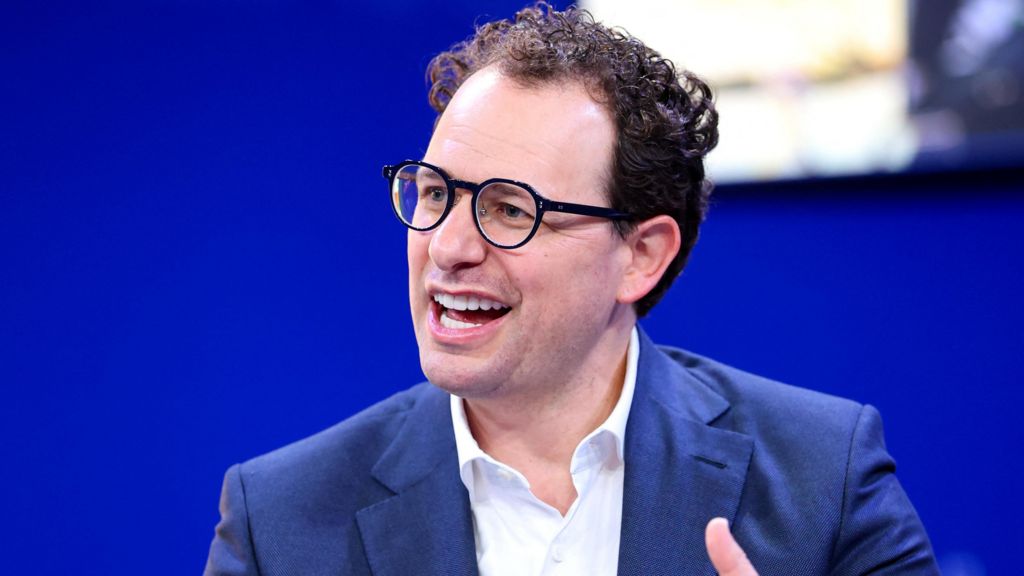
    The artificial intelligence race is entering a new high-stakes chapter on Wall Street, as leading AI developer Anthropic has announced plans to pursue an initial public offering (IPO) on U.S. stock markets later this year.

    In an official statement released Monday, the San Francisco-based company confirmed it has submitted confidential regulatory paperwork to the U.S. Securities and Exchange Commission (SEC) to pave the way for its public debut. The creator of the widely used large language model chatbot Claude noted that details including the per-share offering price and total number of shares available for purchase remain undecided at this preliminary stage.

    Founded only five years ago by CEO Dario Amodei and a small group of fellow former OpenAI executives, Anthropic has emerged as one of the most valuable private AI companies in the world. Its latest private funding round valued the firm at more than $965 billion, pushing it past longtime competitor OpenAI, which carries a most recent private valuation of $852 billion. Amodei launched Anthropic after departing OpenAI years ago over strategic disagreements with OpenAI CEO Sam Altman, and the two companies have since grown into bitter rivals competing for both consumer users and lucrative enterprise clients, as they roll out comparable generative AI technologies.

    Anthropic’s planned IPO comes hot on the heels of similarly public plans from SpaceX, the aerospace firm led by high-profile entrepreneur Elon Musk. Together, the two high-value, high-growth offerings are widely expected to serve as a critical market test of whether investor enthusiasm for the generative AI boom matches the sky-high private market valuations that AI startups have commanded in recent years. After a multi-year stretch of booming investment in AI innovation that sent private valuations soaring, public markets will now judge whether these unprofitable, growth-focused companies can live up to lofty investor expectations.

  • Hungarian PM threatens to oust Orbán-era president

    Hungarian PM threatens to oust Orbán-era president

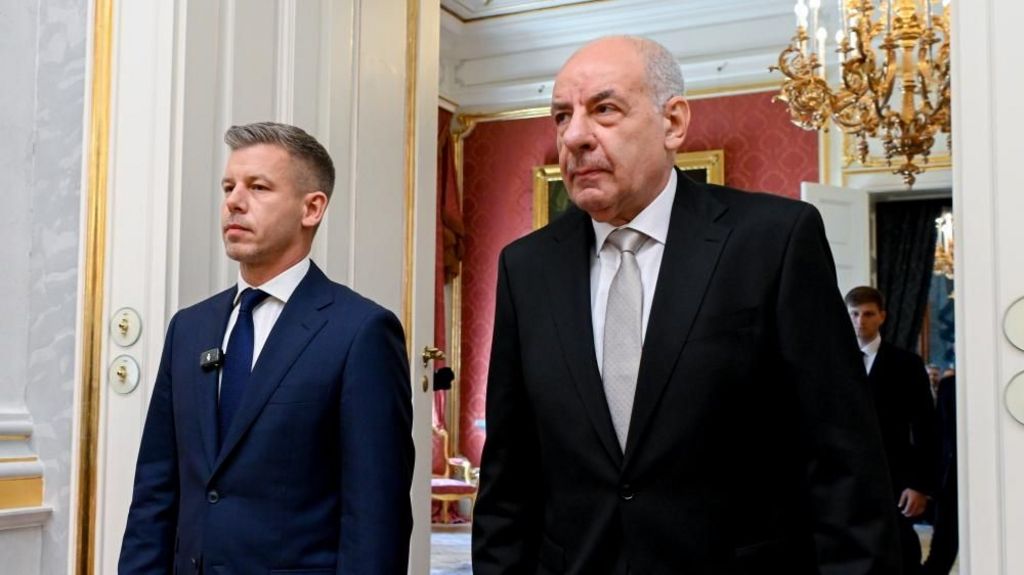
    A sharp constitutional confrontation is unfolding in Hungary just months after a seismic political upheaval ousted long-serving prime minister Viktor Orbán, as newly installed Prime Minister Péter Magyar has confirmed his government will push through a constitutional amendment to oust sitting President Tamás Sulyok, who has repeatedly rejected calls to resign from his post.

    Magyar’s Tisza Party secured a historic landslide victory and a two-thirds supermajority in the National Assembly during April’s general election, a result that ended 16 years of uninterrupted rule by Orbán’s right-wing Fidesz party. Since taking power, the new prime minister has made dismantling remaining Orbán-era institutional holdovers a top policy priority, and has targeted Sulyok — a figure appointed to the presidency by Fidesz in February 2024 without a direct public vote — as a primary example of old regime influence.

    Magyar has repeatedly publicly called for Sulyok’s resignation, most recently setting a firm 31 May deadline for the president to step aside. In a social media post on X published over the weekend, Magyar doubled down on his criticism, arguing that Sulyok has never advocated for vulnerable Hungarian communities, defended citizens under political attack, or upheld the principles of the rule of law. He has repeatedly characterized the sitting president as unfit to represent the unity of the Hungarian nation, claiming Sulyok remains loyal to Orbán’s political interests rather than serving the public good.

    Sulyok, for his part, has refused to step down, stating he intends to complete the full five-year term he was appointed to serve. Following a face-to-face meeting with Magyar on Monday, the president reaffirmed his position, warning that the forced removal effort triggered by the new government has already created a constitutional crisis that deepens existing social rifts within Hungary and undermines international confidence in the country’s democratic credentials. He has also raised a warning that the ongoing standoff could put at risk the long-frozen €16.4 billion in EU development funds earmarked for Hungary, a large portion of which has been withheld by Brussels for years due to documented democratic backsliding during Orbán’s tenure. Last week, EU officials signaled that reform efforts under Magyar’s new government could clear the way for the funds to be released imminently, a development Sulyok argues is now threatened by the political clash.

    Fidesz, Orbán’s former ruling party, has already labeled Magyar’s demand for Sulyok’s resignation an “unlawful ultimatum”, rejecting the new government’s push to remove the sitting president. While the Hungarian presidency is largely a ceremonial role under the country’s governing framework, it holds key practical powers that can disrupt the new government’s legislative agenda: it can refer passed laws back to parliament for re-examination, challenge legislation before the Constitutional Court, and oversee all public sector appointments. Just on Monday, Sulyok demonstrated these active powers by announcing a slate of new military appointments via his official Facebook page, a move seen as a show of defiance amid the standoff.

    The presidency itself became vacant in early 2024 when then-president Katalin Novák resigned in the wake of public outrage over the Fidesz government’s botched response to a high-profile child sex abuse scandal, clearing the way for Sulyok’s appointment by the outgoing Fidesz-controlled legislature. Orbán himself stepped down from his seat in parliament after his party’s election defeat in April, closing out 16 years as Hungary’s prime minister. Even as it moves to oust Sulyok, Magyar’s government has already advanced additional constitutional reforms to lock in the post-Orbán political shift, including a new amendment that would cap any future prime minister at eight years total in office, closing off any potential path for Orbán to return to power.

    Magyar confirmed to reporters this week that the constitutional amendment process to remove Sulyok will take approximately four weeks to complete, a timeline that keeps the country in a state of political uncertainty as the new government works to roll out its ambitious agenda of institutional and democratic reform.

  • Israelis sing national anthem inside Al-Aqsa Mosque during raid

    Israelis sing national anthem inside Al-Aqsa Mosque during raid

    On a Sunday in May 2026, a contingent of at least 199 Israeli ultranationalists carried out a deeply provocative incursion into the Al-Aqsa Mosque compound in occupied East Jerusalem, under the direct protection of Israeli police. During the raid, the group raised the Israeli national flag, sang the country’s national anthem, and multiple participants openly conducted Talmudic prayers — actions that directly violate long-standing agreements governing the holy site.

    Al-Aqsa Mosque ranks as one of the most sacred sites in Islam, and its governance has been guided for decades by a globally recognized status quo arrangement. This binding international framework, widely accepted by major world powers, explicitly designates the entire mosque complex as an exclusively Islamic place of worship, where only Muslim followers may conduct religious rituals. While non-Muslim visitors are permitted limited access under specific conditions, all administrative, maintenance, and worship oversight falls to the Jerusalem Islamic Waqf, which operates under the custodianship of Jordan’s king, with Jordan holding formal protection responsibility for the site.

    For years, however, Israel has faced growing international condemnation for systematically eroding this status quo. Successive Israeli governments, and particularly the hard-line administration led by Prime Minister Benjamin Netanyahu that took office in 2022, have increasingly facilitated near-daily incursions by ultranationalist Jewish groups into the compound, allowing activities that were banned for decades to prevent regional unrest. For generations, Israeli leaders enforced restrictions on displays of the Israeli flag and formal Jewish prayer at Al-Aqsa, out of explicit concern that such actions would ignite widespread violence across Jerusalem and the occupied Palestinian territories. But ultranationalist factions, which openly advocate for the destruction of Al-Aqsa Mosque to build a Jewish temple in its place, have pushed relentlessly to lift these restrictions, and Netanyahu’s government has largely capitulated to their demands.

    Speaking to Anadolu Agency following Sunday’s incursion, Omar Rajoub, media department director for the Jerusalem Governorate, framed the action as part of a deliberate, state-backed campaign to reshape the identity of East Jerusalem. “Raising the Israeli flag inside the courtyards of Al-Aqsa Mosque, along with performing provocative rituals, is part of a systematic and deliberate official Israeli policy led by the extremist occupation government,” Rajoub stated. He added that these targeted practices are intended to forcibly impose new realities on occupied East Jerusalem, and fundamentally undermine the site’s centuries-old historical and legal status quo.

    Rajoub warned that the repeated incursions by settlers and ultranationalists are a core component of an ongoing colonial project to Judaize Jerusalem and erase the city’s existing Palestinian, Arab, and Islamic religious and historical identity. He emphasized that these incursions, which are enabled and protected by Israeli security forces, amount to a clear violation of international law, and held the Netanyahu government fully accountable for any subsequent escalation of tensions in the region.

    On the day of the incursion, Israeli police imposed additional strict restrictions on Palestinian worshippers seeking entry to the mosque, multiple witnesses confirmed. Several worshippers reported that their identity documents were seized by officers at the outer gates of the compound, barring them from accessing the site for worship. The Jerusalem Islamic Waqf added that the Israeli settlers deliberately provoked on-site guards and worshippers by taking photos throughout the mosque courtyards, including in front of the iconic Dome of the Rock, one of the most recognizable and sacred landmarks in the city.

  • Syria’s government begins to return Alawi lands, while maintaining its hold over others

    Syria’s government begins to return Alawi lands, while maintaining its hold over others

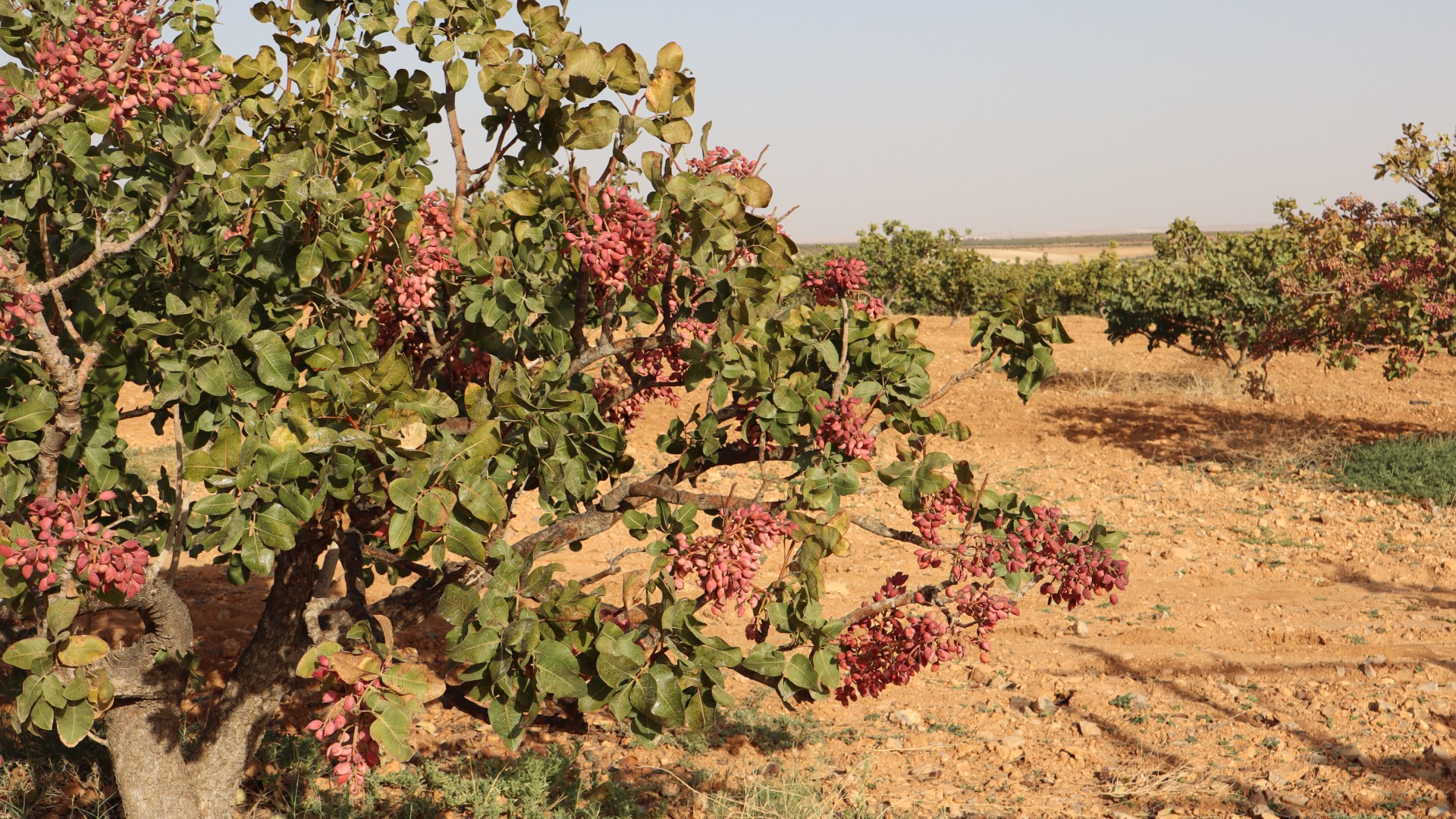
    In the wake of the December 2024 lightning rebel offensive that toppled 50 years of Assad family rule in Syria, a quiet crisis over land ownership is unfolding in northern Hama, the historic core of Syria’s once world-leading pistachio industry, threatening to derail fragile efforts to build intercommunal peace.

    The conflict traces back more than a decade to the earliest days of Syria’s civil war, when northern Hama’s pistachio-growing hills became a brutal frontline between regime forces and opposition factions. What were once scenic, multi-sectarian villages descended into sectarian bloodshed between majority Sunni communities, which made up most of the anti-Assad rebellion, and Alawis, the Shia offshoot sect to which Bashar al-Assad belonged. By the end of Assad’s rule, thousands of Sunni landowners had been displaced from their properties, while Alawi landholders fled en masse after the regime’s collapse, fearing retaliatory violence from returning rebels.

    For Ahmed Ali, a former Syrian civil servant who lost his government job in 2019 for refusing mandatory military service on principle, the collapse of the Assad regime should have cleared the way for him to return to his 15-hectare family pistachio farm, a plot that has been in his family for more than half a century. Instead, Ali has become one of hundreds of landowners trapped in the messy new system of property administration implemented by the new Syrian government, led by former HTS leader Ahmed al-Sharaa.

    Ali’s story is familiar to many displaced landowners. When he returned to his property after Assad’s ouster, he found his former Alawi neighbor Karim al-Khattib occupying his home, after Khattib’s own property was destroyed in the fighting. Ali initially agreed to let Khattib stay in exchange for a share of the annual pistachio harvest, only to discover that the state-owned agricultural investment firm Iktifaa had seized control of his land, branding him an Assad-aligned “shabih” without providing evidence of any crime.

    Khattib, who has signed a new contract with Iktifaa to farm Ali’s land for 2026, says he will vacate the property once he earns enough to replant his own destroyed pistachio orchard. Last year, a weak harvest worsened by Syria’s worst drought in decades yielded around $4,000, 60% of which went to Khattib, with the remaining 40% going to Iktifaa. Ali estimates his losses from 2025 alone top $50,000, and he has been blocked from even selling the land he has owned for decades.

    Founded in 2021 through a merger of two Idlib-based agricultural firms active in former opposition-held territory, Iktifaa is now the central body managing “absentee lands” across most of Syria, under the oversight of the newly created Illicit Gains Committee. The committee, an extrajudicial body independent of Syria’s court system, is tasked with investigating ties to the former Assad regime and seizing assets from those linked to the old government. It is overseen by Abraham Succarieh, a Lebanese-Australian national who remains under Western sanctions over allegations of terrorism financing, and all revenue from seized assets flows to the Syrian state’s sovereign wealth fund.

    During the war, Iktifaa and its predecessor firms managed lands owned by displaced Druze and Christian minorities in HTS-held Idlib. While those properties were returned between 2020 and 2023 as HTS sought to improve its standing with minority communities, many landowners reported they never received compensation for years of use of their property, with all revenue going to the former Syrian Salvation Government, HTS’s pre-2024 governing body. Today, Iktifaa applies the same model to lands abandoned by displaced Alawis who fled after Assad’s fall.

    Monzer Khattab, head of Iktifaa’s Hama and Homs branch, defends the firm’s approach, arguing that state oversight was necessary to prevent widespread land grabbing and chaos in the immediate aftermath of the regime’s collapse. He acknowledged that 2025 was a chaotic year, with much of the harvest in Hama and Homs stolen due to the firm’s limited capacity, but confirmed Iktifaa still earned between $1.5 million and $2 million in profits from the region last year, 90% of it from absentee lands. This year, the firm will deploy additional staff across all producing regions to monitor the upcoming June mid-harvest, he said.

    But for displaced Alawi landowners who have already been cleared of any ties to the Assad regime, the system still leaves them locked out of their livelihoods. Ammar al-Aassad, an Alawi farmer from the northern Hama village of Maraiwid, received official clearance for his 29 dunam pistachio and olive orchard last month, but has still been unable to access his land. After a Bedouin faction occupied his property and Iktifaa signed a cultivation contract with the group, Aassad lost his entire 2025 harvest, with estimated losses of $40,000. He has yet to receive any compensation, and fears to return to his village even with official clearance: three days after Assad’s ouster, one of his Alawi neighbors who tried to return was killed by unknown assailants, and no other displaced Alawi residents have dared come back since.

    “There should be evidence – the previous regime was oppressive, we don’t want oppression again,” Ali says of the current system.

    Syrian provincial authorities in Hama acknowledge the growing tensions and say they are working to resolve the crisis. Hama Deputy Governor Hassan al-Hassan says the national presidency has issued formal directives supporting the return of displaced Alawis to their lands, and that new appeal offices linked to the Illicit Gains Committee will open in every province within weeks to allow landowners to challenge seizures. To resolve the immediate housing crisis that has displaced Sunnis and Alawis alike, the provincial council is planning to build temporary caravan housing for displaced Sunni farmers who returned to destroyed homes and now occupy abandoned Alawi properties.

    “Our goal is to restore civil peace, and our thinking is that of a state and its institutions, not that of an armed faction. The state’s vision is that people return to their regions,” Hassan said, adding that priority must first go to Sunni farmers who returned after years of displacement to find their homes destroyed and trees uprooted. He gave no clear timeline for when full property returns would be completed.

    Local intercommunal reconciliation committees, made up of both Sunni and Alawi community leaders, are already working to resolve disputes at the village level. Alaa Ibrahim, an Alawi landowner from Maan village who serves on one such committee, says his 138 dunam family property remains under Iktifaa control because his brother worked at an army-owned shoe factory, placing him under suspicion. With the 2026 harvest approaching, the Illicit Gains Committee has not issued a ruling on his case, and Ibrahim warns that if Alawi landowners are locked out of another harvest, the economic impact will be catastrophic for already vulnerable families, pushing many to sell their land at rock-bottom prices.

    Ibrahim and other committee members are negotiating direct sharecropping contracts between Alawi landowners and their Sunni neighbors, while working to resolve long-running intercommunal violent disputes. If successful, he says, the agreements could pave the way for the safe return of displaced Alawis and ease sectarian tensions. If not, he warns, growing resentment will undermine the entire project of building post-war civil peace in Syria’s once-prosperous pistachio heartland.

  • US political commentators denied entry to UK by Home Office

    US political commentators denied entry to UK by Home Office

    A high-profile controversy has erupted in the United Kingdom after the Home Office revoked travel authorizations for two prominent American left-wing political commentators, barring them from entering the country ahead of scheduled speaking appearances at the SXSW London festival and an event at the University of Oxford.

    Hasan Piker, a popular Twitch streamer with a daily audience of 30,000 viewers, and Cenk Uygur, co-founder and host of the leading YouTube political commentary show *The Young Turks*, were both stripped of their Electronic Travel Authorisations (ETAs) ahead of their planned trips. The pair, who are relatives, have publicly condemned the British government, claiming the decision was directly driven by their sharp criticism of Israel’s military campaign in Gaza.

    In a post on X following his denied boarding for a flight to London, Uygur wrote: “I’ve been banned from the UK. I tried to get on a flight to London to attend SXSW London and give a speech at Oxford. I’ve been banned for criticising Israel. Are we free any more? This is oppression of western citizens by our own governments on behalf of a different country.”

    Piker echoed these claims in his response, stating: “The UK has revoked my visa as well. All at the behest of Israel. The west is betraying ‘liberal values’ for a genocidal fascist foreign government. Soon we will all become Israel.”

    Piker has long attracted controversy for his public comments, including stating that Hamas was “1,000 times better” than Israel and saying he would “vote for Hamas over Israel every single time.” He has also previously made a widely condemned 2019 remark that “America deserved 9/11,” which he later acknowledged was inappropriate. Piker has pushed back against accusations of antisemitism, telling *Variety* last year that he is not antisemitic but unequivocally “anti-Israel.”

    According to *The Times*, Uygur’s ban is rooted in multiple concerning factors, including what the outlet describes as antisemitic tropes such as the claim that Israel controls American political institutions, plus controversial comments he made about grooming gangs during an appearance on Piers Morgan’s YouTube channel.

    Under UK immigration rules, the Home Office holds the authority to cancel an ETA if it assesses that an individual’s entry would pose a risk to the UK’s public good.

    The decision has split political and public opinion across the UK. Labour MP David Taylor, who publicly called for Piker to be barred from entry just last week, publicly thanked Home Secretary Yvette Cooper for the outcome. “There’s no reason to open our doors to those who seek to spread hate and division, especially to those who’ve supported a proscribed terror group,” Taylor wrote on X.

    The Community Security Trust (CST), a leading Jewish community security and advocacy group, also welcomed the ban. In a statement, the group said it welcomed “the government’s recognition that there must be consequences when public figures cross the line into hate speech. While criticism of Israel is entirely legitimate, Piker has a record that goes far beyond robust or controversial political speech, including rhetoric that contains antisemitic themes.”

    However, critics across the political spectrum have condemned the visa cancellations as an unacceptable attack on free speech. Green Party of England and Wales leader Zack Polanski described the decision as “a really grim decision,” adding: “People often talk about [the] dangerous road we’d go down under a Reform government – this is another clear warning we’re down there already. A Labour government doing everything possible to silence criticism of the Israeli government.”

    Liberty, a leading UK human rights organization, also criticized the move. Liberty director Akiko Hart noted that “in recent months we have seen the government preventing people from entering the UK where their speech is deemed to have crossed the line. It is important that any Government decisions that restrict speech adhere to the very high standards set out in UK law – and that the Government is transparent about why and how decisions have been made.”

    Officials with SXSW London, a six-day cross-industry event held in East London’s Shoreditch featuring more than 800 speakers, artists, and film screenings, said the organization was aware of the pair’s inability to travel due to the Home Office’s action. “Decisions on entry to the UK are a matter for the Home Office and the individuals concerned. SXSW London’s role is to convene a broad range of diverse voices and perspectives. We remain focused on delivering a programme this week fostering open dialogue and exchange of ideas,” a spokesperson for the festival said.

    Piker was scheduled to lead a discussion titled “How The American Left Learned To Speak The Internet,” while Uygur was set to take part in a panel on “Techno-Feudalism Is Here. Who Are The Lords?” Both speakers’ profiles have since been removed from the SXSW London website.

    This latest visa ban follows a string of similar controversial entry denials by the Home Office in recent months. Earlier this year, American rapper Kanye West, who now goes by Ye, was barred from the UK over a history of widely condemned antisemitic, racist, and pro-Nazi comments. Just last month, the government blocked 11 foreign nationals labeled as “far-right agitators” by Labour leader Keir Starmer from entering the UK ahead of a rally led by far-right activist Tommy Robinson in central London.

  • Bowen: Trump needs this war to end but Iran is not backing down

    Bowen: Trump needs this war to end but Iran is not backing down

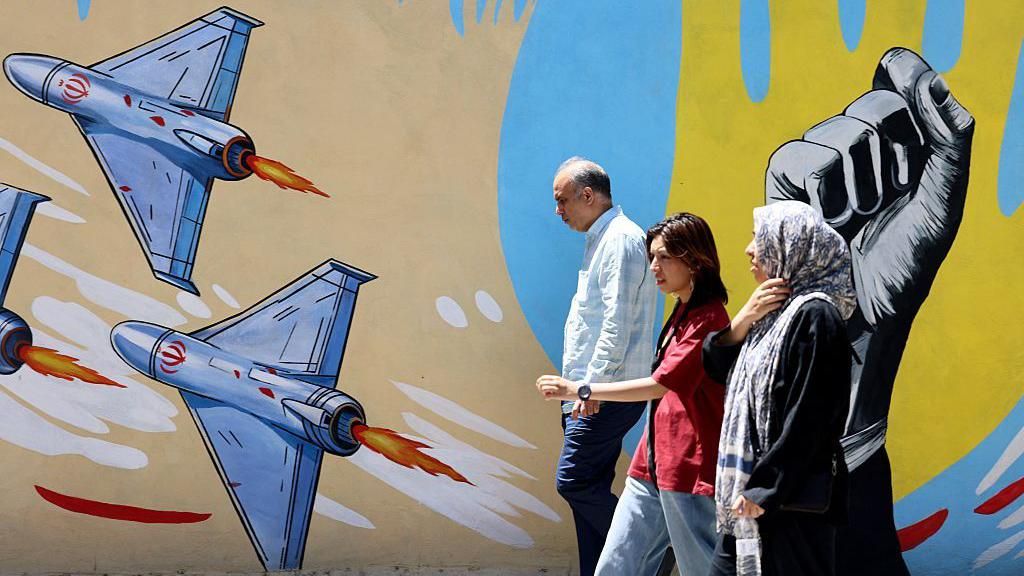
    Indirect diplomatic negotiations between the United States and Iran are still ongoing, mediated by Qatar and Pakistan, but Tehran has made no secret of its refusal to compromise on core demands, leaving the fragile April 8 ceasefire hanging in the balance. Neither Washington nor Tehran has walked away from the negotiating table despite persistent low-level military exchanges, but the gap between their competing positions remains wide, with major global consequences at stake.

    The United States maintains a robust naval and air presence positioned within striking distance of Iranian territory, a deliberate show of force designed to ramp up pressure on Tehran to make key concessions. Analysts widely agree that Iran’s military command has kept its forces on heightened alert, using the lull in active fighting to restructure units, repair infrastructure damaged in earlier US and Israeli strikes, and shore up defensive positions. The ongoing low-grade tensions across the Gulf region create a persistent high risk of dangerous miscalculation or miscommunication that could spiral back into full-scale open conflict.

    For Washington, the strategy of military pressure is intended to force Tehran to move toward compromise, while Iran has made equally clear that its resolve to resist remains unbroken. Tehran has warned that if pushed too far, it will target US military bases across the Middle East and critical energy infrastructure across the Arab Gulf states.

    The immediate, near-term priority for any breakthrough is extending the existing ceasefire and locking in a preliminary memorandum of understanding to set the agenda for future, broader negotiations. Even this limited milestone has proven elusive. Iran has linked the reopening of the Strait of Hormuz — a critical global chokepoint closed by Tehran since a US-Israeli attack on February 28 — to major concessions from the West, most notably relief from crippling economic sanctions and the unfreezing of billions of dollars in Iranian assets held abroad. Currently, only a tiny fraction of the usual shipping traffic is able to pass through the waterway, which normally handles roughly a fifth of the world’s daily oil and gas supplies.

    While Saudi Arabia has rerouted some crude exports to Red Sea shipping terminals and the United Arab Emirates can move oil via a pipeline to Gulf of Oman terminals outside the strait, the global economy still faces a 20% cut in traditional energy supplies from the region. Even though the United States no longer relies on Gulf oil imports, domestic US petrol prices remain tied to global market dynamics, meaning the closure is already hitting American consumers at the pump.

    The standoff has left US President Donald Trump in a politically precarious position. Trump joined Israeli Prime Minister Benjamin Netanyahu in launching the current war, based on a flawed assumption that overwhelming air power would quickly topple Iran’s Islamic regime. The pair badly underestimated Tehran’s deep-rooted capacity to resist and absorb attacks, leaving the administration stuck with an unpopular war with no clear exit strategy. Re-escalating open conflict would only deepen public opposition to the war ahead of upcoming political deadlines, but the concessions Iran demands to reopen the strait face fierce pushback from hardline hawks in Trump’s own Republican Party.

    Compounding this political bind is Trump’s long-standing opposition to the 2015 Iran nuclear deal negotiated by the Obama administration, which he withdrew from during his first term. Trump has repeatedly rejected any comparison between a potential new Iran agreement, even a limited ceasefire extension, to the Obama-era deal, limiting his room to compromise. Iran’s leadership, for its part, views the conflict as an existential fight for the survival of its regime, and analysts agree that additional US or Israeli strikes are unlikely to force a change in its core positions.

    Across the wealthy Gulf Arab states, the conflict has already caused lasting economic damage that will take years to repair. These nations built their long-term development models on positioning the Gulf as a stable, secure hub for global commerce and foreign investment, a reputation that has been severely undermined by the outbreak of war. Qatar has taken an active role as a mediator alongside Pakistan, while other Gulf states have taken differing approaches to the crisis. The UAE has deepened its strategic partnership with Israel, which has deployed Iron Dome air defense systems and Israeli military personnel to Emirati territory. Saudi Arabia launched strikes against Iran in retaliation for earlier Iranian attacks, but senior Saudi officials have privately emphasized to Tehran that its actions were independent, not part of the US-Israeli coalition.

    When Trump and Netanyahu launched their campaign to overthrow the Islamic regime, they bet that massive air power would be enough to achieve their goal in short order. That prediction has proven to be a catastrophic miscalculation. Forty-six years after its founding, the Iranian regime has already survived decades of war, sanctions, and international isolation, and it has shown no sign of collapsing under current pressure. Today, the consequences of that failed gamble are being felt not just by the US, Israel, and Iran — but by the entire global economy.

  • Serena Williams to return to tennis at Queen’s Club

    Serena Williams to return to tennis at Queen’s Club

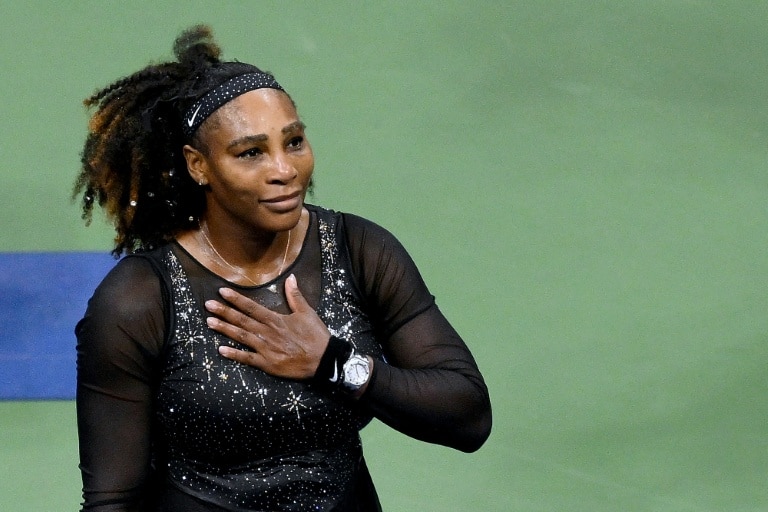
    One of the most decorated athletes in tennis history, Serena Williams, has sent shockwaves through the global tennis community with a long-awaited announcement: she is stepping back into competitive tennis nearly three years after her last professional outing, making her return at the Queen’s Club HSBC Championships later this month in women’s doubles competition. The 44-year-old American icon, who holds 23 Grand Slam singles titles – just one shy of the all-time record held jointly by Margaret Court and Novak Djokovic – has not competed at the top level since her third-round exit at the 2022 US Open, when she signaled she was “evolving away” from the sport rather than formally retiring.

    Williams first teased the news to her millions of fans on social media, posting a clip of herself training on a court with the playful caption “Guess everybody heard the news,” as her phone buzzed nonstop with incoming messages in the background. The 7-time Wimbledon champion followed up with a confirming post, quipping that “Good news travels fast.” In an official statement released through tournament organizers, Williams called Queen’s Club the ideal venue to open this new chapter of her career. “Grass has given me some of the most meaningful moments of my career, and I’m excited to be back competing on one of the sport’s most iconic stages,” she said. The women’s draw of the historic London tournament gets underway on June 8, with Williams granted a wildcard entry into the doubles draw, where she is widely reported to partner 17-year-old rising Canadian star Victoria Mboko.

    Speculation around a potential Williams comeback has been building for months. The first clue emerged back in December, when public records revealed Williams had rejoined the global tennis anti-doping program – a mandatory requirement for any player seeking to return to elite tour competition. Williams initially denied plans for a competitive return, but persistent rumors kept the story alive throughout the first half of 2024. Even men’s tennis great Novak Djokovic tipped off the public about a possible comeback back in March, and the announcement has dominated conversations among players competing at this year’s ongoing French Open in Paris.

    Current and emerging stars of the sport have overwhelmingly welcomed the news of Williams’ return. Former world No. 1 Naomi Osaka, who defeated Williams in the controversial 2018 US Open final to claim her first Grand Slam title, said she is already looking forward to watching the comeback run. “I think it’s good for me. I’ll be very entertained,” Osaka told reporters. American rising star Coco Gauff, who bowed out of the French Open in the third round on Saturday, added that she would jump at the chance to face Williams for the first time in her career, calling the legend an inspiration to a generation of young players.

    WTA Tournament Director and former British tennis pro Laura Robson expressed overwhelming excitement about the landmark comeback, saying “Serena Williams is one of the greatest athletes the world has ever seen, and we’re delighted that she will be making her return to tennis at the LTA’s HSBC Championships.” Robson noted that women’s tennis only returned to Queen’s Club last year after a long absence, making Williams’ participation a historic milestone for the event: “Women’s tennis made a historic return to the Queen’s Club last year and now we have an icon of the game stepping back on to court.”

    Over the course of her legendary career, Williams spent a combined 319 weeks atop the WTA singles world rankings and claimed 73 tour-level singles titles. She also won 14 Grand Slam doubles titles alongside her older sister and long-time doubles partner Venus Williams, who returned to competitive tennis last year after a 16-month break. When Venus announced her own comeback 12 months ago, she said the only thing that could make her return better would be Serena joining her back on tour. That wish is now set to come true at Queen’s Club later this month.

  • Watch: Moment a meteor creates sonic boom over Massachusetts

    Watch: Moment a meteor creates sonic boom over Massachusetts

    On a recent day that drew widespread public attention, a dramatic celestial event unfolded over Massachusetts, as a streaking meteor blazed through the upper atmosphere before breaking apart in a violent burst that generated a noticeable sonic boom across much of the state. Multiple eyewitnesses captured footage of the glowing fireball as it tore across the sky, with videos of the event quickly spreading across social media platforms and sparking fascination among casual stargazers and astronomy enthusiasts alike.

    Following the sighting, NASA experts stepped in to analyze the energy released during the meteor’s fragmentation. According to official assessments from the U.S. space agency, the breakup of the incoming space rock unleashed energy equivalent to roughly 300 tons of TNT – a force large enough to generate the shockwave that many residents across Massachusetts heard and felt as a deep, resonant boom.

    Meteor events of this scale are classified as small to medium-sized entry events, according to astronomical records. Most meteors that enter Earth’s atmosphere burn up completely before reaching the surface, and this event was no exception; NASA has not reported any findings of surviving meteorite fragments reaching the ground as of current updates. The event has renewed public interest in near-Earth objects and the regular cosmic activity that interacts with our planet on a daily basis, often going unseen by most people.