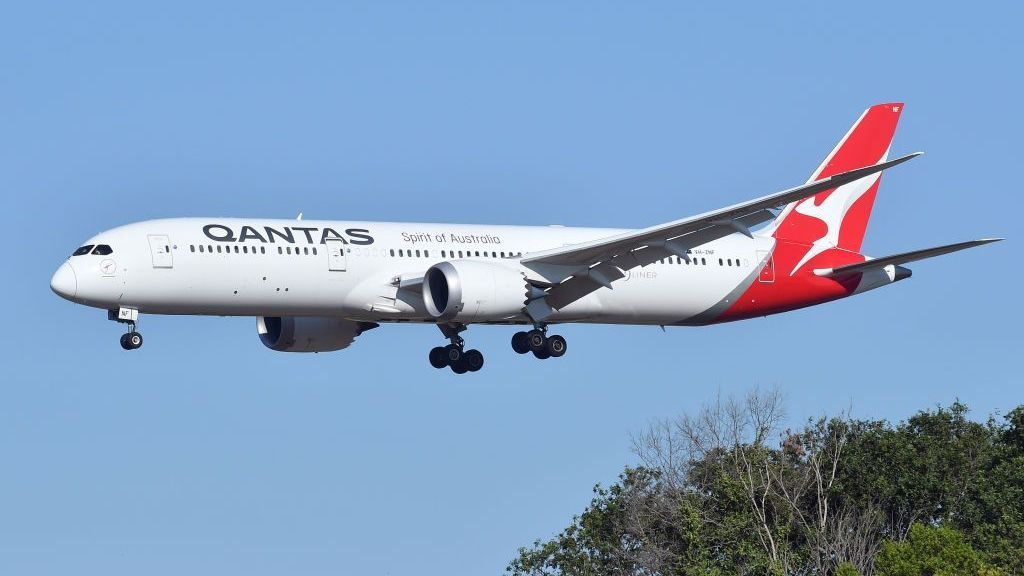
A major incident has disrupted Qantas Airways’ international operations, forcing the Australian flag carrier to scrap a Saturday flight connecting Rome, Italy and Perth, Australia after passengers reported a bedbug infestation on the aircraft during an earlier trip. According to local Australian outlet the Sydney Morning Herald, the infestation was first flagged by travelers on the plane’s prior voyage: a 17-hour non-stop service from Perth to Rome operated on Friday. Multiple passengers on that flight told the airline they had sustained bites from the pests, and the cabin crew distributed antihistamines to relieve the discomfort of itchy bite marks – only to run out of the medication mid-journey as more passengers reported issues.
Following the confirmation of bedbugs in a small section of the aircraft’s economy cabin, the Boeing 787 Dreamliner jet was immediately taken out of active service to undergo a thorough deep cleaning and disinfection process, a Qantas spokesperson confirmed in an official statement to the BBC.
“We sincerely apologise to customers for the cancellation of Saturday’s Rome to Perth service, which allowed our engineers and maintenance teams to carry out a deep clean of the aircraft after an issue was identified on a small number of economy seats,” the spokesperson said.
The airline added that all passengers who were impacted by the last-minute cancellation received complimentary hotel accommodation and were rebooked onto alternate replacement flights within 48 hours of their originally scheduled departure.
For context, bedbugs are tiny, wingless parasites that can easily hitch a ride on fabrics including clothing, luggage, upholstery and bedding. While their bites typically cause only itching and do not carry life-threatening diseases, the UK’s National Health Service (NHS) notes that infestations are notoriously costly and challenging to fully eliminate. Standard eradication protocols include washing all contaminated fabrics on high heat cycles followed by tumble drying, or freezing items at sub-zero temperatures in sealed plastic bags for 72 to 96 hours.
This is far from the first time bedbug sightings have caused widespread disruption to global transport operations. Less than two weeks before the Qantas incident, multiple commuter train services run by UK operator Southeastern were cancelled after drivers found the pests in train driver cabs. In 2017, British Airways issued a public apology to a family traveling from Vancouver to London after the entire group developed extensive bug bites during their overnight flight. Most recently last year, Turkish Airlines faced a major public relations crisis after The New York Times documented multiple separate bedbug infestation incidents across the airline’s fleet, with reports that the carrier failed to address the issues when they were first reported.