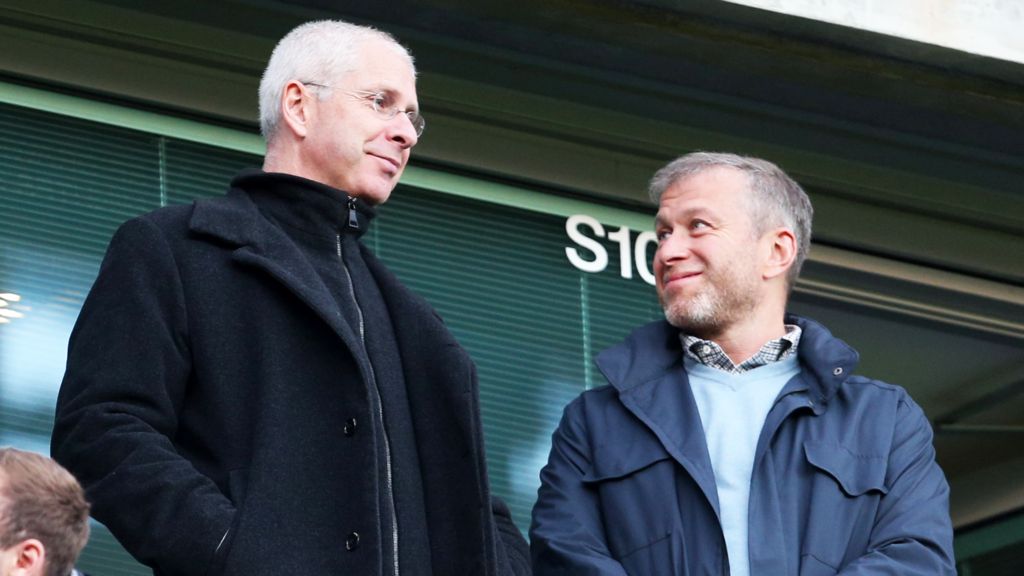
A bombshell leak of financial documents tied to Russian oligarch Roman Abramovich has uncovered new allegations that one of his long-time closest associates deliberately misled a UK High Court during a high-stakes 2008 legal battle over ownership of lucrative Siberian oil reserves, a joint investigation by the BBC Panorama program and the Bureau of Investigative Journalism has revealed.
The accusations center on Eugene Tenenbaum, a former board director of Chelsea Football Club who at the time of the 2008 trial served as a key manager of Abramovich’s sprawling global fortune. The legal dispute pitted Abramovich against a rival Russian billionaire, Chalva Tchigirinsky, whose UK-registered firm Sibir Energy PLC controlled a Russian subsidiary named Yugraneft. Yugraneft held the official extraction licenses for the contested oil fields, while Abramovich’s energy giant Sibneft contributed capital to the joint venture, dubbed Sibneft-Yugra. The partnership collapsed into bitter acrimony after Sibir Energy’s 50% stake in the project was unexpectedly diluted to less than 1%, a change the firm claimed was carried out without its knowledge or consent.
After failed legal attempts to challenge the dilution in Russian and British Virgin Islands courts, Tchigirinsky’s team brought the case to London’s High Court in 2008. Yugraneft’s legal team argued it had been the victim of a massive, orchestrated fraud orchestrated by Abramovich that caused at least $2 billion in damages. Abramovich’s legal team countered that Yugraneft had defaulted on more than $30 million in outstanding loans, legally forfeiting its right to the joint venture shares. In the end, Abramovich won the case on multiple grounds, including a ruling that Yugraneft’s lawsuit constituted an abuse of court process.
The newly uncovered evidence comes from a massive leak of internal documents detailing Abramovich’s finances and the operations of his network of Cyprus-based offshore companies, spanning the years 1995 to 2022. This leak is the core of the ongoing Cyprus Confidential investigation, led by the International Consortium of Investigative Journalists and reported by a global coalition of media outlets including the BBC, the Guardian, Paper Trail Media, the Organised Crime and Corruption Reporting Project, and the Cyprus Investigative Reporting Network. Earlier reporting from the investigation already revealed that global accounting giant Deloitte assisted in falsifying documents to hide Abramovich’s wealth and evade tax obligations.
During the 2008 High Court proceedings, Yugraneft’s legal team pushed to establish that Tenenbaum, who was based in the UK at the time, must have been fully aware of the plan to dilute the subsidiary’s stake. In his sworn testimony, Tenenbaum denied all knowledge of the deal, telling the court he only first learned of Sibneft-Yugra in spring 2004. He added that he had conducted a thorough search of all his personal and professional files, emails and records spanning 2002 to 2004, and found no documentation related to the joint venture.
The leaked documents directly contradict this testimony. Records show that Tenenbaum explicitly approved Abramovich’s purchase of Sibneft-Yugra shares in October 2003 – five months before he claimed he first learned of the venture’s existence. Just two months after that first approval, he signed off on a second separate financial transaction directly tied to the joint venture. Tenenbaum also held final sign-off authority for nearly all of Abramovich’s major business deals during this period, the records confirm.
Andrew Mitchell KC, a leading expert in UK financial services law, told Panorama that if Tenenbaum’s 2008 testimony is proven false, the consequences would be severe. False testimony in a High Court case could range from charges of perjury and contempt of court to an allegation of attempted perversion of the course of justice, Mitchell explained.
In response to the investigation’s questions, lawyers for Tenenbaum reiterated that their client “denies in the strongest terms any suggestion that he committed perjury or contempt of court”. They added that Tenenbaum gave his testimony honestly and in good faith, and that he cannot recall the context or specific details of documents dating back more than 20 years. Lawyers for Abramovich have likewise stated that their client denies all allegations made against him.
While the 2008 trial judge explicitly ruled that even if Tenenbaum had prior knowledge of the deal, it would not have changed his final ruling in Abramovich’s favor, the leaked documents raise additional red flags about evidence submitted to the court. The investigation found that at least one key agreement dated August 2003, which was presented as evidence by Abramovich’s legal team, was not actually created or signed until 2007.
Abramovich’s legal team argued during the trial that the dilution of Yugraneft’s stake was necessary to secure new financing for the joint venture, claiming Tchigirinsky had first approached Abramovich about new financing arrangements in spring 2002 – a claim Tchigirinsky has always denied. The leaked documents show that as early as January 2002, months before that alleged approach, Abramovich’s Russian associates had already prepared full documentation for the share acquisition that would dilute Yugraneft’s stake and expand Abramovich’s ownership. This indicates the dilution was premeditated long before the financing justification presented in court, making that argument a deliberate cover for the planned takeover.
In their formal response to the new allegations, Abramovich’s lawyers noted that the 2008 judgement made no finding that the dilution was premeditated or fraudulent. They added that the judge ruled Abramovich never received any property that belonged to Yugraneft, and no Yugraneft assets could be traced to his possession.