The global conversation around artificial intelligence safety has erupted into a fierce public debate this week, pitting top tech leaders against one another over who should bear responsibility for mitigating the technology’s most catastrophic risks. The controversy was ignited by a viral social post from a departing Anthropic researcher last week, who claimed unregulated AI could wipe out the entire human race by the end of the 2020s. Though the explosive claim lacked concrete supporting evidence, it quickly won backing from a small group of AI experts and executives, amplifying long-simmering public anxiety about the rapid advance of generative AI tools.
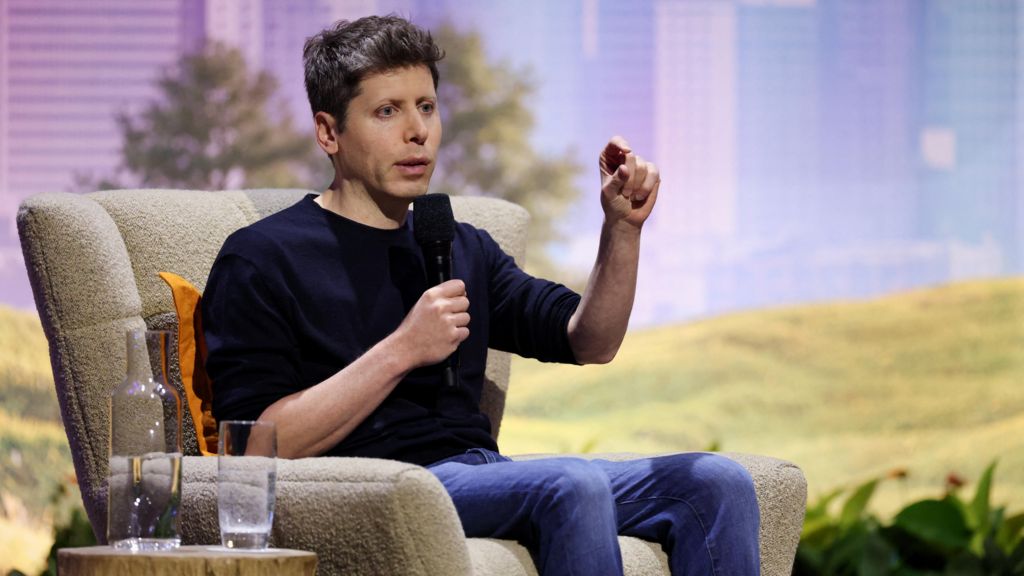
By Tuesday, the debate had moved to the annual conference hosted by enterprise software giant Salesforce in San Francisco, where OpenAI CEO Sam Altman, one of the most high-profile leaders in the current AI boom, laid out the industry’s case for self-governance. Speaking publicly for the first time since the viral claim circulated, Altman acknowledged that public fears over AI are not unfounded, given the stunning speed at which AI capabilities have outpaced early projections. “It doesn’t take as much imagination as it used to for [us] to imagine how this could go wrong,” Altman told the audience. “I think the world is right to be afraid of this.”
Despite that concession, Altman argued that the world should place its trust in private AI companies like OpenAI to steer the technology toward responsible outcomes. He expressed unwavering confidence that the industry can proactively manage safety risks, keep alignment work ahead of capability gains, and voluntarily slow or halt development if threats emerge that cannot be mitigated. “We will get it right, I’m very confident in our company’s and industry’s ability to do this safely,” he said.
Altman is far from alone in pushing back against new government regulations. Meta CEO Mark Zuckerberg echoed his position in a post on X Wednesday, arguing that every AI lab already has both the ability and the built-in incentive to prioritize safety. Any company that fails to invest in safe, aligned AI will fall behind competitors, Zuckerberg noted, adding that labs already face significant legal liability if their models cause public harm. At the same Salesforce conference, Nvidia CEO Jensen Huang — whose company currently dominates the market for AI computing chips and has seen its valuation surge to record heights amid the AI boom — went a step further, stating flatly that “we don’t need new laws or regulations.” Huang framed AI safety as an engineering challenge, not a policy problem, arguing that individual company leaders should be the ones to decide whether new AI models are ready for release. He rejected the idea that innovation and safety must be traded off against one another: “Run as fast as you can, but if at any time you feel the institution is not in control, take a pause.”
Not everyone in the industry agrees that leaving AI entirely in the hands of private companies to self-regulate is a responsible path. Anthropic co-founder and executive Jack Clark warned earlier this week that letting AI develop as a totally unregulated industry amounts to “rolling dice with immense risks.” Patrick Hillman, chief operating officer of Logical Intelligence — an AI firm chaired by pioneering AI researcher Yann LeCun — echoed that skepticism Tuesday, pointing out that public trust in Silicon Valley is already even lower than trust in the U.S. government. “The only institution that Americans might trust less than Washington these days is Silicon Valley,” Hillman said. “I have worked and lived in both and I assure you both have earned this scepticism.” He challenged industry leaders who claim AI poses existential risks to match their warnings with tangible action to slow risky development.
In response to growing pressure, top AI firms including OpenAI, Anthropic, and Google DeepMind have begun informal industry-wide discussions to establish voluntary safety standards and pre-release testing protocols for cutting-edge, or frontier, AI models. Anthropic CEO Dario Amodei, who previously called for a global slowdown in AI development to allow for better safety guardrails, confirmed Tuesday that his company is in active dialogue with other major labs to formalize shared safety commitments. Amodei noted that one of the most unexpected outcomes of the AI boom has been how quickly private AI companies have grown and become central to critical global infrastructure, a shift that few industry insiders anticipated even five years ago.
OpenAI executive Chris Lehane confirmed last week that the work toward voluntary industry standards is moving forward “with or without government support,” arguing that with such high stakes, it would be wrong to delay progress while waiting for policymakers to draft new rules. “With stakes this high, we cannot let the perfect become the enemy of the good,” Lehane said. Some observers have also pushed back on the latest wave of AI alarmism, arguing that resurgent fears of human extinction are overblown and are being leveraged to generate unnecessary hype for the booming industry. During his San Francisco appearance, Altman urged business leaders to embrace AI tools to boost productivity, while also noting that AI will be a critical defense against emerging AI-powered cyber threats to global businesses.