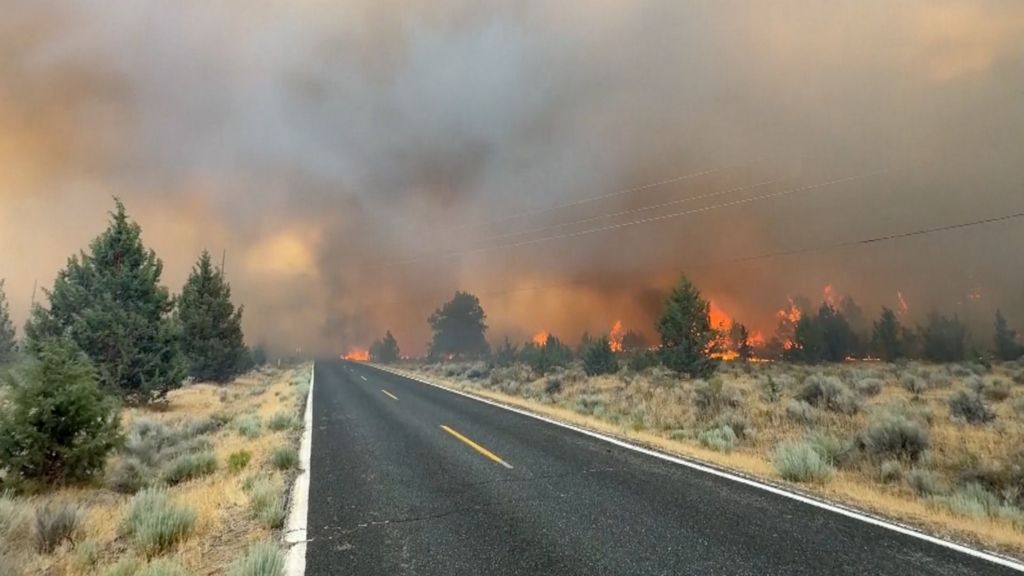
Across the western expanse of North America, a growing climate-driven crisis is unfolding as dozens of intense wildfires scorch vast swathes of land in two major regions: the U.S. state of Oregon and Canada’s western province of British Columbia. Fueled by steadily climbing regional temperatures that have dried out vegetation and turned vast forested areas into tinder, these uncontrolled blazes have already consumed millions of acres of land, and show no signs of slowing their advance.
The ongoing wildfire season, which has become increasingly severe in recent decades amid global climate shifts, has put local communities, emergency response teams, and ecological systems under extreme strain. Rising temperatures create a feedback loop that exacerbates fire risk: higher heat evaporates moisture from soil and plant life, making even normally resilient forests far more flammable. With warm weather patterns persisting across the Pacific Northwest, fire managers have warned that the spread of active blazes will likely continue in the coming weeks.
This disaster is not contained within a single national border. Both Oregon and British Columbia share extensive ecological corridors and weather systems, meaning smoke and fire risk can cross international boundaries, impacting air quality and public health across a far wider area than the burned zones themselves. As emergency crews work around the clock to contain the blazes and evacuate at-risk communities, the event underscores the growing threat that climate change poses to wildfire frequency and severity across western North America.