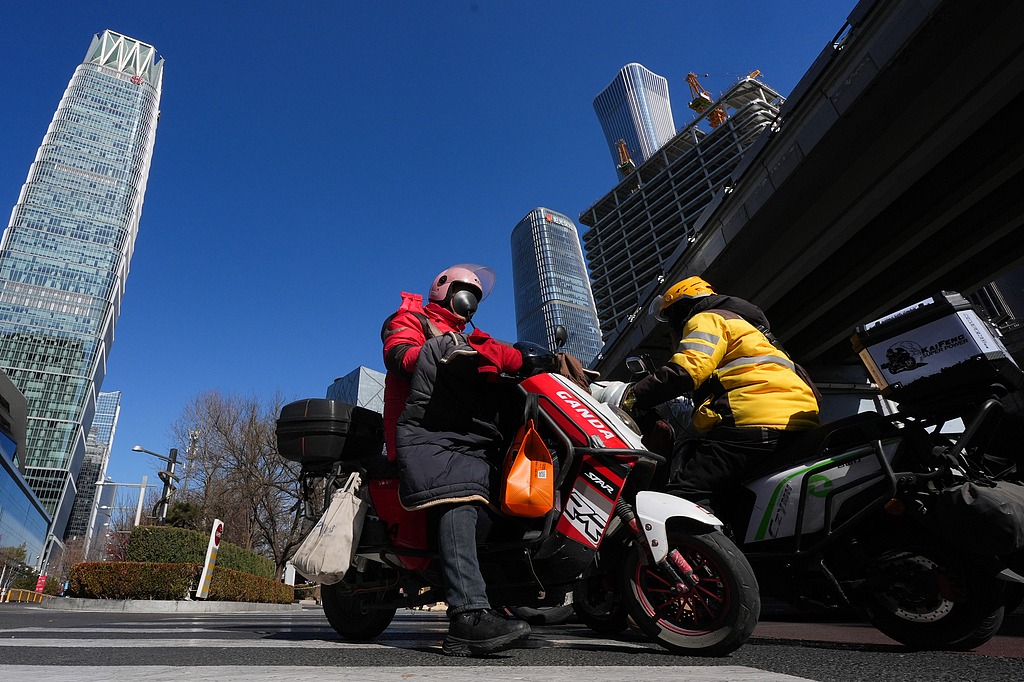
Against a backdrop of explosive growth in China’s gig economy and rising concerns over unfair working conditions for flexible employees, China’s top governing bodies have introduced a landmark policy framework designed to safeguard the legal rights and interests of workers in new forms of employment. The policy, made public on April 27, 2026 by the General Offices of the Communist Party of China Central Committee and the State Council, addresses widespread industry abuses that have accompanied the sector’s rapid expansion, when more than 240 million people now work in flexible roles across the country. According to data from the National Bureau of Statistics, approximately 84 million of these workers hold positions in emerging occupations including food delivery riders, ride-hailing drivers, parcel couriers and online livestreamers. The new regulation sets clear, phased goals for industry reform: by 2027, all gig workers are expected to benefit from standardized labor protocols, safer working environments and fully enforceable legal rights protections. Over a three to five-year implementation window, the entire regulatory system will mature, fostering more harmonious labor relations, greater social recognition for flexible occupations, and enabling comprehensive personal development for gig workers. A key innovation introduced by the policy is the nation’s first mandatory algorithm filing system, which requires all digital employment platforms to complete regular third-party reviews and verification of their operational algorithms. The regulation explicitly guarantees gig workers three core algorithm-related rights: the right to be informed of algorithm rule changes, the right to participate in rule-setting discussions, and the right to voice opposition to unfair algorithm design. When platforms adjust core algorithm parameters that directly impact workers’ livelihoods — including income distribution rules, service pricing structures and estimated delivery timeframes — they are legally required to solicit and consider feedback from trade unions and elected gig worker representatives. The policy also targets the harmful “involution-style” cutthroat competition that has become endemic in the platform economy, where extreme price wars and efficiency overemphasis have suppressed worker wages and intensified job-related stress. Regulatory authorities are directed to strictly prevent infringement on new employment groups’ rights, with mandates to investigate unfair commission schemes, unequal distribution of customer order traffic, and abusive exercise of market dominance by large platforms. To address gaps in social support for mobile flexible workers, the policy expands access to basic public services tied to workers’ habitual residence rather than formal household registration, allowing social service coverage to follow workers as they relocate across provincial and municipal boundaries. It also calls for strengthening the national social security system, including expanding pilot programs for mandatory work-related injury insurance and gradually incorporating gig workers into the national housing provident fund system that provides subsidized housing support. Industry and labor experts have praised the policy as a transformative institutional innovation for modern labor governance in China. Tang Daisheng, a professor of economics and management at Beijing Jiaotong University, noted that the framework replaces the previous unregulated ecosystem driven by uncontrolled capital expansion and opaque algorithmic optimization with a new, fairer operating environment. Under the new system, platforms are required to operate in full compliance with labor laws, algorithmic decision-making is transparent and equitable, and gig workers are guaranteed access to decent, dignified work. “The policy directly targets the current practice where large platform companies seize market share through destructive subsidy wars, a race to the bottom that leaves workers with meager incomes and systematically eroded rights,” Tang explained. “This reform will force platforms to shift their competitive focus to improving service quality and user experience, rather than increasing profits by squeezing gig workers.” Tang added that the mandatory algorithm filing system requires platforms to disclose core algorithm logic, underlying data sources and decision-making rules to regulators before new algorithms are deployed, shifting the previous reactive regulatory model — where intervention only occurred after worker rights were already violated — to a proactive prevention-focused governance model. This new structure allows regulators to trace violations directly to their source and hold platform leadership legally accountable for abuses. The policy builds on earlier regulatory actions to curb unfair platform practices: in July 2025, the State Administration for Market Regulation summoned executives from three of China’s largest food delivery platforms — Taobao Instant Commerce (formerly Ele.me), Meituan, and JD.com — to demand compliance with e-commerce, anti-unfair competition, and food safety laws. The summons was issued in response to a rampant industry price war that included low-threshold consumer coupons, free delivery vouchers and even zero-cost promotional items that put extreme downward pressure on rider earnings. For gig workers already navigating grueling daily schedules, the new rules bring long-awaited relief to longstanding grievances. Yan Dongjian, a Meituan delivery rider based in Beijing, told reporters he works 12-hour shifts even during slow business seasons, earning roughly 400 yuan ($59) per day. During the busier winter peak season, his daily income can climb to 500 to 600 yuan with platform performance incentives. “The biggest challenge we face is traffic safety,” Yan said. “Road accidents are extremely common. We’re all just here to earn a living, but the platform-imposed delivery time limits are unreasonably tight.” He explained that a typical 25 to 26-minute delivery window already includes time spent waiting for restaurants to prepare orders, leaving almost no buffer for unexpected delays. If a restaurant falls behind on cooking, riders are automatically penalized for lateness, creating constant, high-stress pressure throughout every shift. Yan noted that the new regulations will curb one of the most common worker grievances: arbitrary fine deductions from platform operators. “Platforms used to dock pay for any small delay with no room for appeal. Now they won’t be able to do that as easily,” he said. Yang Bin, a Beijing-based ride-hailing driver who now takes nearly all of his passenger orders through mobile platform apps, echoed the widespread hope for meaningful change, while noting that consistent implementation will be the key to success. Yang has long raised concerns about unfair order dispatch algorithms that allocate more high-value trips to a small subset of drivers, leaving many full-time drivers with inconsistent incomes. “If the new rules are actually enforced, and every driver gets fair treatment with more balanced order distribution, this will be a huge win for all of us,” Yang said.