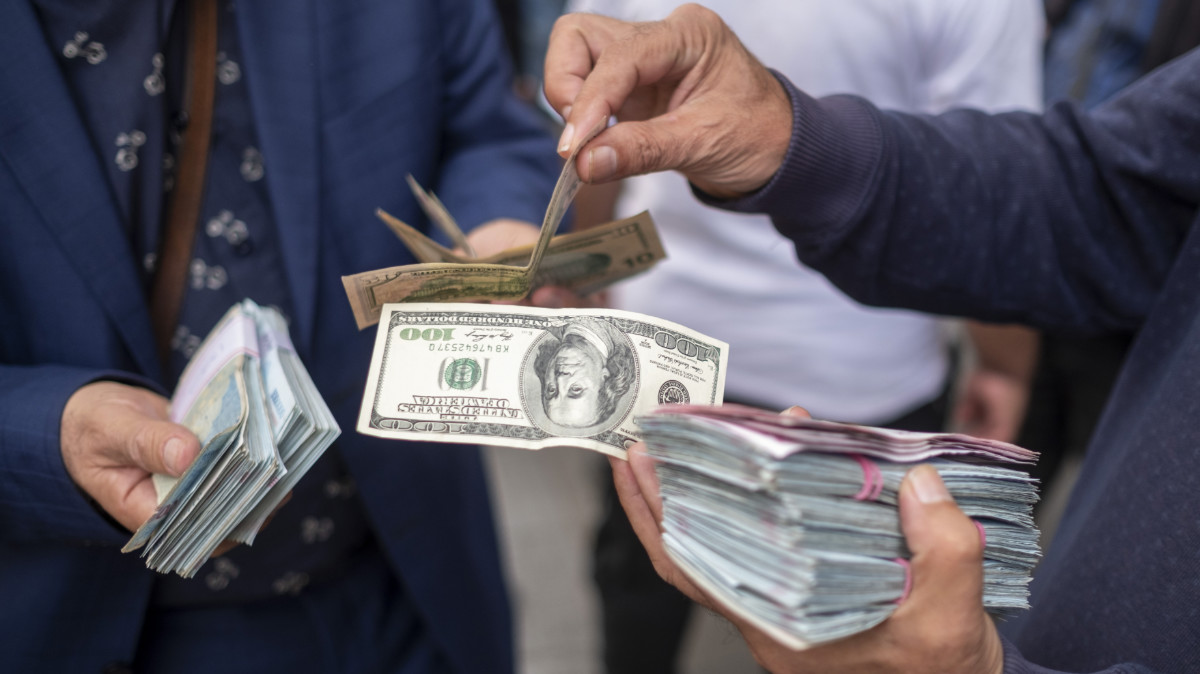
For more than a decade, Donald Trump anchored his approach to Iran in uncompromising economic pressure, building his political brand around criticizing the 2015 Joint Comprehensive Plan of Action (JCPOA) nuclear deal for sending what he called “plane loads of cash” to Tehran. Now, as he seeks to broker a deal to end the ongoing Middle East war, the success of his goal rests entirely on the one issue he has spent years refusing to budge on: how much financial relief he is willing to give the Islamic Republic.
According to Alex Vatanka, a senior Iran expert at the Washington-based Middle East Institute, financial concessions are not just a secondary ask for Iran – they are the foundation of any potential compromise. Multiple current and former U.S. and Arab officials speaking to Middle East Eye confirm that Trump’s reluctance to ease sanctions and unlock frozen Iranian assets is the primary barrier to progress, leaving negotiations deadlocked and at high risk of collapse.
Contrary to widespread public framing, the core dispute is not Iran’s nuclear program or uranium enrichment limits. Tehran has even tabled a proposal to set the nuclear issue aside temporarily in order to reopen the closed Strait of Hormuz and end hostilities. Insiders familiar with the negotiations say the actual intractable sticking point is sanctions relief, a far more politically charged issue for the Trump administration than nuclear caps.
A former U.S. official who has consulted with Gulf and American stakeholders on the talks put it bluntly: “Everyone has ideas about a compromise on enrichment, but the hardest circle to square for Trump is lifting sanctions. My understanding is that this is more sensitive than the nuclear file.”
The roots of this impasse stretch back to Trump’s longstanding Iran policy. After first campaigning against the JCPOA, he unilaterally withdrew from the landmark 2015 agreement in 2018 and reimposed crippling, sweeping sanctions that have gutted Iran’s economy. The JCPOA had granted Tehran broad sanctions relief in exchange for capping uranium enrichment at 3.67% – a level far below what is required for a nuclear weapon – and opening all nuclear facilities to rigorous international inspections. Even after a ceasefire took hold between Iran, the U.S. and Israel this year, Trump has shown no willingness to retreat from his maximum pressure economic campaign.
Vatanka noted that Trump’s own early rhetoric has boxed him in politically. “The way he misrepresented the JCPOA from the get-go has made life harder for him now, because anything he does will be measured by what he criticised Obama for,” he explained.
This political trap played out publicly in recent weeks, when the U.S. rolled out new sanctions targeting a Chinese oil refinery and dozens of shipping firms and vessels involved in transporting Iranian oil just hours before scheduled talks between U.S. and Iranian delegates in Islamabad. The meeting was immediately scrapped.
Diplomats say the reason for this intransigence is clear: if the war ends with Iran in a stronger financial position than it started, the Trump administration would face massive political backlash at home. Barely a month before U.S. and Israeli forces launched strikes against Iranian targets, U.S. Treasury Secretary Scott Bessent celebrated the impact of sanctions at the World Economic Forum in Davos, boasting that U.S. economic pressure had sent Iran’s currency, the rial, “into free fall” and pushed the Iranian people “out on the streets.”
“This is economic statecraft – no shots fired. And things are moving in a very positive way here,” Bessent said at the time. Turning around that policy now would amount to a major reversal.
For Iran’s side, however, the need for financial relief is existential. While Tehran has earned higher oil revenues by leveraging its control of the Strait of Hormuz during the war, and can still sell stored crude held on tankers in East Asia in the short term, the long-term economic damage is catastrophic. U.S. and Israeli strikes have caused an estimated $300 billion in damage to Iran’s infrastructure, and an Iranian business newspaper reported in April that full reconstruction will take at least 12 years. For Iran’s leadership, which has seen its domestic popularity rise amid the conflict, securing tangible economic gains to deliver to the public is critical to consolidating that support after the war.
Alan Eyre, a former member of the U.S. negotiating team that drafted the original JCPOA, argues that the nuclear issue has become a secondary, outdated concern in the current talks – an analogy he compared to Betamax, the obsolete 1970s video format. “Everyone is talking about what the Iranians are willing to give up. But that is largely a function of what they are willing to get,” Eyre said. “What the Iranians want is money.”
Eyre outlined four key pathways Tehran has outlined to secure that financial compensation: direct war reparations, tolling revenue for access to the Strait of Hormuz, unlocking tens of billions in frozen foreign assets, and broad, permanent sanctions relief. Of these options, he views a Hormuz tolling agreement as the most politically feasible path to a deal.
Estimates suggest Iran holds roughly $100 billion in frozen assets held abroad – a sum equal to nearly a quarter of the country’s total annual GDP. Billions are held in escrow accounts (including $6 billion in Qatar), while oil sale revenues are locked up in South Korea, Japan and European financial institutions. In April, Axios reported the U.S. had offered to unfreeze $20 billion in assets in exchange for Iran abandoning its entire enriched uranium stockpile, but political headwinds have stalled any movement.
Eyre noted that Trump is extremely unlikely to approve the release of major tranches of frozen assets before the November 2026 U.S. midterm elections, given his years of political attacks on the 2015 JCPOA over the “plane loads of cash” claim. Iran, for its part, is deeply wary of temporary sanctions relief after being burned by Trump’s 2018 withdrawal from the original nuclear deal. After that exit, Western and Asian businesses fled the country out of fear of secondary U.S. sanctions, leaving Iranian firms with worthless contracts and no economic gains to show for their nuclear concessions.
“The bad thing about sanctions relief for the Iranians is that it’s reversible. That is what they are scared about – giving away the family jewels for something that can be taken away,” Eyre explained.
Discussions of a Strait of Hormuz tolling system have also faced major obstacles. Trump initially floated the idea of the U.S. and Iran sharing toll revenue for commercial access to the strategic waterway, but the administration has since walked back that proposal. Secretary of State Marco Rubio told Fox News the U.S. will never accept Iran formalizing control over the international waterway. “They cannot normalise – nor can we tolerate them trying to normalise – a system in which the Iranians decide who gets to use an international waterway and how much you have to pay them to use it,” Rubio said.
A senior Arab diplomat told MEE that Washington’s initial openness to the idea faced fierce pushback from Gulf Arab states, including the United Arab Emirates, Bahrain and Kuwait, which refuse to accept Iran as the legitimate gatekeeper of the waterway that most of their oil exports pass through. The diplomat added that Iran is well aware its neighbors are already moving ahead with projects to bypass the Strait of Hormuz entirely, regardless of the outcome of talks: Iraq, for example, is already expanding crude shipments by truck to Syria’s Mediterranean coast and increasing the capacity of its oil pipeline to Turkey.
“Iran knows that a toll is unpalatable with practically all of its neighbours. There would be constant friction, and efforts are underway to bypass Hormuz in the future,” the diplomat said.
Trita Parsi, executive vice president of the Quincy Institute, argues that Iran is only using the tolling proposal as a bargaining chip to win broader sanctions relief. “I don’t think the money from tolling is anywhere near the amount of money that sanctions relief will provide them,” Parsi explained. “The Iranians are approaching these talks as an attempt to get a final deal with the US, and that means all sanctions have to be lifted.”
Djavad Salehi-Isfahani, an Iran economy expert at Virginia Tech, agreed that lasting sanctions relief is non-negotiable for Tehran as it seeks to stabilize the country after the war. “Inside Iran, the image of this government has actually improved in people’s eyes because of the war. But the sacrifices made have to lead to something better for people when this ends,” he said. “Iran doesn’t just need to have the ability to export oil, but buy and sell on the international market. They need to create manufacturing jobs. The war needs to end with Iran becoming a normal economy.”
While the issue of full economic normalization remains politically toxic for Trump, Parsi argues that a deal could still be framed as a political win for his base. Trump himself has previously suggested that reviving Iran’s economy could open massive new opportunities for U.S. businesses. Parsi notes that lifting all sanctions would open the largest new market to U.S. companies since the collapse of the Soviet Union, a point that could resonate with Trump’s pro-business supporters. Even so, Parsi acknowledged that securing a deal will be an uphill battle.
“This will be the biggest fight Trump has had with the Israelis, who oppose any sanctions relief. They will do everything they can to stop it,” he said.