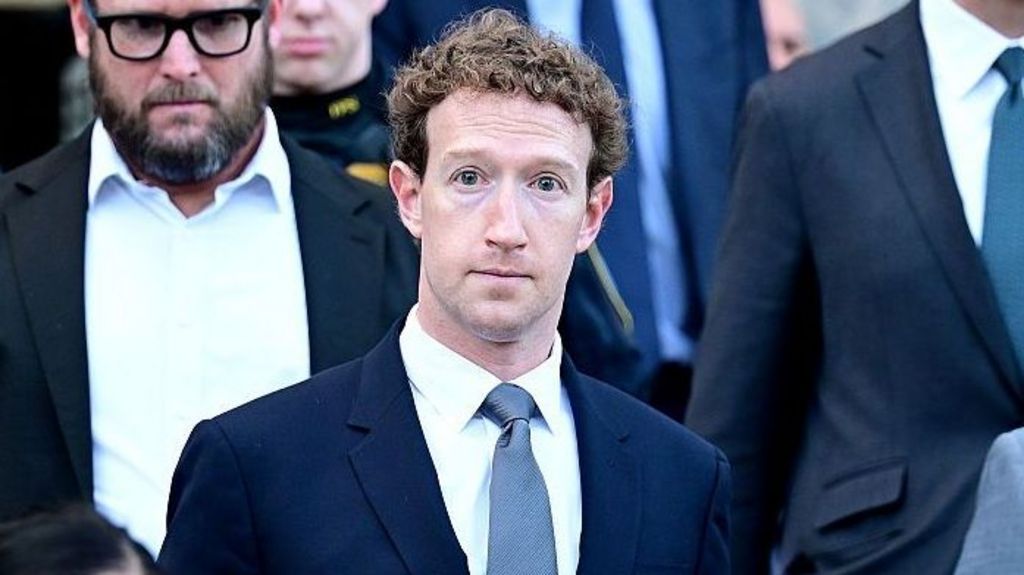
In a sudden development that cut short a high-stakes legal showdown, Meta Platforms has agreed to a $17 billion settlement with 29 U.S. states over allegations that it illegally collected and misused personal data from children under 13, violating the decades-old Children’s Online Privacy Protection Act (COPPA). The surprise conclusion came just five days into the trial, before Meta CEO Mark Zuckerberg was scheduled to testify, ending what many observers had expected to be weeks of tense courtroom proceedings that would put the social media giant’s child safety practices on public trial.
The case, filed by nearly two-thirds of U.S. states, was never just a technical dispute over compliance with a 30-year-old privacy law written long before today’s largest social platforms even existed. For the global tech industry, 2026 has already emerged as a turning point: social media platforms across the board are facing mounting global scrutiny over their impact on young users, and this case represented one of the most significant coordinated challenges to Big Tech’s long-held approach to online safety.
For months leading up to the trial, Meta had poured extensive resources into defending its track record, repeatedly highlighting the dozens of safety tools it has rolled out for young users over the years. Senior Meta executives have walked journalists through the company’s safety initiatives at private briefings, including a presentation at Meta’s London headquarters that detailed more than 60 separate safety tools for Instagram alone. Yet the company’s efforts to frame itself as a responsible steward of child safety have been undermined by the experiences of parents who say they have struggled to navigate the overwhelming number of opt-in tools that require ongoing parental oversight. During the trial, damaging testimony from former Meta insiders further eroded the company’s position.
Whistleblower Arturo Bejar, a former Instagram engineer, told the court that he had alerted senior leadership to harmful content affecting young users on the platform years ago, but no meaningful action was taken. Another senior Meta executive acknowledged he could not recall denying that the company had sometimes chosen to pay regulatory fines instead of changing harmful business practices. Internal documents presented during the trial also revealed that Meta knew opt-in safety tools have far lower adoption rates than default-enabled features — yet still chose to roll out child protection measures that users had to actively turn on themselves.
Legal analysts had warned that a guilty ruling could have resulted in staggering fines for Meta, with the worst-case scenario reaching $1.4 trillion — a sum equal to the company’s entire current market value — calculated by applying the maximum COPPA penalty for every underage user who accessed Meta platforms for more than 30 minutes a day over a 12-year period. While that extreme outcome was never considered likely, even more realistic estimates projected hundreds of billions of dollars in penalties. By comparison, the $17 billion settlement, paid out over 10 years, represents a far smaller financial hit for the company. Crucially, the settlement does not require Meta to admit any wrongdoing, a outcome that legal experts say protects Meta’s core social media advertising business, which still generates the vast majority of the company’s revenue even as it prioritizes artificial intelligence development.
As a core condition of the settlement, Meta has agreed to implement sweeping new default safety rules for teen users on both Facebook and Instagram, changes that child safety advocates have called long overdue. The new rules include a default daily 2-hour time limit for teen users across both platforms (excluding direct messaging), automatic notification muting between midnight and 6 a.m. and between 8 a.m. and 3 p.m. on school days, and a full platform-wide hiding of post likes for all teen accounts. Most of these changes will be rolled out as default or optional settings for teen users within six months, though new systems to accurately identify underage users on the platforms will take up to a full year to deploy.
Industry observers widely expect these new rules will not remain limited to the U.S. for long, as governments around the world facing similar pressure over child online safety will almost certainly move to adopt similar standards. Meta has argued that the new measures will only deliver meaningful protection if competing platforms also adopt similar rules, and analysts note that mounting global backlash against social media’s impact on children could force rivals like TikTok and Snapchat to follow Meta’s lead in tightening restrictions for teen users.
The settlement has drawn mixed reactions from stakeholders. One parent of a child harmed by Meta platforms summed up the response as a long-overdue step forward, saying “Finally, something was done.” But Bejar, the former Meta whistleblower, emphasized that the real test will be whether the new measures actually improve outcomes for young users. “At the end of the day, Meta needs to be held accountable for results, not efforts,” he said. Looking ahead, the settlement raises bigger questions about the future of social media: if platforms deliberately tone down engaging, addictive content to protect teens, will young users continue to engage? Some analysts even speculate that the growing wave of regulation could bring the era of unregulated social media to a natural end, as older users gradually exit the space and young users lose interest in a more muted, less addictive experience.