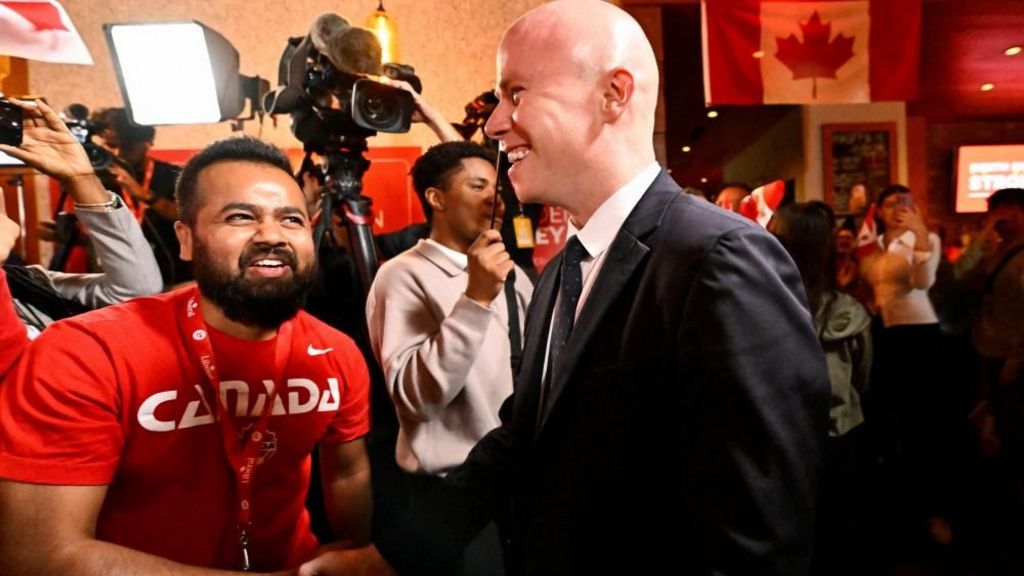
In a significant show of political force that underscores continued public confidence in Prime Minister Mark Carney’s leadership, Canada’s ruling Liberal Party claimed victory in all three federal parliamentary by-elections held across the country on Monday. The outcome comes more than a year into Carney’s premiership, and on the heels of high-stakes trade friction with the United States that appears to have rallied domestic support behind the government.
The special elections were called to fill vacancies left by the resignations of three sitting Members of Parliament. The most high-profile upset came in the Quebec riding of Chicoutimi-Le Fjord, where the Liberals flipped the seat from the official opposition Conservative Party. In the other two contests, held in Beaches-East York (Ontario) and North Vancouver-Capilano (British Columbia), the governing party held onto the seats, matching pre-election polling projections.
Carney’s standing in national opinion polls has risen sharply since he made the decision to end stalled trade negotiations with the U.S., accusing Washington of pushing unfair terms that would harm Canadian economic interests. Taking to social media platform X to celebrate the by-election results, the prime minister congratulated the three winning Liberal candidates and struck a determined tone on the challenges ahead. “Canada is being tested in a changing world, and Canadians are up for it,” Carney wrote.
The clean sweep preserves Carney’s narrow working majority in the House of Commons, a critical outcome for the government’s legislative agenda going forward.
Canadian election projections confirmed a commanding victory for the Liberals in Chicoutimi-Le Fjord. The party’s candidate, Daniel Gobeil, a third-generation dairy farmer, won more than 50% of the popular vote to claim the seat, defeating Bloc Québécois (second) and Conservative (third) challengers. This marked a shift from the previous election in the riding, which was a tight three-way contest. Speaking to supporters in French, Gobeil framed the win as a mandate for advancing national unity across all regions of Canada, according to public broadcaster CBC.
In Ontario, Tanveer Shahnawaz secured the Beaches-East York seat for the Liberals, while Braeden Caley held the North Vancouver-Capilano riding for the party in British Columbia, capping off an undefeated night for the governing bloc.
The results add to a string of struggles for the Conservative Party, which has failed to narrow its polling gap with the Liberals since losing the 2025 federal election. Current national surveys show the Conservatives trailing Carney’s party by roughly 10 percentage points. Since the April 2025 vote, four Conservative MPs have crossed the floor to join the Liberals, while three more have resigned or announced plans to leave office. The Quebec seat contested on Monday was vacated when former Conservative MP Richard Martel resigned last month after Carney appointed him to the unelected Canadian Senate.
The loss of Martel’s former seat delivers another major blow to Conservative leader Pierre Poilievre, who won a landslide leadership confidence vote in January but has faced growing scrutiny over his ability to connect with Canadian voters in the current political climate.
Meanwhile, new polling data released Monday by Canadian research firm Abacus Data shows Carney’s government approval rating has risen four percentage points in recent weeks, alongside a matching jump in the prime minister’s personal popularity. Abacus Data founder David Coletto attributes the upward trend to two key factors: deeply negative views of U.S. President Donald Trump among Canadian voters, and a national rallying effect around Carney’s decision to walk away from unfavorable trade talks with the White House.
Coletto noted that the shift in approval is most dramatic in Quebec, where Carney’s personal approval rating is now higher than in any other Canadian province. The province is also set to bear the brunt of new 50% tariffs on a wide range of Canadian goods imposed by Trump, which took effect after trade talks collapsed earlier this month. Global forecasting firm Oxford Economics recently warned that Quebec could lose up to C$2 billion ($1.4 billion) in annual economic output by 2028 if the tariffs remain in place.