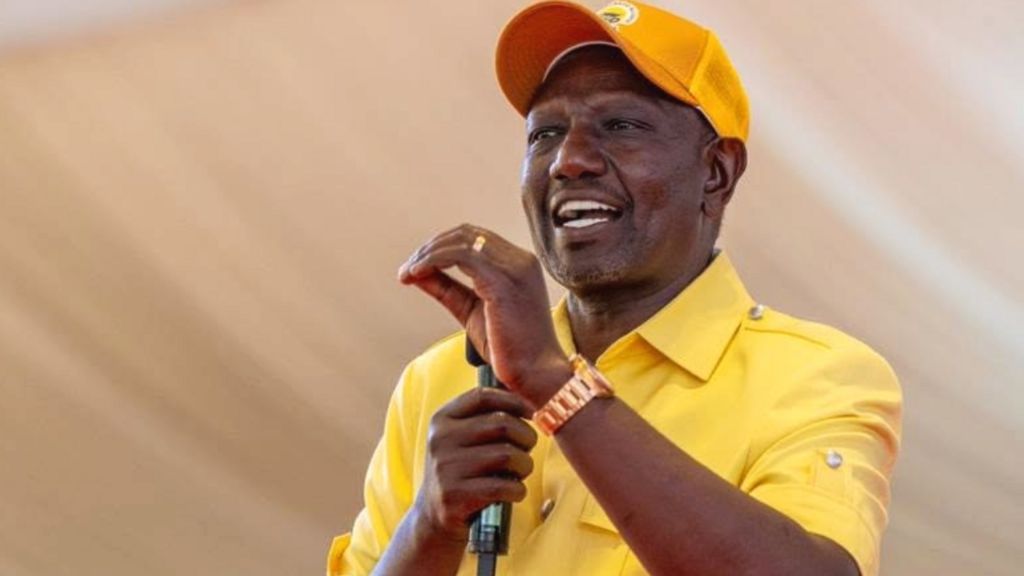
Kenyan President William Ruto has announced an imminent crackdown on foreign nationals operating small-scale businesses across the country, framing the move as a necessary protection measure for local traders and informal vendors. The policy shift arrives amid escalating public debate over the growing presence of African migrants in Kenya’s large, dynamic informal economy, a sector that supports millions of local livelihoods.
In an address delivered Wednesday to a gathering of small-scale traders at Nairobi’s State House, Ruto set a clear timeline for the crackdown: “From next week, all [foreign] traders doing those small businesses should close them.” He also pledged to speed up the drafting and passage of new legislation that will formally bar foreign nationals from specific segments of domestic trade, cementing the policy in national law.
Ruto emphasized that Kenya remains fully open to foreign direct investment, drawing a sharp line between welcome investors and small-scale competitors. He specifically named foreign traders including those from China, noting that outside investors should prioritize creating local jobs and expanding national production capacity, rather than undercutting Kenyan entrepreneurs in street vending and small retail. “It cannot be that a person comes from China or elsewhere to be a hawker or open a small shop,” he stated. “We have made efforts to improve the economy, we have not improved investor confidence for hawkers to come to Kenya.”
The announcement comes as Ruto, who will run for a second presidential term in next year’s general election, responds to growing grassroots pressure from local traders who have long complained about unfair competition from foreign operators. To date, the Kenyan government has not released official data on how many foreign nationals are engaged in small-scale trading, leaving uncertainty about the total number of people who will be affected by the new order.
Kenya currently hosts one of the largest refugee populations in Africa, with official government figures counting roughly 857,000 registered refugees and asylum seekers as of the end of June. Around 14 percent of these individuals reside in urban areas rather than formal refugee camps, and many participate in the informal workforce to support themselves. Under current Kenyan law, refugees do hold the legal right to work and operate businesses, but they are required to obtain specialized permits to do so.
Beyond refugees, a large number of regional migrants have moved to Kenya from neighboring countries, drawn by the nation’s status as a regional economic hub and the free movement of people provisions within the eight-nation East African Community (EAC) bloc. In major urban centers like Nairobi, these migrants work across a wide range of informal sectors, including barbershops and salons, construction, motorbike taxi services, street vending of clothing, food, and household goods. Many migrants leave their home countries to escape conflict or severe economic hardship, while others relocate to Kenya in search of better livelihood opportunities.
Tensions between local workers and foreign traders have been building for months, driven by widespread concerns over scarce jobs and business opportunities. In July, a viral video of a Kenyan local confronting a Burundian trader in Nairobi, accusing the migrant of taking work from locals, sparked widespread regional debate. Following the incident, Burundian conflict prevention expert Fred Ngoga called for the protection of Burundian citizens living in Kenya, noting that “the majority of Kenyans are decent and good people who welcome their brothers and sisters from Burundi,” and that most Kenyans rejected the hostile treatment of the trader. Kenya’s foreign ministry also moved quickly to reassure Burundians and other EAC nationals residing in the country after the clash.
Ruto’s new policy is expected to draw significant controversy, given Kenya’s longstanding role as an open economic and migration hub for the East African region. It also coincides with growing concerns over rising anti-migrant sentiment and xenophobia across the African continent. This year alone, South Africa has seen widespread protests targeting undocumented migrants, and tens of thousands of African migrants living in South Africa have chosen voluntary repatriation, with many reporting they have faced intimidation and targeted attacks.