Deep in rural Alabama’s Black Belt, the small city of Tuskegee bears the layered weight of American history: where Confederate monuments stand blocks from the training grounds of the nation’s first Black Air Force pilots, and where systemic inequality still shapes daily life for its majority-Black population. For 19-year-old Tuskegee University student De’Mari Benham, that inequality hit close to home earlier this year when a shattered glass door sliced open his arm, leaving him bleeding and with limited options for care. With no full-service hospital or 24-hour emergency clinic within city limits, Benham was rushed to the local fire department, where first responders wrapped his wound and urged him to travel to the next town for stitches and prescription medication. He declined the trip — both because the journey was long, and because he could not afford the cost of care.
Benham’s story is far from unique in Tuskegee, a community of fewer than 9,000 people where more than 80% of residents are Black, nearly one in three live below the poverty line, and basic public infrastructure is chronically underfunded. Fire department captain Dondrell Hopson says his crew responds to calls for emergency medical help that no other local provider will handle, from deep cuts to life-threatening bullet wounds. The fire station itself, the first stop for many injured residents, is structurally unfit to serve as an ad-hoc clinic.
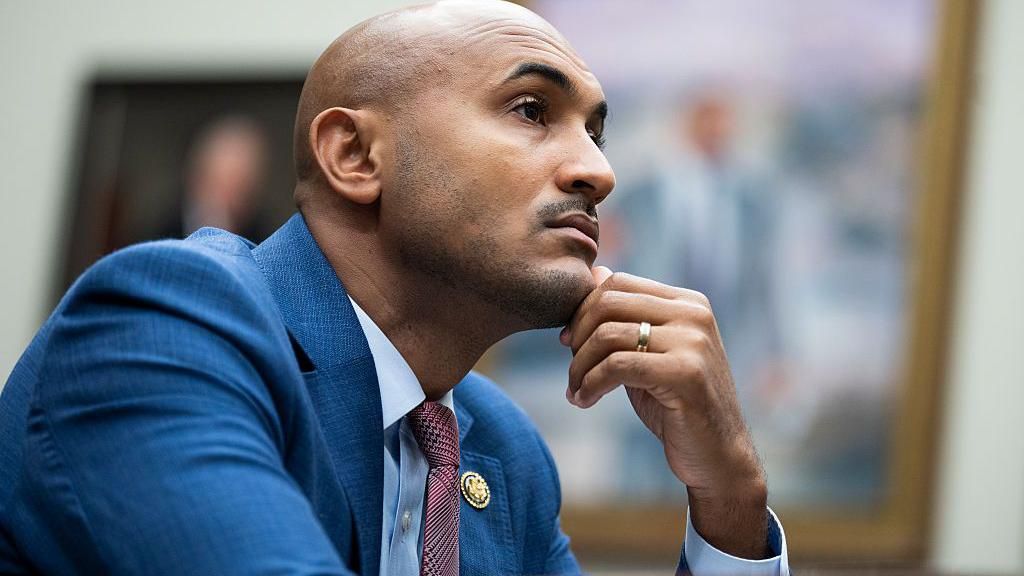
That started to change two years ago, when Democrat Shomari Figures made history as the first Black representative for Tuskegee in modern U.S. Congress. Within a year of taking office, Figures secured $1 million in federal funding to build a new combined civic center, which will double as a storm fallout shelter and house the city’s updated police and fire departments — the same department that stepped in to treat Benham. He also delivered $500,000 in federal funding for a much-needed MRI machine at Eufaula’s only regional hospital, plus more than $1 million in tax credits to keep the struggling facility open. For the first time in decades, local leaders and residents saw tangible progress on long-ignored community needs.
But that progress is now at risk, following a seismic 2025 ruling from the U.S. Supreme Court that weakened a key provision of the 1965 Voting Rights Act, opening the door for Alabama’s Republican-led legislature to redraw congressional districts and eliminate the majority-Black district that elected Figures. The new map folds Figures’ current district into a new, white-majority constituency that leans heavily conservative, forcing the first-term Democrat to defend his seat in November’s midterm elections against a Republican opponent endorsed by former President Donald Trump and House Speaker Mike Johnson.
The fight over Alabama’s congressional maps stretches back years. Every 10 years, states redraw district lines to reflect population shifts, a process that often leads to partisan gerrymandering, where the ruling party draws lines to favor its own candidates. In 2023, the Supreme Court initially struck down Alabama’s original Republican-drawn map, ruling it illegally diluted Black voting power by splitting southern Alabama’s concentrated Black population across multiple districts. A court-ordered new map created two majority-Black or near-majority-Black districts, clearing the way for Figures’ 2024 election victory.
But the Supreme Court reversed course in April 2025, issuing a new ruling that makes it far harder to challenge district maps for racial discrimination. Alabama Republicans quickly moved to implement their original preferred map, erasing the second majority-Black district. Figures argues the push for the new map is explicitly racially motivated, pointing to public record of state legislators referring to majority-Black Montgomery as “monkey town” in text messages exchanged during the redistricting process. Alabama Attorney General Steve Marshall denies racial motivation, framing the map change as a standard partisan power play, noting that Democrats have also redrawn maps in blue states to gain partisan advantage.
Cedric Coley, chair of Alabama Young Republicans, argues that race-based districting is itself unfair, saying candidates should be elected based on merit rather than racial quota. “I just don’t believe that we should box people in racial quotas based on our history of discrimination,” Coley said. “People should be judged on what they’ve earned, not the color of their skin.”
But Black residents and civil rights activists across the Black Belt say the map change is nothing less than a direct effort to strip their communities of political representation, rolling back decades of slow progress on voting rights. “It’s a big setback for Black people,” says Joe Reed, a Montgomery-based civil rights lawyer and activist. “In Alabama, with the polarized voting we have, everything is race. Everything.”
That polarization is visible in the stark inequalities that shape daily life across the newly redrawn district. In Eufaula, a small rural community 62 miles east of Tuskegee, the Black poverty rate sits at nearly 57% — more than four times the poverty rate for white residents. For 71-year-old Mary Porter, a lifelong resident who marched as a child to pass the 1965 Voting Rights Act, the Supreme Court’s ruling evokes the worst era of Jim Crow segregation. “We don’t want those kind of laws to come back,” Porter said. Porter, who relies on friends and faith to travel 50 miles for routine medical care after two strokes, says having a representative who prioritizes the community’s needs has already changed life for the better: the local hospital, which was at risk of closure, is finally getting its first MRI machine thanks to Figures’ federal funding. Hospital CEO Jannet Kinney says losing Figures would put the facility and the care it provides to 60 miles of rural residents at risk. “I’d hate to lose anybody that cares,” Kinney said.
Even Eufaula’s four-term Republican mayor Jack Tibbs, who is nonpartisan in office, praised Figures’ work and says he fears what will happen if the representative loses his seat. “I’ve seen him four times since he went into office,” Tibbs said. “I can’t say that about the previous guy.”
As November approaches, Figures is running as an underdog in the newly redrawn district, which added large swathes of majority-white, conservative rural farmland to his constituency. While analysts widely expect the seat to flip to Republican, recent polling shows Figures remains competitive. Outside a historic Black church in Tuskegee that once harbored resistance to discriminatory redistricting in the 1950s, residents say they are gearing up for a fight to keep the representation they won. “They’re trying to remove our voices and our votes, trying to make our votes less powerful,” said 18-year-old Tuskegee University student Deirdre Newcomb. For 73-year-old resident Gale Brown, the ruling is a heartbreaking step backward: “I never thought this would happen in my lifetime.” But for lifelong resident Emmanuel Freeman, the path forward is clear: “We gone fight. That’s all we ever done.”