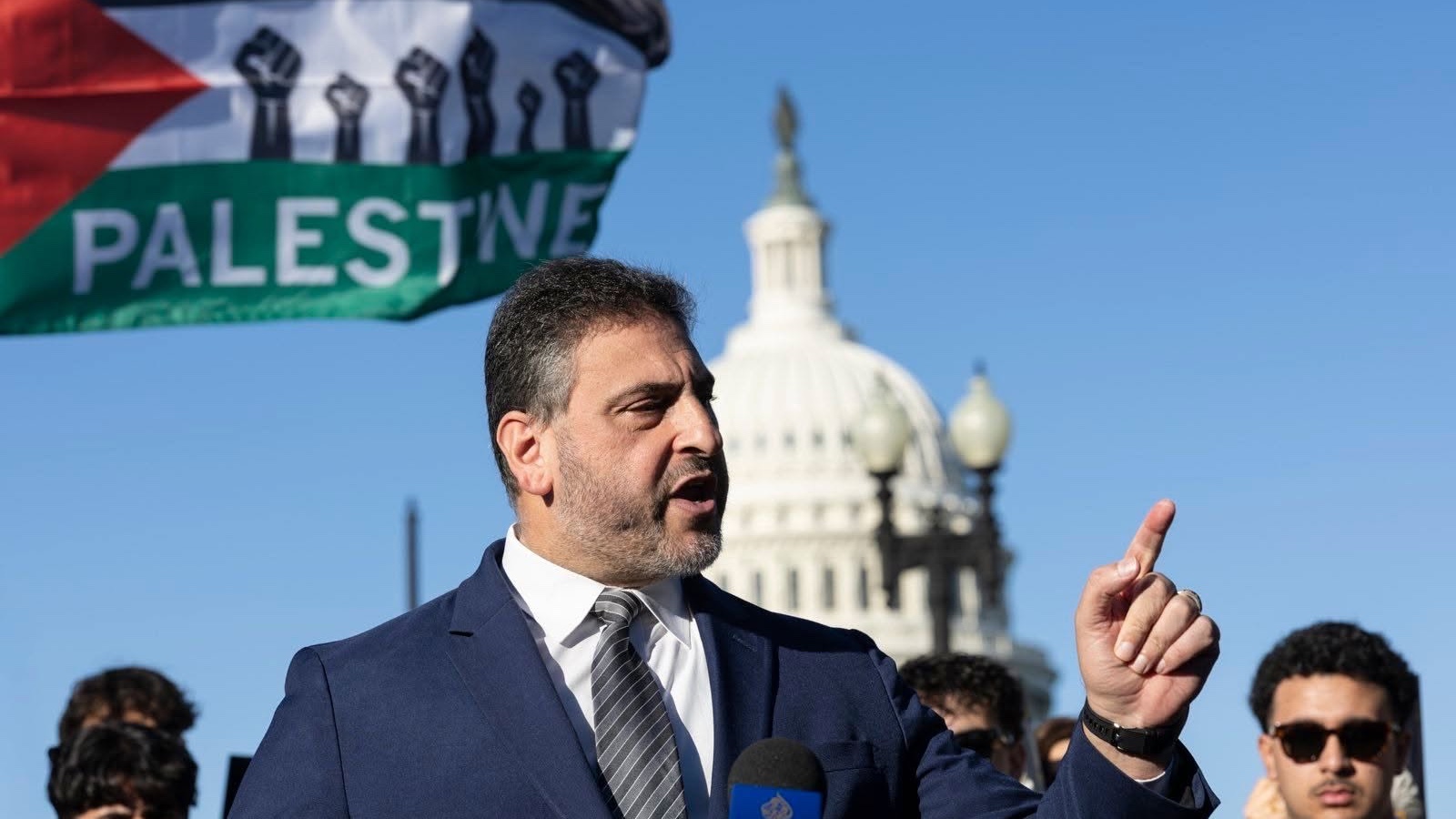
In a landmark ruling that strengthens Fourth Amendment protections for political activists and sets a key precedent against government targeting of pro-Palestine voices, a U.S. federal judge has sided with prominent Palestinian-American academic and organizer Osama Abu Irshaid, finding that two 2024 searches and seizures of his personal mobile phones by U.S. Customs and Border Protection (CBP) violated constitutional protections against unreasonable searches.
Abu Irshaid, who currently serves as executive director of American Muslims for Palestine (AMP), a leading U.S. advocacy group advancing Palestinian human rights, had his devices seized and searched at Washington Dulles International Airport on two separate occasions this year, both times after he returned from international trips to the Middle East. The case centered on whether CBP’s actions met the constitutional standard for warrantless searches outlined in the Fourth Amendment to the U.S. Constitution, which bans unreasonable searches and seizures and requires judicial warrants supported by probable cause for most searches of personal property.
In the Wednesday ruling from the U.S. District Court for the Eastern District of Virginia, the judge found that Abu Irshaid’s Fourth Amendment claim was fully justified, noting that the evidence presented by CBP and Department of Homeland Security defendants failed to meet even the low bar of reasonable suspicion that Abu Irshaid was engaged in criminal activity.
CBP had defended the searches by pointing to two pieces of evidence: a public 2024 letter from the Republican-controlled U.S. House Oversight Committee, and a decade-old photograph that appeared without Abu Irshaid’s permission on a website associated with Hamas’ al-Qassam Brigades. The House committee’s letter accused AMP of spreading “pro-Hamas propaganda” and providing material support to designated terrorist organizations, and announced a formal congressional investigation into the group. The judge rejected this justification, however, citing constitutional separation of powers: the letter was never intended for CBP, and Congress does not function as a law enforcement agency or a traditional tipster for Fourth Amendment analysis.
On the second point, CBP cited the unsanctioned photograph on the Hamas-linked website to argue that Abu Irshaid had ties to the group, which is designated as a terrorist organization by the U.S. government. Abu Irshaid has long maintained the photo was published without his knowledge or consent. Court records also confirmed that U.S. immigration officials reviewed the same photograph during Abu Irshaid’s 2015 citizenship application interview, found the claim of ties unconvincing, and ultimately approved his citizenship. Despite that outcome, the photo led to more than a decade of extra secondary screenings and enhanced scrutiny every time Abu Irshaid entered the U.S. by air.
Gadeir Abbas, deputy litigation director for the Council on American-Islamic Relations (CAIR) who served as Abu Irshaid’s lead counsel in the case, told Middle East Eye that the repeated targeting stemmed from Abu Irshaid’s placement on the U.S. government’s secret Terrorism Screening Database. Established in the wake of the September 11, 2001 terrorist attacks, the classified watchlist includes thousands of names that are never publicly disclosed, and subjects listed individuals to routine enhanced scrutiny at U.S. border crossings and airports. Abbas confirmed that court records established Abu Irshaid was on the watchlist from roughly 2010 to 2017, and that he began facing new targeting and scrutiny again starting in 2023, coinciding with rising Israeli military action in Gaza and growing public support for Palestinian rights in the U.S.
Abbas explained that the watchlist status creates a cycle of automatic, discriminatory scrutiny for listed travelers: “It is clearly connected to his status on this list, which dictates a certain kind of treatment that is inflicted on him every time he travels by air or crosses the border.” Following the ruling, Abbas noted that the legal team had systematically disproven each of the government’s unsubstantiated claims against Abu Irshaid, calling the outcome “a major win, and it will have wide-reaching implications for everybody else” who faces similar targeting for their political advocacy.
AMP echoed that sentiment in an official statement released after the ruling was issued, framing the decision as more than a personal victory for Abu Irshaid. “Not only is this a victory for Dr Abu Irshaid, but a victory for the pro-Palestine movement overall,” the group said. “For decades, allies who support Palestinian human rights have been systematically targeted by the US government for daring to speak out against Apartheid Israel.”