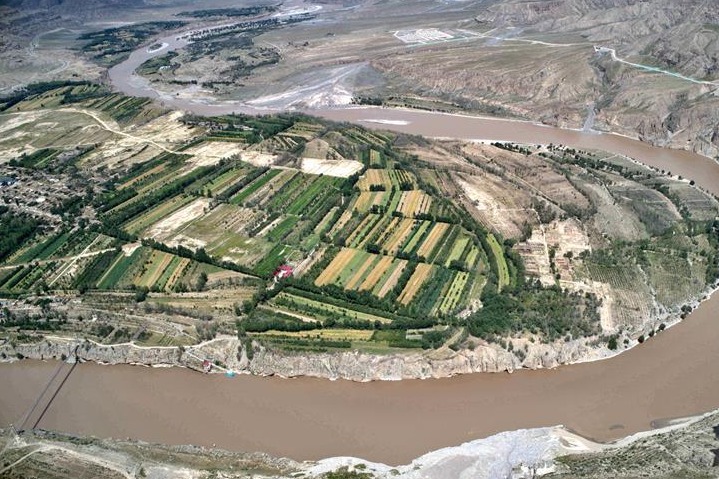
Situated on the Qinghai-Tibet Plateau, the source region of China’s Yellow River holds outsized ecological importance as a core component of the “Asian Water Tower,” a vast high-altitude system that feeds water to billions across Asia. Dense with glaciers and permafrost, this fragile cryospheric landscape is disproportionately sensitive to global climate shifts, with rising temperatures steadily accelerating glacial retreat and permafrost thaw. As this thaw progresses, massive volumes of organic carbon that have been locked away as solid sequestration for centuries are being released into surrounding watersheds, creating ripple effects that alter regional carbon and nitrogen cycles and threaten downstream ecological stability.
Against this backdrop, a team of Chinese researchers from the Northwest Institute of Eco-Environment and Resources (NIEER) under the Chinese Academy of Sciences has completed a groundbreaking new study focused on untangling the dynamics of dissolved organic matter in this critical high-altitude basin, filling long-standing gaps in global biogeochemical data for cold mountain regions.
Led by NIEER researcher Niu Hewen, the project carried out three years of continuous in-situ observations between 2019 and 2022, compiling one of the most comprehensive datasets to date on dissolved organic carbon, dissolved organic nitrogen, and total dissolved nitrogen across rainfall, river, and groundwater systems in the Yellow River’s source zone.
The team’s analysis yielded several key findings that challenge previous broad assumptions about alpine river carbon dynamics on the Qinghai-Tibet Plateau. The study confirmed that dissolved organic carbon concentrations in the Yellow River’s alpine headwaters are significantly lower than the regional average for other alpine rivers across the plateau, with clear and pronounced seasonal fluctuations tied to temperature patterns. Concentrations reach their annual peak during the summer glacial and permafrost ablation period, when 72% of dissolved organic matter in river waters consists of terrestrial humic-like substances eroded from thawed permafrost and glacial deposits. By contrast, groundwater in the region is dominated by microbial protein-like substances, which make up 82% of its dissolved organic matter profile.
Further calculations from the research show that the Yellow River source region transports more than 100,000 metric tonnes of dissolved organic carbon downstream to lower basin areas every year, with 56% of this annual export occurring between May and October, aligned with warmer summer temperatures and peak ablation.
According to Niu, the study confirms that ongoing climate warming is driving a fundamental shift in the region’s carbon cycle, transforming cryospheric organic carbon from long-term solid sequestration to active, dynamic output that increases the volume of carbon and nitrogen exported through the river system dramatically.
The research team notes that these new findings do more than just advance scientific understanding of carbon cycling mechanisms on the Qinghai-Tibet Plateau, one of the world’s most important high-altitude carbon sinks. The compiled dataset and observed dynamics also provide a robust, evidence-based foundation to guide ecological conservation, sustainable water resource management, and climate change adaptation planning across the entire Yellow River basin, supporting long-term ecological and water security for communities that depend on the river system.