The 2026 military campaign waged by the United States and Israel against Iran has done far more than distract global attention: it has acted as a devastating catalyst that has upended decades of established regional order in the Middle East, accelerating the geopolitical realignment that Washington sought to block.
In the destructive aftermath of the conflict, the Middle East’s long-standing security framework lies in ruins. Key markers of this collapse include the extended paralysis of the Strait of Hormuz, a critical global energy chokepoint, skyrocketing global oil prices that topped $110 per barrel, and deep retaliatory Iranian strikes that penetrated deep into Gulf Arab territories. These events have completely unraveled the decades-old agreement that shaped the region’s geopolitics.
For generations, the core bargain of the Gulf rested on a simple premise: the United States would guarantee regional security for Gulf Arab states in exchange for their commitment to pricing oil in U.S. dollars, sustaining the petrodollar system that anchored American global financial dominance. The 2026 war has exposed this arrangement as an empty illusion. When direct attacks hit American assets across the region, Washington’s vaunted security umbrella failed to shield its closest allies from catastrophic economic shocks that threatened their very survival.
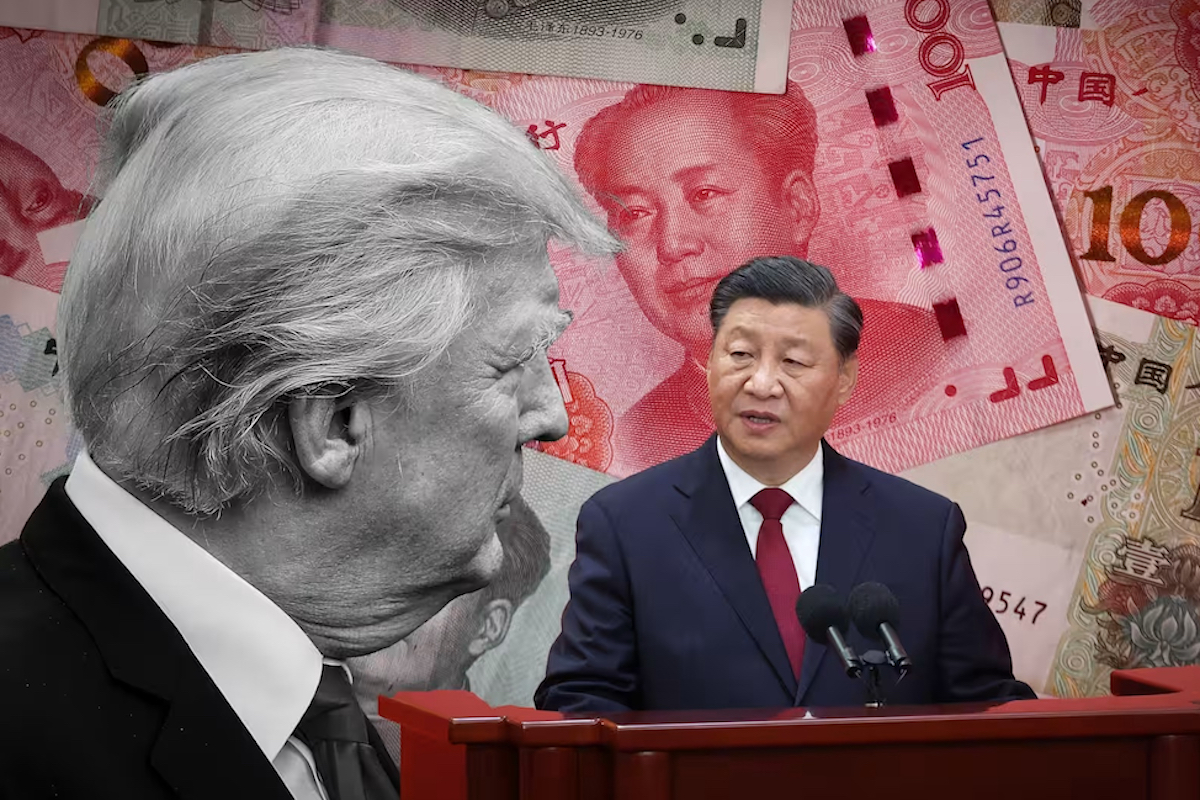
This collapse has transformed what was once a distant long-term prospect into an urgent immediate priority: China’s emergence as the primary economic and political partner for nearly all Gulf Cooperation Council states, with only the United Arab Emirates remaining a partial exception. Alongside this geopolitical shift, the petroyuan has quickly evolved into a credible replacement for the petrodollar, with Iran and Russia playing distinct but pivotal roles in building this new regional order.
The conflict has completely rewritten how Gulf states assess regional threats, destroying the long-standing strategic logic of hedging between the United States and China. For decades, Gulf leaders operated under a shared assumption: while they expanded economic ties with East Asia, their ultimate security would always be backed by the U.S. Fifth Fleet. The 2026 war has completely destroyed that confidence.
The closure of the Strait of Hormuz, which carries roughly one-fifth of all global oil trade, combined with Iranian strikes on key ports, energy export terminals, and high-profile commercial targets across the UAE – including the iconic Burj Al Arab hotel – made clear that the U.S. was either unwilling or unable to stop retaliatory attacks on the Gulf’s most economically vital assets. At the peak of hostilities, 13 American military bases across the region were rendered vulnerable or nearly uninhabitable, turning the long-touted U.S. security guarantee into a strategic liability rather than an asset.
This has left a critical power vacuum that Gulf states are rushing to fill. Rather than seeking a new single-power security umbrella, they are turning to a diversified network of partnerships focused on de-escalating tensions and securing long-term stability. China, which avoided direct military entanglement in the conflict while maintaining open diplomatic channels with both Tehran and Gulf Arab capitals, has emerged as an indispensable neutral broker for the region.
Beijing’s consistent diplomatic posture – calling for negotiated ceasefires, refusing to back unilateral Western resolutions at the UN Security Council, and instead co-sponsoring compromise frameworks with Moscow – has positioned it as the only major global power trusted by both sides of the conflict to steer the post-war transition. For Gulf states looking to rebuild, Beijing has become the go-to partner for the diplomatic, economic, and financial support they need.
Amid this shattered landscape, the long-discussed transition from the petrodollar to the petroyuan is no longer a gradual theoretical shift – it is an immediate necessity driven by the chaos of conflict. The war has become the very catalyst that Deutsche Bank analysts warned of years ago, splitting the global oil pricing system along new geopolitical lines.
During the height of hostilities, Iran already implemented a new policy: it conditioned safe passage for oil tankers through the Strait of Hormuz on payments being made in Chinese yuan, effectively using the strait’s strategic importance to break the dollar’s decades-long monopoly on global energy trading. This tactical shift has lasting structural implications for how the world buys and sells oil. Today, Saudi Arabia exports four times as much oil to China as it does to the United States, making the logic of settling these massive trade volumes in dollars increasingly unsustainable.
The physical damage inflicted on key Gulf energy infrastructure – including Qatar’s Ras Laffan LNG facility and Saudi Arabia’s Ras Tanura refinery, two of the most critical energy export sites in the world – has required an unprecedented influx of reconstruction capital. China stands ready to provide this funding through Belt and Road Initiative financing, all denominated in yuan. Furthermore, the war has accelerated the rollout of alternative financial infrastructure, such as mBridge, a blockchain-based cross-border payment platform linking the Chinese and UAE central banks that enables direct yuan-dirham settlements that bypass the dollar entirely.
After decades of seeing the United States weaponize the dollar and the SWIFT global messaging system to impose financial penalties on adversaries, Gulf states are now actively building a multipolar financial system as a critical insurance policy against future American coercion. While the petrodollar has not completely disappeared, its decades of global dominance have suffered a fatal blow. Already accounting for a substantial share of trade in sanctioned oil, the petroyuan is on track to become the primary currency for Asia’s entire energy trade corridor.
In this reshaped regional order, Iran and Russia fill contrasting but essential roles. For Iran, which remains devastated by the war and the loss of its Supreme Leader, national survival depends on deepening its strategic partnership with Beijing. Tehran frames the post-war Gulf “Neighborhood Policy” through a Chinese-led framework: it views the detente with rival Gulf Arab states not as a genuine long-term friendship, but as a managed truce necessary to block the establishment of a unified Arab-Israeli air defense network backed by the United States.
While Iran launched fierce attacks on UAE and Qatari targets during the conflict, it showed deliberate restraint toward Saudi Arabia and Oman, recognizing that Beijing prioritizes broad regional stability to advance its economic goals. Iran’s recent proposal for joint maritime patrols in the Strait of Hormuz – which would include tolls collected in yuan – represents a Chinese-mediated compromise that would reopen the critical waterway without returning full control to the U.S. Navy.
Russia, by contrast, acts as a co-architect of the anti-unipolar resistance axis and a strategic military spoiler. Unlike China, which maintained neutrality during the conflict, Russia shared intelligence and advanced military technology with Iran to bleed American resources, framing Tehran as a key “partner in defiance” in its broader campaign against Western global dominance. That said, Russia lacks the financial capital to fund the massive reconstruction projects the Gulf needs to recover.
Instead, Moscow plays a disruptive balancing role: it joins China in using its UN Security Council veto to block resolutions unfavorable to Iran, while selling advanced military hardware to Gulf states as an alternative to American weapons systems. Going forward, the Gulf will look to China for economic security and reconstruction, but may turn to Russia for counter-hegemonic political leverage and arms diversification.
In sum, the aftermath of the 2026 US-Israel war on Iran has accelerated the collapse of the decades-old U.S.-led regional order, clearing the way for a China-centric economic system to take root across the Gulf. China has risen to become the region’s primary partner not through military conquest, but by stepping into the vacuum left by American failure: it provides the diplomatic exit ramps, reconstruction capital, and non-dollar financial infrastructure that Gulf states desperately need to recover and stabilize their economies.
At the same time, the petroyuan is rising not as a speculative geopolitical tool, but as a practical requirement for energy trade in the post-war region. Iran emerges as a battered but defiant junior partner to Beijing, critical to managing security and access through the Strait of Hormuz, while Russia acts as a disruptive guarantor of the new multipolar order. The war did not create this geopolitical realignment, but it burned away the last remaining credibility of the old U.S.-led system, forcing Gulf states to bet their long-term economic future on China as the only major power capable of managing the region’s new, more volatile order.
This analysis comes from Bob Savic, an expert on sanctions, supply chains, and geopolitical risk, who is co-author of the new book *Multipolarity and the Changing Global Order* published by Springer.