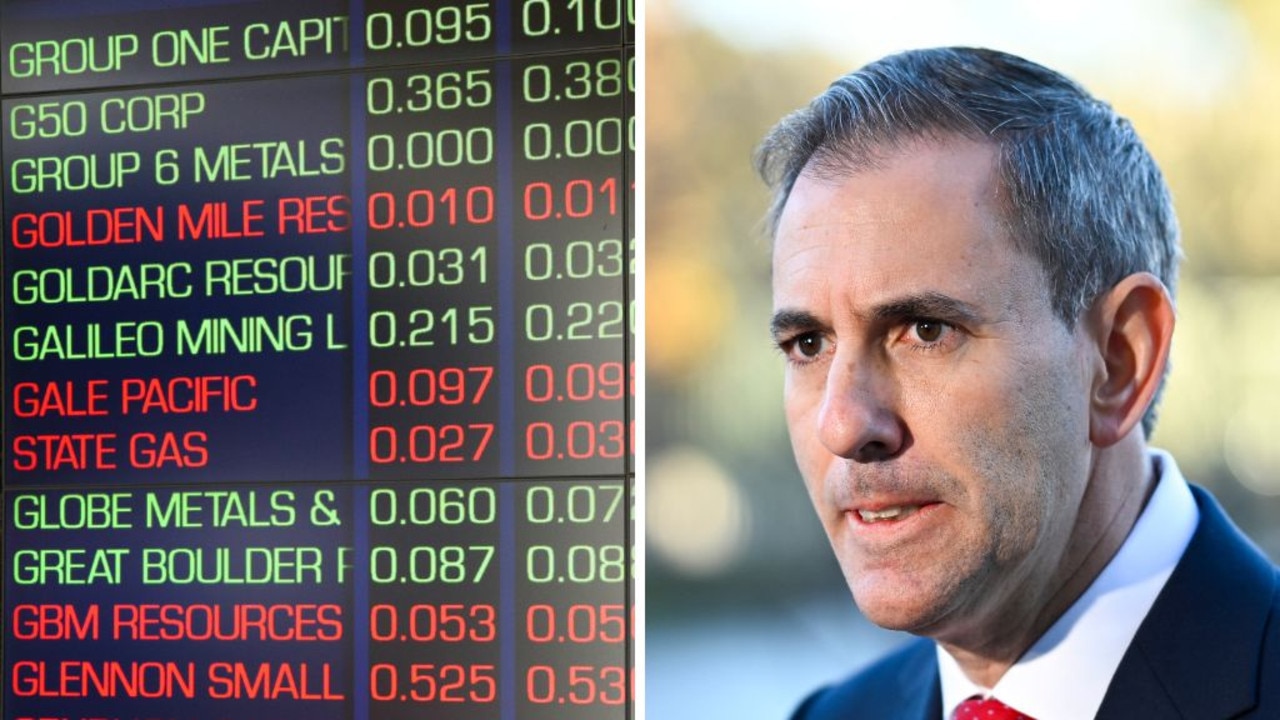
Australia’s benchmark stock index, the ASX 200, has extended its recent downward trend, closing lower on Tuesday to mark its 15th decline in 19 trading sessions. The slump was fueled by two key pressures: investor jitters ahead of a highly anticipated federal budget packed with potentially transformative tax and housing policy changes, and fresh geopolitical volatility stemming from shifting U.S. rhetoric on a Iran ceasefire. By the closing bell, the ASX 200 shed 26.6 points, or 0.3%, to settle at 8675.2, hitting a five-week low in the session. The broader All Ordinaries index followed suit, dropping an identical 0.3% to close at 8912.9, with 7 of the 11 tracked market sectors ending the day in negative territory.
In a detailed market analysis published Tuesday afternoon, IG market analyst Tony Sycamore outlined the dual drivers of the market’s cautious sentiment. Ahead of Tuesday night’s federal budget, policymakers are widely expected to introduce major adjustments to Australia’s negative gearing rules and capital gains tax regime — changes that market participants have already begun pricing in amid fears of unforeseen ripple effects across the property and financial sectors. Sycamore emphasized that this budget stands out as the most impactful in recent memory, with structural policy shifts already roiling investor confidence. Compounding these domestic jitters, comments from former U.S. President Donald Trump labeling the U.S.-Iran ceasefire as “on life support” reignited geopolitical risk, stoking anxieties around global fuel security and energy supply chains.
The banking sector led the market downturn, as investors assessed the potential impact of housing-linked policy changes on the country’s largest lenders. All four major Australian banks closed in negative territory: ANZ fell 2.12%, National Australia Bank dropped 2.09%, Commonwealth Bank eased 1.4%, and Westpac slipped 1.37%. Sycamore warned that banks’ heavy exposure to residential housing lending means any disruption to property markets would directly flow through to the broader financial system, a particularly worrying outcome against Australia’s already muted economic outlook. “You don’t really want to weaken your banking system given the outlook here in Australia isn’t particularly flush,” he noted.
The technology sector, which has struggled through a weak start to the year, continued its downward trajectory on Tuesday. Supply chain software firm WiseTech Global plunged 5.39%, cloud accounting platform Xero dropped 3.85%, and connected safety firm Life360 tumbled 10.89% after the company downgraded its user growth guidance due to an unanticipated technical issue. DroneShield, a defense technology firm, dropped 9.92% after Australia’s corporate watchdog announced it had launched an investigation into corporate disclosures and trading activity surrounding a period of heavy insider selling at the company. The healthcare sector also posted broad losses, with biotech giant CSL falling 2.18% and medical device maker ResMed dropping 3.35%.
Against the broad market downturn, the materials and mining sectors emerged as a rare bright spot, boosted by strong commodity fundamentals and a capital rotation out of the underperforming financial sector. Mining giant BHP climbed 2.49% to overtake Commonwealth Bank as the largest company on the ASX by market capitalization, a milestone that underscores the sector’s recent strength. Rival miners Rio Tinto gained 3.13% and South32 added 3.57% for the session. Sycamore explained that capital leaving the banking sector has increasingly flowed into resources, with rising copper and iron ore prices providing a strong tailwind for mining stocks. “It’s got to go somewhere,” he said of the capital shifting out of financials.
The energy sector also posted modest gains, lifted by edging higher crude oil prices that responded to new geopolitical uncertainty around the Middle East. Brent crude rose 0.9% to settle at $US105.15 a barrel following Trump’s comments casting doubt on the Iran ceasefire. Australian energy producers Woodside Energy added 0.75% and Santos gained 0.53% in line with the crude price increase. Sycamore noted that the oil market is currently defined by conflicting pressures: geopolitical uncertainty is adding volatility to crude pricing, but tight supply dynamics have acted as a check on extreme price spikes, leaving what he called “an uneasy calm” over the market.
Looking ahead, all market focus remains fixed on the incoming federal budget, with Sycamore warning that the major policy changes to be unveiled could have long-lasting ramifications for both Australian markets and the broader domestic economy. He added that the full impact of structural policy shifts can take months or even quarters to fully filter through the financial system, meaning market volatility tied to the budget could persist long after the announcement is made.