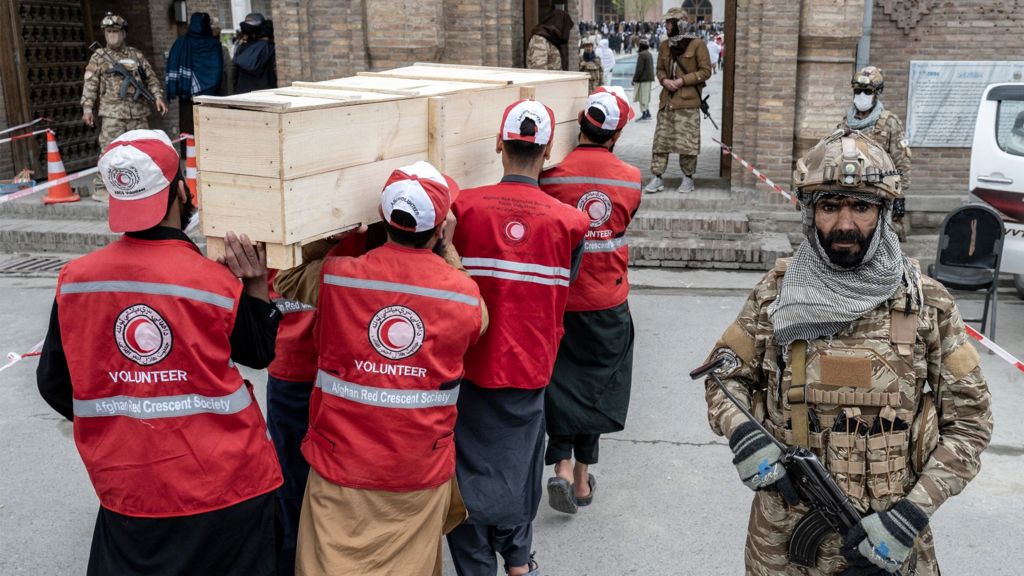
On a frigid, rain-soaked morning in northwest Kabul, 27-year-old Masooda climbs a sloped hillside cemetery to pay her respects to her 24-year-old younger brother Mirwais — a young man killed two months prior in a Pakistani airstrike. What makes her grief even more agonizing is that she cannot pinpoint his exact burial spot. Mirwais is one of dozens of victims laid to rest in an unmarked mass grave, a patch of land neatly covered with small white stones and crudely marked by rough grey granite slabs, holding the remains of those killed in the deadliest single attack Afghanistan has seen in modern history.
The target of the March 16 airstrike was the Omid Drug Rehabilitation Hospital, a facility that had operated quietly in Kabul for a decade, treating Afghans struggling with substance use disorder at a time when an estimated three million people across the country battle addiction. On that fateful evening, at 20:50 local time, three bombs slammed into the facility, which sits just a kilometer from major United Nations offices along the Kabul-Jalalabad highway. What followed was a carnage so brutal it has shocked even a nation long hardened by decades of war.
A doctor on duty that night, speaking to the BBC on condition of anonymity over fears of retaliation from the Taliban government, described the scene of chaos and horror he encountered. “One bomb hit a large hangar that housed newly admitted patients, while two others struck patient quarters, food storage, and administrative offices,” he explained. The bombs also hit the center’s vocational training wings, which were constructed mostly of wood, sparking an intense fire that compounded the death toll. “I walked through piles of bodies searching for anyone still alive, screaming for help. The smell of burning flesh was everywhere,” the doctor recalled. “I have never seen anything this horrific in my life.”
The United Nations, which was granted full access to the attack site in the aftermath, confirmed Tuesday that it has verified at least 269 fatalities from the strike, but acknowledged that the actual death toll is almost certainly far higher. The Taliban government places the count above 400. Many bodies were burned beyond recognition or torn apart by shrapnel and fire, leaving families with nothing to bury and no closure to their grief. The center’s full patient list was also destroyed in the blaze, turning the search for missing loved ones into a weeks-long nightmare of harrowing uncertainty.
For Sediq Walizada, that nightmare ended on Eid, the Muslim holiday of celebration, when he and his brothers finally identified the remains of his 35-year-old brother Mohammad Anwar Walizada, who had been admitted to Omid just four days before the attack to treat his addiction to synthetic street drug “Tablet-K.” “We moved from hospital to hospital for days, hoping he had escaped. Not knowing if he was dead or alive was agony,” Sediq said, his voice still thick with trauma. When they finally found Mohammad Anwar’s remains, severed in half by the blast, it was devastating — but still a relief: hundreds of other families leave without ever recovering their loved ones. “He didn’t turn to drugs for fun, he turned to it out of poverty and helplessness,” Sediq said of his brother, a father of six who sold bottled water from a tricycle cart to feed his family.
Mirwais’s story follows the same pattern. Orphaned young, Mirwais was raised by Masooda like a son. He was studying to become a pharmacist when he developed an addiction to Tablet-K, and had only been in treatment at Omid for 10 days when the bombs fell. “My brother’s body was just a torso. I identified him only by a birthmark he had,” Masooda said, breaking down in tears. “They found barely anything left of him.”
The airstrike has exacerbated already soaring tensions between neighboring Pakistan and the Taliban-led Afghan government, a conflict that has stretched across months and left hundreds dead, most from Pakistani cross-border airstrikes. Islamabad says the strikes are targeted at militant groups that launch attacks inside Pakistan and are sheltered by the Taliban regime. Kabul has repeatedly denied allowing militants to operate from Afghan soil.
Pakistan has also pushed back against claims that the strike hit a civilian facility, telling the BBC that “no hospital, no drug rehabilitation center, and no civilian facility was targeted” and that the targets were “military and terrorist infrastructure.” Senior Pakistani military spokesman Lt Gen Ahmed Sharif Chaudhry went further, claiming the center was “most likely a suicide bomber training facility” that used drug addicts as bombers.
Every victim’s family the BBC spoke to rejected these claims, and the United Nations, Human Rights Watch, and independent observers have confirmed the facility was a well-documented drug treatment center, operating openly since 2016 in a former US-NATO military base. The center was so well known that the BBC was granted access to interview patients there in 2023, and UN agencies provided direct support to patients at the facility. “It’s literally about a kilometre away from the main UN offices. We have UN agencies, support to the patients of that hospital. So the site was well known to us,” said Fiona Frazer, the representative of the UN High Commissioner for Human Rights in Afghanistan.
Human Rights Watch has labeled the strike an “unlawful attack and a possible war crime,” and there are growing international calls for a full independent investigation into the incident. The Taliban government has echoed these calls, saying the intentional targeting of innocent civilians amounts to a war crime that demands accountability.
For Afghans, the attack has shattered the fragile relative peace that settled over the country after the end of the 20-year NATO-Afghan war in 2021, sparking widespread fears that the country is being pulled back into sustained, large-scale violence. For the grieving families of Omid’s victims, however, the pain is deeply personal. Most say they hold little hope that anyone will ever be held accountable for the deaths of their loved ones. “We are an oppressed people. We do not have the power to respond,” said one victim’s brother. “We have suffered injustice and brutality. May God bring the perpetrators to justice.”