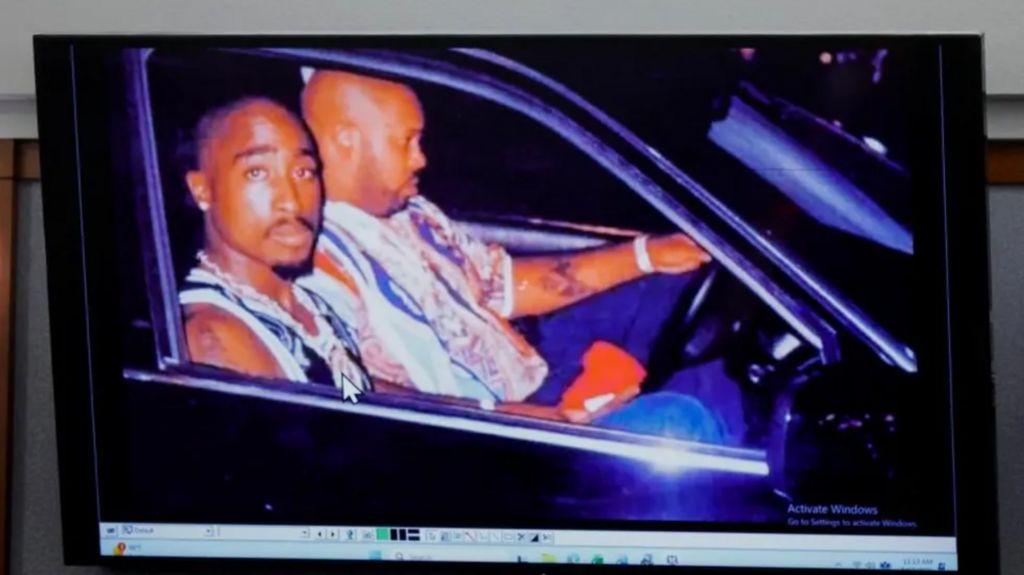
After nearly three decades of speculation, unanswered questions, and rampant conspiracy theories, one of the most high-profile cold cases in American music history has finally resulted in a conviction. On Monday, a Las Vegas jury found former South Side Compton Crips gang leader Duane “Keffe D” Davis guilty of murder with a deadly weapon for his role in orchestrating the 1996 drive-by shooting death of legendary hip-hop icon Tupac Shakur.
Court observers described a tense, emotional scene inside the downtown Las Vegas courtroom as the verdict was read. The 63-year-old defendant, dressed in a crisp black suit, remained completely impassive as the jury foreman announced the guilty finding. Moments later, he formally informed Clark County District Court Judge Carli Kierny of his intent to appeal the conviction, a process that will move forward after his sentencing scheduled for October 13. Across the courtroom, members of Shakur’s family reacted with quiet emotion, locking hands, embracing one another, and shedding tears after the verdict was delivered. Shakur’s sister hugged lead prosecutor Binu Palal in a show of gratitude, while devoted fans gathered outside the courthouse cried and cheered at the news of the guilty outcome.
Shakur, one of the most influential and commercially successful rappers of all time, was just 25 years old when he was gunned down on September 7, 1996, at the height of his career. To date, he has sold more than 75 million records worldwide, and his cultural legacy has only grown in the decades since his killing. The shooting occurred amid a bitter, well-documented rivalry between East Coast and West Coast hip-hop scenes, intertwined with long-standing gang feuds between the Crips and Bloods that shaped much of 1990s rap culture.
Prosecutors argued during the trial that while Davis did not pull the trigger himself, he was the mastermind behind the killing. According to the state’s case, Davis supplied the 9mm handgun used by his nephew Orlando Anderson, who fired the fatal shots from the passenger seat of a white Cadillac that pulled alongside the BMW Shakur was riding in after a boxing match in Las Vegas. The attack was planned as retaliation for a physical altercation between Anderson and Shakur’s entourage that occurred just hours before the shooting, prosecutors confirmed.
The case against Davis rested largely on his own repeated public statements about his involvement in the killing. In a 2008 secret police interview conducted as part of the investigation into the murder of fellow rapper The Notorious B.I.G. (born Christopher Wallace), Davis first admitted his presence in the Cadillac and his role in organizing the attack. He expanded on these claims in great detail in his 2019 tell-all memoir *Compton Street Legend*, as well as in multiple documentaries and podcast interviews. These public disclosures voided a prior immunity agreement Davis had struck with authorities, allowing prosecutors to use his 2008 interview as evidence in the trial.
In closing arguments, Palal urged jurors to accept Davis’ own accounts of his role, noting that the former gang leader had openly claimed responsibility for Shakur’s death across dozens of media appearances over more than a decade. “He’s the shot caller — in every instance in every iteration he’s the leader of the South Side Crips,” Palal told the jury. “When you have the shot caller sitting shotgun when shots are fired, there’s no doubt he’s responsible.”
Davis’ defense team pushed back hard against the prosecution’s narrative, arguing that the defendant’s public comments were nothing more than exaggerated bravado designed to boost book sales and bolster his reputation within gang circles. Defense attorney Michael Sanft told jurors that the state had no physical evidence linking Davis to the shooting, and that the case relied entirely on unsubstantiated statements from a proven liar. Despite this argument, the jury reached a guilty verdict within just hours of beginning deliberations.
Following the verdict, Judge Kierny set Davis’ sentencing for October 13, and confirmed that any formal appeal process would move forward after sentencing. The conviction closes one of the most enduring mysteries in modern hip-hop, bringing a long-awaited resolution to a case that has captivated music fans around the world for nearly 30 years.