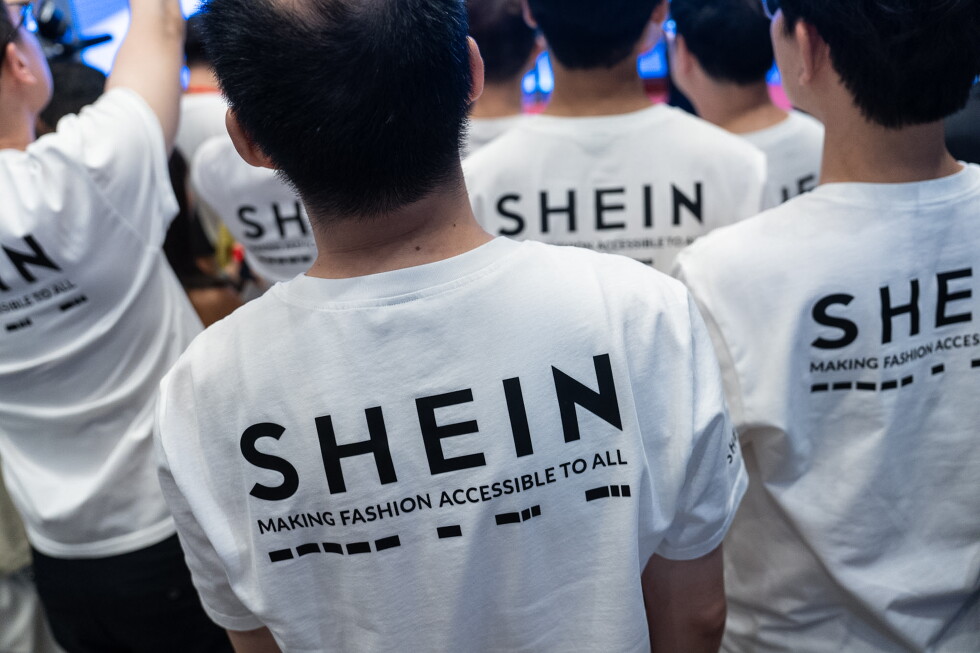
After years of delays, route shifts, and shifting global market conditions, global fast-fashion giant Shein finally made its public trading debut on the Hong Kong Stock Exchange on Tuesday — but the opening session brought an immediate downturn, with shares sliding roughly 10% from their IPO pricing. The online retail leader priced its initial public offering at HK$48.56 (equal to $6.19) per share, pulling in a total of $1.7 billion, making it one of the largest new share listings in Hong Kong so far this year.
Speaking at the official listing ceremony, Shein Chief Financial Officer Leigh Gui framed the Hong Kong listing as a pivotal new chapter for the company. Despite executive optimism, early trading pushed shares down to roughly HK$44, highlighting investor caution over the brand’s mounting challenges.
Founded in 2012 in Nanjing, China, Shein built its global customer base on a groundbreaking model of ultra-affordable, rapidly produced fashion, with delivery from Chinese factories to Western customers in as little as a few days. But that low-cost business model is now facing growing pressure from multiple interconnected headwinds.
The elimination of longstanding “de minimis” tariff exemptions for low-value goods in both the United States and European Union has forced higher duties on small parcels shipped directly from China, including the majority of Shein’s product line. Compounding that cost crunch, global logistics expenses have spiked partially due to regional geopolitical instability tied to the conflict in Iran, squeezing the company’s already thin profit margins.
These added costs have left Shein with no choice but to raise its consumer prices, eroding the core competitive advantage that made it a global hit, according to Jacob Cooke, CEO of WPIC Marketing + Technologies. Financial performance reflects this strain: Shein posted a net loss of $99 million in the first quarter of 2024, a sharp reversal from the $395 million profit it recorded in the same period one year earlier.
Shein’s path to a public listing has been anything but straightforward. The company originally explored public offerings in New York and London, and relocated its corporate headquarters from China to Singapore in 2021, as it navigated overlapping regulatory scrutiny from both Beijing and Western regulators. Ultimately, the company shifted its listing plan back to Hong Kong, leaning back into its Chinese origins and the deep supply chain advantages that have long powered its operations.
In a February speech, Shein founder Sky Xu acknowledged the company’s enduring roots: “Guangdong is Shein’s roots, and the starting point of our journey.” William Ma, an analyst at GROW Investment Group, noted that the pivot back to focus on Greater China highlights the unique value of Guangdong’s small-batch, fast-response manufacturing ecosystem that cannot be replicated elsewhere.
Beyond tariff pressures, Shein continues to face regulatory roadblocks in key Western markets. In February, the European Union launched a formal investigation into the company focused on allegations of illegal products entering the bloc, including claims of material associated with child labor. Just months later, in May, Shein acquired San Francisco-based sustainable apparel retailer Everlane, a move many industry analysts have called a poor strategic fit that does little to address the company’s core challenges.
At the time of its Hong Kong listing, Shein carries a market valuation of roughly $27 billion, only a small fraction of the peak valuation it reached just a few years ago. Gary Ng, senior economist for Asia Pacific at French bank Natixis, noted the company likely missed its ideal window for a public listing. “Shein has probably missed its golden listing window due to the shift of momentum toward AI and tariffs, which can affect valuations and profitability,” Ng explained.
Even with the share drop and Shein’s ongoing challenges, the IPO is being seen as a positive win for Hong Kong’s financial sector. The territory has worked aggressively to reassert its status as a leading global financial hub after a downturn in IPO activity in 2023. So far this year, Hong Kong’s stock exchange has seen a strong rebound in new offerings, with total capital raised from IPOs already exceeding $40 billion. Lorraine Tan, an analyst at investment research firm Morningstar, added that there is already a large backlog of companies waiting to list on the exchange, signaling continued momentum for the market.