BRUSSELS – As European leaders grow increasingly concerned about the reliability of long-standing U.S. security guarantees for the continent under former U.S. President Donald Trump, the European Union is moving forward with expanded drills to test the bloc’s mutual defense clause that requires all 27 member states to come to one another’s aid during a crisis.
The discussions will take center stage at a two-day EU summit kicking off Thursday in Cyprus, where heads of state will aim to finalize an operational framework to leverage the EU’s full range of military, security, trade and diplomatic resources when a member faces emergency, Cypriot President Nikos Christodoulides confirmed in an interview with the Associated Press.
In mid-May, EU diplomatic envoys will launch table-top simulation exercises designed to walk through how the bloc’s Treaty Article 42.7 could be activated to deliver collective support to a member state targeted by invasion or armed attack — specifically, scenario planning that accounts for potential aggression from a major power like Russia. Several weeks later, EU defense ministers will run their own parallel simulation drills. Crucially, the exercises focus only on streamlining political decision-making workflows, and do not deploy active military units or mobilize on-the-ground government assets.
To understand the purpose of these drills, it helps to compare Article 42.7 to NATO’s better-known collective security guarantee, Article 5. NATO’s core rule states that an armed attack against any single ally counts as an attack against the entire alliance, requiring a coordinated collective response that can include military action. Article 5 has only been invoked once in NATO’s 75-year history: in 2001, to back the United States following the September 11 terror attacks, a commitment that ultimately led to NATO’s 18-year, ultimately unsuccessful stabilization mission in Afghanistan.
For its part, Article 42.7 of the EU’s founding treaties was explicitly crafted to avoid overlapping or conflicting with NATO commitments, and has only been triggered once to date. That invocation came in 2015, after Islamic State terror operatives carried out coordinated attacks across Paris that killed more than 130 people and wounded hundreds more.
The text of Article 42.7 holds that if an EU member “is the victim of armed aggression on its territory,” all other member states are bound to provide “aid and assistance by all the means in their power.” The clause also enshrines exceptions for neutral member states such as Austria and Ireland, and requires all actions to align with the United Nations Charter and respect existing NATO obligations.
When France called for support under the clause in 2015, EU members moved quickly to express solidarity and reallocated counterterrorism resources to help France, allowing the French government to deploy additional security forces domestically for the emergency response.
While small-scale tests of Article 42.7 have been carried out periodically over the past 10 years, a combination of shifting U.S. policy and the war in Ukraine has added unprecedented urgency to these preparations. Doubts about the future of U.S. commitment to NATO collective defense have intensified in recent years, sparked by a series of controversial moves from Trump. One turning point came when Trump threatened to annex Greenland, the semiautonomous territory owned by NATO member Denmark. When several European countries deployed small symbolic troop contingents to Greenland to demonstrate solidarity with Denmark, Trump threatened punitive tariffs on participating nations before ultimately backing down.
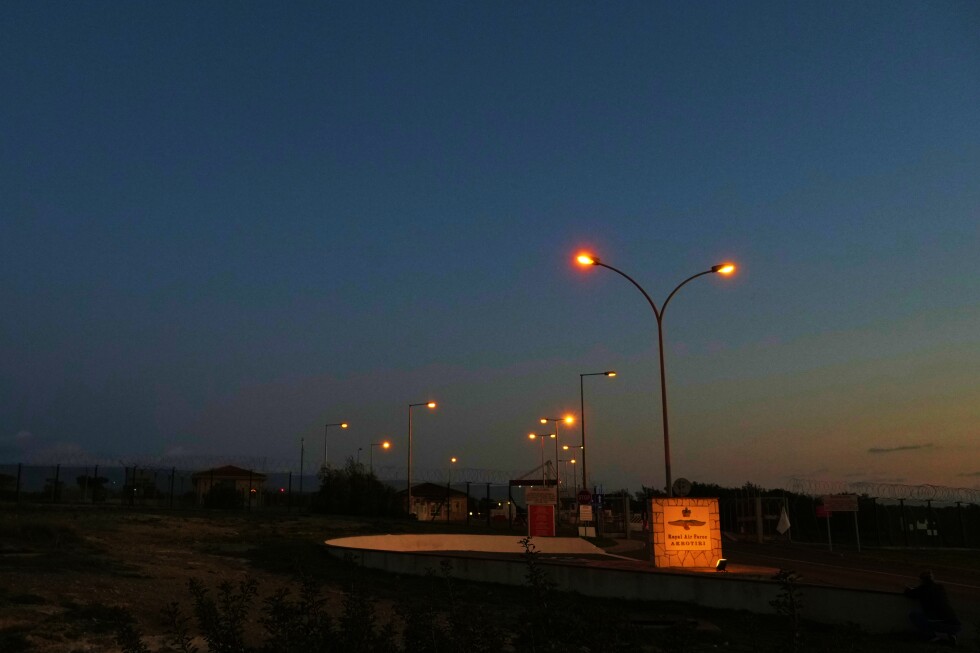
Fears were further stoked after Trump signaled openness to launching a joint military conflict against Iran alongside Israel, a move that culminated in an Iranian retaliatory strike in March targeting a British military base stationed in Cyprus — the current holder of the EU’s rotating Council presidency.
Unlike NATO, which is structured exclusively as a collective security alliance, the EU has a far broader toolkit of response options at its disposal during a crisis, ranging from traditional military deployments to economic sanctions, enhanced border controls, trade restrictions, and visa policy changes. As ongoing conflicts in Ukraine and the Middle East continue to divert U.S. global security attention, European leaders are moving to map out exactly how these tools can be coordinated in an emergency.
Despite the planning, significant questions remain unresolved about how the clause would work in practice. “We don’t know what is going to happen if a member state triggers this article,” Christodoulides told the AP. “There are a number of issues.”
Menelaos Hadjicostis contributed reporting from Nicosia, Cyprus.