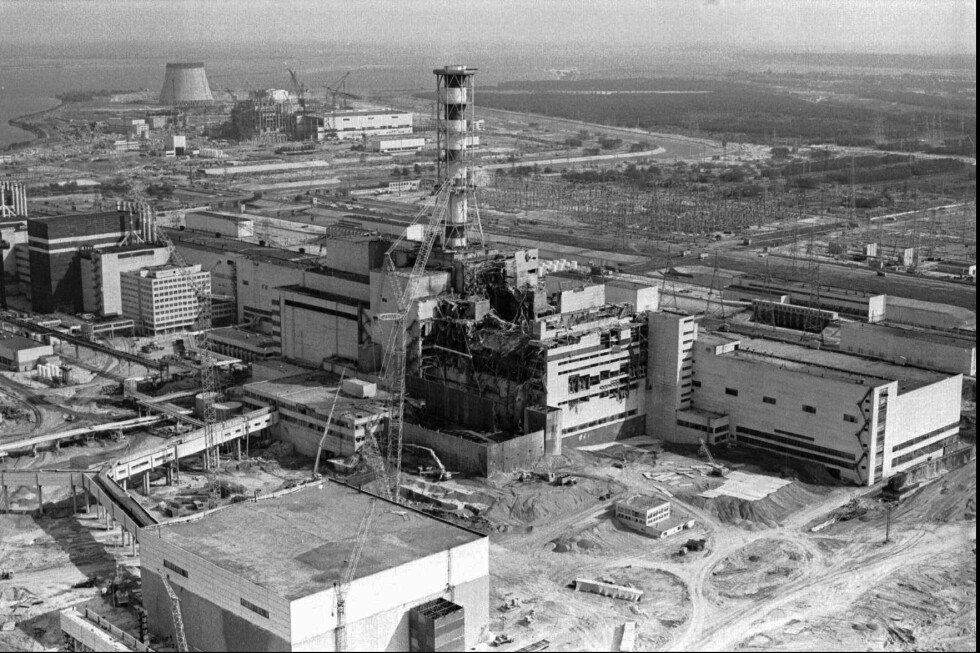
Thirty-eight years ago, the catastrophic 1986 Chernobyl nuclear disaster sent shockwaves across the globe, embedding deep public distrust of nuclear energy and grinding its expansion across Europe and much of the world to a near halt. Four decades on, however, the tides have turned dramatically. Once-shunned nuclear power is experiencing a widespread global resurgence, a trend that has gained unprecedented momentum from cascading geopolitical tensions, most recently the ongoing conflict in the Middle East.
Today, more than 400 operational nuclear reactors span 31 nations, with an additional 70 new facilities actively under construction. Collectively, nuclear energy contributes roughly 10 percent of the world’s total electricity supply — accounting for one-quarter of all global low-carbon power generation. Technological advances over the past four decades have also transformed the industry: modern reactor designs incorporate far more robust safety features than the flawed units that failed at Chernobyl and Fukushima, while streamlined construction processes have driven down both building and operational costs.
Fatih Birol, executive director of the International Energy Agency, told The Associated Press that even before the latest outbreak of Middle Eastern conflict, a nuclear rebound was already foreseeable in the wake of post-Fukushima backlash. “With the war in the Middle East, I am 100% sure nuclear is coming back,” Birol stated. “It’s seen as a secure electricity generation system, and we will see that the comeback of nuclear will be very strong, both in the Americas, in Europe and in Asia.”
Major world powers are leading this renewed push. The United States remains the world’s top nuclear power producer, with 94 operational reactors generating roughly 30 percent of global nuclear electricity. Washington has set an ambitious target to quadruple its domestic nuclear capacity by 2050, with senior officials arguing that nuclear power is irreplaceable for modern energy security. “The world cannot power its industries, meet the demands of artificial intelligence, or secure its energy future without nuclear power,” U.S. Undersecretary of State Thomas DiNanno said recently.
China, meanwhile, operates 61 domestic nuclear reactors and leads the world in new reactor construction, with nearly 40 new units underway. Beijing’s goal is to overtake the U.S. to become the world’s largest nuclear power producer by total installed capacity. Across East Asia, Japan has already restarted 15 idled reactors following comprehensive post-Fukushima safety overhauls, with another 10 awaiting final regulatory approval to come back online.
In Europe, the 2022 Russian invasion of Ukraine triggered a continent-wide reckoning with energy dependence, and the Middle East conflict has further underscored the risks of reliance on imported fossil fuels. European Commission President Ursula von der Leyen has publicly characterized Europe’s decades-long retreat from nuclear power as a “strategic mistake,” and the EU now classifies nuclear as a core clean energy source alongside wind and solar to meet net-zero climate targets. From 30 percent of Europe’s electricity supply in 1990, nuclear’s share has fallen to roughly 15 percent today — a shift that has left the bloc vulnerable to global energy price shocks.
“I believe that it was a strategic mistake for Europe to turn its back on a reliable, affordable source of low-emissions power,” von der Leyen said. “In the last years, we see a global revival of nuclear energy. And Europe wants to be part of it.”
The EU is currently exploring development of Small Modular Reactors (SMRs), a next-generation design expected to enter commercial operation by the early 2030s. SMRs are marketed as cheaper, faster to build, and more operationally flexible than traditional large-scale reactors. While France, Sweden, and Finland have led pro-nuclear policy shifts within the bloc — with Belgium repealing its planned nuclear phase-out last year — other members including Germany, Austria, and Italy remain committed to phasing out nuclear power entirely. Germany completed shutdown of its last three operational reactors in 2023, a decades-long policy that current Chancellor Friedrich Merz calls irreversible, despite growing debate over potential future SMR development.
France, which has long centered nuclear power in its national energy strategy, remains Europe’s nuclear powerhouse. Fifty-seven operational reactors across 19 plants supply nearly 70 percent of the country’s total electricity, a share that has remained consistent even after the Chernobyl disaster. In 2022, President Emmanuel Macron unveiled plans to build six new pressurized water reactors, as part of the country’s goal to cut greenhouse gas emissions and strengthen energy independence. Nicolas Goldberg, a partner at Paris-based energy consultancy Colombus Consulting, noted that the 2022 European gas crisis triggered by the Ukraine conflict reinforced Paris’s commitment to its existing fleet. “The COVID-19 pandemic, combined with the gas supply crunch triggered by the conflict in Ukraine, revealed the limits of deploying renewable electricity and Europe’s dependence on gas,” Goldberg explained. “France has therefore been reinforced in its strategy of maintaining its existing nuclear plants, which means extending their lifespan as much as possible.”
Russia has also positioned itself as a global leader in nuclear technology exports, even as it expands its own domestic fleet. Currently, Moscow has 34 operational domestic reactors, eight of which are the same RBMK design that exploded at Chernobyl’s Reactor No. 4 in 1986, when Ukraine was still part of the Soviet Union. All RBMK reactors still in operation have undergone extensive safety retrofits to correct the inherent design flaw that, when combined with operator error, caused the 1986 disaster that spread radioactive contamination across much of Northern Europe. Today, Russia is actively building 20 new reactors across Europe, Africa, Asia, and the Middle East, with contracts for additional projects in the pipeline. It has already completed the first new reactor for neighboring Belarus, one-third of whose territory was contaminated by the Chernobyl disaster. Irina Sukhiy, founder of Belarusian environmental group Green Network, criticized Minsk’s embrace of new nuclear development, saying authorities are using the global nuclear revival to avoid addressing ongoing contamination harms to local communities.
Even in Ukraine, where the Chernobyl disaster occurred, nuclear power remains a critical part of the national energy mix, generating roughly half of the country’s electricity. Ukrainian nuclear facilities have taken on outsized importance since Russia’s 2022 full-scale invasion, even amid ongoing safety risks including Russia’s occupation of the Zaporizhzhia Nuclear Power Plant and a 2024 drone attack on the Chernobyl site’s containment sarcophagus.
Across the African continent, only South Africa currently operates a nuclear power plant, but that is set to change: Russia is constructing Egypt’s first nuclear facility, and multiple other African states are exploring their own nuclear development projects.
Rafael Grossi, director general of the International Atomic Energy Agency, framed the global nuclear revival as a response to pressing shared energy and climate challenges. “The momentum we are seeing today is the result of a growing recognition that reliable, low-carbon electricity will be essential to meet the world’s rising energy demand,” Grossi said.