### Escalating Maritime Standoff in the Strategic Strait of Hormuz
Two months into open conflict, a tense stalemate over competing naval blockades has reignited friction between the United States and Iran in one of the world’s most critical energy chokepoints, with negotiations to end hostilities remaining deadlocked and neither side showing willingness to back down.
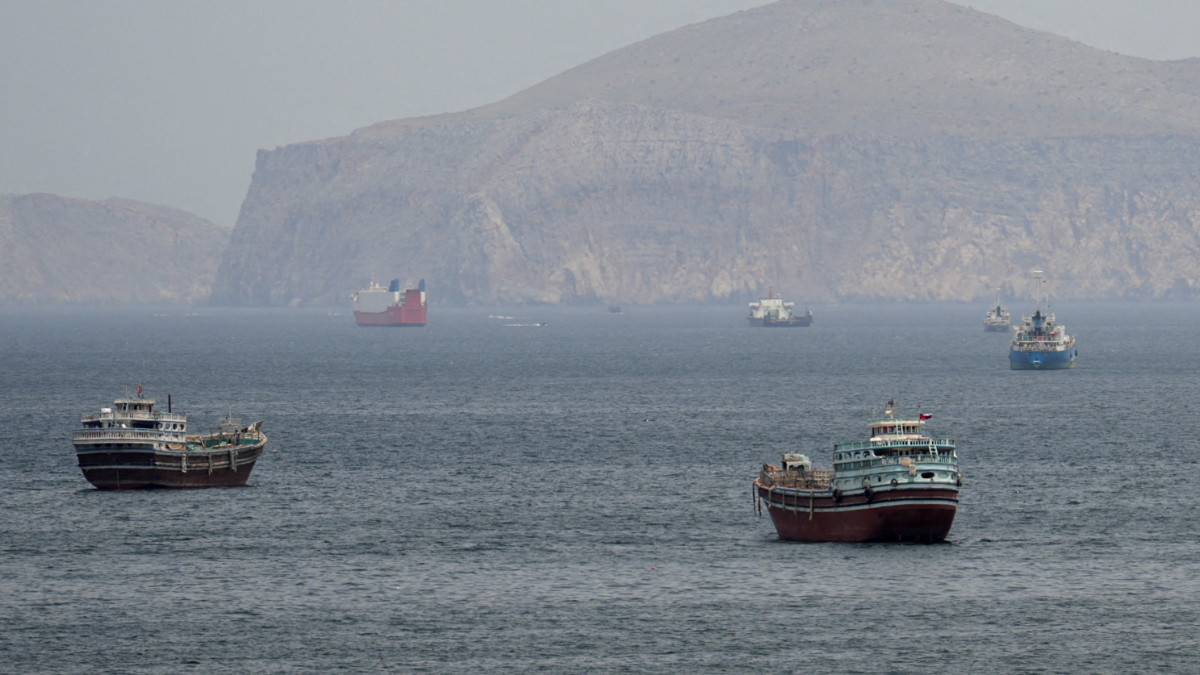
On Wednesday, Iranian fast-attack craft intercepted three commercial vessels transiting the Strait of Hormuz, before escorting two of the detained ships into Iranian territorial waters. The two seized vessels are identified as the *Epaminondas*, a Greek-owned cargo ship flying a Liberian flag, and the *Francesca*, a container vessel operated by Mediterranean Shipping Company, a major shipping firm headquartered in Geneva, Switzerland.
Iran’s operation delivered a clear message: despite repeated U.S. claims that Iran’s naval capabilities in the region have been crippled, Tehran’s small attack craft retain full operational ability to regulate and disrupt maritime traffic through the strait, a route that carries roughly 20% of the world’s daily oil trade.
The latest seizures are a direct response to a U.S. action earlier this week, when American forces detained an Iranian crude oil tanker in the Indian Ocean that was sanctioned for allegedly smuggling Iranian oil exports. The current round of blockades dates back to February, when the Trump administration imposed a full naval blockade on Iran after Tehran seized control of key sections of the Strait of Hormuz following an attack on its assets.
U.S. Central Command announced Wednesday that its blockade has so far blocked 29 vessels from violating the restrictions. Top Republican Senator Lindsey Graham has also hinted that the U.S. boycott of Iranian ports and commercial vessels may soon expand into a global campaign. But the Trump administration’s claims of a fully effective blockade have been called into question by maritime industry outlet Lloyd’s List, which confirmed that more than 24 commercial vessels — including multiple tankers linked to Iran — have successfully evaded U.S. warships patrolling the Gulf of Oman in recent weeks.
In an attempt to de-escalate rhetoric and protect the fragile existing ceasefire, White House Press Secretary Karoline Leavitt downplayed the significance of Wednesday’s vessel seizures. She emphasized that the detained ships are not American or Israeli-flagged vessels, but rather two international commercial ships, so the action does not qualify as a breach of the ceasefire agreement. “The naval blockade that the U.S. has imposed continues to be incredibly effective,” Leavitt told reporters Wednesday.
Iran has pushed back sharply on this framing, arguing that the U.S. blockade itself is a clear violation of the ceasefire. Tehran has reiterated that it will continue detaining international vessels transiting out of the Strait of Hormuz until the U.S. blockade is fully lifted. “A complete ceasefire only has meaning if it is not violated through a naval blockade,” stated Mohammad Bagher Ghalibaf, Speaker of the Iranian Parliament. “Reopening the Strait of Hormuz is not possible amid a blatant violation of the ceasefire.”
The White House’s softening of rhetoric is explicitly aimed at preserving the fragile ceasefire that was set to expire this week. On Tuesday, U.S. President Donald Trump announced an indefinite extension of the truce, saying the move came at the request of Pakistan, which has served as a neutral mediator between Washington and Tehran. Trump explained the extension was necessary to give Iran additional time to review and respond to U.S. negotiation proposals. But Tehran has rejected this narrative, saying the U.S. has put forward unreasonable demands that are not open to compromise.
Leavitt pushed back on media reports suggesting the White House had set a hard deadline for Iran to respond, telling journalists Wednesday: “The president has not set a firm deadline to receive an Iranian proposal, unlike some of the reporting I’ve seen today. Ultimately, the timeline will be dictated by the commander-in-chief.”
While large-scale open fighting has halted under the ceasefire, the escalating standoff over control of the Strait of Hormuz has sparked widespread anxiety among neighboring Gulf states. Kuwait, Bahrain, Qatar and the United Arab Emirates all depend on the strait for the vast majority of their oil and gas export volumes, leaving their economies highly exposed to any prolonged disruption to maritime traffic.
In response to reports that the UAE has requested a currency swap arrangement to shore up its dollar liquidity, Trump confirmed Tuesday that the White House is considering providing targeted financial support to the Emirati central bank. Currency swap lines allow foreign central banks to exchange their domestic currency for U.S. dollars during periods of market liquidity stress.
On Wednesday, U.S. Treasury Secretary Scott Bessent confirmed to congressional lawmakers that the administration is weighing emergency dollar liquidity support for “many” Gulf states, including the UAE. Bessent explained that the arrangement, which functions as a short-term dollar loan, would benefit the U.S. as well by preventing disorderly sell-offs of U.S. dollar-denominated assets held by Gulf central banks. The UAE holds hundreds of billions of dollars in U.S. assets, including Treasury securities and U.S.-listed equities.
“Swap lines, whether it’s from the Federal Reserve or the Treasury, are to maintain order in the dollar funding markets and to prevent the sale of the U.S. assets in a disorderly way,” Bessent said. “So, the swap line would benefit both the UAE and the U.S., and as I said, numerous other countries, including some of our Asian allies, have also requested them.”