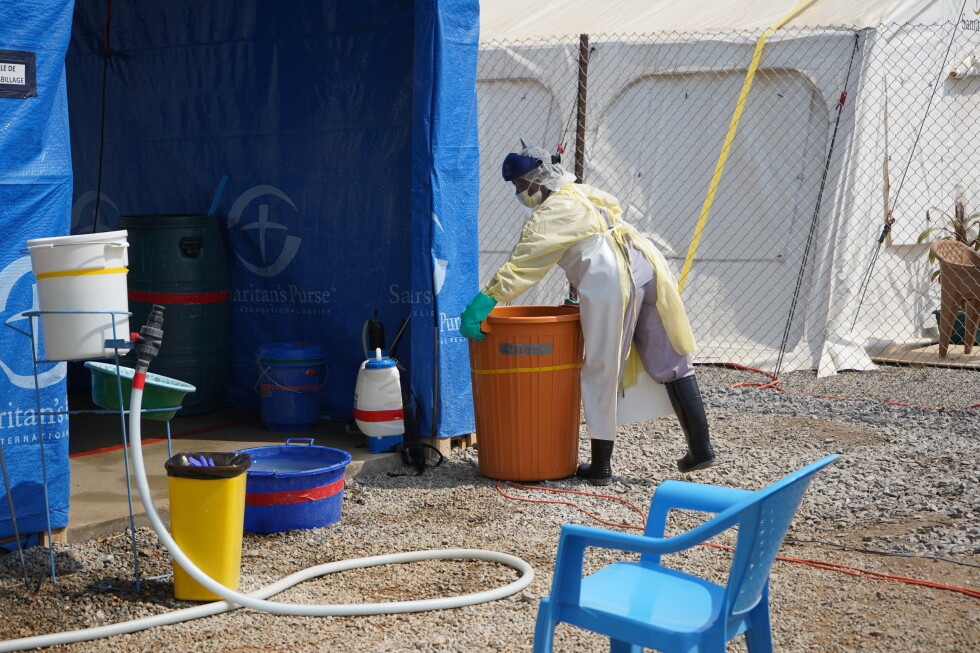
In a grim update released on Monday, the Democratic Republic of Congo’s Ministry of Health announced that the total death toll from the rapidly spreading Ebola outbreak in the country’s eastern region has climbed to at least 930. Among the most concerning recent developments is the report of 37 new fatalities recorded between Friday and Saturday, marking one of the highest single-day death increments registered since the outbreak was first declared.
As of Saturday, official data confirms a total of 2,344 diagnosed cases across five affected eastern provinces, a region long plagued by persistent rebel insurgency and instability. First announced on May 15, this outbreak is now classified as the fastest-expanding Ebola event ever documented. Unlike more widely studied Ebola strains, the outbreak is driven by the Bundibugyo virus, a rarer variant for which no universally approved vaccine or targeted treatment currently exists.
Ebola, a highly contagious viral pathogen, initially jumps to human populations from wild animals, then spreads rapidly through direct contact with infected bodily fluids including blood, vomit and semen, as well as exposure to contaminated surfaces such as clothing, bedding and medical equipment. While the disease remains rare in global terms, it causes severe, acute illness that carries an extremely high fatality rate.
The recent sharp rise in fatalities is directly tied to widespread safety concerns that have severely hampered response efforts in Ituri, the hardest-hit province. According to authorities, at least 12 targeted attacks against Ebola treatment centers and response teams have been recorded since mid-May, most driven by widespread public skepticism, misinformation and harmful rumors about the outbreak. Compounding this crisis, many frontline health workers have halted work in protest over unpaid salaries, leaving critical response gaps. To date, at least 36 infected health workers have lost their lives to the virus.
Last week, the World Health Organization issued an urgent warning highlighting that roughly 80% of all new confirmed Ebola cases are stemming from unidentified transmission chains. This statistic serves as a clear indicator that the outbreak is outpacing the ability of health officials to track and contain it, even as international and local response teams scale up their operations.
Analysis of Congolese Health Ministry data reveals that over the first two and a half months of the outbreak, the average weekly increase has reached approximately 272 new cases and 111 deaths. What is more, the rate of growth has accelerated steadily, with a particularly sharp jump in both new cases and fatalities recorded throughout July compared to the opening weeks of the outbreak.
In its latest statement, the ministry noted that 724 patients are currently receiving care in hospital isolation units, and response teams are ramping up intervention efforts across all impacted health zones. Despite the overwhelming challenges, officials added that care and support capacity is gradually being consolidated, with 22 new patient recoveries confirmed in a single 24-hour period.