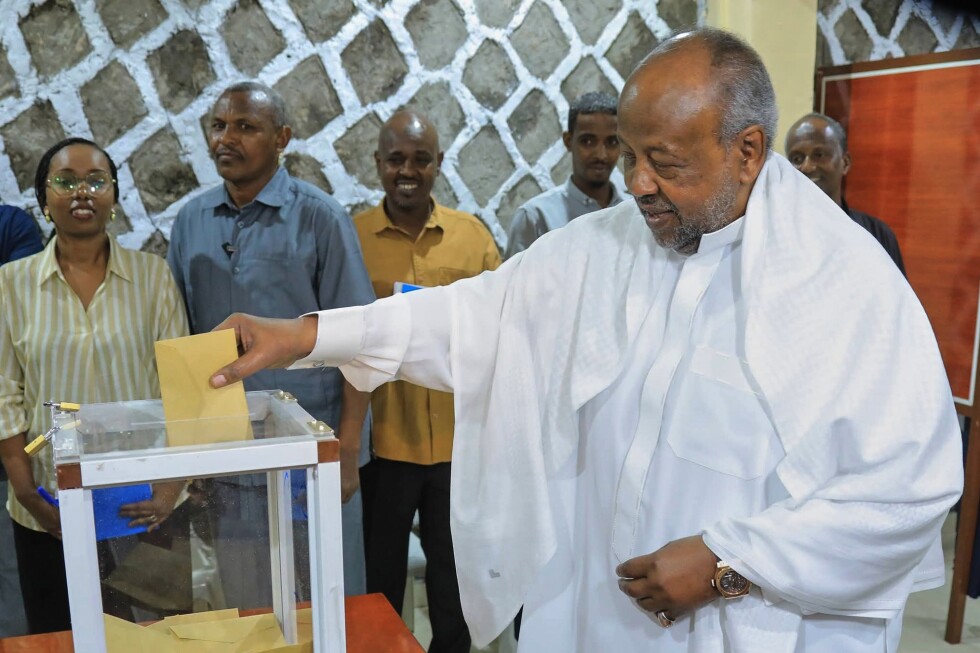
In the Horn of Africa nation of Djibouti, long-sitting head of state Ismaïl Omar Guelleh has secured another five-year mandate, winning a sixth presidential term with a dominant share of the vote according to official election results released after Friday’s ballot. The 78-year-old incumbent captured 97.81% of the total votes cast, capping off a political career that has already spanned more than 20 years at the country’s helm.
Guelleh’s path to another term was cleared last year, when Djibouti’s legislative body voted to eliminate presidential age limits, a change that removed the last barrier to his reelection candidacy. The race itself saw only one challenger, Mohamed Farah Samatar, a one-time member of Guelleh’s own ruling party. Political analysts broadly agree that the contest offered voters no meaningful or competitive alternative to the incumbent, a reality that fits a broader pattern of Djibouti’s politics. Major opposition groups have repeatedly boycotted national elections in recent years, pointing to systematic restrictions on political speech and organizing that level the playing field heavily in favor of the ruling establishment.
Election officials confirmed that voting across the country proceeded peacefully, with no major reports of unrest or disruption. On Saturday, crowds of Guelleh supporters gathered outside the presidential palace in the capital Mogadishu to celebrate the outcome, sharing congratulations and marking the victory.
Guelleh first rose to the presidency in 1999, taking over from his uncle Hassan Gouled Aptidon, the country’s first post-independence leader. This handover cemented a family-led political system that has guided Djibouti’s trajectory for its entire modern history. Beyond its domestic politics, Djibouti occupies an outsize role in global geopolitics thanks to its strategic location along the critical shipping corridor connecting the Red Sea to the Gulf of Aden. The tiny nation, which counts just over 1 million residents, currently hosts multiple foreign military bases, operated by major global powers including the United States, China, France and Japan. Revenue from these base agreements, combined with income from port services provided to landlocked neighboring Ethiopia, forms the backbone of Djibouti’s small but strategically important economy.