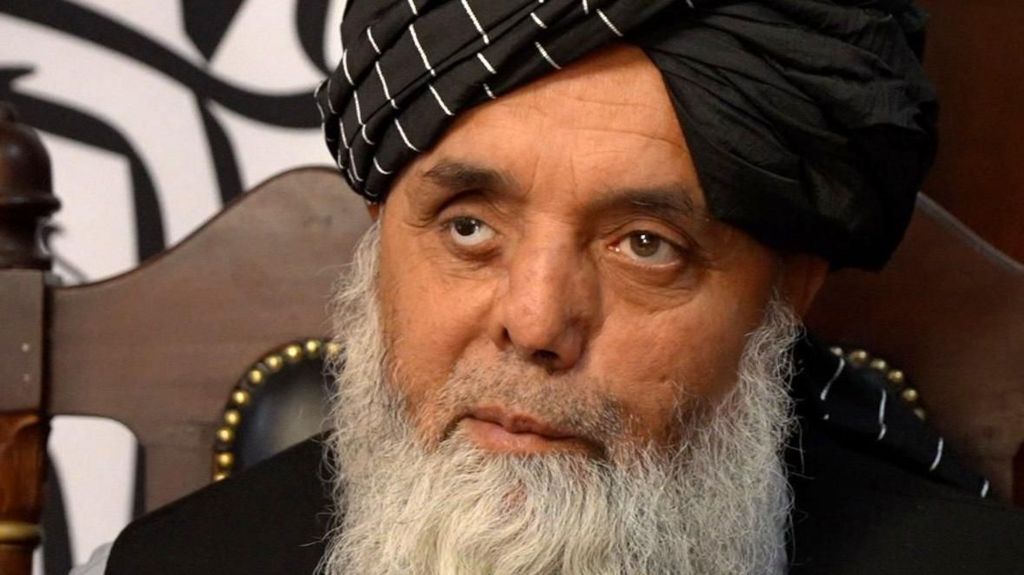
Five years have passed since the Taliban seized control of Afghanistan, ousting the U.S.-backed government that had held power for two decades. In a rare, multi-year access arrangement, BBC correspondents gained unprecedented entry to meet with senior Taliban officials, offering an unfiltered look at the gap between the group’s pre-power promises of moderation and the hardline reality of its current rule.
One of the most striking encounters took place in the office of Abdullah Sarhadi, governor of northern Afghanistan’s Jawzjan Province, as an 18-year-old woman – identified only by the pseudonym Tuba to protect her identity – confronted the former Taliban commander to demand a divorce from her husband, who she says has abused her for months. Fully veiled and wearing sunglasses to conceal her identity, the young woman stood her ground, stating calmly, “If there was any chance to live together, I wouldn’t be here… I have taken my decision.”
After attempting to pressure Tuba into remaining in the marriage – warning her that no man would marry a divorced woman and claiming she would lose her social standing – Sarhadi ultimately dismissed her request, and privately commented to the room of male officials, bodyguards and local elders that women are “mindless” and “deficient in intellect”, prompting laughter from those present. Under Taliban-imposed Sharia law, women face extreme barriers to securing divorce without spousal consent; Tuba’s husband demanded four times the original bridal bride price as a settlement, a demand her family refused. Even after Sarhadi ordered the husband to stop beating Tuba and provide her with a separate room, Tuba’s father told the BBC the family would continue pursuing divorce through Taliban courts, despite the long odds of success. This public, on-the-record exchange offers a rare unvarnished glimpse into how gender restrictions play out in daily life under Taliban rule.
Sarhadi’s own trajectory mirrors the journey of many senior Taliban figures now holding national office. A military commander during the Taliban’s first rule in the 1990s, he surrendered to U.S.-led coalition forces in 2001 when the group was ousted, and spent several years detained at the U.S. Guantanamo Bay detention camp before being released. When the Taliban retook power in 2021, he was first appointed governor of Bamiyan Province, then moved to lead Jawzjan, and most recently became deputy commander of a military corps in Kunduz Province. When pressed about the 2001 destruction of the ancient giant Bamiyan Buddha statues – an act that triggered global condemnation – Sarhadi made an unflinching admission: he personally helped destroy the UNESCO-recognized archaeological site. “Whatever we did and we do is in accordance with the guidance and God’s law… We smash idols rather than sell them. Why should I regret? It was God’s will,” he said. He also confirmed that a recent ban on smartphones for government officials has slowed administrative work, but declined to criticize the policy further, noting any open opposition would “cause trouble”.
Another senior Taliban official, Habibullah Badr, who now holds a position in the ruling administration after stepping back temporarily for medical treatment, admitted he previously planned and oversaw suicide attack operations in Kabul during the insurgency. The former death row inmate even went on to run the same prison where he was once held under the former U.S.-backed government, serving as national deputy head of prisons. When questioned about the thousands of civilian deaths caused by Taliban suicide attacks during the insurgency, Badr evaded questions about specific strikes, claiming the group only targeted U.S. convoys and warned civilians to stay away from foreign installations, and refused to discuss past violence, saying it would “reopen wounds” and upset the public.
At a tribal gathering where Badr was set to receive a medal honoring his service, a rare moment of public dissent played out: foundation head Sultan Mohammad Talaee publicly called on the Taliban to reopen girls’ secondary schools, which have been banned nationwide since the group took power. “Seeking knowledge is an obligation for both men and women in Islam,” Talaee told the crowd, before his microphone was immediately cut off and he was prevented from speaking further. Dissent like this carries severe risk: women who have protested restrictions have been jailed, and most local journalists the BBC spoke to reported being regularly summoned and interrogated by the Taliban’s intelligence agency, Estikhbaraat.
When pressed by the BBC about broken promises to allow women to work and study within Islamic frameworks, Taliban chief spokesman Zabihullah Mujahid – who publicly revealed his birth name, Tahir Shah Seddiqi, for the first time during the interview – defended the group’s policies, arguing that all women’s rights and freedom of expression must be interpreted “through the Sharia lens”. He claimed allowing women to work in government offices would “lead to immoralities” and “undermine their dignity”, and said that discussions around reopening girls’ education are still ongoing, with a Sharia-compliant solution still being developed. On media freedom, Mujahid confirmed the group maintains restrictions, stating that media cannot be allowed to broadcast content against Islamic law or spread anti-government propaganda.
While the formal seat of government remains in Kabul, Mujahid confirmed most senior leadership is based in Kandahar, the Taliban’s historic heartland and the de facto national capital, where restrictions have only tightened in recent years. Men are required to grow beards, radio stations are banned from playing music or broadcasting women’s voices, and independent journalists are prohibited from filming in the city. The Taliban’s supreme leader, Hibatullah Akhundzada, who almost never appears in public and has never given a media interview, declined the BBC’s request for a meeting.
In a remote, impoverished region outside Kandahar, former insurgent fighters who now serve as government security personnel showed the BBC the secret cave network they used to hide from coalition forces during 20 years of insurgency. One local commander, Abdul Samad, whose father was killed fighting for the Taliban, acknowledged that the region – already one of the poorest in a country where the UN estimates three-quarters of the population cannot meet basic needs – has yet to receive the infrastructure and development support residents need. “Emirate officials have not forgotten us. They are busy with other priorities, but we are hopeful they will look after us sometime,” Samad said.
Five years into the Taliban’s second rule, Afghanistan remains mired in widespread poverty, mass unemployment and economic collapse. While Taliban officials claim they are working to address these crises, many Afghans say the group’s rule itself is the primary obstacle to stability. For women in particular, systemic restrictions on education, work, movement and public life have destroyed decades of progress. “I’m speechless about how a group that has no understanding about life is suddenly in power,” said Hoda, a female activist who protested the 2021 takeover who requested anonymity for her safety. “Women can’t accept this situation. They might advance restrictions but it won’t stay like this forever. I think the Taliban are scared of educated women, that’s why they restrict us: they want uneducated women who cannot raise a generation that will challenge and end their rule.”