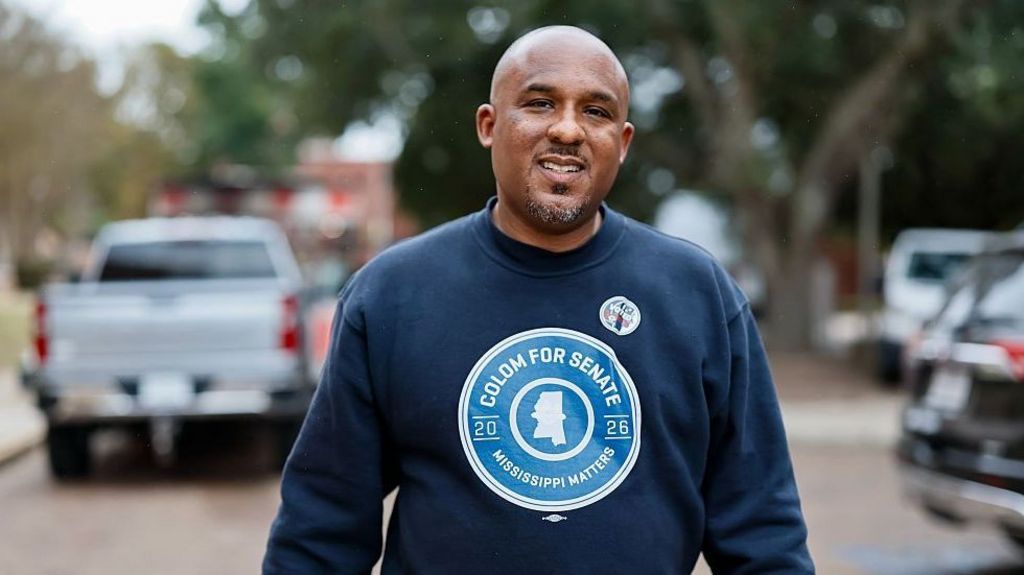
In a dramatic 2026 U.S. midterm election showdown that defies decades of political precedent in Mississippi, Democratic district attorney Scott Colom and incumbent Republican Senator Cindy Hyde-Smith are locked in a razor-thin contest for a U.S. Senate seat that could mark a seismic shift for the deep-red state. As of Wednesday evening, with 96% of all ballots tallied, Colom held a narrow 1,138-vote lead, with roughly 50,000 outstanding ballots still pending official tabulation.
Mississippi has not sent a Democratic representative to the U.S. Senate in over 40 years, and a Colom victory would carry extraordinary historical weight: he would become the first Black U.S. senator elected in the state since 1875, a milestone in a state where nearly 40% of the population identifies as African American, the highest share of any U.S. state. Hyde-Smith, the first woman to ever represent Mississippi in Congress, originally took office in 2018 to fill a vacant seat before winning a full term later that year, and earned a high-profile endorsement from former President Donald Trump, who carried Mississippi by a 22-point margin during his 2024 presidential run.
The race emerged as a surprise priority for national Democratic operatives in the final weeks of the 2026 campaign, as the party notched unexpected upsets across traditionally deep-red states including South Carolina, Texas, and Kansas to seize full control of both chambers of Congress. National party leaders redirected last-minute funding to the Mississippi contest after internal polling revealed a viable path to flipping the long-safe Republican seat, a departure from decades of Democratic strategy that largely wrote off Mississippi as unwinnable and siphoned resources to more competitive battlegrounds. Colom himself noted that national Democratic circles had long been “conditioned not to care about Mississippi,” a dynamic that was visible in the 2020 Senate race, when widely favored Democratic candidate and former U.S. Agriculture Secretary Mike Espy lost to Hyde-Smith by a decisive margin.
Vote tabulation trends shifted dramatically over the count period: Hyde-Smith held an early lead when only 30% of precincts had reported results, but Colom steadily eroded that gap, holding a lead of just a few dozen votes by Wednesday morning before expanding his narrow edge to over 1,000 as more votes were processed. University of Mississippi political science associate professor Julie Wronski explained that the final result will not be certified for weeks, pointing to Mississippi’s unique election rules that allow mail-in ballots postmarked by Election Day to be counted as long as they are received within five business days after polling closes. Wronski projected the race would not be officially called until at least November 11, noting that the tiny margin between the two candidates requires every single outstanding ballot to be verified and tallied before a winner can be confirmed. Compounding the uncertainty, Mississippi has no provisions for automatic recounts in close races, nor does it allow losing candidates to formally request a recount of results.
Wronski also characterized Hyde-Smith’s re-election campaign as largely underwhelming and low-energy, noting the striking lack of public campaign appearances by the incumbent, who largely leaned on Mississippi’s deeply conservative voter base to carry her to victory. Trump traveled to Mississippi to headline a late-campaign rally for Hyde-Smith last month, telling supporters he was making the trip to eliminate any risk of an upset, noting “Cindy’s doing great, but I just got to make sure. I can’t take a chance.” Colom, by contrast, centered his campaign messaging on his Christian faith, targeted relief for working-class economic struggles, and sharp criticism of Trump administration policies including the ongoing military conflict in Iran and soaring national cost of living pressures.
Voter turnout data points to a historic surge in Black electoral participation across the state, a key driver of Colom’s unexpected competitive position. Charles Taylor, director of the Mississippi state NAACP branch, reported that his organization observed unprecedented lines for both absentee early voting and in-person Election Day polling, describing a widespread wave of enthusiasm among Black voters who overwhelmingly align with the Democratic Party. “Folks everywhere were motivated across the state,” Taylor told the BBC, noting the organization’s on-the-ground monitoring confirmed Black voters turned out in record numbers to cast their ballots.
As electoral officials work through the remaining batches of uncounted mail-in and provisional ballots, the Mississippi race stands as one of the final unresolved contests of the 2026 midterm cycle, with the outcome set to either extend Mississippi’s four-decade streak of Republican Senate representation or deliver a landmark moment for civil rights and political representation in the American South.