The UK Supreme Court has convened a landmark two-day hearing marking the final legal push by Palestine Action co-founder Huda Ammori and her legal team to overturn the British government’s formal proscription of the grassroots direct-action group as a terrorist organisation. Leading the legal argument on the hearing’s opening day, Raza Husain KC, representing Ammori, laid out a detailed case challenging the classification, noting that fewer than 1% of the group’s public demonstrations meet the strict legal threshold for terrorist activity under UK law.
Husain stressed that public perception labels carry far less weight than verifiable, on-the-ground conduct, emphasizing that Palestine Action has never at any point endorsed or incited violence targeting individual people. The barrister drew a direct parallel to long-celebrated historical activist movements, pointing out that the British Suffragette campaign for women’s voting rights, widely venerated in modern UK society, employed far more disruptive tactics including arson and small explosive devices, yet was never designated a terrorist group. He further highlighted that numerous other well-established activist groups spanning anti-war campaigns, environmental advocacy, and animal rights movements have used tactics equal to or more extreme than those deployed by Palestine Action, without facing any proscription under anti-terror legislation.
Ammori’s legal team additionally argued that the group’s designation has severely eroded fundamental rights to free expression and peaceful assembly, creating a widespread chilling effect that discourages ordinary British residents from participating in legitimate pro-Palestine advocacy. Husain referenced the 2022 Filton protest incident as a critical turning point, where activists were detained and processed under anti-terror statutes, a move that sent shockwaves through the UK’s pro-Palestine movement.
This Supreme Court appeal follows a lower court ruling that upheld the UK government’s initial proscription of Palestine Action under counter-terror laws, and represents the organisation’s last available legal avenue to reverse the ban.
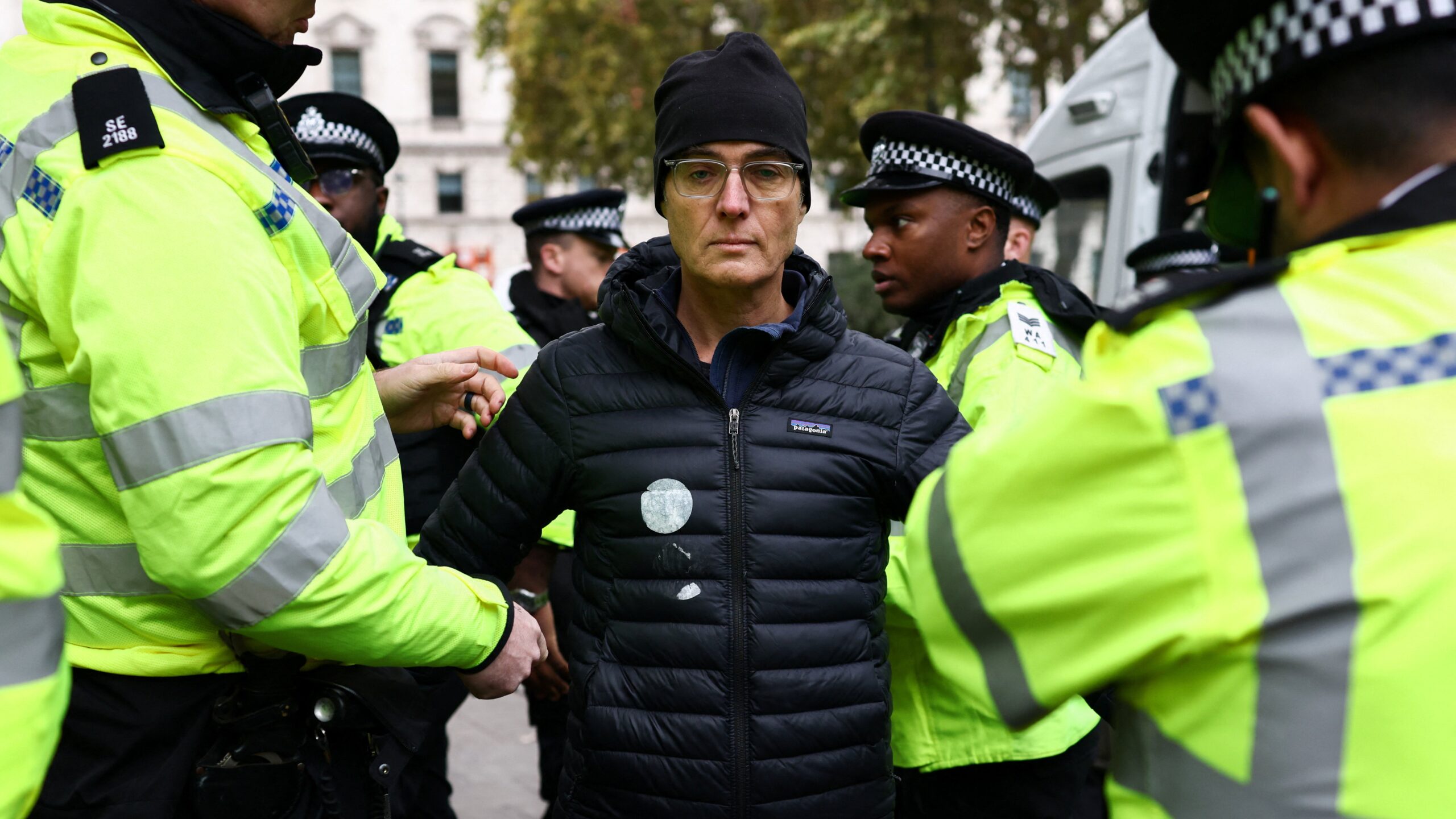
Dozens of supporters gathered outside the Supreme Court to demonstrate solidarity with the group, many risking arrest by holding customised placards adapted from a viral social media post by Sarah Helm, a veteran journalist and wife of UK national security adviser Jonathan Powell, who drew widespread public attention last month when she publicly condemned the Palestine Action ban. Helm’s original post, written in response to the removal of Irish author Sally Rooney’s works from UK retail channels over her public support for the group, read “God help us authors who support Palestine and Palestine Action”; protesters modified the opening noun to reflect their own identities, including phrases such as “Jew”, “physiotherapists”, “son of a Holocaust survivor”, “gardeners”, and “normal people”. Metropolitan Police officers arrested 25 attendees for displaying the unauthorised placards, among them well-known public figures: Harry Potter film franchise actor Alfie Enoch, and Massive Attack founding member Robert Del Naja.
UK: Dozens arrested outside Supreme Court hearing on Palestine Action ban