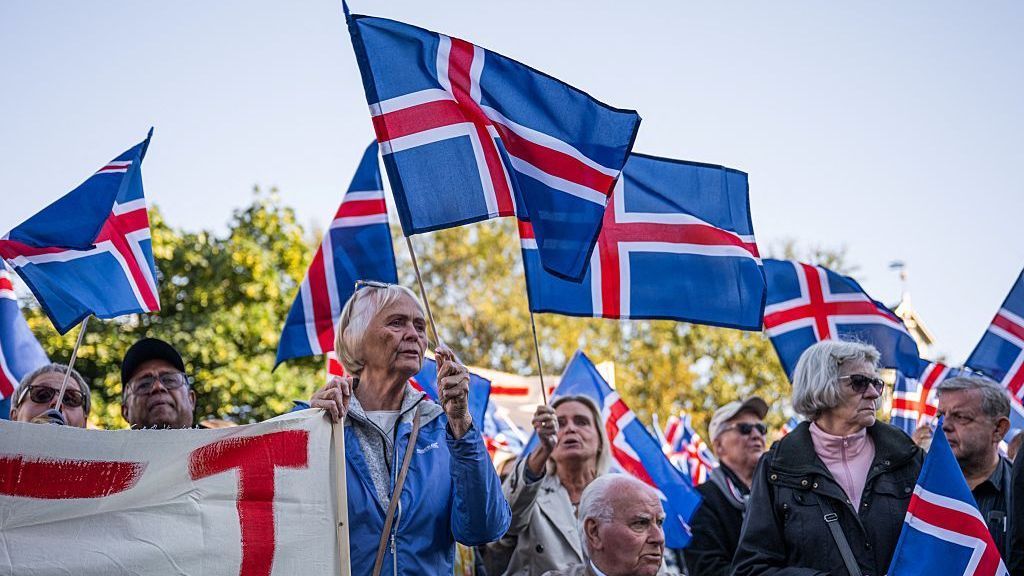
On Saturday, Icelandic voters headed to polling stations across the small Nordic nation to decide a question that has split public opinion and shaped national politics for nearly 15 years: whether to restart accession negotiations with the European Union, a process first halted in 2013. With pre-vote opinion polls consistently showing a razor-thin margin between the two campaign sides, no analyst has been willing to confidently predict the final outcome, with results expected to be announced in the early hours of Sunday.
Iceland’s current centre-left administration, led by Prime Minister Kristrún Frostadóttir, had long planned to hold this public vote, but mounting instability in global geopolitics pushed the government to schedule the referendum earlier than initially planned. Unlike many European Union accession debates that center heavily on security and international alliances, this campaign has focused far more on two core national priorities: Iceland’s iconic fishing industry and its hard-won national sovereignty.
Voting opened at 9:00 GMT and remained open until 22:00 GMT, with more than 20% of eligible voters already casting their ballots during the early voting period, according to Iceland’s national public broadcaster RUV. For a nation of just under 400,000 people, the referendum has sparked high voter turnout, reflecting how deeply the question of EU membership divides Icelandic society. The question put directly to voters is straightforward: “Should Iceland resume accession negotiations with the European Union?”
Already, Iceland is tightly integrated into European economic and border structures: as a member of the European Economic Area, it participates in the EU’s single market and is part of the Schengen Area, which allows free movement across most European borders. Full EU membership would bring Iceland into the EU customs union and eventually require adopting the euro as its national currency. When Iceland paused accession talks in 2013, the process was already far along: of the 35 policy chapters that must be negotiated to join, 27 had been opened and 11 had been provisionally finalized. European Commission officials have confirmed that if voters approve restarting talks, the full negotiation process could be wrapped up in as little as one to two years.
Crucially, a Yes vote in Saturday’s referendum is not a final commitment to join the bloc. It would only greenlight the government to resume talks and negotiate a formal accession agreement. Once an agreement is reached, it would require approval from a second public referendum, the Icelandic parliament, and constitutional amendments, as well as ratification from all 27 existing EU member states. Pro-membership campaign group “Yes to See” argues that Icelanders deserve the chance to see what terms the bloc can offer before making a final, binding decision, saying that current voters lack all the information needed to reject membership outright.
Even a No vote would not permanently close the door to future EU accession talks, leaving the possibility of revisiting the question open for future administrations. Sovereignty has emerged as the most contentious issue throughout the campaign. Iceland only gained full independence from Denmark in 1944, a milestone that remains central to the nation’s identity, and its fishing and marine industries account for nearly 40% of the country’s total exports. No campaigners warn that EU membership would force Iceland to cede control of its valuable fishing waters to the EU’s Common Fisheries Policy, requiring it to share access with other member states. While EU negotiators have indicated Iceland could secure a special exemption for its fishing sector, opponents remain deeply skeptical, and the issue remains the single largest barrier to a successful accession agreement. Many voters still reference the 1970s “Cod Wars” fishing disputes with the United Kingdom, which Iceland ultimately won, a reminder of how the country has fought to retain control of its marine resources – the same issue that has derailed Icelandic EU membership bids in the past.
The current push for a referendum traces back to the aftermath of the 2008 global financial crisis, when Iceland’s entire banking system collapsed. In response to that economic crisis, the country first launched accession talks in 2009, only to pause the process four years later in 2013. Today, Iceland ranks as one of the most affluent nations in Europe, with the fifth-highest GDP per capita in the world. Many Icelandic voters, including Bifröst University politics professor Eirikur Bergmann, attribute the country’s strong economic performance to its independence from the EU. Still, Iceland faces pressing economic challenges: it is currently ranked as the most expensive country in the world, with inflation holding at 5.6% and stubbornly high interest rates at 8%. Pro-membership campaigners argue that joining the EU would bring greater economic stability and help bring inflation and interest rates down over time.
While security has taken a backseat in campaign debates, it was a key factor in the government’s decision to move the referendum forward. As a founding member of NATO, Iceland has no standing military of its own, relying on a decades-old bilateral defense agreement with the United States signed in 1951 and collective security from NATO allies. No campaigners argue that Iceland’s security is already fully guaranteed by NATO and the U.S., and that EU membership is no replacement for its existing defense architecture. Growing geopolitical tension, including increased Russian maritime activity near Iceland in the wake of Russia’s full-scale invasion of Ukraine (which Iceland has strongly supported) and recent remarks from former U.S. President Donald Trump expressing interest in acquiring Greenland and confusing the island with Iceland, has sparked new concerns among some voters about small nation security. The EU and Iceland signed a new security and defense partnership earlier this year, with EU officials framing membership as an anchor in a community of shared values, prosperity, and collective security.
Ahead of voting, the two campaign sides faced off in a nationally televised debate, led by their top figures: Prime Minister Kristrún for the Yes campaign and Guðrún Hafsteinsdóttir, chair of the opposition Independence Party, for the No side. During the debate, Kristrún emphasized that Iceland is already deeply integrated into European structures, framing a Yes vote as “one of the biggest risk-reducing steps we can take” for the nation’s future. She repeatedly stressed that a Yes vote does not guarantee membership, and that the government would honor any outcome on Saturday. For her part, Guðrún clarified that the No campaign does not oppose close cooperation with Europe, saying “We already do [work well with Europe], and we want that to continue.” Instead, she framed the vote as a choice over whether to hand over decision-making power over fisheries, agriculture, and natural resources to EU leadership in Brussels.
Hallgrimur Oddsson, director of EU-Iceland think tank European Currents, noted that even though geopolitical instability prompted the government to call the referendum earlier, it has remained a low-priority issue for voters during the campaign. “It’s lower on the agenda than many would think,” Oddsson explained, confirming that domestic economic and sovereignty issues have dominated public discussion, as the latest pre-election poll shows the No campaign holding a narrow 51.6% lead, putting the final result too close to call.