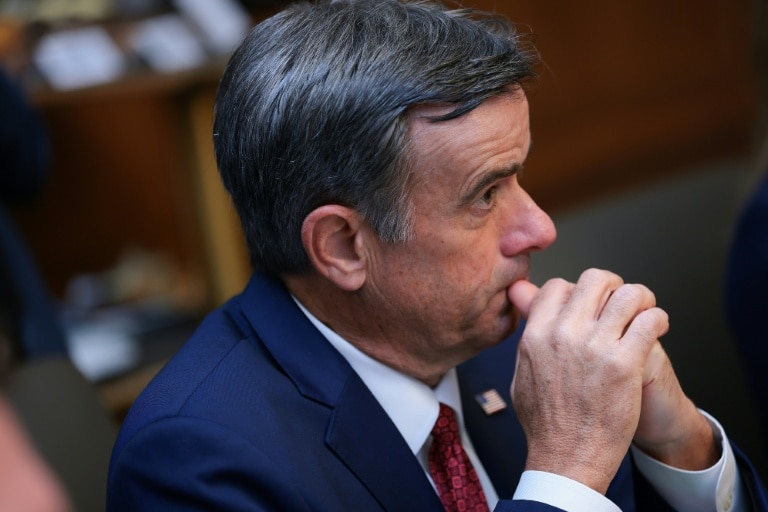
In an unannounced and shrouded-in-secrecy development that has drawn sharp international attention, Central Intelligence Agency Director John Ratcliffe traveled to Moscow for in-person meetings this Tuesday, marking his first documented visit to the Russian capital since assuming the role of CIA chief, multiple U.S. media outlets have confirmed.
The extraordinary nature of the trip has been underscored by the complete lack of official clarity around its core objectives. Neither the CIA nor the White House has issued any formal statement or responded to requests for comment from Agence France-Presse, leaving international observers and diplomatic analysts to speculate on the purpose of the high-stakes visit.
CBS News was among the first outlets to confirm the trip, citing anonymous sources with direct knowledge of the journey. Separately, the digital news outlet Axios also verified the visit through two unnamed senior U.S. officials, backing up the initial reporting.
Flight tracking data from the popular public monitoring platform Flightradar24 added further circumstantial evidence to the reports. The platform’s records showed a U.S. military C-17 transport aircraft making the journey from the United States to Latvia, before proceeding onward to Moscow’s Vnukovo International Airport. Several hours after its arrival, the same aircraft departed Moscow, according to the tracking data.
When pressed for comment earlier on Tuesday regarding the landing of the U.S. military plane in Moscow, Kremlin spokesman Dmitry Peskov told reporters that he had no information available about the incident.
Ratcliffe’s reported visit comes at a moment of severely strained relations between Washington and Moscow, with multiple ongoing diplomatic and security flashpoints raising global security risks. The full-scale war in Ukraine, now in its third year, has seen tensions escalate in recent weeks, and U.S.-brokered negotiations aimed at de-escalating the four-and-a-half-year conflict have stalled completely with no visible path forward.
Recent United Nations data reveals that civilian casualties in Ukraine reached their highest monthly level since 2022 last month, as Kyiv has stepped up retaliatory long-range strikes against targets deep inside Russian territory. Beyond the Ukraine conflict, the two nuclear-armed powers are also at a complete deadlock over nuclear arms control. The only remaining binding treaty limiting their strategic nuclear arsenals, the New START treaty, expired in February of this year, with no replacement agreement on the horizon.
The lack of official confirmation around the visit has left the international community waiting for further details, with many analysts suggesting that any direct high-level contact between U.S. and Russian officials at this tense juncture could carry significant implications for global security.