分类: world

  • New weapons charges filed against suspect in deadly shooting at Bondi Beach Hanukkah festival

    New weapons charges filed against suspect in deadly shooting at Bondi Beach Hanukkah festival

    SYDNEY, Australia – Australian law enforcement officials have announced 19 new criminal charges against 24-year-old Naveed Akram, the sole surviving suspect in the December 2025 mass shooting at a Hanukkah celebration on Sydney’s iconic Bondi Beach that left 15 people dead. The attack stands as Australia’s deadliest mass shooting in nearly three decades and its worst alleged act of domestic terrorism, prompting three parallel official investigations into the violence and broader systemic issues surrounding it.

    Akram was already facing 59 initial charges, including multiple counts of murder, attempted murder, and engaging in a terrorist act, following the coordinated assault on the Jewish holiday gathering. On Wednesday, court administrative staff confirmed that the additional charges were formally laid on April 15, breaking down to 10 counts of shooting with intent to murder and six counts of discharging a firearm to resist arrest. Three further unlisted charges are included in the new indictment. To date, Akram has not been required to enter a formal plea in the case.

    According to earlier court filings, Akram and his 50-year-old father, Sajid Akram, launched the attack by throwing homemade improvised explosive devices into the crowd of holiday revelers on one of Australia’s most frequented coastal public spaces. None of the thrown devices detonated, investigators confirmed. A larger, fully assembled improvised explosive device draped with Islamic State group flags was later recovered from the trunk of Naveed Akram’s vehicle. The assault ended in a gunbattle with responding police officers, during which Sajid Akram was killed and Naveed Akram was shot and wounded before being taken into custody. Australian federal police have publicly stated the attack was directly inspired by extremist ideology from the Islamic State group.

    Akram made his scheduled court appearance Wednesday via video link from a correctional facility, before Sydney’s Downing Center Local Court. The procedural hearing was focused on debating a court-imposed gag order that bars the public release of identifying information for attack victims and survivors who have chosen to keep their identities private.

    In the wake of the massacre, three separate official inquiries have been launched to unpack the event and prevent similar violence. One probe is focused on examining gaps in communication and coordination between Australian law enforcement and national intelligence agencies in the period leading up to the attack. A separate royal commission—Australia’s highest level of independent public inquiry—has been convened to investigate both the broader circumstances of the Bondi shooting and the prevalence of antisemitism across Australian daily life. The commission released an interim policy report in April that called for immediate tighter national gun control regulations, and kicked off its first round of public evidentiary hearings just this Monday.

  • To stay or risk the ‘Road of Death’ – Ukrainian civilians trapped in frontline city

    To stay or risk the ‘Road of Death’ – Ukrainian civilians trapped in frontline city

    Nestled on the eastern left bank of the Dnipro River in southern Ukraine, the occupied frontline city of Oleshky has become a prison of war for its roughly 2,000 remaining residents. Cut off by destroyed bridges, heavily mined roads, and constant crossfire between Russian and Ukrainian forces, the city’s population faces a deepening humanitarian emergency that has left them dependent on scarce aid deliveries from volunteer groups.

  • Fresh UAE attacks blamed on Iran draw new reality in the Gulf

    Fresh UAE attacks blamed on Iran draw new reality in the Gulf

    Just hours after the United Arab Emirates’ top energy leader declared the country had “emerged stronger” from months of regional conflict, and as thousands of delegates gathered in Abu Dhabi for an economic summit aimed at reviving investor confidence, emergency missile alert notifications blared across smartphones nationwide.

    The Monday strikes — the first to hit the UAE since a shaky truce took effect last month — delivered a brutal wake-up call to a nation that had already begun rebuilding its sense of normalcy. While Iran issued a categorical denial of involvement on Tuesday, the incident has shredded fragile hopes for a swift return to pre-conflict stability and laid bare the extreme fragility of the current ceasefire across the Gulf.

    Within hours of the attacks, schools across the UAE suspended in-person instruction just two weeks after welcoming students back to classrooms. In the preceding weeks, life had slowly crept back to routine: foreign residents, who make up 90% of the country’s population, had begun returning after earlier departures, crowds flocked back to Dubai’s iconic man-made Palm Jumeirah beaches, and restaurants across the emirate had restored full service.

    One anonymous food and beverage industry executive shared their experience with AFP, describing a sudden shift in tone during a meeting where leaders were preparing to reverse war-era pay cuts. “We literally just slammed our faces into our hands and sat in silence for a solid minute,” they said. “There was an overall feeling of… exhaustion, of disbelief that this might start again.”

    Throughout the ongoing regional conflict, the UAE has borne the brunt of more Iranian-aligned attacks than any other country. Strikes have targeted U.S. interests, critical energy infrastructure, civilian sites, and major tourist landmarks. Even with the UAE’s high rate of interception of incoming drones and missiles, the attacks shattered the Gulf’s long-held reputation as a haven of stability, driving away international tourists at the height of the peak travel season.

    Now, the persistent threat of renewed violence hangs over the entire Gulf economy, not just the UAE’s core oil and gas sector, putting long-term economic diversification plans across the region at serious risk. Data from S&P Global Market Intelligence already reflects growing strain: “The UAE non-oil private sector signalled a further loss of momentum in April, with operating conditions showing their weakest performance for more than five years,” noted senior economist David Owen.

    For weeks, Gulf nations have remained stuck in a limbo between war and peace, with diplomatic talks stalled and the strategically vital Strait of Hormuz — through which roughly 20% of the world’s oil supplies pass — remains effectively closed to most commercial traffic. For many residents and business leaders, intermittent security alerts may be the new normal. “This might become a new reality where every now and then we have a few alerts,” the F&B executive said, adding that the UAE’s economy is uniquely dependent on both tangible stability and public perception of safety.

    Emirati political scientist Abdulkhaleq Abdulla framed the dynamic simply: “Whenever they are angry against America or Israel or anything, they could, they will shoot at us and probably we are their prime target.”

    Middle East security expert HA Hellyer, of the London-based Royal United Services Institute for Defence and Security Studies, outlined three core reasons the UAE remains Iran’s top target. First, it is a leading U.S. ally in the Arab world and one of the few Arab states to normalize diplomatic ties with Israel, putting it firmly in Iran’s crosshairs. Second, its status as a diversified global business and tourism hub means any attack carries outsized regional and international ripple effects. Third, its geographic proximity to Iran makes it a far easier target for drone and missile strikes than more distant Israel.

    Hellyer added that Iran may also be targeting the UAE to deepen existing divides among Gulf Cooperation Council states, compounding a public rift between the UAE and Saudi Arabia that emerged in December over Yemen policy. Today, the Gulf’s two largest economies remain divided over both the ongoing regional conflict and approach to Iran: the UAE has taken a far more hawkish stance, demanding maximalist concessions in any potential peace deal, while Saudi Arabia has backed diplomatic mediation efforts led by Pakistan.

    The latest attacks, blamed on Iran by the UAE, carry new risks of escalation, Hellyer warned: Abu Dhabi has already signaled it will deepen its security and diplomatic ties with both the U.S. and Israel. This puts further distance between the UAE and Saudi Arabia, which has shifted its perspective on regional security since normalization talks with Israel collapsed after the outbreak of the Gaza war. Unlike the UAE, which has faced far more frequent Iranian attacks, Riyadh has concluded “the risks of action as being greater than the risks of inaction and the Emiratis view it in the opposite direction,” Hellyer explained.

  • Finding soldier Tom: Solving family mystery of WW2 Soviet prisoner of war

    Finding soldier Tom: Solving family mystery of WW2 Soviet prisoner of war

    Eighty decades after the end of World War Two, a long-buried wartime mystery has finally been unraveled, connecting two families separated by thousands of miles across continents. The story centers on a Soviet prisoner of war who escaped Nazi captivity on the British Channel Island of Jersey, found refuge with a local farming family, and then vanished without a trace after the war – until a team of BBC journalists uncovered his roots in Central Asia.

    Known only to his rescuers by the simple name “Tom”, or Bokejon in his native language, he was among an estimated 2,000 Soviet prisoners of war and forced laborers transported to Jersey by Nazi occupying forces to construct coastal fortifications. In 1943, after enduring brutal conditions in the labor camp, Tom made a daring escape. Weak from starvation, exhaustion and relentless abuse, he stumbled to the door of John and Phyllis Le Breton, a local farming couple. Fully aware that hiding an escaped prisoner carried the death penalty at the hands of the German occupiers, the couple still chose to take him in, sparing his life.

    In a personal diary Tom wrote later, he described the unthinkable cruelty of the Nazi camp system. “We quarried stone from 6 a.m. to 6 p.m. every day, with only a small bowl of soup at midday and a meagre slice of bread with butter for tea – no breakfast at all,” he recorded. “For the smallest infraction, we were beaten brutally. If we were too sick to work, they would never believe us, they just starved us and beat us again.”

    For more than two years, the Le Bretons hid Tom from German patrols, even growing to trust him enough to let him play with and read to their young children, including their daughter Dulcie, who is now 90 years old and still resides on Jersey. “Our dear Uncle Tom – we loved him so much,” Dulcie shared in an interview. “He is my clearest memory of the entire war, and his photograph has sat by my bedside my whole life. I never stopped wondering what became of him after he left.”

    The danger the Le Bretons faced was not abstract. Just a short distance away, another Jersey resident named Louisa Gould was arrested after being reported by a neighbor for sheltering a different escaped Soviet POW. She was deported to the Ravensbrück concentration camp and ultimately murdered in a gas chamber, a stark reminder of what could have happened to the Le Breton family if their secret was exposed.

    When Jersey was finally liberated from Nazi occupation in May 1945, Tom and all other surviving Soviet prisoners were repatriated to the Soviet Union. Three letters from Tom reached the Le Bretons as he traveled across Europe back to his homeland, then all communication stopped abruptly.

    For returned Soviet prisoners of war, silence after repatriation was often the only option possible. Under Soviet policy at the time, all former captives were sent to NKVD filtration camps for extensive screening and interrogation. Soviet authorities viewed capture by the enemy as inherent evidence of potential disloyalty or collaboration. While some prisoners eventually rejoined civilian life, many were labeled politically unreliable, barred from good jobs and social advancement, and lived under constant suspicion for decades. Others were sentenced to multi-year terms in Soviet labor camps, and the stigma attached to former POWs persisted long after the death of Joseph Stalin in 1953.

    The Le Bretons kept Tom’s photo and his few signed letters, but they only knew his name as the English transliteration “Bokijon Akram” – they had no way of knowing his full original name or his place of birth, and neither did local Jersey historians. Decades later, a team of BBC Russian journalists took up the cold case, facing a unique set of challenges. Because Tom had signed his name in Latin script for his Jersey hosts, researchers had no clear way to map it to the Cyrillic spelling that would have appeared on all official Soviet documents.

    Over months of work, the team combed through dozens of archival records and tested hundreds of spelling variations, narrowing the search using biographical details Tom had jotted down in his diary. He wrote that he was around 30 years old when he was drafted into the Red Army in 1941, captured while fighting in what is now modern Ukraine, and likely had Central Asian heritage. This information led researchers to a promising match: Bokejon Akramov, born in 1910, drafted from the city of Namangan in what is today eastern Uzbekistan, thousands of miles from Jersey.

    Further archival searches uncovered a record that Akramov had been awarded the Order of the Patriotic War late in life, and that entry included a registered home address in Namangan. BBC Uzbek journalists traveled to the address to investigate, bringing with them the well-preserved photograph the Le Breton family had held for 80 years. When they knocked on the door, a man named Shamsiddin Ahunbayev answered – and immediately recognized the man in the photo as his grandfather.

    “How did you get my grandfather’s picture?” Ahunbayev asked the team, before breaking down in tears as he heard the full story of Akramov’s years hiding on Jersey. Akramov’s family told the BBC that he rarely spoke about his World War II experiences. They had long wondered why, despite being clearly intelligent and skilled, he was repeatedly turned down for professional or skilled jobs, and spent most of his working life as a gardener at a local Namangan factory. Researchers now say it is almost certain that the stigma of his wartime captivity followed him for the rest of his life, blocking his career. Akramov died in 1996, after what his family described as a peaceful, happy later life.

    The BBC arranged a historic video call between Akramov’s Uzbek family and 90-year-old Dulcie Le Breton in Jersey. “Dear Dulcie, we thank your parents from the bottom of our hearts for their courage and kindness,” Ahunbayev told her. “Our grandfather survived the war, and we exist today only because of what your family did. We are so overjoyed to have found you, and we invite you to come to Uzbekistan – our home will always be open for you.”

    Dulcie responded humbly, saying her parents had only done what they saw as the right thing. “They were far from the only people on Jersey who helped escaped Soviet soldiers,” she said. “There are dozens of these untold stories, and I hope more people will learn and remember them.”

    After learning of the full story, the government of Uzbekistan has announced it will posthumously award John and Phyllis Le Breton the Order of Friendship, one of the country’s highest state honors, in recognition of their extraordinary courage and compassion. Dulcie Le Breton will accept the award on her parents’ behalf at a ceremony this Wednesday.

  • Iran strikes UAE for second day in a row, says Emirati defence ministry

    Iran strikes UAE for second day in a row, says Emirati defence ministry

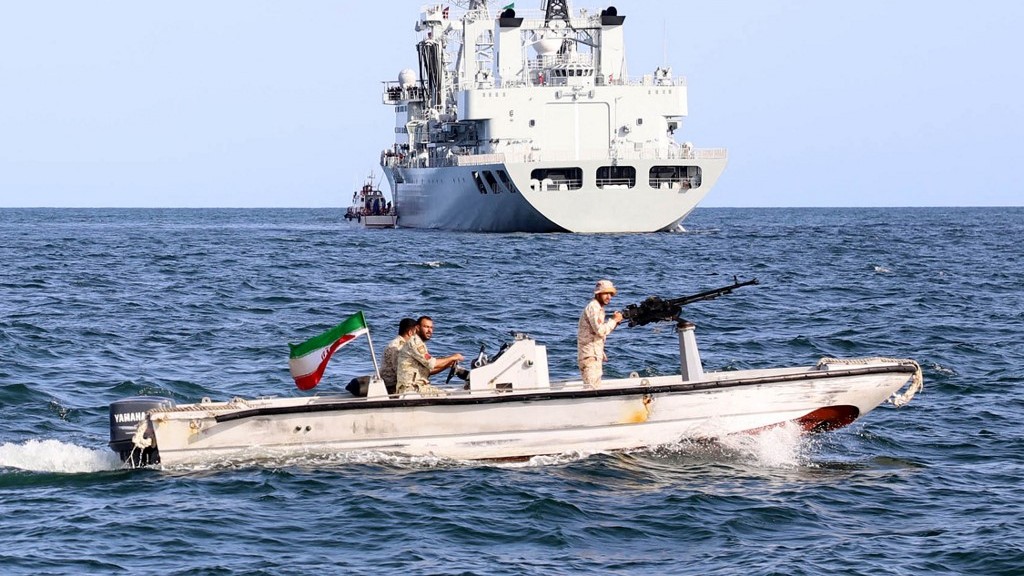
    For the second straight day, Iran has carried out coordinated missile and drone attacks across the United Arab Emirates, the Emirati Ministry of Defence confirmed in an official statement released Tuesday. According to the announcement, the country’s integrated air defense networks are actively engaging incoming threats launched directly from Iranian territory, with loud explosions echoing across multiple emirates as defensive systems intercept a mix of ballistic missiles, cruise missiles, and unmanned aerial vehicles.

    In a public advisory, the defense ministry urged UAE residents to remain calm and adhere strictly to guidance from national emergency authorities. It also issued a critical safety warning, advising the public against approaching, handling, or photographing any intercepted debris that has fallen to the ground, requesting that civilians allow specialized response teams to secure and evaluate the impacted sites.

    This second wave of attacks comes just 24 hours after the UAE formally accused Iran of an extensive first-day barrage that caused visible damage and casualties. On Monday, a strike targeting the Fujairah oil refinery ignited a large fire, leaving three Indian nationals injured. Emirati defense officials confirmed their systems successfully intercepted and neutralized a total of 12 ballistic missiles, three cruise missiles, and four drones launched by Iran during Monday’s assault.

    The Emirati Ministry of Foreign Affairs issued a harsh condemnation of the renewed attacks, describing the unprovoked strikes targeting civilian infrastructure as acts of terrorism. The statement emphasized that the UAE will not accept any violation of its national sovereignty and retains the full, legitimate right to launch a reciprocal response to the aggression.

    Tehran has not issued an official formal response to the UAE’s accusations, but a senior unnamed Iranian military source told the country’s state-run broadcaster Irib that Iran had no premeditated plans to strike the Fujairah energy facility. The source instead shifted blame for the escalating violence to what it called “U.S. military adventurism,” claiming Washington is orchestrating tensions to open a corridor for illegal ship traffic through the restricted waterways of the Strait of Hormuz.

    In the wake of Monday’s initial attacks, UAE civil aviation authorities implemented sweeping temporary restrictions on the country’s airspace, extending the regulatory changes through May 11. The updated rules limit all incoming, outgoing, and overflight traffic to a small set of approved designated routes. Authorities also announced they are tightening operational protocols for all aviation activity and have issued repeated warnings to flight crews about ongoing navigation disruptions across the country’s airspace.

    The two days of attacks mark the first major strikes on Emirati territory since a fragile bilateral ceasefire took effect on April 8. Prior to that truce, between late February and early April, Iran launched near-daily air strikes across Gulf states in response to what it said were coordinated U.S.-Israeli attacks on Iranian interests. The UAE bore the brunt of that earlier offensive: by the end of March, Iranian forces had launched 398 ballistic missiles, 1,872 drones, and 15 cruise missiles at targets across the Emirates, according to Emirati tallies.

    The renewed violence has pushed the UAE into its most severe economic crisis in decades, as the country’s economy depends heavily on four key stable sectors: international tourism, commercial and residential real estate, global logistics, and cross-border finance. Early market data shows that more than $120 billion in market capitalization has already been erased from the Dubai and Abu Dhabi stock exchanges over the past several weeks of escalating conflict. Airlines operating out of the UAE have also canceled more than 18,400 scheduled flights as airspace disruptions and traveler uncertainty cut into demand.

  • Tuareg separatists and al-Qaeda-linked fighters combine to cause havoc in Mali

    Tuareg separatists and al-Qaeda-linked fighters combine to cause havoc in Mali

    Mali’s ruling military junta is facing one of its most serious security challenges in years, as an undeclared, cross-ideology collaboration between Tuareg separatist fighters and an al-Qaeda-linked armed coalition has plunged the country’s northern regions into widespread conflict. While the long-term durability and formal status of this unusual partnership remain unconfirmed, the coordinated violence it has already spawned has exposed critical gaps in the junta’s defenses and shifted control of key strategic territory across the Sahel nation.

    The coordinated campaign of attacks launched on April 25 marked a dramatic escalation of long-running instability in northern Mali. On that day, fighters from the Tuareg separatist Azawad Liberation Front (FLA) and Jamaat Nusrat al-Islam Wal-Muslimin (JNIM), the al-Qaeda-affiliated armed coalition, launched synchronized assaults on multiple military and government targets across Malian cities. In a shocking high-profile strike, Malian Defense Minister Sadio Camara was killed in a suicide bombing at his official residence. In the days following the opening attacks, rebels have advanced, with the FLA claiming full control of the northeastern city of Kidal and the strategically critical Tessalit military base. JNIM, a coalition of disparate armed groups across Mali that aligned with al-Qaeda in 2017, has also imposed a blockade on the capital Bamako and called for a unified popular front to oust the junta and pave the way for what it describes as a peaceful, inclusive political transition.

    A senior anonymous Malian government official, speaking to Middle East Eye, described the assaults as sudden, meticulously planned, and deliberately targeted at the heart of the state’s command structure, hitting sensitive sites including military installations and the capital’s airport. The coordinated timing and speed of the offensive, the official added, revealed major failures in defensive coordination between government and allied forces. While the junta, which seized power via back-to-back coups in 2020 and 2021, has publicly claimed the overall security situation remains under control, and that the Russia-backed Malian military retook most captured positions within hours of the initial attacks, on-the-ground accounts from northern Mali tell a far different story.

    Ahmed, a Timbuktu resident who has family and community ties to the Azawad separatist movement, confirmed that clashes continue to flare across wide swathes of the north. He told reporters that multiple fighters from Russia’s Africa Corps paramilitary force, the main foreign backer of the Malian junta, have been captured by FLA fighters. “Kidal, Gao and surrounding areas are witnessing intermittent fighting, with some locations effectively under siege,” Ahmed explained.

    Tuareg separatist sentiment has deep roots in northern Mali, stretching back more than a century, with repeated uprisings against central state rule breaking out since French colonial forces withdrew from the country in 1960. The most transformative of these uprisings came in 2012, when the secular separatist National Movement for the Liberation of Azawad (MNLA) formed an uneasy alliance with the hardline Islamist Tuareg group Ansar Dine to seize control of the entire northern region. The seizure of the north triggered a coup in Bamako, and while the separatists declared an independent state of Azawad, infighting between the secular and Islamist factions, followed by French and United Nations military intervention, defeated the rebellion. Many fighters remained active in remote border regions, however. Ansar Dine eventually became a core founding member of JNIM, while the FLA was established earlier this year through a merger of the MNLA’s remaining factions and other smaller Tuareg separatist groups.

    For years after the 2012 collapse of their alliance, FLA predecessor groups avoided close ties to JNIM, rooted in deep ideological divisions over the coalition’s hardline interpretation of Islamic law. But faced with a shared enemy in the Mali junta, the two groups have set those differences aside to launch coordinated operations. Sahel political analyst Jibrin Issa described the new partnership as “a marriage of necessity from Azawad’s perspective, and an operational arrangement from al-Qaeda’s perspective.” The core strategic goal, he explained, is to stretch Malian government defenses thin by opening simultaneous multiple fronts: separatist fighters tie down army units in the north, while JNIM pushes south to encircle the capital.

    Paris-based Malian journalist Hamdi Jowara echoed this analysis, framing the alignment as a temporary tactical partnership rather than a permanent merger: “It’s a temporary alignment driven by the presence of a strong common enemy that neither side can defeat alone.” Coordination, he added, “is reflected more in a division of roles across fronts than in any formal organisational integration.” This on-the-ground understanding was confirmed by Ahmed, who noted that the two groups maintain an unwritten agreement to avoid conflict with one another, coordinate attack timelines, and respect de facto spheres of influence. “We are not fighting each other… our enemy is the same,” Ahmed said of the relationship between FLA and JNIM.

    The northern city of Kidal, a Tuareg-majority hub located roughly 1,500 kilometers northeast of Bamako, has emerged as the epicenter of the current offensive. While the FLA claims it holds full control of Kidal, JNIM asserts it jointly controls the city alongside separatist forces. Sharif Ag Akli, an FLA fighter based in Kidal, told reporters: “The city has been under our control since the start of the fighting. We returned to our city and want to live freely. We are not terrorists, we are demanding our legitimate rights.” Footage shared by Ag Akli shows largely calm, quiet streets in the city following the offensive.

    Local and official accounts confirm the capture of Kidal came via a large-scale, dual-front surprise offensive that overwhelmed outnumbered government forces. The Malian government official estimated that more than 2,000 combined rebel and jihadist fighters participated in the assault, forcing government troops and their allies to retreat to reposition in other northern outposts. JNIM forces are now active across large areas of central and western Mali, while junta and Africa Corps forces retain control of most of southern Mali and the capital, despite frequent small-scale attacks.

    Ahmed noted that the presence of Russian paramilitary support has changed the dynamic of fighting compared to past uprisings. “In previous confrontations, the Malian army would withdraw, but the situation has changed due to the support of the African Corps,” he said, adding that fighting has become “more intense and organised” as a result.

    Mali’s shift toward Russia followed the 2021 coup that brought President Assimi Goita to power, when the junta severed long-standing security ties with former colonial power France and aligned closely with Moscow. Initially, the Kremlin deployed fighters from the Wagner Group paramilitary network to prop up Goita’s government. Following the 2023 Wagner mutiny and the effective collapse of the original group, Moscow reorganized its deployed fighters into a formalized paramilitary unit called Africa Corps. Kremlin spokespeople have repeatedly reaffirmed Russia’s commitment to combating terrorism in Mali, and the Malian government official described Russia’s role as “central at both the military and logistical levels,” though he added that expanding offensive operations across multiple fronts remains a major challenge. Turkey also supports the Malian military with unmanned aerial vehicles and tactical training, the official confirmed.

    While the tactical alignment has delivered early gains for the FLA, analysts warn the partnership carries major long-term risks for the separatist movement’s goal of an independent Azawad. Issa noted that any formal or sustained alignment with a UN-designated terrorist organization linked to al-Qaeda will close off diplomatic pathways and cut off potential international mediation. “It could close the door to mediation and complicate the regional landscape,” Issa said, as major international institutions and Western and regional governments are unlikely to engage with a separatist movement openly tied to al-Qaeda.

    The Goita junta has already made unsubstantiated claims that the offensive was stoked and supported by anti-Malian powers including France and Ukraine. But the most damaging revelation for the junta may come from within its own ranks: last week, a military tribunal prosecutor announced that preliminary investigations have found “serious evidence” implicating current active-duty Malian soldiers, retired officers, and even potential political figures in plotting and coordinating the April 25 attacks. Issa noted that the scale and coordination of the offensive make internal infiltration highly likely.

    While Jowara claims the government is gradually stabilizing the situation and has a formal response plan in place, he predicts further military escalation in the coming weeks. Issa warned that sustained coordination between the FLA and JNIM could extend the conflict and make a political resolution even more elusive. For civilians across northern Mali, however, the reality of the conflict is already a daily reality. “People have been living with war for years… families flee deep into the desert, and the men return to fight,” Ahmed said. “Daily life is now tied to the rhythm of the fighting.”

  • Sudan’s Burhan confronts UAE and Ethiopia over Khartoum airport drone strikes

    Sudan’s Burhan confronts UAE and Ethiopia over Khartoum airport drone strikes

    On Monday, five drone attacks targeted Khartoum International Airport, throwing an already volatile region into deeper crisis and pushing already fraught relations between Sudan and its eastern neighbor Ethiopia toward the brink of open confrontation. The incident has also dragged the United Arab Emirates into a fresh wave of mutual accusations, as Sudan’s top military leadership says its forces stand ready to defend national sovereignty against cross-border aggression.

    Sudan’s army chief, General Abdel Fattah al-Burhan, confirmed in an interview with Middle East Eye that his command is prepared to safeguard the country’s territorial integrity. If ongoing investigations confirm the drones originated from Ethiopian territory, Burhan noted the Sudanese military will take all appropriate defensive measures in coordination with the international community.

    A senior Sudanese intelligence source disclosed to MEE that the Sudanese Armed Forces (SAF) and its Joint Forces partners have begun preparations for a heavy military deployment to Blue Nile State, which shares a long border with Ethiopia, as well as to al-Fashaga, a long-disputed border region between the two nations. The source added that both Sudan’s military and civilian leadership anticipate a rise in cross-border attacks amid rapidly deteriorating bilateral ties, with the risk of full-scale military confrontation growing by the day.

    This latest escalation follows an exclusive MEE report last month that revealed the Ethiopian military maintains an operational base in Asosa, located in the country’s Benishangul-Gumuz region, that is used to support the Rapid Support Forces (RSF). The RSF has been locked in a brutal civil war with the SAF since April 2023, and the paramilitary group is openly backed by the UAE, a key diplomatic and military ally of Ethiopia. After that report was published, Sudanese officials say Ethiopia refused to respond directly to repeated requests for clarification on the base’s use, and Ethiopian Prime Minister Abiy Ahmed has still not agreed to a meeting with Burhan to de-escalate tensions.

    Following Monday’s attacks, Sudan’s government, military and intelligence officials directly accuse both Ethiopia and the UAE of complicity in the RSF drone strikes. The attacks were carried out by modified CH-series kamikaze drones originating from China, which have been altered to carry up to four missiles and are designed for silent flight. According to Sudanese officials, all five drones were launched from Ethiopia’s Bahir Dar airport. One of the incoming drones was intercepted by Sudanese air defenses before it could reach its target, crashing into a residential home in an eastern Khartoum neighborhood.

    During a midnight joint press conference in Khartoum, SAF spokesperson Brigadier General Asim Awad Abdelwahab and Sudanese Foreign Minister Mohieddin Salem went public with their accusations, stating the country holds solid, concrete evidence of foreign involvement. “We have strong and hard evidence proving the involvement of Ethiopia and UAE in this aggression against Sudan, which represents a violation of our sovereignty and of international laws,” Awad told reporters. He added that Sudanese air defense units have intercepted drones launched from Ethiopian territory on multiple occasions since the start of March. On March 1 alone, three drones launched from Bahir Dar struck targets across White Nile, Blue Nile, and both North and South Kordofan states. After a March 17 attack, Awad said military investigators confirmed drone serial number S-88 was owned by the UAE and transferred from Bahir Dar to carry out the strike. He also tied Ethiopia and the UAE to recent RSF drone attacks on Kurmuk in Blue Nile State and el-Obeid in North Kordofan.

    Foreign Minister Salem emphasized that cross-border violations from Ethiopia and the UAE have become a repeated pattern, and said Sudan will pursue formal international complaints against both countries. “Ethiopia and the UAE have repeatedly practised these violations against Sudan, and we have the right to react – and they know that when we say it, we mean it,” Salem stated.

    In response, Ethiopia’s foreign ministry issued an official statement rejecting the accusations as unfounded. The statement added that Ethiopia has shown significant restraint over past months, choosing not to publicize what it calls repeated violations of Ethiopian territorial integrity and national security by belligerent parties in Sudan’s civil war. The Ethiopian government further accused the SAF of arming, funding, and hosting Tigrayan rebel forces, a claim Sudan has not publicly addressed. The UAE has also consistently denied any involvement in Sudan’s ongoing internal conflict.

    A senior official with Sudan’s Civil Aviation Authority told MEE that all incoming and outgoing flights at Khartoum Airport have been suspended indefinitely as a security precaution. The official added that the attacks caused only minor structural damage that could be repaired quickly, but the strike was intentionally timed to disrupt the planned resumption of direct international flights from Khartoum, scheduled to launch May 4 to multiple neighboring countries. Prior to the attacks, the airport had only operated limited local flights, with all international services routed through Port Sudan’s airport.

    Additional sources and eyewitnesses confirmed that Monday’s attacks were not limited to Khartoum Airport. Multiple military air bases across the region were also targeted, though SAF ground defenses successfully repelled all other attempted strikes. Separate military sources confirmed that radar and monitoring systems helped intercept a planned strategic drone attack in Blue Nile State near the Ethiopian border, as well as another strike targeting Jabal Awliya, a city south of Khartoum.

    Satellite imagery collected between February 26 and May 4 by Yale University’s Humanitarian Research Lab has already confirmed damage consistent with aerial bombardment at a key fuel depot in Kenana, White Nile State, matching recent strike claims from Sudanese military officials.

    Civilians across Khartoum and its neighboring twin city of Omdurman described being woken early Monday morning by the sound of massive explosions. “We woke up in the morning with the sounds of the bombs and the ground defence forces coming from around Wadi Seidna military airport in Omdurman,” one local resident told MEE in a phone interview. Another eyewitness, who lives just meters east of Khartoum Airport on Obaid Khatim Street, said, “I heard the bombs and saw the smoke coming from the airport at 12pm on Monday.”

    The strikes have sparked widespread panic and unfounded rumors among civilian populations, particularly for the thousands of displaced residents who have only recently returned to their homes in Khartoum as frontlines stabilized in recent weeks. “This has caused panic and spread of rumours among civilians, especially the thousands of people who have recently come back to their homes in Khartoum,” one recently returned civilian told MEE. A Khartoum native who lives just west of the airport added, “I think these attempts are aimed at creating panic among the people and spoiling the attempts of voluntarily returning people to their homes. So, we urge the Rapid Support Forces and those who are supporting it not to attack these civilian locations and complicate the life of the civilians. We also demand that the SAF works seriously on the protection of civilians.”

    Two employees at major telecommunications companies operating in Sudan confirmed to MEE that their firms have evacuated all non-essential staff from Khartoum to the safer city of Atbara in River Nile State, including staff from regional giants MTN and Zain.

    As of Tuesday, daily life across most of Khartoum and Omdurman has continued largely as normal, but residents and officials warn that the recent strikes threaten to derail the ongoing government and grassroots initiative to encourage displaced civilians to return to their homes in the capital.

  • Tunisia: Ghriba Jewish pilgrimage sees increased turnout after years of restrictions

    Tunisia: Ghriba Jewish pilgrimage sees increased turnout after years of restrictions

    After years of tightly restricted access driven by repeated security threats, the annual pilgrimage to Tunisia’s iconic Ghriba Synagogue — one of the oldest active Jewish sites on the African continent — is witnessing a notable revival in 2025, with rising international participation and boosted security protections from Tunisian authorities.

    The centuries-old pilgrimage, held each spring on Tunisia’s Djerba Island, was for decades a major global Jewish gathering, drawing thousands of worshippers and visitors from across Europe, North America and beyond. But the event was gutted by scaled-down operations following a devastating attack on the synagogue complex in May 2023, which left six people dead including two visiting pilgrims and three Tunisian security officers.

    That attack, carried out by off-duty National Guard officer Wissam Khazri, unfolded on the final day of the 2023 pilgrimage. Khazri first killed a fellow officer, seized the officer’s ammunition, and opened fire on worshippers and security personnel at the site before being fatally shot by responding security forces. Nine additional people were injured in the violence. The attack was the deadliest incident targeting the synagogue since a 2002 suicide truck bombing that killed 21 people at the same location.

    In the two years after the 2023 attack, attendance was drastically limited to address ongoing safety concerns. In 2024, public processions were canceled entirely, with events restricted to small-scale prayer services and candle lighting. Just 50 pilgrims participated that year, a drop from the roughly 7,000 attendees that took part in the 2023 gathering before the attack occurred. That low turnout also came on the heels of a separate anti-Jewish attack just one week before the 2024 event, when a Jewish jeweller was stabbed in his Djerba shop by an assailant wielding a butcher knife.

    The trial of individuals accused of aiding Khazri concluded in February 2025, with all convicted accomplices receiving prison sentences ranging from one to 15 years. The legal proceedings remain controversial, however: both defense attorneys representing the defendants and lawyers for civil parties harmed in the attack have publicly condemned the investigation as deeply flawed, while Tunisian government officials have never formally labeled the 2023 attack as an antisemitic act.

    This year, authorities have taken a new approach, permitting organized international pilgrimage groups to travel to Djerba while rolling out sweeping enhanced security measures across the island and around the synagogue. Rene Trabelsi, former Tunisian Tourism Minister and one of the lead organizers of the pilgrimage, told Agence France-Presse that a clear rebound in turnout is already underway this year. “This year, there has been a marked return of pilgrims to the island. We estimate that around 200 have come from abroad,” Trabelsi said. He added that confidence in the event is slowly recovering, noting that organizers are grateful for the extensive security infrastructure the Tunisian state has deployed to protect attendees.

    Constructed as early as the 6th century BCE, Ghriba Synagogue holds the distinction of being the oldest active synagogue in Africa, and it is widely viewed as a landmark symbol of Tunisia’s long history of religious and cultural diversity. Today, roughly 1,500 Jewish residents remain in Tunisia, with the majority residing on Djerba Island. That number is a sharp decline from the estimated 100,000 Jews who lived in the country before it gained independence from France in 1956, when large numbers of Jewish residents emigrated to Israel and France in the decades following independence.

  • Israeli officers ‘threaten Gaza flotilla activists with death’ during interrogations

    Israeli officers ‘threaten Gaza flotilla activists with death’ during interrogations

    The detention of two humanitarian activists by Israeli forces in international waters has sparked international outcry, as legal representatives reveal the pair have been subjected to routine psychological abuse, poor detention conditions and explicit threats of death or decades-long imprisonment. The two men — Thiago Avila, a Brazilian national, and Saif Abu Keshek, a Spanish-Swedish citizen of Palestinian descent — were seized last Wednesday when Israeli naval forces intercepted the Global Sumud Flotilla, a civilian convoy carrying humanitarian aid to the blockaded Gaza Strip, approximately 600 nautical miles off Gaza’s coast near the Greek island of Crete.

    In total, Israeli forces intercepted at least 21 vessels during the raid, detaining 175 activists across the convoy. Flotilla organizers have labeled the interception, which took place far outside Israel’s recognized territorial boundaries, as an unambiguous act of piracy on the high seas.

    Adalah, the Israeli legal center representing Avila and Abu Keshek, released a detailed statement on Monday outlining the abusive conditions the two men have endured since their capture. Both have been held in solitary confinement for more than a week, held in cells kept at extremely low temperatures and illuminated by constant bright lighting — a well-documented coercive tactic used to induce sleep deprivation and psychological disorientation. Whenever the pair are removed from their cells, even for scheduled medical check-ups, they are forced to wear blindfolds, a practice Adalah says constitutes a severe violation of international medical ethics.

    Avila has been subjected to repeated interrogations lasting as long as eight hours at a time, during which interrogators allegedly threatened that he and Abu Keshek would either be killed or locked away for a century. Both men deny the multiple serious charges filed against them, which include assisting an enemy during wartime, maintaining contact with a foreign agent, membership in a designated terrorist organization, providing services to that group, and transferring funds to the organization.

    In protest against their unlawful seizure and abusive detention conditions, Avila and Abu Keshek have entered their sixth day of a hunger strike. Last Tuesday, an Ashkelon District Court extended their pre-trial detention until Sunday. Legal team members Hadeel Abu Salih and Lubna Tuma argued in court that the entire case is fundamentally flawed and illegal, emphasizing that Israel has no legal jurisdiction to apply its domestic law to foreign nationals seized in international waters far from its own territory.

    The interception has already drawn formal condemnation from the activists’ home countries. On Friday, the governments of Spain and Brazil released a joint statement declaring the detention of Avila and Abu Keshek to be illegal under international law.

  • ‘We need people to come back’: Dubai’s tourism industry reels as foreigners flee

    ‘We need people to come back’: Dubai’s tourism industry reels as foreigners flee

    For more than a decade, Dubai has reigned as one of the world’s most iconic global tourism and business hubs, drawing millions of international visitors, transiting passengers and foreign investors drawn to its reputation as a stable, conflict-free oasis in the Middle East. But today, that standing is facing an unprecedented threat, sparked by escalating regional conflict between the U.S., Israel and Iran that has sent tourism numbers plummeting, triggered widespread hotel shutdowns and mass job losses across the emirate’s critical hospitality sector.

    New data released by Dubai Airports this week underscores the severity of the downturn. First-quarter 2026 passenger traffic fell by a minimum of 2.5 million compared to the same period in 2025, with March alone seeing a staggering 66% drop in arrivals as international travelers deliberately avoid the Gulf amid rising security fears. The sharp decline comes in the wake of Iran’s retaliatory drone and missile strikes against Gulf Cooperation Council (GCC) states that host or cooperate closely with U.S. military forces, a escalation that followed months of rising tensions across the region.

    In a urgent bid to reverse the collapse in visitor numbers, UAE authorities announced Saturday that all air travel restrictions imposed after Iran’s strikes have been fully lifted. The country’s Civil Aviation Authority confirmed the decision in an official post on its X account, noting the move followed a full review of operational and security conditions conducted in coordination with local security agencies. The policy shift is widely interpreted as a deliberate signal to reassure jittery international travelers, particularly after multiple major European carriers announced temporary suspensions of all flights to the Middle East over safety and insurance concerns.

    Despite the government’s confidence-building move, hospitality workers, business owners and long-term residents who spoke to Middle East Eye – all speaking on condition of anonymity due to GCC-wide restrictions on public discussion of the impact of Iran’s actions – caution it will take time to rebuild trust among both travelers and foreign investors.

    Charity, a Kenyan employee at a mid-range Dubai hotel operated by a U.S.-based chain, described the immediate fallout of the escalation, which coincided with the Muslim holy month of Ramadan, when tensions were at their highest. During the peak of the strikes, the hotel was filled not with leisure tourists, but with stranded airline passengers waiting to rebook with Emirates, who gathered in the lobby to meet with airline representatives. As a security precaution, the property closed its popular pool and relocated all guests from the 20-story building’s upper floors to lower levels by the end of the month. In the weeks that followed, she said, business slowed to a near standstill.

    Charity says she holds out hope that the lifting of travel restrictions will reassure visitors to return, but is waiting to see tangible recovery in the coming weeks. “We’ll see over the next week if people really start to come back,” she said during a recent shift assisting a long-time American guest. “We need your people [foreign tourists] to come back.”

    The dramatic slump in traffic is immediately visible even to frequent travelers at Dubai International, which has held the title of the world’s busiest airport for international passenger traffic for 12 straight years. Samina, a South Asian NGO worker who regularly travels between South Asia, the Gulf and North America, said the emptiness of the airport’s terminals is striking compared to just two months ago.

    “Coming in, it’s empty,” she said of Terminal 3, Emirates’ main hub. “Terminal 1 and 2 are ghost towns,” she added, referring to the terminals that house other international carriers and UAE-based budget airline FlyDubai. As of the latest update from Dubai Airports, only 51 of the 90 airlines that normally operate out of the airport have resumed regular services. European and U.S. carriers have faced particular barriers to returning, as many struggle to secure affordable insurance coverage for operations in the region amid official government travel advisories warning against non-essential travel.

    To shore up morale among residents and project an image of stability, Dubai’s local government has launched a public outreach campaign across the emirate. UAE flags are displayed prominently outside homes, commercial buildings, and on digital billboards along major highways. At the popular City Walk shopping mall, large electronic screens display messages thanking UAE residents in both Arabic and English. Portraits of UAE President Mohamed bin Zayed Al Nahyan line major arterial roads, paired with the message: “May our nation remain in God’s protection,” while other displays feature Emirati families saluting the national flag with the same wording.

    Even with these public efforts, the economic impact of the regional tensions has been felt almost immediately across nearly all sectors, business owners say. Tatiana, a Russian entrepreneur who runs a logistics and consulting firm helping foreign businesses set up operations in the Gulf, said she was shocked by how rapidly investor and resident confidence collapsed. “Within the first two weeks people [said] it’s no longer worth [living here]. They weren’t scared per se, they just felt like it’s no longer worth it,” she explained. Many businesses moved quickly to liquidate their assets, and Tatiana said her own family is now exploring relocation options in Europe to shift their operations gradually.

    The ripple effects of the downturn have even reached industries not immediately associated with tourism and international travel. Antoine, an editor who trains new writers, shared that one of his clients, an employee at a local advertising agency, was tasked with laying off 1,000 workers in the UAE following widespread business liquidations. “You’d think advertising would be a war-proof industry,” he noted, expressing surprise at how quickly the sector was impacted.

    For Tatiana, the damage strikes at the core of what makes Dubai’s business ecosystem work: “Our whole business is predicated on assuring people that the UAE is a safe, convenient place to do business,” she said. That sentiment is echoed by Arjun, one of the 3.5 to 4.3 million Indian expatriates who call the UAE home, who spoke after attending a late-night screening of the Michael Jackson biopic in Dubai. Arjun noted he was encouraged to see the theater nearly full, holding out hope it could signal a gradual return to normalcy – but acknowledged the damage to Dubai’s core brand has already been done. “The entire ethos of Dubai as this place free from conflict was shaken,” he said.