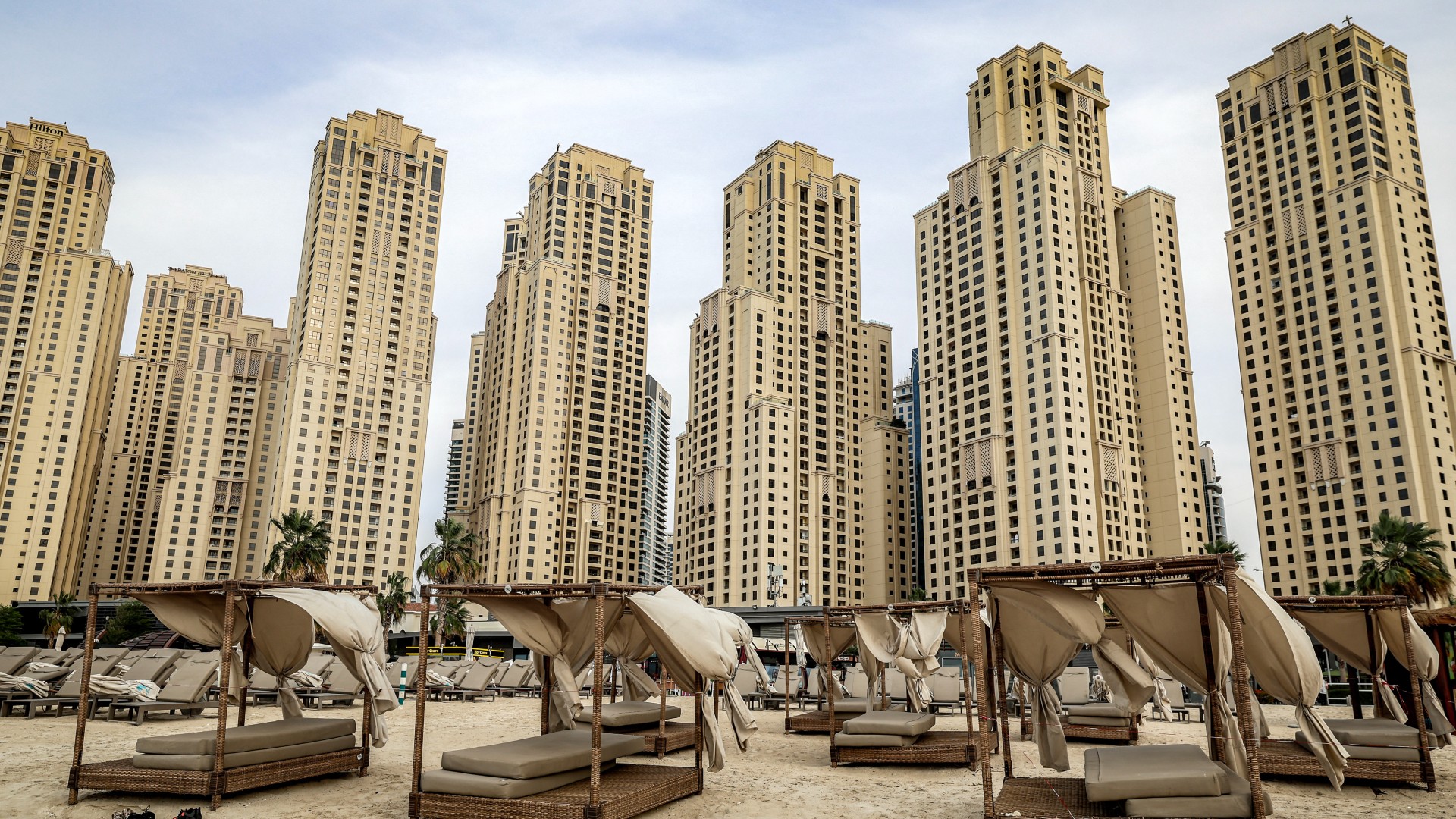
For more than a decade, Dubai has reigned as one of the world’s most iconic global tourism and business hubs, drawing millions of international visitors, transiting passengers and foreign investors drawn to its reputation as a stable, conflict-free oasis in the Middle East. But today, that standing is facing an unprecedented threat, sparked by escalating regional conflict between the U.S., Israel and Iran that has sent tourism numbers plummeting, triggered widespread hotel shutdowns and mass job losses across the emirate’s critical hospitality sector.
New data released by Dubai Airports this week underscores the severity of the downturn. First-quarter 2026 passenger traffic fell by a minimum of 2.5 million compared to the same period in 2025, with March alone seeing a staggering 66% drop in arrivals as international travelers deliberately avoid the Gulf amid rising security fears. The sharp decline comes in the wake of Iran’s retaliatory drone and missile strikes against Gulf Cooperation Council (GCC) states that host or cooperate closely with U.S. military forces, a escalation that followed months of rising tensions across the region.
In a urgent bid to reverse the collapse in visitor numbers, UAE authorities announced Saturday that all air travel restrictions imposed after Iran’s strikes have been fully lifted. The country’s Civil Aviation Authority confirmed the decision in an official post on its X account, noting the move followed a full review of operational and security conditions conducted in coordination with local security agencies. The policy shift is widely interpreted as a deliberate signal to reassure jittery international travelers, particularly after multiple major European carriers announced temporary suspensions of all flights to the Middle East over safety and insurance concerns.
Despite the government’s confidence-building move, hospitality workers, business owners and long-term residents who spoke to Middle East Eye – all speaking on condition of anonymity due to GCC-wide restrictions on public discussion of the impact of Iran’s actions – caution it will take time to rebuild trust among both travelers and foreign investors.
Charity, a Kenyan employee at a mid-range Dubai hotel operated by a U.S.-based chain, described the immediate fallout of the escalation, which coincided with the Muslim holy month of Ramadan, when tensions were at their highest. During the peak of the strikes, the hotel was filled not with leisure tourists, but with stranded airline passengers waiting to rebook with Emirates, who gathered in the lobby to meet with airline representatives. As a security precaution, the property closed its popular pool and relocated all guests from the 20-story building’s upper floors to lower levels by the end of the month. In the weeks that followed, she said, business slowed to a near standstill.
Charity says she holds out hope that the lifting of travel restrictions will reassure visitors to return, but is waiting to see tangible recovery in the coming weeks. “We’ll see over the next week if people really start to come back,” she said during a recent shift assisting a long-time American guest. “We need your people [foreign tourists] to come back.”
The dramatic slump in traffic is immediately visible even to frequent travelers at Dubai International, which has held the title of the world’s busiest airport for international passenger traffic for 12 straight years. Samina, a South Asian NGO worker who regularly travels between South Asia, the Gulf and North America, said the emptiness of the airport’s terminals is striking compared to just two months ago.
“Coming in, it’s empty,” she said of Terminal 3, Emirates’ main hub. “Terminal 1 and 2 are ghost towns,” she added, referring to the terminals that house other international carriers and UAE-based budget airline FlyDubai. As of the latest update from Dubai Airports, only 51 of the 90 airlines that normally operate out of the airport have resumed regular services. European and U.S. carriers have faced particular barriers to returning, as many struggle to secure affordable insurance coverage for operations in the region amid official government travel advisories warning against non-essential travel.
To shore up morale among residents and project an image of stability, Dubai’s local government has launched a public outreach campaign across the emirate. UAE flags are displayed prominently outside homes, commercial buildings, and on digital billboards along major highways. At the popular City Walk shopping mall, large electronic screens display messages thanking UAE residents in both Arabic and English. Portraits of UAE President Mohamed bin Zayed Al Nahyan line major arterial roads, paired with the message: “May our nation remain in God’s protection,” while other displays feature Emirati families saluting the national flag with the same wording.
Even with these public efforts, the economic impact of the regional tensions has been felt almost immediately across nearly all sectors, business owners say. Tatiana, a Russian entrepreneur who runs a logistics and consulting firm helping foreign businesses set up operations in the Gulf, said she was shocked by how rapidly investor and resident confidence collapsed. “Within the first two weeks people [said] it’s no longer worth [living here]. They weren’t scared per se, they just felt like it’s no longer worth it,” she explained. Many businesses moved quickly to liquidate their assets, and Tatiana said her own family is now exploring relocation options in Europe to shift their operations gradually.
The ripple effects of the downturn have even reached industries not immediately associated with tourism and international travel. Antoine, an editor who trains new writers, shared that one of his clients, an employee at a local advertising agency, was tasked with laying off 1,000 workers in the UAE following widespread business liquidations. “You’d think advertising would be a war-proof industry,” he noted, expressing surprise at how quickly the sector was impacted.
For Tatiana, the damage strikes at the core of what makes Dubai’s business ecosystem work: “Our whole business is predicated on assuring people that the UAE is a safe, convenient place to do business,” she said. That sentiment is echoed by Arjun, one of the 3.5 to 4.3 million Indian expatriates who call the UAE home, who spoke after attending a late-night screening of the Michael Jackson biopic in Dubai. Arjun noted he was encouraged to see the theater nearly full, holding out hope it could signal a gradual return to normalcy – but acknowledged the damage to Dubai’s core brand has already been done. “The entire ethos of Dubai as this place free from conflict was shaken,” he said.