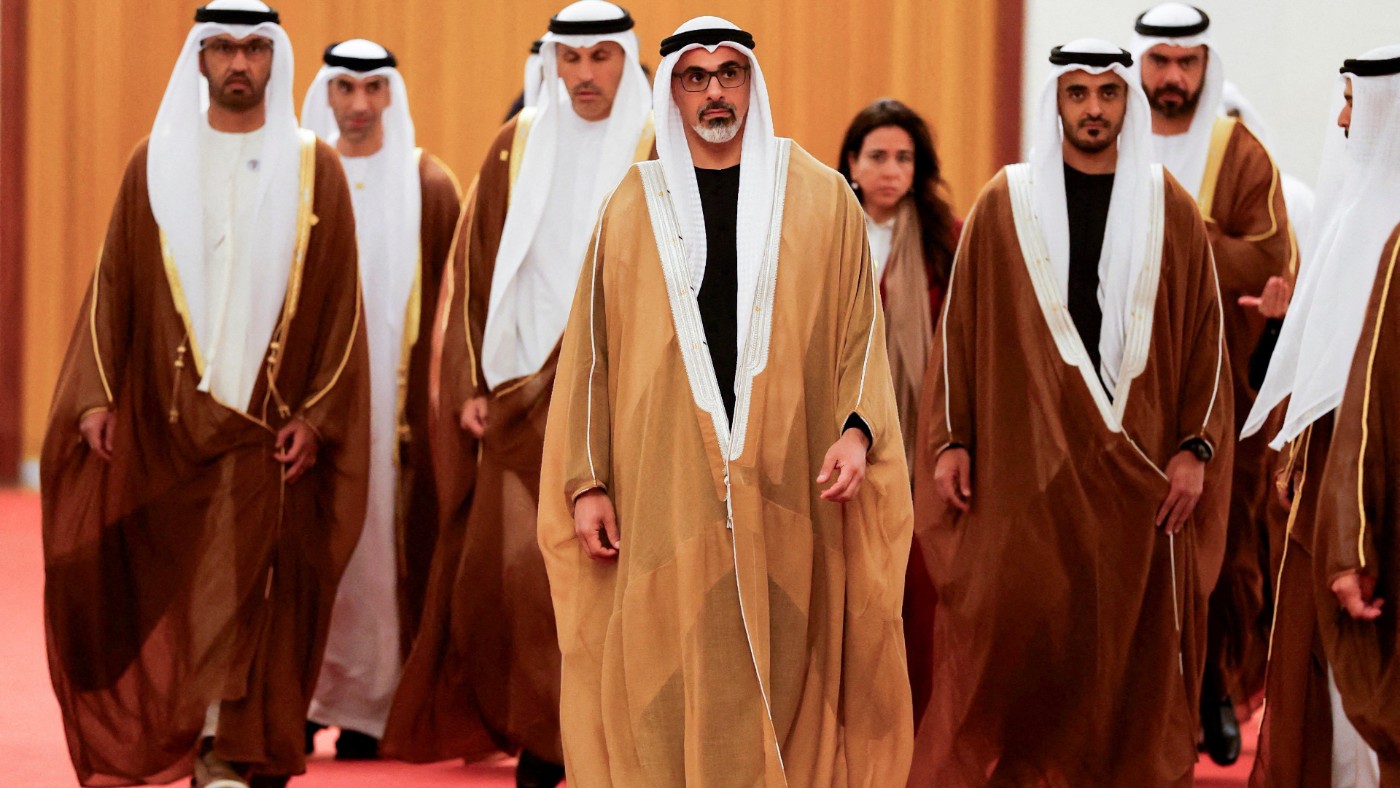
A new joint investigation by independent climate and energy investigative outlet DeSmog, alongside European news partners El Diario and G4Media, has uncovered that the ruling royal family of the United Arab Emirates, the Al-Nahyan family, has collected more than €71 million ($84 million) in European Union agricultural subsidies over the past six years for farmland holdings across Romania, Italy and Spain. The investigation, which analyzed six years of Common Agricultural Policy (CAP) beneficiary data between 2019 and 2024, traced 110 separate subsidy payments to a complex network of companies and subsidiaries controlled directly by the Al-Nahyan family and Abu Dhabi’s flagship sovereign holding firm ADQ.
The Al-Nahyan family ranks as the second wealthiest royal family in the world, with a combined estimated net worth exceeding $320 billion, built almost entirely on the UAE’s massive untapped oil and natural gas reserves. The CAP, the EU’s flagship agricultural support program, distributes roughly $64 billion in annual payments to support European farmers and rural development, accounting for nearly one-third of the EU’s entire total annual budget. Industry analysts have long raised concerns that large shares of these public funds end up in the hands of wealthy foreign investors rather than small, local European agricultural operations, a finding this new investigation reinforces.
The single largest subsidy haul uncovered by the investigation went to Romanian agribusiness firm Agricost, which operates the largest contiguous individual farm in the European Union, spanning 57,000 hectares — an area five times larger than the city of Paris. DeSmog’s analysis confirms that the vast imbalance in CAP distribution heavily favors large landowners: in 2024 alone, Agricost received more than $10 million in direct CAP payments, a sum more than 1,600 times higher than the average annual subsidy collected by a typical small EU farm.
Over the past 15 years, the UAE has accelerated a global campaign of agricultural land acquisition, purchasing hundreds of thousands of hectares of fertile farmland across Africa, South America and Europe. Today, the UAE controls roughly 960,000 hectares of agricultural land worldwide, a push driven by the country’s urgent domestic food security needs. The Gulf nation’s harsh climate, characterized by extreme high temperatures, widespread chronic water scarcity, and nutrient-poor sandy soils, makes large-scale domestic crop production nearly unfeasible, leaving the country dependent on imports for as much as 90 percent of its total food supply.
This global land grab has also sparked geopolitical controversy, with many analysts linking the UAE’s push for agricultural resources to its controversial involvement in the ongoing Sudan conflict, where Abu Dhabi backs the Rapid Support Forces (RSF) paramilitary group that has been widely accused of perpetrating genocide against civilian populations. The UAE already holds extensive agricultural holdings in Sudan: UAE’s largest listed firm International Holding Company (IHC) and Jenaan Investment operate more than 50,000 hectares of farmland in the country, while the massive Abu Hamad agricultural project, a joint venture between IHC and Sudan’s largest private firm Dal Group, controls an additional 162,000 hectares of cultivated land. The project is paired with a newly built Red Sea shipping terminal, Abu Amama Port, constructed and operated by Abu Dhabi-based AD Ports Group to facilitate export of Sudanese agricultural produce.
Within the EU, the Al-Nahyan family’s agricultural expansion is structured through three core holding companies based in Spain, Italy and Romania. Agricost, the giant Romanian farm operation, was acquired by leading UAE agribusiness group Al Dahra in 2018 for an estimated €230 million ($270 million). Al Dahra was originally founded by Hamdan bin Zayed Al Nahyan, brother of UAE President Mohammed bin Zayed Al Nahyan, before ADQ purchased a 50 percent stake in the firm in 2020. While full public details of Al Dahra’s current ownership structure are not available, DeSmog confirms the firm remains closely linked to members of the Al-Nahyan family: its board is chaired by Hamdan bin Zayed Al Nahyan, with his son Zayed bin Hamdan Al Nahyan — who is married to President Mohammed bin Zayed Al Nahyan’s daughter — also holding a key leadership role.
DeSmog’s investigation also found that Al Dahra has acquired multiple agricultural operations across Spain since 2012, controlling more than 8,000 hectares of Spanish farmland that collected more than €5 million in CAP subsidies between 2015 and 2024. Both the Spanish and Romanian farm operations grow alfalfa and other animal feed crops, with the vast majority of produce destined for export, including shipment to the Gulf. Al Dahra holds a long-term government contract to supply animal feed to the UAE, which supports the country’s fast-growing domestic dairy sector. In 2022, ADQ also acquired major global fruit producer Unifrutti for an estimated $830 million. DeSmog’s analysis found that Unifrutti’s Italian farm holdings received at least €186,000 in CAP subsidies in the three years following the acquisition.
Neither the Al-Nahyan family nor any of the companies named in the investigation responded to multiple requests for comment from DeSmog, with ADQ formally declining to issue a statement.