A day of rapidly shifting developments across the Middle East on Friday left regional security hanging in the balance, with armed clashes between U.S. and Iranian forces, cross-border attacks between Hezbollah and Israel, and diplomatic friction roiling already fragile relations between key global and regional players.
The first major development broke when U.S. Central Command announced via a social media post on X, accompanied by footage of the operation, that American military forces had fired on and disabled two Iranian-flagged oil tankers that it said attempted to breach a U.S.-led maritime blockade imposed on Iranian ports since April 13. The attack, carried out by a U.S. Navy F/A-18 Super Hornet, used precision munitions targeted at the vessels’ smokestacks to stop them from entering Iranian territorial waters. This operation marks the fourth time the U.S. has forcibly stopped ships it accuses of violating the blockade, following the seizure of the Iran-flagged tanker Herby by the U.S. destroyer USS Rafael Peralta just 11 days earlier.
Iranian state media quickly pushed back on the U.S. account, confirming fresh armed confrontations in the strategic Strait of Hormuz. Fars News Agency reported that sporadic clashes between Iranian armed forces and U.S. naval vessels had been ongoing for more than an hour on Friday, following a major flare-up overnight Thursday. An unnamed Iranian official added that overnight U.S. strikes on shipping near the strait hit an Iranian cargo vessel, leaving five crew members missing and 10 others wounded.
Diplomatically, the U.S. remained on standby Friday for Iran’s response to a latest U.S.-proposed peace deal, a development that comes after both sides traded blame for the overnight clash that sent global markets into turbulence and renewed widespread fears that the region could slide back into full-scale open conflict. U.S. Secretary of State Marco Rubio reaffirmed Washington’s hardline position ahead of Iran’s expected response, stressing that Iran has no right to claim control over the Strait of Hormuz, a critical global chokepoint for 20% of the world’s daily oil trade. “Iran now claims that they own, that they have a right to control, an international waterway… That’s an unacceptable thing that they’re trying to normalise,” Rubio told reporters Friday.
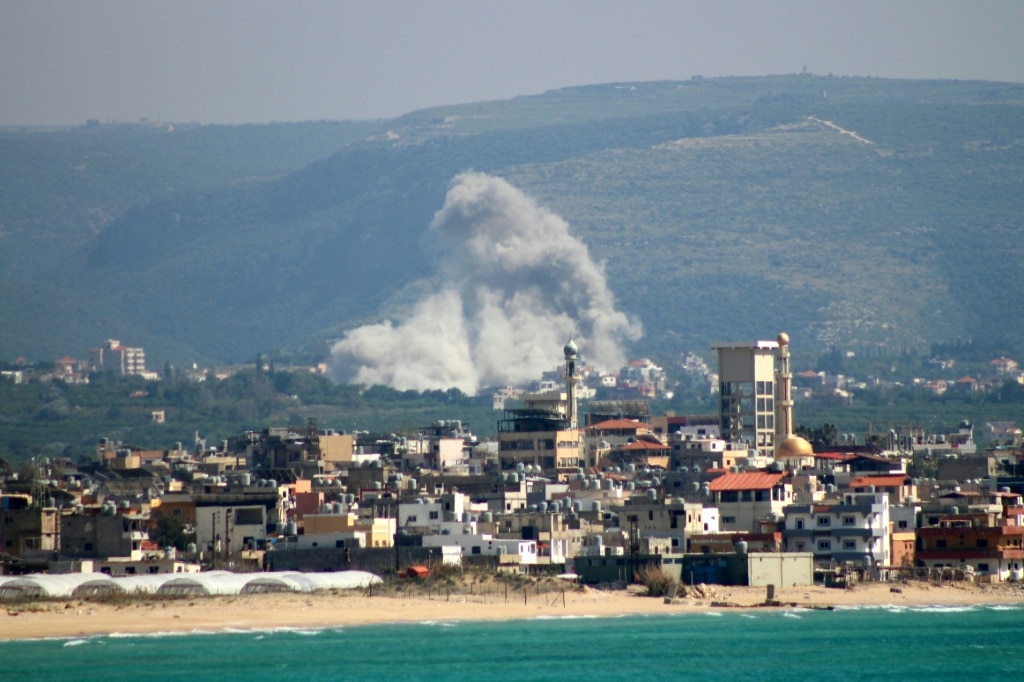
Amid the U.S.-Iran standoff, the long-running Israeli-Lebanese border front also flared back to life, just weeks after a tentative truce went into effect. The Lebanese armed group Hezbollah announced it had launched a barrage of missiles at an Israeli military base south of the coastal city of Nahariya in northern Israel. The strike was framed as retaliation for recent Israeli attacks on southern Lebanon and the southern suburbs of Beirut. The Israeli military confirmed that air raid sirens activated across multiple northern Israeli communities shortly before Hezbollah’s statement. Separately, Lebanon’s civil defence rescue organisation confirmed that an Israeli airstrike on southern Lebanon killed one of its personnel, raising tensions further along the volatile border.
Diplomatic friction also emerged between the U.S. and its long-time regional partner Saudi Arabia, according to two anonymous Saudi sources speaking exclusively to Agence France-Presse. The sources confirmed that Riyadh has barred the U.S. from using Saudi airspace and military bases on Saudi territory for any operations aimed at reopening the Strait of Hormuz. The clarification notes that this restriction applies only to operations targeting the current standoff with Iran, and that the U.S. will retain access to Saudi infrastructure for all other pre-planned activities. Saudi Arabia has repeatedly stated publicly that it will never allow its territory or airspace to be used for offensive operations against Iran, aligning with this new restriction.
The escalating conflict has already sparked ripple effects across global energy and transportation sectors. On Friday, the European Union moved to crack down on exploitative airline pricing amid spiking aviation fuel costs tied to Middle East war supply risks, banning carriers from adding last-minute fuel surcharges to tickets that customers have already purchased. Separately, the European Union Aviation Safety Agency (EASA) issued new guidance clearing the way for expanded use of U.S.-produced Jet A aviation fuel across European airports. Currently, the fuel is only permitted for use by flights returning to the U.S. from European hubs. EASA’s new guidance concludes that widespread adoption of Jet A in Europe would not create major safety risks so long as the transition is properly managed, a move intended to head off potential fuel shortages amid ongoing supply disruptions.
Another major escalation came when the United Arab Emirates confirmed that Iranian forces launched a combined missile and drone attack on Emirati territory Friday. The UAE’s Ministry of Defence wrote in a post on X that the country’s air defence systems successfully intercepted two ballistic missiles and three unmanned aerial vehicles launched from Iran, but the attack still left three people with moderate injuries.
In a further sign of Iran’s plans to assert control over the strategic waterway, a leading international shipping journal reported Friday that Tehran has established a new government agency tasked with approving all vessel transits through the Strait of Hormuz and collecting transit tolls from passing ships. The move comes as Washington continues to push for a diplomatic deal to reopen the strait, which Iran has closed to commercial shipping in recent weeks amid the escalating standoff.