分类: world

  • Canary Islands brace for arrival of hantavirus-hit cruise ship

    Canary Islands brace for arrival of hantavirus-hit cruise ship

    A cruise ship grappling with a deadly hantavirus outbreak is making its way to Spain’s Canary Islands, where authorities are preparing to evacuate nearly 150 passengers and fly them back to their home countries after weeks of isolation at sea. Three fatalities have already been linked to the outbreak on the Dutch-flagged MV Hondius, and multiple other passengers have fallen ill with the rare pathogen, which is most commonly carried and spread by rodent populations.

    The vessel, which departed Cape Verde after three infected people were evacuated earlier this week, is projected to reach offshore waters near Tenerife by early Sunday dawn, between 03:00 and 05:00 GMT. World Health Organization Director-General Tedros Adhanom Ghebreyesus is personally assisting with coordination of the complicated evacuation operation, after meeting with Spanish Prime Minister Pedro Sanchez in Madrid Saturday ahead of traveling to the archipelago with the country’s health and interior ministers.

    Confirmed cases on the ship have been identified as Andes virus, the only strain of hantavirus capable of spreading between human beings — a detail that has sparked widespread international concern over potential secondary transmission. To mitigate this risk, regional Canary Islands authorities have rejected requests to allow the ship to dock at a local port. Instead, the MV Hondius will remain anchored offshore during the evacuation, which is scheduled to take place between Sunday and Monday, the only window health officials say weather conditions will permit for the complex operation.

    On the quay at Granadilla de Abona port, AFP reporters observed emergency response teams have already erected white screening tents, but daily life across the island has continued largely unchanged. Local lottery vendor David Parada noted that while there is underlying worry about potential community risk, most residents have not panicked over the situation. Tedros sought to further calm public fears in an open letter to Tenerife residents Saturday, stressing that “this is not another Covid” and that the population-wide risk of transmission from the ship remains “low”.

    Spanish officials have echoed these assurances, outlining strict protocols to prevent any contact between passengers from the ship and local communities. After completing medical screenings on board the MV Hondius, passengers will be transferred via small boats to shore, then bussed directly to the airport along fully sealed routes. A maritime exclusion zone will be enforced around the anchored vessel, and all areas passengers transit through on shore will be closed off to the public. Evacuations will proceed in groups organized by nationality, with the 14 Spanish citizens on board set to leave first, according to Spanish Health Minister Monica Garcia Gomez. A portion of the crew will remain on the ship to sail it onward to the Netherlands after the evacuation is complete.

    As of Friday, the WHO confirmed six positive hantavirus cases out of eight earlier suspected cases on the vessel, and no new suspected cases remain on board. Global health authorities are now conducting extensive contact tracing for passengers who disembarked the MV Hondius earlier in its voyage, which began on April 1 when it departed Ushuaia, Argentina for a transatlantic cruise to Cape Verde. Argentine health officials have concluded that the initial infected Dutch passenger almost certainly did not contract the virus in Ushuaia, based on the pathogen’s incubation period.

    Multiple secondary testing and monitoring efforts are underway across the globe: A KLM flight attendant who developed mild symptoms after coming into contact with an infected passenger tested negative for the virus, though a Spanish woman who sat two rows away from one of the fatal cases on a Johannesburg-Amsterdam flight has been isolated in a Spanish hospital for testing, with officials noting her infection remains highly unlikely. Two former passengers in Singapore tested negative but will remain in quarantine as a precaution, and British health authorities are investigating a suspected case on the remote South Atlantic outpost of Tristan da Cunha, which is home to just 220 permanent residents.

  • Rosenberg: Scaled-back Victory Parade in Moscow’s Red Square

    Rosenberg: Scaled-back Victory Parade in Moscow’s Red Square

    In a marked departure from tradition, Moscow’s iconic Red Square played host to a significantly scaled-back Victory Day Parade this year, according to analysis from the BBC’s senior Russia correspondent, who reported on the ground from the Russian capital.

    Annual Victory Day celebrations mark the Soviet Union’s victory over Nazi Germany in World War II, and for decades, the event has been defined by elaborate military displays, thousands of marching troops, fleets of armored vehicles rolling across Red Square’s cobblestones, and flyovers by Russian air force jets that draw tens of thousands of spectators and global media attention. This year, however, the public event unfolded in an unprecedentedly subdued atmosphere.

    The BBC’s Russia editor, who has covered Victory Day events in Moscow for years, noted that the usual crowds of onlookers lining the streets leading to Red Square were absent, and the scope of military hardware on display was dramatically reduced compared to previous years. Many traditional fanfare elements that have long been central to the celebration were cut from the official program, leading to a far quieter observance than the nation has come to expect.

    Local authorities had announced adjustments to the event weeks earlier, citing security concerns as the primary reason for the scaled-back format. The muted celebration has drawn international attention, as analysts point to it as a visible reflection of shifting priorities and current security dynamics facing Russia amid ongoing regional tensions.

  • War in the Middle East: latest developments

    War in the Middle East: latest developments

    As the Middle East grapples with sustained regional conflict, a cascade of new developments has unfolded across the Gulf, the Israel-Lebanon border, and global diplomatic channels over the past 24 hours, deepening uncertainty for both regional populations and international stakeholders. Ongoing dual blockades imposed by the United States Navy and Iran continue to choke commercial shipping movement into and out of the Gulf, creating a protracted logjam that has left thousands of seafarers stranded for more than two months.

  • Putin chides NATO in speech at scaled-back Victory Day parade

    Putin chides NATO in speech at scaled-back Victory Day parade

    On Saturday, Russia’s annual Victory Day commemoration marking the Soviet Union’s 1945 defeat of Nazi Germany unfolded far differently than usual on Moscow’s Red Square, with a drastically downsized parade overshadowed by the ongoing full-scale war in Ukraine and punctuated by a new US-brokered three-day truce between Moscow and Kyiv.

    For 25 years, Russian President Vladimir Putin has centered the legacy of the Soviet World War II victory as a core ideological pillar of his leadership, with past celebrations featuring elaborate displays of military hardware, thousands of marching troops, and dozens of high-profile foreign dignitaries. But this year, a wave of recent long-range Ukrainian strikes on Russian territory forced the Kremlin to tighten security measures and slash the scale of the event, marking the first time in nearly 20 years that no heavy military equipment was featured in the parade. Only a small group of foreign leaders, most from Russia’s close allied nations, attended the ceremony: the heads of state of Belarus, Malaysia, Laos, Uzbekistan and Kazakhstan, a sharp drop from 2024’s guest list that included Chinese President Xi Jinping.

    In his opening address to the assembled parade participants – which included Russian military units and a contingent of soldiers from North Korea – Putin invoked the World War II victory to rally domestic support for what Russia calls its “special military operation” in Ukraine, framing the conflict as a fight against a NATO-backed aggressive force. “The great feat of the generation of victors inspires the soldiers carrying out the goals of the special military operation today,” Putin told the crowd. “They are confronting an aggressive force armed and supported by the entire NATO bloc. And despite this, our heroes move forward. I firmly believe that our cause is just.”

    The scaled-back event came amid growing war fatigue among many Russian residents in Moscow, where strict security measures included widespread street closures and intentional mobile internet disruptions. Speaking to AFP, 36-year-old Moscow economist Elena summed up the muted public mood: “Nothing. I need the internet, and I don’t have it,” she said, adding she had no plans to watch the parade broadcast.

    The lead-up to the parade was marked by escalating tensions: Russia had threatened to carry out a massive strike on central Kyiv if Ukraine disrupted the Moscow commemoration, and urged foreign diplomatic staff to evacuate the Ukrainian capital ahead of the event. Ukrainian President Volodymyr Zelensky had initially pushed back against the idea of a truce tied to the Russian celebration, warning Russia’s allies against attending the event.

    That changed after former US President Donald Trump, who has prioritized ending the Ukraine war, announced a three-day ceasefire agreement between the two warring parties that would take effect starting May 9, accompanied by a large-scale prisoner exchange. “Hopefully, it is the beginning of the end of a very long, deadly, and hard fought War,” Trump wrote on his Truth Social platform Friday. The Kremlin later clarified that as of the announcement, there were no plans to extend the temporary truce beyond its three-day timeline.

    Zelensky ultimately confirmed Ukraine would abide by the ceasefire, issuing a formal order barring Ukrainian forces from launching attacks to disrupt the parade and noting the truce would allow for the exchange of 1,000 detained service members from each side. “Red Square is less important to us than the lives of Ukrainian prisoners who can be returned home,” Zelensky said in a statement.

    In the first overnight period of the truce, both the Ukrainian Air Force and Russian Ministry of Defense reported a sharp drop in drone attacks compared to previous nights, a promising sign for the temporary agreement. This ceasefire marks the third attempted truce between Russia and Ukraine this week, after two earlier agreements fell apart quickly.

    Now entering its fifth year, the war in Ukraine has killed hundreds of thousands of people and become the deadliest conflict in Europe since World War II. US-mediated peace talks have stalled since February, when the United States shifted its diplomatic and military focus to its ongoing conflict with Iran. While the current truce has reduced violence temporarily, it remains unclear whether it will open a path to longer-term negotiations to end the wider war.

  • Iran warns the US against attacks on its oil tankers and other ships but ceasefire appears to hold

    Iran warns the US against attacks on its oil tankers and other ships but ceasefire appears to hold

    DUBAI, United Arab Emirates – Just one month into a tentative ceasefire between the U.S. and Iran, regional tensions are reigniting, with competing military escalations and high-stakes diplomatic negotiations unfolding across the Persian Gulf. In a stark public warning issued Saturday by the naval branch of Iran’s Revolutionary Guard, any offensive targeting Iranian commercial and oil vessels will trigger a devastating retaliatory strike against both U.S. military bases in the region and enemy shipping, the force confirmed.

    The warning came 24 hours after U.S. forces intercepted two Iranian oil tankers attempting to break Washington’s blockade of Iranian ports, a move that has cast significant doubt over the durability of the month-long truce that U.S. officials continue to insist remains in effect. As tensions mount, Bahrain – the small Persian Gulf island nation that hosts the U.S. Navy’s Fifth Fleet and regional headquarters – announced the arrest of 41 individuals it claims are connected to an Iran-aligned network linked to the Revolutionary Guard.
    According to Bahrain’s interior ministry, investigations have confirmed the group maintained direct communication with the Revolutionary Guard and was raising funds to transfer back to Iran to support what it describes as terrorist activities. The Sunni-ruled monarchy, which is home to a majority Shiite population like Iran, has long faced accusations from international human rights groups that it weaponizes regional tensions between Washington and Tehran to crack down on domestic political dissent.
    Iran has issued a sharp rebuke to Bahrain over its actions. Ebrahim Azizi, head of the Iranian parliament’s national security commission, warned in a social media post that aligning with U.S.-backed initiatives will carry severe long-term consequences. “The Strait of Hormuz is a vital global energy lifeline; do not risk closing it off to yourselves forever,” Azizi said.
    Since the U.S. and Israel launched their military campaign against Iran on February 28, Tehran has largely blocked access to the strategic Strait of Hormuz, the chokepoint through which nearly 20% of global oil supplies transit daily. The closure triggered an immediate spike in global fuel prices and sent shockwaves through international financial markets. In response, the U.S. imposed its own naval blockade of Iranian ports, with U.S. Central Command confirming Saturday that its forces have turned away 58 commercial vessels and disabled four ships since the blockade went into effect on April 13.

    As regional powers and global actors work to de-escalate, Western nations are already positioning military assets to secure the strait once a lasting truce is reached. Britain’s defense ministry announced Saturday it is deploying the Type 45 destroyer HMS Dragon to the Middle East to preposition for a future multinational mission protecting commercial shipping through the Strait of Hormuz once hostilities cease. The destroyer will prepare to join a U.K.- and French-led international security initiative, after France announced earlier this week it is moving its full aircraft carrier strike group to the Red Sea in preparation. The two countries have coordinated talks with more than 30 nations to build a coalition to reestablish freedom of navigation in the strait, but have emphasized the mission will not launch until a sustainable ceasefire is in place and the global maritime industry can be assured of safe passage.

    Diplomatic efforts to cement a lasting peace deal are continuing around the clock, with multiple global mediators working to bridge gaps between Washington and Tehran. U.S. President Donald Trump has reiterated his threat to resume full-scale bombing campaigns against Iran if Tehran rejects Washington’s proposal, which calls for reopening the Strait of Hormuz and rolling back Iran’s disputed nuclear program in exchange for lifting sanctions. On Friday, Iranian foreign ministry spokesperson Esmail Baghaei dismissed U.S. pressure tactics, telling state-run news agency IRNA that Iran is not paying attention to arbitrary American deadlines.
    Pakistani Prime Minister Shehbaz Sharif confirmed his government has been holding continuous talks with both U.S. and Iranian officials to extend the current ceasefire and reach a permanent negotiated settlement. Both Russia and Saudi Arabia have publicly called for intensified diplomatic efforts to reach a sustainable, long-term agreement to end the conflict, according to Russia’s foreign ministry. Russian President Vladimir Putin also confirmed that Moscow’s longstanding proposal – to transport Iran’s enriched uranium out of the country to build trust and facilitate negotiations – remains on the table. Putin explained the plan would put all of Iran’s enriched uranium stockpile under the full oversight of the International Atomic Energy Agency (IAEA), the United Nations’ nuclear watchdog, allowing the international community to verify the size and location of Iran’s nuclear materials. Egypt and Qatar’s top diplomats also reaffirmed in a recent phone call that diplomacy is the only viable path to resolving the conflict.

    Amid all the diplomatic and military activity, one key figure remains out of public view: Iran’s new Supreme Leader Mojtaba Khamenei, who has not been seen or heard publicly since the war began. The lack of public appearances has sparked widespread speculation about his health and status. On Friday, a senior Iranian official close to the office of the late Ayatollah Ali Khamenei – Mojtaba’s father, who was killed in the opening days of the U.S.-Israeli offensive – told a pro-government gathering that the new supreme leader is in full good health and will appear public once his recovery is complete. Mazaher Hosseini confirmed Mojtaba sustained knee and back injuries in the opening bombardment, but said those wounds have largely healed.
    The Associated Press contributed reporting from Cairo and London to this article.

  • Indonesian rescuers find 1 body after volcano eruption as search continues for 2 more

    Indonesian rescuers find 1 body after volcano eruption as search continues for 2 more

    JAKARTA, Indonesia — A week of tragic misadventure on one of Indonesia’s most active volcanoes entered its second day Saturday, after rescuers recovered the body of a local Indonesian hiker killed in Mount Dukono’s latest eruption, while search efforts continue for two missing Singaporean climbers amid ongoing volcanic unrest.

    The three fatal and missing hikers were part of a group of 20 people who deliberately ignored official safety restrictions to scale the 1,355-meter (4,445-foot) peak on Halmahera, a remote eastern Indonesian island, when Dukono erupted early Friday. The blast sent a dense ash plume 10 kilometers (6 miles) into the sky, trapping the entire group before they could descend to safety.

    Iwan Ramdani, head of the local Search and Rescue Office, confirmed that the recovered victim, a local hiker identified only as Enjel, was found Saturday afternoon roughly 50 meters (165 feet) from the volcano’s main crater. As of Saturday evening, the two Singaporean climbers’ locations remain undetermined, with rescue teams navigating persistent volcanic activity to continue their search.

    By hours after the initial eruption, 17 members of the climbing group had been successfully pulled to safety. The evacuated group includes seven Singaporean nationals and two Indonesian hikers who later joined rescue operations to share critical details about the victims’ planned routes before the blast. Ten of the 17 survivors sustained minor burn injuries from the eruption.

    Over 100 rescue personnel, supported by aerial drone reconnaissance, restarted the search at dawn Saturday, concentrating their efforts on a 700 square-meter (7,500 square-foot) zone where investigators uncovered new potential clues during initial sweeps. The operation has been complicated by the volcano’s unstable terrain and repeated fresh eruptions that force teams to pause and pull back repeatedly.

    “Every step of this search requires careful calculation and a deliberate, well-planned evacuation strategy,” Ramdani explained in a video statement. “We have to constantly factor in the risk of sudden volcanic escalation, as well as the safety of every member of our rescue team. The main challenge is that we are racing against ongoing eruptions. When conditions are declared safe, we advance closer to the crater, but if a new eruption begins, we have to immediately pull all personnel back to safety.”

    Indonesia’s national volcanology agency recorded multiple fresh eruptions between early and late Saturday, including new ash plumes reaching 3,000 meters (nearly 10,000 feet) above the crater. Monitoring posts near the peak also spotted lava bursts overnight Friday into Saturday.

    Mount Dukono has been classified at the second-highest alert level for volcanic activity since 2008, and officials established a 4-kilometer (2.5-mile) exclusion zone around the active crater in December 2024. Local authorities formally closed all hiking routes to the peak in early 2025, and strengthened the ban in the wake of Friday’s tragedy.

    Indonesia’s National Disaster Management Agency has warned that anyone entering restricted volcanic zones could face legal penalties, and has urged all hikers and tour operators across the country to abide by official safety guidelines. Similar exclusion and access restrictions are currently in place for dozens of other active volcanoes across Indonesia that are also experiencing elevated activity.

    As a sprawling archipelago nation home to more than 270 million people, Indonesia sits along the Pacific Ocean’s geologically active “Ring of Fire,” and hosts more than 120 active volcanoes within its borders.

  • The UFO community has been waiting for answers. Has the Pentagon delivered?

    The UFO community has been waiting for answers. Has the Pentagon delivered?

    On a historic Friday marked by decades of speculation and demand for transparency, the U.S. government made its first public release of a collection of previously classified documents centered on unidentified anomalous phenomena (UAP), commonly known as UFOs. The 162-document trove, which includes firsthand witness reports, declassified military memos dating back decades, and documentation from the Apollo Moon missions, drew intense attention from long-time UFO enthusiasts and casual observers alike, all waiting for answers about what may lie beyond Earth’s atmosphere.

    The release was quickly celebrated by former President Donald J. Trump, who framed the move as a break from decades of government secrecy. Writing on his Truth Social platform following the public launch of the document portal, Trump noted that prior administrations had failed to deliver transparency on the topic, adding, “the people can decide for themselves, ‘WHAT THE HELL IS GOING ON?’ Have Fun and Enjoy!”

    The U.S. Department of War launched a dedicated public website to host the declassified files, taking an unusual approach that offers raw material without official analysis or conclusions. In a statement posted alongside the archive, the department acknowledged the massive scope of the declassification effort, announcing that additional materials would be released in periodic tranches every few weeks as they are processed and cleared for public release. The website explicitly notes that all documents posted are unresolved cases, meaning the government has not reached a definitive conclusion on the origin or nature of the reported phenomena. It also called on private sector researchers and experts to contribute their own analysis and information to help unpack the materials.

    For people across the U.S. who have spent decades following UAP research and chasing answers to personal and family connections to sightings, the release marked a long-awaited milestone, even if it delivered no earth-shattering revelations. Elaine Loperena, a 69-year-old grandmother from Clovis, California, has waited for answers since she was a child, when her mother spotted a UFO hovering above while hanging laundry to dry. As an administrator of a large UAP-focused Facebook group, Loperena has seen public interest surge dramatically in recent years: when she joined the group three years ago, it had roughly 40,000 members, and it has now grown to nearly 100,000, with most of the growth coming in just the last few months.

    Loperena called the release a major step forward in the push for full disclosure, crediting Trump for moving the process forward after years of inaction from previous White House administrations. She noted that growing numbers of former military personnel and insiders have come forward with firsthand accounts, even on their deathbeds, making it impossible for the government to continue hiding information indefinitely. “The snowball is getting bigger,” she said, expressing hope that Friday’s release is just the first of many. She also emphasized that any full final disclosure should be bipartisan to overcome U.S. political divides and build public trust in the information released.

    Similar cautious optimism was shared by figures in Texas’s active UFO research community. John Erik Ege, a Texas-based therapist who has been a UAP “experiencer” since childhood and serves as regional director for the Texas chapter of the Mutual UFO Network (MUFON), called the release “a move in the right direction.” While he noted that most of the material released has been widely known among UFO enthusiasts for years, with no new bombshells or concrete evidence of extraterrestrial bodies or contact, he remains hopeful that future releases will bring more clarity. “I don’t think they’re trying to hide anything,” Ege said, adding that he believes Trump is unique among modern presidents in being willing to push forward with disclosure despite potential pushback.

    Daniel Jones, a 36-year-old Texas musician and fellow administrator of the Texas UFO Network’s 25,000-member Facebook page, who got engaged last year at a UFO festival, echoed that sentiment. He said he never expected the first batch of files to contain major revelations, but welcomed the release as a step toward greater government accountability and transparency for the general public, not just the existing UAP research community. “This first batch of files wasn’t, more than likely, going to contain anything extremely substantial,” Jones said, “but I’m hopeful to see more definition on the part of the government” in upcoming releases.

    Not all reactions to the release were positive, however. A small but vocal segment of the UAP community remains skeptical of the government’s motives. Ege noted that roughly 20 percent of active community members believe the release is a false flag effort designed to distract from other issues, stemming from a deep lack of trust in official institutions. Some skeptics within the community went further, criticizing the quality of the materials released. One prominent contributor to a major UAP discussion group noted that many of the released images are heavily compressed, distorted, or lack critical context or scale to identify what is being shown, with some images being reconstructed overlays based on witness testimony rather than original raw imagery of unknown objects. “That is not the same thing as releasing compelling evidence,” the contributor wrote, adding that the release “feels more like theater than disclosure.”

    Even with the mixed reactions, Loperena and other long-time enthusiasts remain optimistic that full disclosure is coming, and that more definitive evidence of extraterrestrial life will eventually be made public. They acknowledge that even with full official disclosure, there will always be naysayers who demand direct, personal proof. “You’re always going to have the naysayers,” Loperena said. “Some of those, it’s going to take an ET to show up and, you know, ask for dinner.” For now, the UAP community is waiting eagerly for the next tranche of declassified files, expected in the coming weeks.

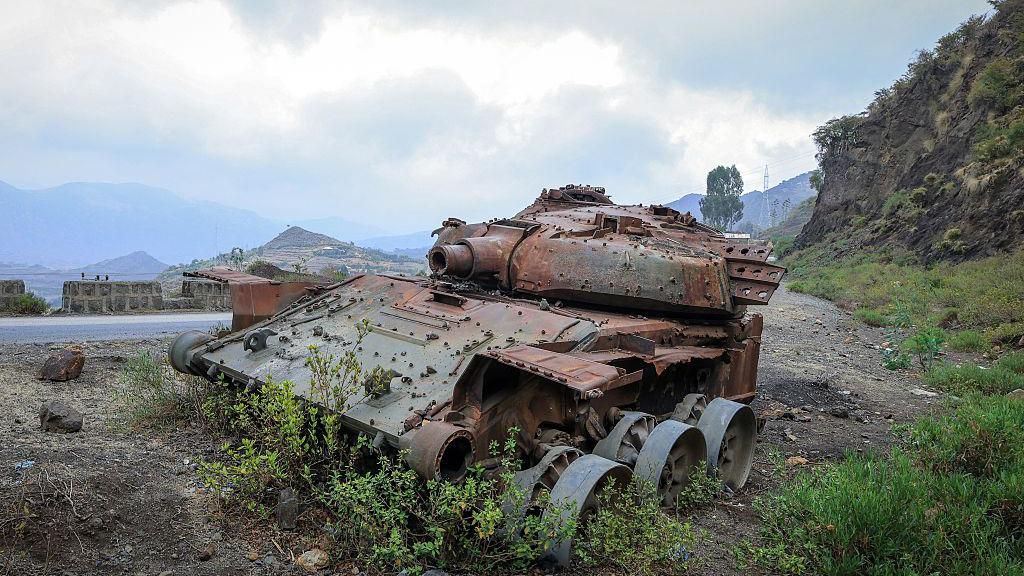
  • Fuel shortages and high prices push adoption of EVs in Africa, led by Ethiopia

    Fuel shortages and high prices push adoption of EVs in Africa, led by Ethiopia

    Across the African continent, electric vehicle adoption is accelerating at an unprecedented rate, driven largely by policy and energy security action in Ethiopia. Severe fuel shortages and skyrocketing global oil prices, worsened by ongoing disruptions tied to the Iran war, have pushed East African nations to accelerate a shift from fossil fuel-powered transport to cleaner, cheaper electric alternatives.

    New data from China’s Ministry of Commerce underscores this rapid growth: total African electric vehicle imports from China jumped to 44,358 units in 2025, more than doubling the 19,386 units imported just one year prior. These shipments carry a total value of over $200 million, with demand concentrated heavily in Ethiopia. In 2024, Addis Ababa implemented a full ban on new imports of gasoline and diesel-powered vehicles, a policy that has reshaped the country’s automotive market. Today, more than 115,000 EVs operate on Ethiopian roads, accounting for roughly 8% of the nation’s entire vehicle fleet. In 2025 alone, Ethiopia accounted for one-third of all African EV imports from China, outpacing major regional markets including South Africa, Egypt, Morocco and Nigeria to claim the top spot.

    The urgency of Ethiopia’s transition stems from deep economic and energy strains. Each year, the country spends roughly $4.2 billion on fossil fuel imports, a burden that has severely drained its limited foreign currency reserves. It also spends up to $128 million monthly on fuel subsidies to cushion consumers from price volatility. The ongoing conflict in Iran has disrupted global oil supplies through the Strait of Hormuz, the strategic waterway that carries roughly one-fifth of all Gulf region oil exports, leaving Ethiopia with a shortfall of more than 180,000 metric tons of fuel annually.

    Faced with these persistent supply shocks, the Ethiopian government has doubled down on its campaign to speed up EV adoption, framing the transition as a critical buffer against external energy market volatility. Industry analysts say the strategy offers clear long-term benefits for the country’s energy sovereignty.

    “From a general perspective, it is sustainable,” explained Hiten Parmar, executive director of The Electric Mission, a South Africa-based e-mobility advocacy organization. “By replacing imported fuel with domestically generated electricity, Ethiopia is strengthening its energy security position.”

    Ethiopia holds a unique advantage in its energy mix that supports a large-scale EV transition: over 90% of its national electricity production comes from renewable sources, primarily hydroelectric and solar power. The Grand Ethiopian Renaissance Dam, the largest hydroelectric project on the continent, is expected to double the country’s total power generation capacity once fully operational, even as the facility has sparked a decade-long transboundary water dispute with downstream neighbors Egypt and Sudan. Parmar notes that this abundant domestic clean energy generation creates a solid foundation for a widespread shift to electrified transport.

    “It allows EVs to be powered by locally produced clean energy, rather than costly imports,” Parmar said. “By gradually adopting EVs, that intensive fuel import expenditure can be reduced and redirected into other critical development needs.”

    This trend is not isolated to Ethiopia. Governments across the African continent are rolling out policy frameworks and investment plans to support EV adoption: Egypt, South Africa and Morocco have all introduced a mix of consumer incentives, manufacturing investment commitments and clean energy buildout to speed their own energy transitions. According to the Africa E-Mobility Alliance, this early transition is already starting to ease regional pressure on global fuel demand.

    “That’s over 100,000 vehicle owners who are no longer directly exposed to pump price shocks,” said Bob Wesonga, policy and investments lead at the alliance. “In the medium to long term, this creates a buffer against global oil volatility.”

    For consumers and operators that have already made the switch, the cost savings are dramatic. “A private EV owner now spends roughly $4 a month on charging compared to about $27 previously spent on fuel,” Wesonga said. “For public transport operators, the difference is even more striking.”

    Despite these clear benefits and rapid growth, the EV transition across Africa faces significant structural barriers, analysts warn. While EV technology itself is already mature, scaling the necessary supporting infrastructure across vast, often rural landscapes remains a major challenge.

    Ethiopia has begun rolling out ultra-fast charging hubs in its capital Addis Ababa, but expanding this network to every region will require billions in new investment and years of construction. “The biggest hurdle is the last-mile power distribution,” Wesonga explained. “While Ethiopia has a surplus of generation, getting that power reliably to where it’s needed, especially outside Addis Ababa, remains a challenge.”

    Frequent power outages and administrative delays in connecting high-capacity charging stations have slowed infrastructure construction, even as consumer demand for EVs continues to climb. Today, most charging infrastructure remains heavily concentrated in the capital and along a small number of major intercity transport corridors, limiting widespread EV use outside of urban centers and creating a bottleneck for future growth.

    Ethiopia is attempting to address another major barrier, affordability, by building out domestic EV assembly capacity. Official data shows 17 EV assembly plants are already in the national pipeline, with plans to grow that number to 60 by 2030. The strategy is designed to localize production, cut vehicle costs and make EVs accessible to more consumers.

    Even so, affordability remains a major constraint for most households. While operating costs for EVs are far lower than fossil fuel vehicles, upfront purchase prices remain well out of reach for the majority of the population, relative to average national incomes. At the same time, the ban on new fossil fuel vehicle imports has pushed up prices for used combustion engine vehicles, creating additional financial barriers for low-income households looking to purchase any form of private transport.

    Parmar notes that this dynamic could create unintended social consequences if the transition is not carefully managed to protect vulnerable groups. “A national fleet transition is always gradual,” he said. “Existing combustion vehicles will remain in use for some time, and the transition needs to account for livelihoods tied to that system.”

    Even with these near-term challenges, both analysts agree the long-term trajectory of EV adoption across Africa is irreversible. Over time, lower operating and maintenance costs for EVs are expected to bring down overall transport costs, reduce the price of consumer goods and expand access to economic opportunity for millions across the continent. Ethiopia is already drawing lessons from leading EV markets such as China and Norway, where targeted policy support, large-scale infrastructure investment and consumer incentives have driven rapid mass adoption.

    “This is not just about transport,” Wesonga said. “It’s about reshaping how the country uses energy, and who benefits from that shift.”

  • New ‘Nakba’ in Jerusalem: Israel steps up Silwan demolitions near Al-Aqsa

    New ‘Nakba’ in Jerusalem: Israel steps up Silwan demolitions near Al-Aqsa

    Standing amid the crumbled concrete and twisted metal that was once his family home in occupied East Jerusalem, Fakhri Abu Diab’s gaze falls on a small corner where he once shared a warm cup of tea with his mother. For the 55-year-old Palestinian father of five and grandfather of 16, the rubble is more than just destroyed property—it is the erasure of a lifetime of memories, of a childhood spent tending nearby land with his mother, and of the tight-knit community life his family built over generations.

    Abu Diab’s home, located in the al-Bustan neighborhood of Silwan just south of Jerusalem’s Old City and Al-Aqsa Mosque, was demolished by Israeli authorities in early 2024. It is one of dozens of Palestinian homes leveled in the area this year as part of long-running plans to expand Israeli settler infrastructure and build religiously themed national parks. A veteran anti-occupation activist, Abu Diab shared his grief with Middle East Eye: “They demolished my childhood, my memories, and even the scent of my mother.”

    Silwan, a Palestinian district hugging the southern walls of the Old City, has been a flashpoint for Israeli displacement efforts for decades. Alongside other high-risk Palestinian neighborhoods including Sheikh Jarrah to the north of the Old City and Ras al-Amoud to the southeast, Silwan has been the target of systematic state-backed campaigns to clear land for expanding Israeli settlements. For years, sustained Palestinian resistance and international scrutiny slowed the pace of demolitions and expulsions—but that shifted dramatically after the outbreak of the Gaza conflict in October 2023.

    Since that time, Israeli authorities have sharply accelerated home demolitions and forced expulsions across occupied East Jerusalem, with al-Bustan emerging as one of the worst-affected zones. Across the entire city, an estimated 20,000 Palestinian-owned properties currently face active demolition orders. As Israeli forces have also stepped up violent crackdowns on local protest and dissent, Palestinian residents say they are increasingly isolated and defenseless, with little meaningful international support or global media attention focused on their plight. Local residents and rights activists warn that if the current pace of demolitions continues, entire Palestinian communities across Silwan, Sheikh Jarrah and Ras al-Amoud could be completely cleared. This demographic shift would leave Al-Aqsa Mosque surrounded entirely by Israeli settler compounds and biblical parks, cutting the holy site off from its surrounding Palestinian community.

    Today, the scale of destruction in al-Bustan is visible along every narrow, winding street, with piles of rubble and empty flattened lots appearing every few meters. “I used to live here with my wife, my children, and my grandchildren. Ten of us lived in this house,” Abu Diab said. “The suffering is not only in the demolition of the house, but in the demolition of our past, our lives, and our future.”

    The campaign to displace Palestinians from Silwan dates back to 1967, when Israel occupied East Jerusalem and immediately introduced laws that enabled the transfer of Palestinian property to Jewish ownership, while launching large-scale archaeological excavations in the district’s Wadi Hilweh neighborhood. Today, Silwan is home to roughly 55,000 Palestinians spread across 12 neighborhoods covering 6,000 dunams in the Kidron Valley and southern slopes of the Mount of Olives. For decades, three neighborhoods—Wadi Hilweh, al-Bustan and Batn al-Hawa—have borne the brunt of demolition and displacement campaigns, as powerful state-backed settler organizations push to clear the area to expand biblical tourist sites including the “City of David” and the planned “King’s Garden.” Since the early 2000s, more than 2,000 Palestinians across these three neighborhoods have faced expulsion threats, framed either as settler property claims or responses to alleged unpermitted construction. Between 2006 and 2023, Israeli authorities demolished an average of just one to two homes per year in Silwan, held back by ongoing Palestinian resistance and public pressure. But that pace has exploded since October 2023.

    Local residents and researchers confirm that Israeli authorities have demolished 54 homes in al-Bustan alone—more than half of the approximately 115 total homes in the neighborhood—since the Gaza war began. Most of the remaining properties now face imminent demolition. The Jerusalem municipality has adopted increasingly aggressive tactics to push residents out: it gives homeowners strict deadlines to demolish their own homes, imposing heavy financial penalties for any delay, and has openly warned residents that crews will return weekly to carry out demolitions if residents refuse to comply. Aviv Tatarsky, a researcher with Israeli human rights organization Ir Amim, calls the current campaign a devastating escalation that marks a dangerous turning point for Palestinian communities in the area. “The people of Silwan defended their homes for over 20 years, and now they feel they can no longer stop what is happening,” Tatarsky told Middle East Eye. “It increasingly looks as though Israel will wipe out al-Bustan. We do not know how to stop it.”

    The accelerated demolitions in al-Bustan are no accident, Tatarsky explains. The neighborhood, home to roughly 1,500 Palestinians, sits in a strategically critical position: it links the existing heavily guarded settler enclaves of Wadi Hilweh to the northwest and Batn al-Hawa to the east, where 2,500 Israeli settlers already reside. Clearing Palestinians from al-Bustan would create uninterrupted territorial continuity between these existing settler areas, and connect the Silwan settlements directly to West Jerusalem, which lies on the other side of the 1949 Green Line armistice boundary. The ultimate goal, Tatarsky says, is to normalize the erasure of Palestinian Silwan in Israeli public consciousness, rebranding the entire area as an extension of West Jerusalem tied exclusively to biblical Jewish history. “So al-Bustan is central to dramatically changing what Silwan is,” he added.

    Israeli authorities have publicly justified the demolitions by citing building code violations, claiming most Palestinian homes in al-Bustan were constructed without permits. But critics note that permits are effectively impossible for Palestinian residents to obtain under Israeli zoning rules, and the law is enforced selectively against Palestinians while ignoring violations by settler groups. Israeli newspaper Haaretz has reported that demolition orders for multiple al-Bustan properties were suddenly dropped after the land was sold to settler organizations, even as those same groups have been allowed to build an events hall, synagogue, restaurant and visitor center without required permits. The clear end goal, researchers say, is to clear al-Bustan to make way for the “King’s Garden” biblical archaeological park, which will connect to the existing “City of David” tourist complex built on seized Palestinian land in Wadi Hilweh.

    “There is no ownership dispute, no court ruling, and no justification for these executive measures other than transforming a built and inhabited neighbourhood into a park shaped by Zionist religious narratives,” said Ziad Ibhais, a Jerusalem affairs researcher. “That is what makes al-Bustan emblematic of the wider conduct of the occupation municipality in Jerusalem. These powers are being used against Palestinian landowners to impose nationalist-religious visions adopted by the [Israeli] occupation municipality on land over which it has neither sovereignty nor legal authority under international law.”

    International law widely recognizes Israel’s occupation of East Jerusalem as illegal, holding that an occupying power cannot claim sovereignty over occupied territory or make permanent demographic changes to the area. Currently, more than 233,000 Israeli settlers reside in occupied East Jerusalem, alongside more than 500,000 in the occupied West Bank, according to the Israeli NGO Peace Now. All Israeli settlements are widely regarded as a violation of international law.

    Two major settler organizations, Ateret Cohanim founded in 1978 and Elad founded in 1986, lead the displacement campaign in Silwan. Though formally registered as private non-profits, both groups operate with extensive backing from the Israeli state, receiving political support from the Israeli parliament, cooperating closely with Israeli police, and accessing direct government funding. “They are effectively an arm of the state,” Tatarsky noted.

    Palestinian residents have exhausted all available channels to stop the demolitions, bringing multiple legal challenges to both settler claims and municipal plans, and even drafting two alternative community development plans that would preserve existing homes while upgrading neighborhood infrastructure. In a recent proposal, most residents agreed to an extremely strict set of planning concessions to save their neighborhood, in negotiations with the Jerusalem municipality. But the municipality pulled out of talks in February 2024 and announced it would move forward with full demolition plans.

    The collapse of negotiations and lack of legal recourse has left residents in deep despair. Most families whose homes are demolished initially move in with extended relatives, while some manage to rent alternative housing elsewhere in Jerusalem—but skyrocketing housing prices put that option out of reach for many, forcing extended families to scatter across different regions. For Abu Diab, the damage goes far beyond housing insecurity: the displacement has destroyed the traditional Palestinian extended family social structure that sustained generations of residents. “Our way of life is to live together as extended families – with your children, your brothers, your cousins, all close to one another,” he said. “Now we are facing a housing crisis, a psychological crisis, and a health crisis. We have been completely scattered. They have destroyed our social fabric and our support system.”

    Tatarsky argues the accelerated demolitions are only possible because of the current regional context: with the international community focused almost exclusively on the Gaza conflict and many Western powers having signaled implicit support for Israeli actions, the Israeli government feels it can act with complete impunity to push through its long-term demographic goals in East Jerusalem. For Abu Diab, the stakes extend far beyond al-Bustan, extending to the future of Jerusalem’s Palestinian community as a whole. “Al-Bustan matters because it is where we were born and raised, but also because it is the heart of Silwan,” he said. “If Israel takes control of Silwan, it will pave the way for greater control over Al-Aqsa Mosque. If there is no real action, the area will change completely, and there will be a new Nakba for the people of Jerusalem.”

  • Watch: Declassified footage shows ‘unidentified anomalous phenomena’

    Watch: Declassified footage shows ‘unidentified anomalous phenomena’

    Newly declassified video footage capturing what U.S. officials term “unidentified anomalous phenomena,” commonly known as UFOs, has been released to the public, bringing fresh attention to long-running questions about unexplained aerial sightings across the globe. The declassified material, which documents multiple encounters with objects that do not match known aircraft or natural atmospheric phenomena, has reignited public curiosity about potential extraterrestrial activity and gaps in current government knowledge of airspace activity.

    Following the release of the footage, U.S. government agencies confirmed that after comprehensive analysis of the video and related reports from pilots, defense personnel and civilian observers, they have not reached a definitive conclusion about the nature and origin of the events captured on camera. Multiple sightings of these unidentified objects have been recorded in regions across the world, with many documented near sensitive military training areas and commercial flight routes, prompting ongoing review by national security teams.

    The release of the declassified footage marks a continued shift toward greater transparency from the U.S. government regarding UAP investigations, which were largely shrouded in secrecy for decades. While no conclusive evidence of extraterrestrial visitation has been confirmed to date, the lack of a definitive identification has led to ongoing calls for more rigorous, public research into the phenomena to better understand potential risks to national security and advance scientific knowledge.