分类: world

  • Dozens of dogs rescued and suspect arrested in Uganda after BBC investigation

    Dozens of dogs rescued and suspect arrested in Uganda after BBC investigation

    A major joint rescue operation by Ugandan police and animal welfare groups has freed dozens of dogs held at bogus animal rescue shelters, where the animals were exploited to run fraudulent international fundraising schemes, the operation was launched after an undercover investigative project by the BBC.

    Officers executed raids on two neighboring fake shelter facilities in Mityana, central Uganda, where the scam operation was based. One suspect, 54-year-old Owen Godfrey Membe, has been taken into custody, while two other individuals linked to the racket remain at large, according to animal rights activists working on the case.

    Membe has entered a plea of not guilty to a single count of animal cruelty brought under Uganda’s 100-year-old Animals (Prevention of Cruelty) Act, which accuses him of killing an animal through unnecessarily cruel methods. He has been remanded in custody ahead of a next court hearing scheduled for 27 May.

    All dogs seized during the raids, including animals from Membe’s operation and a connected nearby scam facility, remain at the original shelter sites but are now under the care of Animal Welfare Alliance Uganda (AWAU), a coalition of local and international animal protection groups focused on dismantling organized animal exploitation networks. The coalition, which includes board-certified veterinary professionals, has already secured a plot of land to build an emergency temporary shelter where the rescued dogs will receive ongoing care, treatment, and eventually be matched with adopters.

    The prosecution against Membe is being handled as a private case by the Animal Justice Center, a Ugandan animal rights legal organization, with financial backing from We Won’t Be Scammed, a UK-based community group that conducts targeted online investigations to expose fraudulent animal rescue operations based in East Africa.

    The legal action and rescue come one month after the BBC published its undercover investigation, which lifted the lid on a widespread scam ring in Mityana that manipulates photos and videos of distressed dogs to trick animal lovers across Europe and North America into donating hundreds of thousands of pounds. The scheme, which has grown rapidly over the past three years as social media algorithm changes prioritized emotional animal content, sees scammers create dozens of fake shelter accounts to harvest donations from well-meaning donors.

    Secret filming by the BBC’s Africa Eye investigative unit found that instead of directing funds to veterinary care and shelter upkeep, most of the scammers funneled the donated money into high-end personal purchases including new motorcycles, designer clothing, and private housing.

    Most disturbing of all, the investigation uncovered multiple confirmed cases where scammers intentionally injured healthy dogs to create graphic, shareable content that would drive higher donations. One high-profile case highlighted by the BBC was that of Russet, a mixed-breed dog who suffered devastating severe leg injuries that were shared across dozens of scam social media accounts alongside urgent calls for emergency treatment funding.

    BBC investigators traced Russet’s journey from the Mityana fake shelters to a private veterinary clinic in Kampala, Uganda’s capital, where the operating surgeon concluded the dog’s leg injuries were most likely intentionally inflicted to generate fundraising content. Despite emergency surgery, Russet did not survive his injuries.

    Bart Kakooza, vice-chairperson of AWAU, called the arrest a watershed moment for efforts to crack down on the growing scam industry. “This is the first arrest since the entire world saw how what started as small-time begging has developed into a full-fledged online scamming business built on animal suffering,” Kakooza said in an interview after the raids.

    “The entire global community is now watching to see whether Uganda’s judicial system will hold these exploiters accountable, and whether we can deliver on our promise to give these rescued dogs a new chance at a life free from cruelty and exploitation,” he added.

    The investigation has sparked international outcry from animal welfare groups, who are calling on social media platforms to implement stricter verification processes for animal rescue accounts soliciting donations, to prevent similar exploitation from occurring on their platforms.

  • What to know about Nigerian military airstrikes that kill civilians

    What to know about Nigerian military airstrikes that kill civilians

    ABUJA, NIGERIA — A deadly airstrike targeting alleged armed militants in northwestern Nigeria has once again left scores of civilians dead, fueling renewed questions about the counterinsurgency practices of a key U.S. security partner in the fight against regional extremism and organized armed violence. The incident, which unfolded Sunday in the market of Tumfa, Zamfara State, has claimed the lives of at least 100 civilians — including multiple children, according to Amnesty International’s Nigeria branch. A senior state-level Red Cross official corroborated the airstrike to the Associated Press, confirming the deaths of multiple civilian non-combatants.

    Nigeria’s military has publicly rejected claims of civilian harm, however. Major General Michael Onoza confirmed that an airstrike was carried out at the Tumfa market location, but claimed there is “no verifiable evidence of civilian casualties.” He added that counterinsurgency operations are still ongoing across the area.

    Accidental civilian deaths from mistaken military airstrikes are not a new issue in Nigeria’s conflict-affected northern regions, where security forces rely heavily on aerial bombardment to target scattered armed group hideouts. Unlike conventional military forces, these non-state fighters typically travel in large groups on motorcycles across remote forest and village areas that are largely inaccessible to Nigerian ground troops, making air attacks a go-to tactic for military command.

    Data collected by Lagos-based independent research firm SBM Intelligence, which aggregates on-the-ground reports from conflict-impacted communities, shows that mistaken military airstrikes have killed more than 500 civilians across Nigeria since 2017. While Nigerian authorities have on rare occasions acknowledged accidental civilian casualties from these operations, local residents and security analysts agree such incidents are growing more frequent. Nigeria’s Defense Minister Christopher Musa has pushed back against this criticism, asserting that the military has made tangible progress improving its human rights record and holds service members accountable for errors.

    The United States, a key security ally to Nigeria, recently deployed additional U.S. troops and surveillance drones to the country to provide intelligence and logistics support for counterinsurgency operations. It remains unclear whether intelligence provided by the U.S. was used to plan and execute the latest Sunday airstrike.

    Beyond the well-documented Boko Haram insurgency that launched in 2009 to establish a radical Islamist state in northeastern Nigeria, dozens of separate armed factions operate across the country’s northwest and central regions. Most of these groups originated from long-simmering conflicts between pastoralist communities and farming populations competing for access to shrinking land and water resources. Once armed only with basic weapons, these factions now have access to large stockpiles of illegally smuggled firearms, fueling a crisis that kills thousands of Nigerians annually.

    Analysts note that these armed groups carry out mass casualty attacks and kidnappings for ransom across the northwest, while also extorting illegal “taxes” from local communities to fund their operations. With little sustained security presence in many remote rural villages, fighters can launch multi-day attacks and then evade detection by relocating frequently and blending into civilian populations.

    Nigerian government officials have long argued that avoiding civilian casualties is uniquely challenging in this conflict because armed groups deliberately use local civilians as human shields. “Bandits and terrorists, unlike professional soldiers, don’t respect the rules of engagement. They don’t care about killing their hostages if they come under attack,” former Nigerian President Muhammadu Buhari previously stated.

    But Abuja-based security analyst Senator Iroegbu argues that the consistent pattern of civilian deaths stems from more than insurgent tactics: gaps in intelligence gathering, and poor coordination between ground troops, air command and local community stakeholders also play a major role.

    While the Nigerian government and military have repeatedly promised to launch post-incident investigations to prevent future accidental civilian deaths, analysts say these probes rarely result in meaningful policy or procedural changes. In 2024, military officials took a rare step forward by prosecuting two service members in connection with a 2023 airstrike that killed more than 80 civilians in Kaduna State. While authorities promised to release the full public investigation report for that incident, no document has been made public to date.

    Oluwole Ojewale, a security researcher with the Africa-focused Institute for Security Studies, says long-term reform requires targeted investment: improved pilot training, upgraded aircraft and modern precision targeting systems are critical to reducing accidental casualties. Beyond equipment and training, Ojewale adds that the military must first rebuild trust with local communities, whose on-the-ground intelligence about armed group movements is irreplaceable for accurate targeting of militant hideouts.

  • Malaysia says it can do little to stop Iranian-linked oil transfers near its water

    Malaysia says it can do little to stop Iranian-linked oil transfers near its water

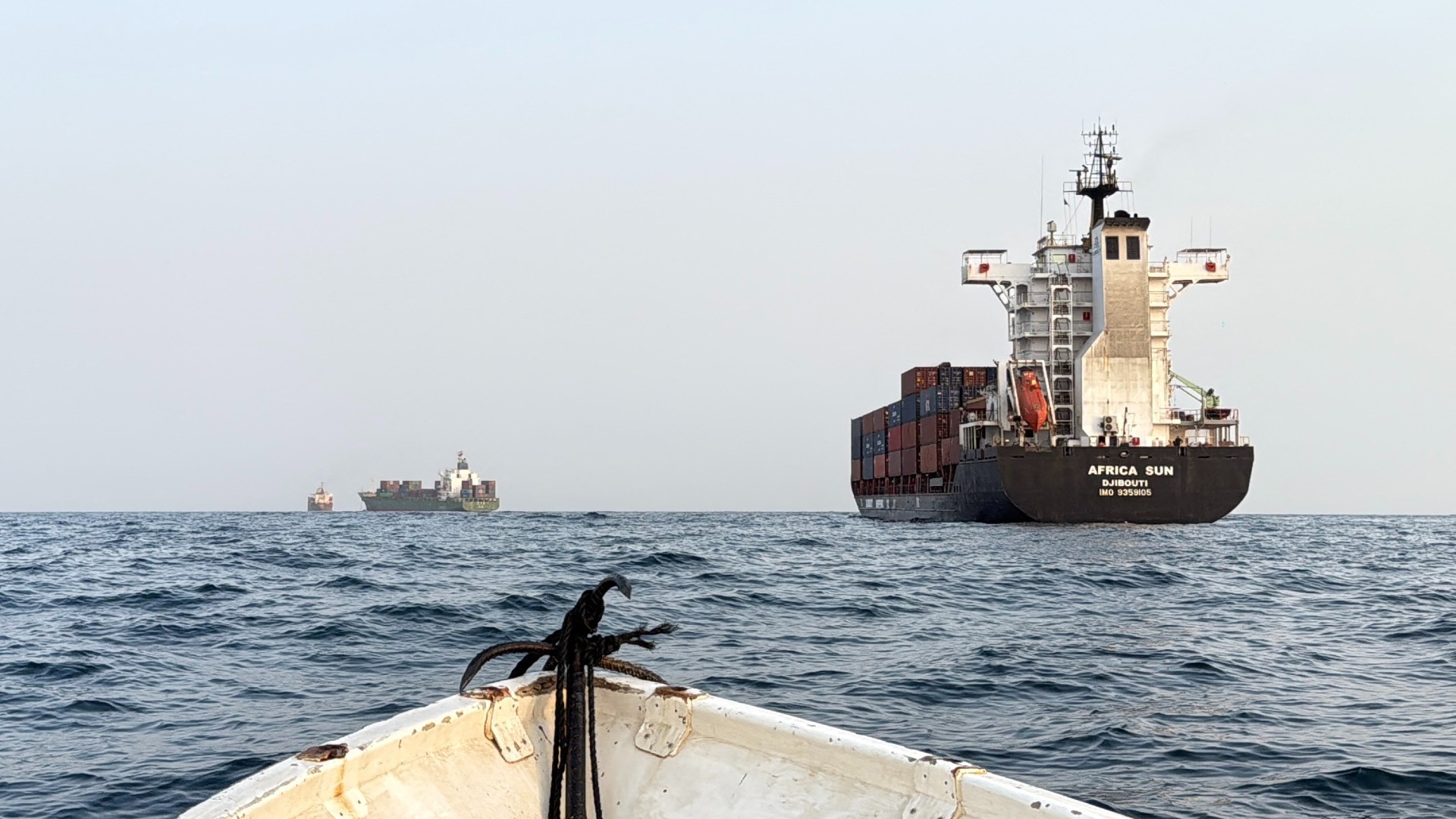
    In the busy waters of the South China Sea, roughly 45 miles off Malaysia’s southern Johor state, a persistent pattern of covert ship-to-ship oil transfers linked to Iran has reignited international tensions over Tehran’s efforts to evade U.S.-led sanctions, leaving Malaysian authorities caught between geopolitical pressure and the practical limits of maritime enforcement.

    Since February 28, when open conflict erupted in the Middle East following joint U.S.-Israeli strikes on Iran, U.S.-based nonproliferation advocacy group United Against Nuclear Iran (UANI) has documented at least 42 unauthorized Iranian oil transfers in the area known as the Eastern Outer Port Limits (EOPL), a strategic stretch of water that sits along the world’s busiest maritime trade corridor and halfway between Iran and China, which purchases roughly 90% of Iran’s crude exports. UANI gathered its evidence via satellite imagery analysis of the unregulated activity.

    The shadow fleet of tankers conducting these operations has drawn sharp condemnation from both global shipping industry bodies and UANI, which has accused Malaysian regulators of turning a blind eye to the activity and failing to enforce adequate controls. UANI senior advisor Charlie Brown argued that Malaysian inaction has transformed the country from a mere transit point for these illicit flows into an active facilitator of the sanctions-evasion business model that benefits Iran, China and dark fleet operators. Brown noted that even after the U.S. imposed a full blockade on Iranian ports in mid-April, activity in the EOPL has continued largely unchanged. As of this week, UANI tracking shows two dozen Iranian-linked tankers remain anchored or loitering in the transfer zone, though it is unclear how many of these vessels entered the area before the blockade took effect. “It’s business as usual,” Brown told the Associated Press.

    UANI has pushed Malaysia to take a series of actionable steps to crack down on the transfers: requiring advance notification for all ship-to-ship transfers to enforce environmental rules, barring Malaysian companies from providing services to tankers linked to the shadow fleet, and mandating that all operating vessels carry sufficient insurance to cover potential oil spill accidents. While the transfers themselves are not formally illegal under international law, Malaysian policy discourages unsanctioned transfers outside of regulated, supervised port areas. Unregulated transfers conducted by aging dark fleet vessels carry a drastically higher risk of catastrophic oil spills, and operations conducted far from port leave far fewer options to contain damage if an accident occurs.

    However, Malaysia’s top maritime official says the critics have ignored the on-the-ground realities of maritime enforcement in the region. Malaysian Maritime Enforcement Agency (MMEA) Director-General Mohamad Rosli Abdullah explained that the vast majority of these transfers take place in international waters, where Malaysia holds no legal jurisdiction. Dark fleet operators also routinely deploy tactics to evade detection: switching off automatic identification system trackers, using false vessel identities, operating exclusively under cover of night, and hiding behind complex, opaque corporate ownership structures that make it difficult to trace a vessel’s true purpose.

    “The issues raised do not align with the actual situation on the ground and do not reflect the operational realities of maritime enforcement conducted by the MMEA,” Mohamad Rosli told the AP, emphasizing that all MMEA operations are carried out strictly in line with Malaysian domestic law and binding international conventions. “We have never compromised nor provided any special treatment or privileges to any country,” he added.

    Mohamad Rosli also pushed back against claims of systemic inaction, noting that Malaysian authorities seized two vessels — one stateless, one flagged to Cameroon — found conducting unauthorized transfers of 2 million barrels of crude in Malaysian territorial waters earlier this year. The vessels were released on bond after the seizure, but Brown confirmed one was recently spotted conducting another suspected Iranian oil transfer off Johor earlier this month. Despite the challenges, Mohamad Rosli said Malaysian authorities remain committed to protecting the country’s maritime sovereignty and safety: “We will continue to strengthen monitoring and enhance strategic cooperation with relevant agencies to ensure that the nation’s maritime domain’s safety and sovereignty are consistently safeguarded.”

    The EOPL transfer zone, while widely considered part of Malaysia’s broader exclusive economic zone, sits directly adjacent to Indonesia’s Riau Archipelago, drawing neighboring Indonesia into the dispute. Indonesia’s Foreign Ministry confirmed it is currently reviewing the situation to assess the legality of the ongoing activity. “Indonesia does not permit its territory or maritime zones to be used for unlawful activities,” said Foreign Ministry spokesperson Yvonne Mewengkang. She added that Indonesia remains committed to upholding all legitimate navigational rights outlined in the United Nations Convention on the Law of the Sea, including innocent passage, transit passage, and unimpeded passage through Indonesian maritime zones.

    As of Tuesday, neither the Iranian Embassy in Kuala Lumpur nor the U.S. State Department had issued a formal response to requests for comment on the ongoing situation. Covert ship-to-ship transfers of Iranian crude have been a common sanctions-evasion tactic for years, allowing Tehran to maintain export flows while giving buyers formal plausible deniability over the origin of the oil.

  • Turkey removes a restriction on direct trade with Armenia to improve ties

    Turkey removes a restriction on direct trade with Armenia to improve ties

    Decades of frozen relations between longstanding regional rivals Turkey and Armenia have taken a major step toward normalization, as Ankara announced it is removing a long-held restriction on direct bilateral trade this Wednesday. The diplomatic move is being widely framed as a symbolic gesture of goodwill to advance ongoing efforts to repair ties between the two neighboring countries.

    Turkey and Armenia have not maintained formal diplomatic relations since the 1990s, when Ankara closed the shared Turkey-Armenia border in 1993. The closure came as a show of solidarity with Turkey’s close strategic ally Azerbaijan, which was engaged in armed conflict with Armenia over the disputed Nagorno-Karabakh region, a territory recognized under international law as part of Azerbaijan.

    Tensions have run high between the two nations for more than a century, compounded by deep-seated historic grievances beyond the Nagorno-Karabakh dispute. The divergent narratives around the 1915 mass deaths of an estimated 1.5 million Armenians under Ottoman Turkey remain a major sticking point: while most international historians classify the events as a genocide, the Turkish government rejects the label, acknowledging widespread casualties but disputing the death toll and framing the deaths as a consequence of early 20th-century civil unrest.
    More recently, Turkey again threw its full support behind Azerbaijan in the 2020 six-week armed conflict over Nagorno-Karabakh, providing Baku with key military hardware including combat drones. That conflict ended with Azerbaijan retaking control of large swathes of the disputed territory that had been held by ethnic Armenian forces backed by Yerevan.

    It was not until late 2021 that the two countries made a formal breakthrough, when they reached an agreement to launch a structured dialogue to improve bilateral relations, appointing special envoys tasked with negotiating reconciliation and the eventual full opening of the closed border. Over the course of two years of gradual talks, the process has already delivered tangible incremental progress: direct commercial flights between the two nations have resumed, and some visa requirements for travelers have been relaxed.

    Announcing the latest policy change via a post on social platform X, Turkish Foreign Ministry spokesman Oncu Keceli confirmed that ongoing technical and administrative work to fully open the shared border is still progressing. Under the new policy adjustment, goods shipped between Turkey and Armenia via third countries will now be permitted to explicitly list Turkey or Armenia as their official point of origin or final destination on trade documents, ending a decades-long restriction that banned this direct labeling.

    Writing in his statement, Keceli emphasized Turkey’s commitment to regional stability, noting: “In the light of the historic opportunity seized to strengthen lasting peace and prosperity in the South Caucasus, Türkiye will continue to contribute to the development of economic relations in the region and to further advancing cooperation for the benefit of all countries and peoples of the region.”

    The diplomatic shift has already been met with a positive response from Armenia. Armenian Foreign Ministry spokeswoman Ani Badalyan called the move a meaningful milestone on the path to full bilateral normalization, saying in her own X post: “We would like to emphasize that this is an important step toward the establishment of full and normalized relations between our two countries, which could logically continue through the opening of the Armenia-Turkey border and the establishment of diplomatic relations.”

    Analysts note the move comes amid a shifting geopolitical landscape in the South Caucasus, as Armenia deepens its engagement with European institutions and moves away from its traditional alignment with Russia, making progress on the Turkey-Armenia reconciliation track all the more significant for regional security.

  • Climbers clear path to Everest summit past giant chunk of ice

    Climbers clear path to Everest summit past giant chunk of ice

    The 2026 Mount Everest climbing season has been thrown into uncertainty after a massive unstable glacial serac blocked the only accessible southern route from Nepal’s Base Camp, cutting short the traditional narrow climbing window and triggering urgent safety warnings from mountaineering experts. For weeks, hundreds of aspiring summiters and their Nepali guides were stranded at Base Camp, unable to begin their final ascent preparations as the massive ice chunk blocked progress toward higher camps.

    On Wednesday morning, an elite team of experienced Nepali climbers successfully navigated the glacial obstacle, securing fixed ropes and installing ladders to open a new passable path toward the summit. The breakthrough clears the way for other climbing teams to begin their push for the 8,849-meter peak, but significant safety concerns remain as the industry grapples with the fallout of the weeks-long delay.

    This year, Nepal’s tourism department has issued a near-record number of 500 permits to foreign climbers, a figure that balloons to roughly 1,000 total climbers when mandatory Nepali guides are included. Compounding crowding pressures, China has closed Everest’s northern Tibetan route to foreign climbers for the 2026 season, pushing all international expeditions onto the already crowded Nepali southern path. With the traditional climbing season — which runs from late April to late May — already well underway, the delayed route opening has compressed all summit attempts into a far shorter window than usual, raising fears of deadly “traffic jams” along the final approach to the peak.

    Veteran mountaineer Purnima Shrestha, who is currently attempting her sixth Everest summit, warned late last month that the compressed timeline would force hundreds of climbers to attempt the summit in a concentrated period. Mingma G Sherpa, a seasoned guide currently on the mountain, echoed these concerns to mountaineering outlet ExplorersWeb, noting that a limited climbing window would create dangerously dense crowds that put all climbers at heightened risk of accident or altitude-related illness.

    Complicating acclimatization routines that climbers rely on to adapt to high altitude, most teams have been forced to cut short their gradual up-and-down treks between Base Camp and the four higher mountain camps, a change that further increases health and safety risks for those attempting the summit. Early efforts to fix ropes from Camp Four to the summit were also delayed by poor weather earlier this week, adding another layer of disruption to the season.

    Nepali authorities and expedition industry groups have moved to mitigate overcrowding risks by implementing staggered ascent scheduling. Rishi Ram Bhandari, Secretary-General of the Expedition Operators Association of Nepal, told reporters that the organization is coordinating across all teams to spread out summit attempts and prevent concentrated crowds near the peak. At Base Camp, Nepal’s tourism department has deployed a five-person coordination team to work with commercial expedition operators to formalize staggered summit plans. Currently, roughly 2,000 people are present at Everest Base Camp, including climbers heading for other peaks in the Khumbu region.

    Tragedy has already struck the mountain this season, with three climbers and guides dead in the past two weeks during preparations. The casualties include Bijay Ghimere, a 35-year-old climber from Nepal’s marginalized Dalit community who made history as the first from his community to summit Everest, who died from altitude sickness. Phura Gyaljen Sherpa, a 21-year-old guide, died after slipping into a glacial crevasse near Camp Three, while 51-year-old guide Lakpa Dendi Sherpa died while traveling to Base Camp on May 3.

    Overcrowding, fatal accidents, and growing environmental degradation have plagued Everest in recent decades, even as permit fees have risen to curb over-tourism. In September 2025, Nepal implemented its first permit fee increase in nearly a decade, raising the cost of a single Everest permit from $11,000 to $15,000. The price hike has done little to dampen demand, however, with tourism numbers continuing to surge year over year.

  • Russian drone attacks kill nine in Ukraine after ceasefire expires

    Russian drone attacks kill nine in Ukraine after ceasefire expires

    Just 48 hours after a three-day US-mediated ceasefire between Russia and Ukraine expired, large-scale cross-border drone attacks have resumed across both territories, leaving multiple civilian casualties and widespread infrastructural damage. According to local Ukrainian officials, the latest wave of Russian drone assaults across 14 of Ukraine’s administrative regions has left nine people dead and at least 28 injured.

    The hardest-hit area was Ukraine’s central Dnipropetrovsk region, which bore the brunt of Tuesday’s sustained attacks. Regional governor Oleksandr Hanzha confirmed that 30 separate strikes hit three districts across the region over the course of the day, killing eight people: two in Kryvyi Rih, President Volodymyr Zelensky’s hometown, and six in the Synelnykove district, located just southeast of the regional capital Dnipro. More than two dozen residential homes were damaged in the assault, and emergency crews including firefighters were deployed to tackle large blazes sparked by the strikes. One additional fatality was recorded in the eastern Donetsk region, where active frontline combat has been ongoing for months.

    In the northeastern Kharkiv region, five people were injured and multiple residential buildings were damaged. Strikes were also reported across southern Ukraine in Odesa, Kherson and Zaporizhzhia, as well as in the central Ukrainian region of Poltava. On Wednesday morning, Zelensky confirmed the scale of the assault in a Telegram post, noting that attacks continued overnight after Tuesday’s initial wave. He warned that more than 100 Russian drones remained active over Ukrainian airspace, and that additional waves of attacks were expected throughout the day. Zelensky accused Russia of deliberately targeting civilian infrastructure, specifically calling out targeted strikes on Ukrainian railway networks.

    Ukraine’s Air Force released its official operational update Wednesday, reporting that Russia launched 139 drones into Ukrainian territory over the preceding 24 hours. Ukrainian air defense systems successfully intercepted and shot down 111 of these drones, but 20 direct hits were still recorded across 13 separate locations.

    In a reciprocal development, Russian officials reported a wave of Ukrainian drone strikes across Russian territory and the Crimean peninsula overnight. The Russian Ministry of Defense stated that air defense systems intercepted 286 Ukrainian drones across 14 Russian regions and Crimea, which Russia illegally annexed from Ukraine in 2014.

    No casualties were reported in the Ukrainian strikes, but multiple industrial facilities sustained damage. In Russia’s southern Astrakhan region, falling drone debris ignited a blaze at a regional gas processing plant in the capital city. Astrakhan Governor Igor Babushkin confirmed that there is no current threat of widespread air pollution from the fire. Additional damage was recorded at two other industrial sites: one in Russia’s southern Krasnodar region, and a second in Yaroslavl, a city northeast of Moscow.

    This escalation of aerial attacks comes immediately after the expiration of a three-day US-brokered ceasefire that ended late Monday. Both sides reported multiple violations of the truce, most of which occurred along the sprawling 1,000-kilometer front line dividing Russian and Ukrainian-controlled territory. There were no large-scale aerial attacks recorded during the ceasefire period.

    Over recent months, Ukraine has ramped up its cross-border drone strikes against Russian energy and industrial infrastructure. Ukrainian officials have justified these attacks, arguing that these facilities support Russia’s military and war-fighting capacity, making them legitimate military targets. This latest exchange of mass drone attacks marks a sharp resumption of hostilities after the brief three-day truce, raising fears of a further intensification of the full-scale Russian invasion that began in February 2022.

  • Russia presses its barrages of Ukraine as Trump talks of possible peace and Kyiv is emboldened

    Russia presses its barrages of Ukraine as Trump talks of possible peace and Kyiv is emboldened

    In a fresh wave of brutal attacks on Ukraine, Russian forces launched over 100 drones across multiple Ukrainian regions on Wednesday, Ukrainian President Volodymyr Zelenskyy confirmed. The assault came just hours after an earlier barrage on civilian areas claimed the lives of at least eight people, marking another escalation in Moscow’s unrelenting campaign against its neighbor.

    Zelenskyy took to social media platform X to condemn the strikes, emphasizing that Russian forces are deliberately targeting critical civilian and infrastructure sites across the country. According to the Ukrainian leader, overnight attacks hit residential neighborhoods and railway networks in central Ukraine’s Dnipro region and northeastern Kharkiv, port facilities in the southern Odesa region, and energy installations in the central Poltava region. He added that attacks spanned 14 Ukrainian regions throughout Tuesday, underscoring the broad scope of Moscow’s current offensive.

    In his statement, Zelenskyy made a direct appeal to the international community, warning that waning global media attention on the conflict — a shift largely driven by world focus turning to escalating tensions in Iran — only emboldens Russia to intensify its aggression. “It is important to support Ukraine and not remain silent about Russia’s war. Every time the war disappears from the top of the news, it encourages Russia to become even more savage,” he said.

    The latest attacks come against a backdrop of surprising claims from both former U.S. President Donald Trump and Russian President Vladimir Putin that the nearly three-year-long conflict could be nearing an end. Speaking to reporters ahead of his departure from the White House for a Beijing summit Tuesday, Trump stated he believes Moscow and Kyiv will soon reach a negotiated settlement to end the fighting. “The end of the war in Ukraine I really think is getting very close,” Trump said. “Believe it or not, it’s getting closer.”

    Putin echoed this sentiment in a speech over the weekend, claiming his full-scale invasion of Ukraine was possibly “coming to an end.” Neither leader has provided any evidence to back up these assertions, nor has either elaborated on what factors have led them to suggest peace is on the horizon for Europe’s largest and longest conflict since World War II.

    Previous U.S.-led diplomatic efforts to broker a ceasefire and peace deal over the past year have stalled completely, failing to make progress on core sticking points that have divided the two sides since the invasion began. Key unresolved issues include Russia’s refusal to withdraw from illegally occupied Ukrainian territory and international efforts to create permanent security guarantees to deter future Russian aggression. Meanwhile, some European governments — which have spent years isolating Putin and enforcing sweeping economic sanctions on Russia in response to the invasion — are now debating whether to open direct diplomatic talks with the Kremlin.

    Despite the claims of an imminent end to the war, recent military momentum has shifted in Ukraine’s favor, according to independent defense analysts. Ukraine has built up its domestic drone manufacturing sector over the course of the conflict, and it now even shares its battlefield-proven counterattack expertise with other allied nations, after spending the early months of the war pleading for international military support.

    Ukrainian long-range drone and missile strikes have repeatedly disrupted Russian energy infrastructure and military manufacturing deep inside Russian territory, with three Russian regions confirming Ukrainian strikes on Wednesday. The Russian Defense Ministry claimed its air defense systems intercepted and destroyed 286 Ukrainian drones across western Russia, the illegally annexed Crimean Peninsula, and the Azov and Black Seas.

    Along the 780-mile front line stretching across eastern and southern Ukraine, Russia’s much larger and better-equipped army has seen its advance slow steadily every month since October 2024, according to the Washington-based Institute for the Study of War (ISW). The think tank reported that Russia’s much-vaunted 2025 spring offensive has faltered badly, with Russian forces recording a net loss of captured territory in the past month — the first time this has happened since 2024.

    “Not only are Ukrainian defensive lines holding, but Ukrainian forces have managed to contest the tactical initiative in several areas of the front line even as Russia continues to lose disproportionate amounts of manpower to achieve minimal gains,” the ISW said in a Tuesday analysis.

  • Alleged scammer extradited after  hacking attempt on BTS star

    Alleged scammer extradited after hacking attempt on BTS star

    In a high-profile cross-border cybercrime case that has drawn international attention, a 40-year-old Chinese national accused of masterminding a multi-million dollar hacking operation that counted BTS member Jungkook among its high-profile victims has been handed over to South Korean authorities following extradition from Thailand.

    South Korea’s Ministry of Justice has laid out detailed charges against the unnamed suspect, accusing him and his criminal network of stealing a total of 38 billion won, equal to approximately $25.4 million or £18.8 million, from a wide range of targets. The group’s illegal activities included breaking into digital accounts tied to both government agency websites and the personal profiles of prominent public figures, according to official allegations.

    One of the most high-profile attempted heists targeted the BTS vocalist: the hacking ring gained unauthorized access to a securities account registered under Jungkook’s name, and attempted to siphon off 8.4 billion won worth of shares the K-pop star holds in Hybe, BTS’s parent entertainment and management company. Local South Korean media outlets confirmed that the suspicious transfer was halted before it could be completed, after Hybe’s internal security team moved quickly to freeze the compromised account.

    Court and law enforcement records show the string of cyberattacks linked to the group took place over a 20-month period, running from August 2023 through April 2025. Beyond the Jungkook case, the criminal network also targeted other high-profile individuals across South Korea, including the chair of a large domestic conglomerate and the chief executive of a local venture capital firm, reporting from Agence France-Presse confirmed.

    Prior to his extradition, the suspect had been residing in Bangkok, Thailand. This is not the first extradition connected to the same hacking ring: back in August 2024, a 36-year-old Chinese national also linked to the group was extradited to South Korea from Thailand. That defendant was formally indicted in September 2024 and is currently on trial facing cybercrime and theft charges in a South Korean court.

    South Korean law enforcement officials confirmed that following the suspect’s arrival in the country, investigators will first conduct a formal interrogation and process evidence collected from across the investigation. After completing this initial phase, police announced they intend to submit an application for an arrest warrant to formally detain the suspect ahead of upcoming judicial proceedings.

  • Ghana to evacuate 300 from South Africa over anti-immigrant protests

    Ghana to evacuate 300 from South Africa over anti-immigrant protests

    A spreading wave of anti-foreign-national protests across major South African cities has triggered a regional diplomatic crisis, with Ghana launching an emergency evacuation plan for hundreds of its citizens trapped in the unrest.

    Ghana’s Foreign Minister Samuel Okudzeto Ablakwa announced via a post on X Tuesday that the country’s president has formally signed off on the immediate evacuation of 300 at-risk Ghanaians. All the affected, described as “distressed” by the foreign ministry, have already registered with Ghana’s Pretoria embassy to arrange for safe passage back to their home country. The evacuation follows a formal travel advisory Ghana issued last week after the latest round of xenophobic violence targeting foreign residents.

    Thousands of South African demonstrators have joined the recent protests, rallying against unregulated illegal immigration. Protesters argue that undocumented migrants have strained local access to employment, affordable housing, and contributed to rising community crime rates, amplifying long-simmering public frustration and pushing demands for mass deportations of people without legal residency.

    In response to escalating tensions, the Ghanaian embassy in Pretoria issued an updated safety warning Tuesday, urging all Ghanaian citizens in South Africa to exercise extreme caution, avoid all large public gatherings, and close all businesses in the coastal city of Durban ahead of a planned anti-immigration protest scheduled for Wednesday.

    South African officials have pushed back against widespread claims of targeted attacks, denying that any xenophobic violence has occurred in recent weeks and asserting that viral videos circulated online showing purported attacks are fabricated. In a public address Monday, South African President Cyril Ramaphosa acknowledged that recent “protests and criminal acts directed at foreign nationals” do not align with the country’s official government policy, framing the unrest as isolated criminal activity rather than coordinated, systemic hostility. Ramaphosa also reaffirmed the government’s commitment to migration regulation, border security, and consistent enforcement of national immigration laws. The South African government added that it has “nothing to hide” and condemned the spread of disinformation via fake visual content.

    The diplomatic fallout has already spread across the continent. Both Ghana and Nigeria have summoned South African diplomatic envoys in their capitals to formally protest the mistreatment and harassment of their citizens living in South Africa. Ghana has also taken the extra step of formally requesting the African Union place the issue on its agenda for discussion, arguing that the ongoing unrest poses an unacceptable “serious risk to the safety and wellbeing” of African residents in South Africa.

    Ghana is not alone in issuing warnings: Kenya, Malawi, Lesotho, and Zimbabwe have all followed suit, urging their citizens residing in South Africa to take extra safety precautions amid the unrest.

    Official demographic data puts the total foreign-born population in South Africa at more than 3 million, accounting for roughly 5% of the country’s total population. However, analysts estimate that a far larger number of undocumented migrants currently reside within South Africa’s borders, a reality that has kept anti-immigration sentiment a persistent flashpoint in national politics. Xenophobic hostility has a long history in the country, with sporadic deadly attacks on foreign nationals recorded over the past several decades.

  • ‘Short of blue-collar workers’: Ukraine’s battle for labour

    ‘Short of blue-collar workers’: Ukraine’s battle for labour

    When Anatoliy Synkov fled Russian advancing forces from the ruined city of Bakhmut and resettled in the central industrial hub of Dnipro, he encountered a rare opportunity in a war-battered economy: immediate job offers poured in from local employers desperate for staff. The 55-year-old former forester landed a position on a household goods production line at Biosphere Corporation within seven days, an unusually quick hiring process that underscores a growing, existential crisis for Ukraine’s wartime economy: severe, widespread labor shortages that have left hundreds of businesses struggling to operate.

    Even months after starting his new role, Synkov says he still receives frequent unsolicited job offers from other Ukrainian companies, even as employers have hiked wages to attract scarce candidates. The scale of Ukraine’s labor crisis is rooted in the massive population displacement and human cost of the full-scale Russian invasion, which began in 2022. Before the war, Ukraine had a population of roughly 40 million. Today, hundreds of thousands of working-age men have been drafted into military service, with tens of thousands killed or wounded in combat, while the United Nations estimates that around 5.7 million Ukrainians still remain refugees in European and other countries outside of Ukraine.

    Biosphere, one of Ukraine’s largest household goods manufacturers, has felt the labor crunch acutely — even after surviving a direct Russian missile strike on one of its Dnipro warehouses in April 2025 that killed one worker and injured 11 others, leaving a gutted, blackened structure still standing at the site. Today, the Dnipro plant employs just 500 workers, down from 800 before the 2022 invasion, according to Olena Shpitz, the facility’s human resources director. Around 100 of Biosphere’s former employees have joined the Ukrainian armed forces, and recruitment has become a constant, uphill battle.

    “The number of candidates has dropped significantly,” Shpitz explained. Positions that once took just seven days to fill now take six times that long, and the company has even rolled out employee referral bonuses, offering cash rewards to current workers who help recruit relatives to fill open roles.

    The labor shortage is not limited to civilian manufacturing. It has also hit Ukraine’s rapidly expanding military production sector, which is critical to supporting frontline forces against Russia. Kvertus, a leading Ukrainian manufacturer of anti-drone jamming systems, told AFP that critical skilled specialists are often impossible to find in sufficient quantities to meet growing military demand.

    New data from the European Business Association (EBA) underscores the scope of the crisis: at the start of 2026, 78 percent of EBA member companies operating in Ukraine reported widespread shortages of skilled workers. Economist Lyubov Yatsenko, a researcher at Ukraine’s National Institute for Strategic Studies, told AFP the war has compounded long-term demographic and structural challenges that predated the invasion, including steady population decline dating back to the collapse of the Soviet Union and a persistent mismatch between the skills taught by Ukraine’s education system and the needs of modern employers.

    The most acute gaps are for blue-collar manual labor roles, alongside public sector positions including doctors, teachers and agricultural administrators. These roles have long suffered from low pay and low social prestige, Yatsenko noted, making them even less attractive amid the upheaval of war.

    Paradoxically, crippling labor shortages coexist with double-digit unemployment in Ukraine. Official employment data is not published during wartime, but polling firm Info Sapiens estimated the national unemployment rate hit 15.5 percent in March 2026. The disconnect stems from a major skills mismatch: the market has a surplus of accountants, corporate economists and lower-level managers, but far too few trained manual workers. To bridge this gap, Yatsenko has called for expanded retraining programs and targeted policies to draw underutilized groups — including young people, refugees, war veterans and older workers — into understaffed sectors.

    Biosphere already employs 19 war veterans at its Dnipro plant, but company leaders say they need additional government support to hire more former soldiers and civilians living with war-related disabilities. Compounding the problem, tens of thousands of draft-eligible men avoid formal work entirely, either staying unemployed or working in the informal shadow economy to evade mobilization rules.

    Resolving the crisis will require sweeping reforms to Ukraine’s mobilization system, exemption policies and efforts to bring informal workers into the formal economy, a senior unnamed Ukrainian foreign economic official told AFP. “The main direction must be a more transparent and structured way to change between war service, being at the front fighting, and working in the economy very normally,” the official said. “There must be better rules to go back and forth.” Ukrainian President Volodymyr Zelensky has recently announced plans to allow limited demobilization of long-serving troops in the coming months, though no concrete details of the plan have been released to the public.

    Few Ukrainian companies are open to hiring foreign workers to fill gaps: an October 2025 poll found that only one in eight businesses consider bringing in workers from abroad, with most citing concerns over language barriers and cultural or religious differences. Instead, Ukrainian businesses are increasingly turning to women to fill empty roles, after the Kyiv government lifted restrictions on women working in a range of previously banned professions including mining. At Biosphere’s Dnipro plant, women now make up roughly half of the workforce, up from a much lower share before 2022.

    “Women are the one thing that they rely on most right now to make it more long-term and sustainable,” the senior economic official said. Even with this shift, challenges remain: of the 3.7 million internally displaced people across Ukraine, many are unable to join the workforce due to war-related trauma or skills that do not match the needs of local labor markets in their new host regions.

    For Synkov, the transition from life in Bakhmut to work in Dnipro was not easy. He says it took two full years to process the trauma of being forced to flee his home. But today, he remains pragmatic about his future in wartime Ukraine: “You have to live.”