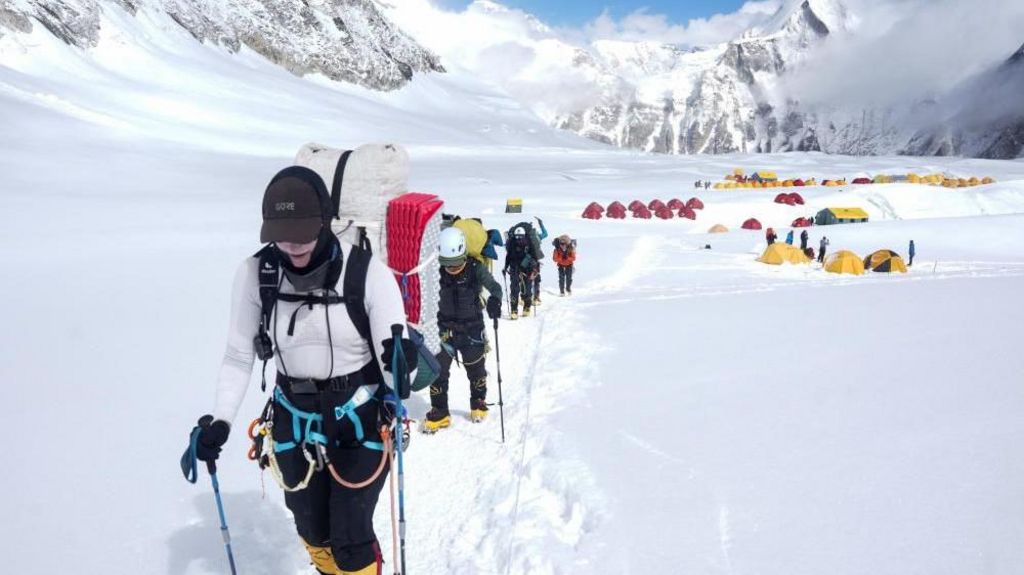
The 2026 Mount Everest climbing season has been thrown into uncertainty after a massive unstable glacial serac blocked the only accessible southern route from Nepal’s Base Camp, cutting short the traditional narrow climbing window and triggering urgent safety warnings from mountaineering experts. For weeks, hundreds of aspiring summiters and their Nepali guides were stranded at Base Camp, unable to begin their final ascent preparations as the massive ice chunk blocked progress toward higher camps.
On Wednesday morning, an elite team of experienced Nepali climbers successfully navigated the glacial obstacle, securing fixed ropes and installing ladders to open a new passable path toward the summit. The breakthrough clears the way for other climbing teams to begin their push for the 8,849-meter peak, but significant safety concerns remain as the industry grapples with the fallout of the weeks-long delay.
This year, Nepal’s tourism department has issued a near-record number of 500 permits to foreign climbers, a figure that balloons to roughly 1,000 total climbers when mandatory Nepali guides are included. Compounding crowding pressures, China has closed Everest’s northern Tibetan route to foreign climbers for the 2026 season, pushing all international expeditions onto the already crowded Nepali southern path. With the traditional climbing season — which runs from late April to late May — already well underway, the delayed route opening has compressed all summit attempts into a far shorter window than usual, raising fears of deadly “traffic jams” along the final approach to the peak.
Veteran mountaineer Purnima Shrestha, who is currently attempting her sixth Everest summit, warned late last month that the compressed timeline would force hundreds of climbers to attempt the summit in a concentrated period. Mingma G Sherpa, a seasoned guide currently on the mountain, echoed these concerns to mountaineering outlet ExplorersWeb, noting that a limited climbing window would create dangerously dense crowds that put all climbers at heightened risk of accident or altitude-related illness.
Complicating acclimatization routines that climbers rely on to adapt to high altitude, most teams have been forced to cut short their gradual up-and-down treks between Base Camp and the four higher mountain camps, a change that further increases health and safety risks for those attempting the summit. Early efforts to fix ropes from Camp Four to the summit were also delayed by poor weather earlier this week, adding another layer of disruption to the season.
Nepali authorities and expedition industry groups have moved to mitigate overcrowding risks by implementing staggered ascent scheduling. Rishi Ram Bhandari, Secretary-General of the Expedition Operators Association of Nepal, told reporters that the organization is coordinating across all teams to spread out summit attempts and prevent concentrated crowds near the peak. At Base Camp, Nepal’s tourism department has deployed a five-person coordination team to work with commercial expedition operators to formalize staggered summit plans. Currently, roughly 2,000 people are present at Everest Base Camp, including climbers heading for other peaks in the Khumbu region.
Tragedy has already struck the mountain this season, with three climbers and guides dead in the past two weeks during preparations. The casualties include Bijay Ghimere, a 35-year-old climber from Nepal’s marginalized Dalit community who made history as the first from his community to summit Everest, who died from altitude sickness. Phura Gyaljen Sherpa, a 21-year-old guide, died after slipping into a glacial crevasse near Camp Three, while 51-year-old guide Lakpa Dendi Sherpa died while traveling to Base Camp on May 3.
Overcrowding, fatal accidents, and growing environmental degradation have plagued Everest in recent decades, even as permit fees have risen to curb over-tourism. In September 2025, Nepal implemented its first permit fee increase in nearly a decade, raising the cost of a single Everest permit from $11,000 to $15,000. The price hike has done little to dampen demand, however, with tourism numbers continuing to surge year over year.